When business class isn’t an option for most of us
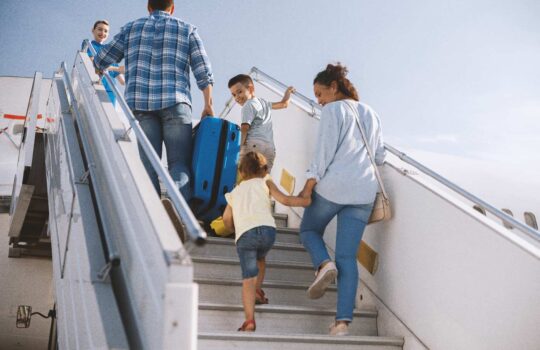
Scroll Instagram and it looks like every other traveling family is sipping juice boxes in business class with seats that turn into beds. For the rest of us, that’s fantasy. Premium economy alone can double a trip budget, and business class could fund an entire holiday. Most families don’t have that luxury, which means we end up wedged into economy, shoulder to shoulder, wondering how to survive ten hours without losing our minds.
The good news? While economy will never be first class, there are ways to make it feel far less punishing. With a little planning, some smart gear, and a few tricks that seasoned families swear by, kids can be surprisingly comfortable — and you might even feel like you’ve hacked the system.
The reality of flying economy with kids
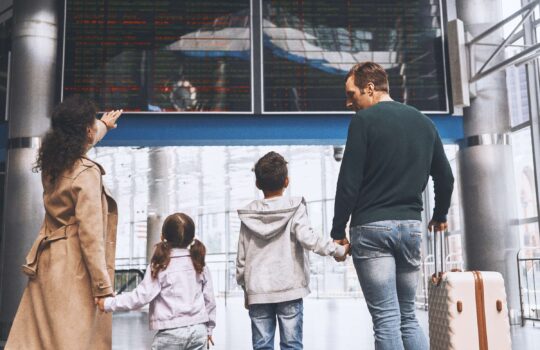
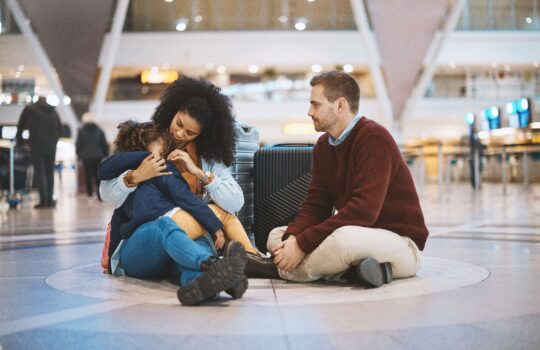
Let’s not sugarcoat it: economy is cramped, noisy, unpredictable, and just pretty shitty in general. Especially when you walk past other families in Business on your way back to basic economy. We know the feeling. You’re dealing with tray tables that barely hold a meal, seats that recline by a few sad degrees, and overhead bins that fill up before you even board. For parents, it’s the stress of trying to keep kids calm while also navigating the tight physical space.
But here’s the perspective shift. Kids often care less about seat width and more about how they’re entertained and fed. Many don’t even notice the discomfort unless you draw attention to it. What feels like a nightmare for adults can feel like an adventure for children if you frame it that way. Think less “flying shoebox” and more “special movie marathon with snacks and sleepovers in the sky.” With the right setup, you can transform an otherwise punishing cabin into a space that actually works for them.
Choosing seats that make a difference
In economy, seat selection is your only real upgrade. Bulkhead seats are the go-to for families because they offer extra legroom and space to spread out. They’re also where airlines install bassinets. The downsides? You can’t keep bags at your feet during takeoff and landing, and fixed armrests make them less cozy for spreading out.
If your kids are older and don’t need a bassinet, sitting toward the back of the plane can actually be smarter. It’s closer to the bathrooms, often emptier, and sometimes you get lucky with an entire row free. Window seats are great for naps and distraction, while aisles make bathroom runs easier. Two and two across the aisle is a favorite family strategy because each parent manages one child without feeling trapped.
Don’t dismiss paying a little extra for “preferred” economy seats if it buys you legroom and sanity. It’s not business class, but even a few more inches can feel like gold when you’ve got wriggly kids. For more detailed setups, see our full guide on airline family seating but the key takeaway here is this: in economy, every seat has trade-offs. Choose the one that matches your family’s needs, not just what’s cheapest.
Managing space when you don’t have much
The lack of space in economy isn’t just inconvenient, it’s what makes parents feel overwhelmed. The secret is to create mini “zones.” Each child should have their own small pouch or bag for snacks, toys, and comfort items. It makes them feel in control and keeps you from digging through one massive carry-on.
Use the seat-back pocket for only the absolute essentials you’ll need in the next hour. Wipes, tissues, and one activity. Overstuffing it just creates chaos. Stash backup items in a bag overhead and rotate them in as needed. If your kids are old enough, assign them their own “seat real estate” and remind them that everything they’re using must fit in that zone. It turns cramped space into a game of order rather than a battle for elbow room.
Parents who swear by packing cubes aren’t just being Instagram-worthy, cubes keep everything compartmentalized so you don’t spend five minutes digging for one pacifier. In tight spaces, being able to grab what you need instantly is the closest thing to feeling organized in economy. Also who wants taps on their shoulder from their little ones while you’re watching office re-runs to ask you to get yet another thing from the overhead compartment.
Sleep and rest in a cramped cabin
Getting kids to sleep in economy feels impossible, but there are ways to make it happen and sometimes even feel cozy. Window seats are gold for leaning and blocking distractions. Bring a small blanket from home and recreate bedtime routines as best you can: reading a book, dimming the light, or using the same playlist you use at night.
For longer flights, some parents invest in inflatable footrest cushions or “bed boxes” that turn a seat into a flat(ish) bed for kids. Airlines vary on whether they’re allowed, but when used, they can transform a cramped seat into a little nest. If gadgets aren’t an option, roll up hoodies or use carry-on bags to create a footrest that makes the seat feel less upright and more lounge-like.
Framing it as a “plane sleepover” helps too. Give your child pajamas to change into, brush their teeth in the airplane bathroom, and treat it like bedtime at home. It won’t be perfect, but it tricks the brain into winding down. Suddenly economy doesn’t feel like a plastic chair in the sky, it feels like a special camping setup with bonus turbulence.
Food, drinks, and keeping kids satisfied
Airline food is hit or miss, and usually miss. But parents can get creative. One trick is to order children’s meals when booking tickets. They often come out earlier than the standard service, which keeps kids from melting down while waiting. The food might still be basic, but at least the timing helps.
Snacks are where you can really elevate comfort. Bring a mix of familiar and fun: crackers, fruit pouches, sandwiches, or even a small treat to break out when morale is low. If you have lounge access, whether through a day pass or credit card perk, stock up on fruit, yogurts, or sandwiches before boarding. Nobody says you can’t “curate” your own in-flight menu.
For picky eaters, adding a bit of familiarity helps. A favorite dip for veggies or a sandwich cut into fun shapes can make bland food feel exciting. Even hot chocolate packets slipped into your carry-on can turn the standard cup of hot water into something cozy mid-flight. Food is comfort, and in economy, comfort is everything.
Entertainment and distraction strategies
Entertainment is the other big comfort factor. A bored child will notice every cramped inch of economy. The fix is variety and pacing. Rotate activities so each one feels fresh. Start with drawing or sticker books, move on to small toys, then bring out screens later in the flight.
Tablets are lifesavers, but they need prep. Download shows and movies in advance using Netflix, Disney+, or Amazon Prime Video. Spotify and Audible also allow downloads of playlists or audiobooks for offline use. Don’t forget a headphone splitter so two kids can share one device without fighting. And always pack wired headphones as backup. Bluetooth doesn’t always play nice with airplane screens.
In-flight entertainment systems can be hit or miss, but kids often love the novelty. Even the moving map can keep them entertained if you turn it into a game: guessing which city you’ll fly over next or how long until you reach the ocean. Entertainment isn’t just distraction, it’s how you buy peace in economy.
Games and Imagination Hacks That Actually Work
Screens and toys are lifesavers, but sometimes kids need more than another episode of Paw Patrol. That’s where imagination comes in. Parents have been trading hacks for years, and some of the simplest games end up working the best at 35,000 feet.
One favorite is turning the in-flight map into a series of challenges. Kids can guess which city you’ll fly over next, how long until you cross the ocean, or even keep a mini “scorecard” of who guessed closest. Snacks can also double as game pieces. Many families play “snack poker chips,” handing out crackers or cereal one by one and trading them like currency. The one left with the most wins something at the destination airport, or at the very least, they get to choose the next game.
For kids who love a hunt, “Sky Bingo” is easy to set up with a napkin and pen. Parents draw quick boxes with things to spot, like the drink cart, a passenger with sunglasses, or the fasten-seatbelt sign. As items are found, kids tick them off until someone calls “bingo.”
Storytelling is another classic. Start with a silly line “Once upon a time, there was a penguin on this plane…” and take turns building the story. It not only passes the time but also gets older kids involved in entertaining younger siblings.
Even the things around you can spark games. The seatback pocket becomes a treasure hunt, with kids asked to find a word, a photo of food, or a picture of a beach in the magazine. The safety card? Instant “safety card theater,” where kids invent voices for the stick figures. And if all else fails, there’s “invisible drawing,” where you trace shapes or letters on your child’s back and they guess what it is. It’s quiet, calming, and oddly addictive.
These games don’t require extra gear, they don’t disturb other passengers, and they often stretch far longer than you’d expect. More importantly, they make economy feel less like a cramped box and more like a place where family fun can actually happen. If you want an even bigger list to keep in your back pocket, check out our guide to “20 Simple Games to Play with Kids on Planes” (coming soon).
Comfort items worth the space in your bag
Never underestimate the power of comfort items. A small blanket from home instantly makes the seat cozier and keeps the cold cabin at bay. A neck pillow sized for kids helps them curl up instead of flopping awkwardly. Even a hoodie pulled over the head can double as a pillow and a way to block light.
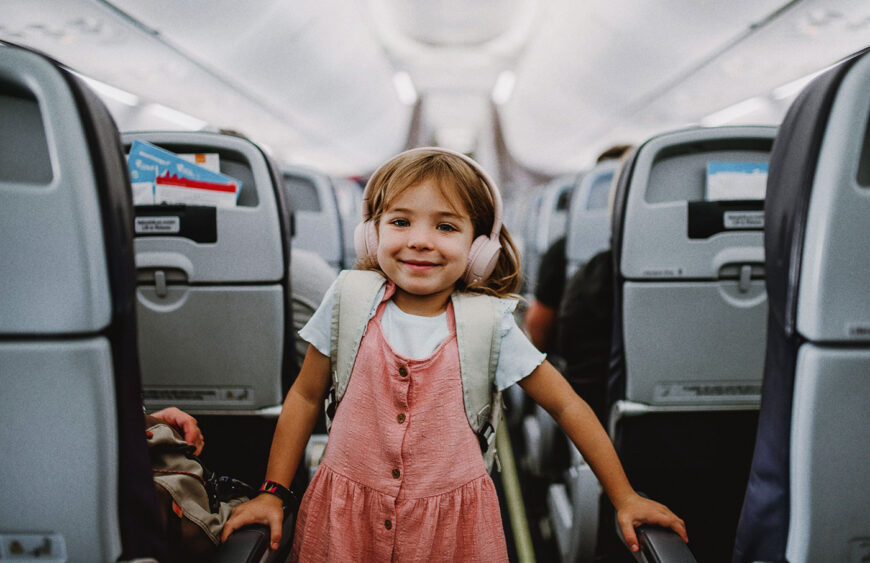
Noise-limiting headphones make a huge difference in shutting out the chaos of the cabin. Soft eye masks help if you’re flying overnight. Foot hammocks or simple inflatable cushions can give children a place to rest their legs. And of course, the classic stuffed animal or comfort toy. It’s less about practicality and more about security. When kids feel safe and comfortable, they’re less likely to fuss.
These items might feel like luxuries when you’re packing, but in reality they’re what transform economy from bare-bones to bearable. They create little bubbles of comfort that make a child feel at home in the sky.
Final thoughts on surviving economy with kids
Flying economy with kids will never be glamorous. You won’t have champagne flutes or seats that turn into beds. But you also don’t need to feel like you’re suffering through it. With clever seat choices, smart packing, sleep tricks, upgraded snacks, and well-timed entertainment, economy becomes less of a punishment and more of a manageable, probably even fun adventure.
Your kids won’t remember how tight the seat was (their legs are tiny). They’ll remember the extra snack you surprised them with, the silly game you played on the in-flight map, or the fact that you turned a cramped row into a makeshift sleepover. That’s the real upgrade economy families can afford.
Too Long? Here are the most common questions we’re asked.
Yes, if you can swing it. Bulkhead seats offer more legroom and are ideal for babies in bassinets, while “preferred” economy seats often come with a few extra inches of space that make a big difference. The trade-offs are less under-seat storage and sometimes fixed armrests. For families, the gain is often worth the cost.
Recreate bedtime routines as much as possible. Change kids into pajamas, dim the light with a blanket or eye mask, and use comfort items like stuffed animals or travel pillows. Inflatable footrests or bed boxes can transform the space into a mini bed for smaller children, though you should check your airline’s policy before using them.
Order children’s meals in advance if possible — they usually arrive earlier. Always pack snacks to bridge gaps and add familiarity. Lounge access can also be a lifesaver, letting you stock up on better food before boarding. Even small comforts, like bringing your own hot chocolate packets, can make in-flight dining feel more special.
Netflix, Disney+, and Amazon Prime Video all allow downloads of shows and movies for offline viewing. Spotify lets you download playlists, and Audible works offline with audiobooks. Having a mix of visual and audio entertainment helps kids switch gears and stay occupied longer.
Blankets, small pillows, noise-limiting headphones, and comfort toys are worth every bit of space they take up. Add extras like an eye mask, foot hammock, or hoodie, and suddenly the seat feels less like a plastic chair and more like a cozy cocoon. The right comfort items can completely change the experience.