When “free” comes with fine print
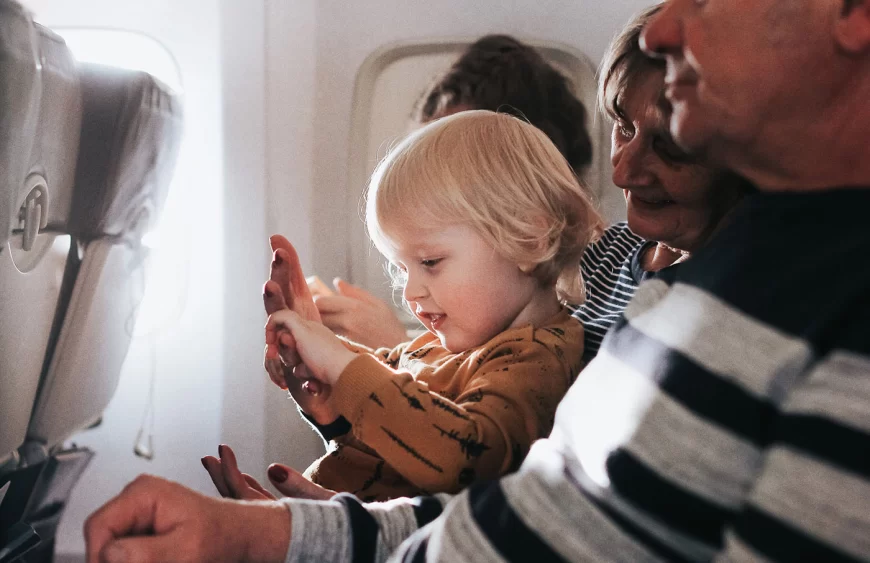
Booking your first flight with a baby often leads to the million-dollar question: should you fly with your child on your lap, or pay for their own seat? On paper, keeping them as a lap infant looks like a budget win. Under two years old, no ticket required, sometimes just taxes and fees. Sounds great, right? Except “free” comes with its own costs: sore arms, restless toddlers, safety concerns, and the joy of trying to eat an in-flight meal with a baby plastered to your chest.
Buying a seat for your baby, on the other hand, feels extravagant when you’re already shelling out for the trip. But many parents who’ve tried both say the comfort, and sometimes the safety, is worth every cent. The truth is, neither option is perfect. The right choice depends on your child, your budget, and how long you’re flying.
What airlines mean by “lap infant”
Most airlines define a lap infant as a child under the age of two who doesn’t occupy their own seat. Domestically in the U.S., lap infants often fly free. Internationally, the story changes. Many airlines still require a ticket, charging anywhere from just taxes to 10–20% of the adult fare. Some parents get caught off guard at checkout when that “free” ticket suddenly comes with a surprising fee attached.
Lap infants must remain seated with an adult during takeoff, landing, and turbulence. Some airlines even provide an infant belt that attaches to the parent’s seatbelt. For long-haul flights, a bassinet in the bulkhead row is sometimes available, but these are limited and must usually be reserved in advance.

The case for flying with a lap infant
The clearest advantage is financial. On domestic flights, babies under two often fly free, and even when international airlines charge taxes or a percentage of the adult fare, so for families stretching their travel budget, that saving can mean the difference between taking a trip or staying home.
But money isn’t the only factor. Many parents find that very young babies, especially those under six months actually prefer being held. The rhythm of a parent’s breathing, the ability to nurse or bottle-feed on demand, and the closeness during a strange new experience all help keep them calm. Feeding on your lap also makes it easier to help relieve ear pressure during takeoff and landing.
Lap travel can also simplify logistics on shorter flights. You don’t need to lug a car seat through the airport or wrestle with installing it in a narrow airplane row. And if your baby is in a particularly clingy phase, being in your arms may actually feel easier than fighting to keep them buckled into a seat they don’t recognize.
That said, most parents who recommend the lap infant option qualify it: it works best for short-haul flights or when your child is still in the “tiny sleeper” stage. Once babies hit the crawling or wriggling toddler phase, many families find the extra space of a separate seat is worth the cost.

Why buying a seat can be worth it
Paying for a separate seat is rarely about status, it’s about survival. Having an extra seat gives you space to breathe, eat, and even set your baby down. With their own seat, your child can use an FAA-approved car seat or a CARES harness, which not only makes the flight safer but also familiar, since many kids relax more easily in a seat they already know.
Parents often say their babies and toddlers sleep better in car seats than in arms. And let’s not ignore the benefit for adults: being able to stretch, eat with two hands, or even just sit without a child glued to your lap can feel like a luxury. On long-haul flights, the difference is dramatic. Yes, it’s another ticket to buy, but when you weigh the sanity saved, many families call it money well spent.
Safety considerations parents should weigh
This is the part of the debate that sparks the most heated conversations. Aviation authorities like the FAA in the U.S. and EASA in Europe are clear: the safest place for a baby on an airplane is in their own seat, secured in an approved child restraint system. In turbulence or in the unlikely event of an emergency, a lap belt, or worse, simply holding your child, offers far less protection. As one safety inspector put it, “you can’t hold onto a baby in sudden severe turbulence any more than you can hold onto a cup of coffee.”
Yet here’s the reality: millions of families every year still fly with lap infants. Why? For many valid reasons really. Because the rules allow it, because budgets are tight, and because for short flights the perceived risk feels small. Turbulence can happen anywhere, but severe turbulence that injures unrestrained passengers is very rare. Parents end up weighing a very small statistical risk against the very large financial cost of another ticket.
It’s worth noting that some airlines also supply “belly belts” or loop belts that clip an infant to a parent’s seatbelt, but these are controversial and not approved everywhere. The FAA and EASA do not endorse them, arguing they could actually increase risk in a crash by transferring force to the child’s abdomen.
Car seats, on the other hand, are proven to make flying safer. They not only provide proper restraint in turbulence, they also keep babies in a familiar environment. A toddler who constantly tries to wiggle out of your arms may actually settle into their seat and nap, which adds comfort as well as safety.
So where does that leave parents? In a grey zone. Official advice says a seat is safest, but airlines still allow lap infants because if they didn’t, many families simply couldn’t afford to fly. That puts the decision back in the hands of parents. If your flight is long-haul, overnight, or crossing regions known for rough air, a separate seat may give you both peace of mind and physical relief. If it’s a one-hour hop and your baby is still tiny enough to sleep happily in your arms, the “risk” may feel worth taking.
How age and temperament matter
A baby’s age is often the single biggest factor in whether lap travel is realistic. Very young babies like the ones still content to be swaddled and snooze on a shoulder, are often easiest to manage without their own seat. They feed frequently, they sleep in short cycles, and they rarely demand to wander the aisle. In this stage, many parents report that lap infant travel feels not only manageable but almost natural.
Things change quickly once babies start moving. A crawling or walking toddler doesn’t want to be confined for hours, let alone on your lap. These kids want to stand, bounce, explore, and forcing them into a cuddle for a transatlantic flight can be exhausting for everyone. At that point, the appeal of having a car seat or their own spot becomes obvious.
Temperament is just as important as age. Some babies are clingy and happiest when pressed against you; others need their own bubble of space. A laid-back toddler may be perfectly fine sitting in your lap with a book, while an active one will thrash, kick, and fight to break free. Only parents know their child best. And that self-awareness often matters more than any airline rule.
Cost comparisons and hidden fees
The lure of “free” is strong, but the truth is that lap infant policies are a patchwork. In the U.S., babies under two generally fly free on domestic routes. Cross a border, though, and things change. Many international carriers charge 10–20% of the adult fare for a lap infant, plus taxes and surcharges. On some routes, the lap infant ticket can cost several hundred euros, even without a seat.
Buying a separate seat is almost always more expensive, but there are workarounds. Families sometimes use frequent flyer miles or points to cover the child’s fare, or they book during sales when children’s tickets are discounted. In rare cases, parents find that the lap infant fee plus taxes is nearly as expensive as a child’s seat meaning the “savings” don’t add up.
Another cost to consider is comfort. If you’re traveling long-haul, the hidden fee may be your sanity. Parents often joke that the money saved on the seat is spent later on chiropractic appointments and triple lattes. While funny, it captures the truth: sometimes the cheaper option comes with invisible costs you’ll feel the second you land.
Tips if you choose the lap infant option
If you’re going the lap route, think about ergonomics and comfort. A soft structured baby carrier is worth its weight in gold, because it keeps your hands free while holding your baby securely. Parents also swear by nursing pillows or small travel pillows to give arms and backs a break.
When going the lap infant route make sure to request the bulkhead row early and ask about bassinets. They’re in high demand and often assigned on a first-come, first-served basis. Even if your baby doesn’t nap in one, it gives you a place to set them down briefly, and doubles as emergency storage for your diaper go-bag and some food pouches.
Finally, prepare for movement. Babies after a certain age don’t like sitting still for long stretches, and let’s face it, neither do you. Use safe moments during the flight to walk the aisles, rock them in the galley, or let them stretch on a blanket at your feet (if the space allows it obviously). These little breaks stop both you and your child from feeling trapped.
Tips if you choose to buy a seat
Buying a seat means you can bring gear, and gear makes a difference. An FAA-approved car seat provides both safety and comfort. If your child already associates the seat with car rides, they’ll often settle more quickly into the routine. Window seats work best for car seat placement since they don’t block other passengers.
If you’re skipping the car seat, a CARES harness is a lightweight alternative approved for kids over 10 kg. It keeps toddlers secure without lugging bulky equipment. Either way, pack items that turn the space into something familiar: a blanket that smells like home, a favorite toy, or even pajamas to trigger sleep cues.
Another tip is to manage your own comfort. An empty adjacent seat doesn’t just give the baby room; it gives you room. Even short breaks — setting your baby down to eat, or letting them nap independently — make the entire flight feel easier. Parents who’ve done both often say the difference is night and day, especially on flights longer than a couple of hours.

Choosing what works for your family
There’s no one-size-fits-all answer to the lap infant vs. separate seat debate. And to say that we know what is best for you, is total crap. There are so many factors and family dynamics that are at play. We just want the best for your family. That said, for short domestic flights, many families manage just fine with a lap infant. For longer journeys, especially overnight flights, the extra space and safety of a separate seat often prove invaluable.
What matters most is making an informed choice. Understand the costs, know your child’s temperament, and balance comfort with budget and safety. Whether you choose to keep your baby on your lap or buy them their own seat, the goal is the same: to make the flight as safe, calm, and bearable as possible for everyone on board.
Too Long? Here are the most common questions we’re asked.
In most cases within the U.S., yes. But on international flights, airlines often charge taxes, fees, or a percentage of the adult fare. Always check the final price before booking to avoid surprises.
Yes, but the rules differ slightly depending on where you fly. In the United States, the FAA allows the use of approved car seats (look for the sticker that says “This restraint is certified for use in motor vehicles and aircraft”). Airlines generally require car seats to be installed in a window seat so they don’t block other passengers.
In Europe, the EASA also recommends the use of child restraint systems, but approval can be more complicated. Some airlines provide their own “cots” or certified child seats, while others require parents to bring seats from an approved list. The label to look for in Europe is the UN ECE R44-04 or i-Size (UN R129) certification. Not all European carriers allow every model, so it’s important to check your airline’s policy in advance.
According to the FAA and EASA, absolutely. Restraint systems like car seats provide protection in turbulence, which lap belts alone cannot. That said, many families still choose the lap infant option for budget reasons, especially on shorter flights.
Most full-service airlines charge around 10% of the adult fare plus taxes for a lap infant, but some stand out for being more budget-friendly. Parents often report that Air Canada, Southwest, and JetBlue are among the most generous, with lap infant tickets costing little more than the taxes. United Airlines also caps lap infant fares at $250 internationally, which helps on expensive long-haul tickets.
At the other end of the spectrum, carriers like Cathay Pacific and some European full-service airlines (such as Lufthansa or Air France) can be more expensive, sometimes charging closer to 20% of the adult fare plus taxes.
The bottom line: if you’re price-sensitive, North American carriers like Air Canada, Southwest, JetBlue, and United usually offer the best lap infant pricing.
Bulkhead rows with bassinets are popular for lap infants, while window seats work best if you’re installing a car seat. Families often prefer sitting toward the back of the plane for easier bathroom access and a bit more flexibility with space.