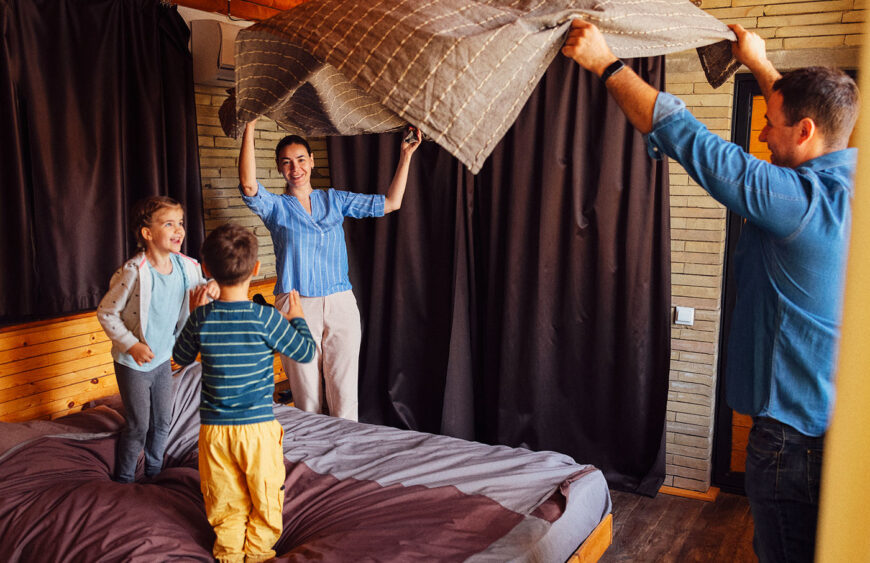
When the hotel room feels smaller than your sanity
You finally make it through the airport, herd everyone into a taxi, and drag tired kids across the lobby only to be handed the key to what feels like the world’s tiniest shoebox. One double bed, a single chair, and a carpet patterned like a migraine. It’s enough to make even seasoned travelers question their life choices.
Hotel rooms are designed with business travelers in mind, not families juggling babies, toddlers, and backpacks full of snacks. What feels cozy for two adults can feel downright impossible once you add a stroller, a travel cot, and a three-year-old who insists on building a Lego fortress in the middle of the floor. But the truth is, with a few clever tricks, even the smallest hotel room can be transformed into a safe, workable space that doesn’t drive you mad before breakfast.
What you’ll find in this guide:
Why hotel rooms feel harder with kids
Creating safe play and sleep zones
Bedtime hacks for better rest
Quick fixes for snacks and meals
Storage and clutter control in tight spaces
Making the room feel like “home”
When to ask hotels for extras
Final thoughts
FAQs
Why hotel rooms feel harder with kids
The reason hotel rooms feel so overwhelming with children isn’t just the size. It’s the fact that all the daily routines you rely on at home suddenly collide in one tiny square of carpet. At home, there’s a kitchen for snacks, a playroom for toys, and bedrooms where doors can be shut. In a hotel, everything happens in the same place: kids play where you sleep, eat where you unpack, and fight over toys three feet away from where you’re trying to figure out the air conditioning.
On top of that, hotels are built for adults. Lamps are breakable, outlets are temptingly exposed, curtains never close properly, and there’s rarely a fridge for milk or a microwave for reheating leftovers. The lack of space and kid-friendly features can make parents feel like they’re constantly one step behind chaos.
But here’s the thing: you don’t need a suite upgrade or luxury perks to make it work. A handful of hacks, some practical, some psychological can turn even the most uninspired room into a manageable base for your family’s adventures.
Creating safe play and sleep zones
The first priority is safety and space. Before anyone unpacks, do a quick scan of the room. Anything breakable within toddler reach? Move it onto a high shelf. Cords dangling? Tuck them behind furniture. Parents often joke that they “baby-proof” hotel rooms the same way they baby-proofed their houses ,by moving everything fragile as high as possible and hoping for the best.
If you’re traveling with a baby or toddler, think about play zones. A folded blanket or play mat spread out on the carpet instantly defines a safe spot where toys belong. Suitcases can double as barriers to keep little ones from wandering toward doors or sharp-edged furniture. If you have older kids, give them a corner of the room to spread out crayons, tablets, or puzzles, so their clutter doesn’t take over every inch of floor.
For sleep, divide the space creatively. Some families slide the crib into the bathroom or closet (ventilation permitting) to give babies a quiet corner. Others push beds together to prevent toddlers from rolling off. If siblings bicker, separating them with pillows, furniture, or even a carefully positioned suitcase can cut down on arguments at bedtime.
Bedtime hacks for better rest
Hotel rooms are notorious for terrible sleep. Curtains that let in slivers of light, thin walls with hallway noise, and everyone trying to settle in one room at the same time. But a few hacks can make nights easier.
Blackout curtains that don’t quite meet? Clip them together with a pants hanger or use a scarf to tie the gap shut. Noisy neighbors? A white noise app on your phone, or even the bathroom fan, can help drown out sounds. For kids who rely on routine, bring pajamas, bedtime books, and comfort toys. Re-creating the rituals of home signals to their bodies that it’s time to sleep, even in a strange place.
If you’re traveling with a baby, don’t underestimate the power of familiar smells and textures. Their usual sleep sack or a blanket from home can be enough to settle them. Older kids may benefit from making bedtime feel like a camping trip. turn lights low, tell a story, and frame it as a fun part of the adventure. Sleep won’t be perfect, but with small adjustments, it can be good enough to keep everyone functional the next morning.
Quick fixes for snacks and meals
Few things test a parent’s patience like trying to feed kids in a hotel room without a kitchen. But you don’t need full facilities to keep everyone fed and calm.
Most hotel rooms have a kettle, which instantly makes oatmeal, noodles, or hot chocolate possible. An ice bucket can double as a cooler for milk or yogurt if you don’t have a fridge. Many hotels will store perishables for you if you ask, especially baby formula or medications that need refrigeration. And don’t forget delivery apps. Ordering a pizza or simple local food to the room can save everyone’s energy after a long day.
Parents often swear by “snack kits” such as small stashes of fruit, crackers, or sandwiches picked up from a local supermarket. These cover odd hunger hours and prevent sugar crashes that lead to meltdowns. If you have picky eaters, think ahead: a simple jar of peanut butter, instant rice, or cereal can save the day when the only room service option is a mystery soup your toddler won’t touch.
Storage and clutter control in tight spaces
The fastest way for a hotel room to feel unbearable is clutter. Kids drop toys, clothes, and snacks everywhere, and suddenly you’re tripping over socks in the middle of the night. The fix? Give everything a place from the start.
Unpack strategically instead of exploding suitcases all over the floor. Use packing cubes like mini-drawers: one for pajamas, one for outfits, one for snacks. A collapsible laundry bag keeps dirty clothes from piling up in corners. Some parents hang a shoe organizer on the back of the bathroom door for toiletries, toys, and small items create a cheap hack that instantly makes the room feel more organized.
Assign each child a “zone” for their things, whether it’s a chair, a side table, or a corner of the floor. It may not stop them from scattering toys, but it gives you somewhere to shove everything when you need to restore order fast.
Making the room feel like “home”
Hotel rooms can feel cold and impersonal, which makes it harder for kids to settle. But tiny touches go a long way. A favorite bedtime story, a small nightlight, or even playing the same lullaby you use at home can make a strange room feel safe.
Rituals matter more than décor. Brushing teeth together, reading a story in bed, or playing a familiar game before lights out reminds kids that the family routine is intact even in a new place. If your child struggles with transitions, letting them set up their toys or arrange their blanket first thing can give them a sense of ownership over the space.
When to ask hotels for extras
Parents sometimes forget that hotels can actually help. Many provide cribs, high chairs, kettles, or even extra mini-fridges if you request them. Some have childproofing kits, though you may need to ask in advance. And while upgrades aren’t guaranteed, politely asking for a larger room, a corner spot, or something away from noisy elevators can make a big difference.
It never hurts to be honest. Tell the front desk you’re traveling with young children and ask if they have any family-friendly options. Hotels would often rather accommodate you than deal with noise complaints later. What works for us is phrasing our request in a way that it sounds like we’d be doing them a favour. Simply saying “our kids will be very jetlagged, so we want to avoid any noise complaints to you as possible.” might actually get you a better more spacious room away from other people in the hotel. Hey, it’s worth a shot.
Embracing imperfection
No matter how many hacks you use, a hotel room with kids will never feel like home. There will be moments when everyone is stepping on each other’s toes, when the bathroom feels like the only quiet place, and when you wonder why you ever thought this trip was a good idea. But children rarely remember the cramped quarters. They remember the excitement of being somewhere new, the silly routines you invent to cope, and the little adventures tucked between the big ones.
Hotel life with kids is about lowering expectations and finding small wins. If you can turn a shoebox room into a place where your family feels safe, rested, and fed, then you’ve already succeeded. The rest is just part of the story you’ll laugh about later.
Too Long? Here are the most common questions we’re asked.
Move breakables out of reach, cover outlets if possible, and create a small play zone with a blanket or mat.
Many hotels will provide them if available. It’s worth asking at booking or check-in, especially if you need milk or baby food stored.
Cribs are usually available on request, but many parents place travel cots in bathrooms, closets, or corners for quieter sleep.
Assign a play corner, pack a few compact toys or books, and lean on imagination games. Sometimes just rearranging furniture gives kids space to play.
Use packing cubes, a hanging organizer, and a laundry bag. Unpack just enough to keep the floor clear, and give kids their own “zones.”