Should You Get the MMR Vaccine Before Travelling With Your Baby?

The question comes up more than you’d think, and it almost never has a simple answer.
Your baby is 9 months old. You’ve got a trip booked. The standard MMR schedule says 12 months for the first dose. Your paediatrician is on holiday. You’re Googling at midnight and getting six different answers. Sound familiar?
This post works through what the actual guidance says, which destinations make early vaccination more relevant, and what questions are worth asking your doctor before you fly. It’s not a replacement for medical advice. It’s the prep work you do before that appointment so you’re not sitting there nodding along without really knowing what to ask.
What the standard schedule says
In most countries, the MMR vaccine (measles, mumps, rubella) is given at 12 months as the first dose, with a booster between 18 months and 4 years. In the US, the CDC recommends the first dose between 12 and 15 months. In the UK, it’s offered at 12 to 13 months as part of the routine schedule.
The reason for the timing isn’t arbitrary. Maternal antibodies, passed from mother to baby during pregnancy and through breastfeeding, can interfere with the vaccine’s effectiveness in very young infants. By 12 months, those maternal antibodies have usually waned enough for the vaccine to do its job properly.
This is also why an early dose given before 12 months is not counted as part of the routine schedule. It may offer some protection, but it’s not considered a full dose. Your child will still need the standard doses at the scheduled ages.
When early vaccination is recommended
Several health authorities, including the CDC and the NHS, do recommend an early MMR dose for infants travelling to higher-risk areas. The threshold for what counts as higher-risk shifts depending on the current global situation, but some destinations consistently appear on the list.
Currently, the CDC recommends an early MMR dose for infants aged 6 to 11 months travelling internationally, particularly to areas where measles outbreaks are occurring or where vaccination rates are lower than in the US. The NHS recommends early vaccination for travel to countries where measles is more common.
The key thing to understand: an early dose given between 6 and 11 months can reduce your baby’s risk of exposure while travelling. But it doesn’t replace the doses they’ll need at 12 months and beyond. Think of it as extra cover for the trip, not a shortcut through the schedule.
Which destinations make it more relevant
Measles remains endemic in parts of Europe, Africa, South and Southeast Asia, and some areas of Central and South America. Outbreaks are dynamic and the picture changes, so checking current conditions for your specific destination is more useful than relying on general lists.
The best sources for current information are the CDC Travel Health Notices (for US-based families) and the NHS Fitfortravel pages (for UK families). Both are updated regularly and give country-specific guidance rather than broad regional advice.
If your trip involves high-density crowded environments, like busy airports with long layovers, large tourist attractions, or areas with known lower vaccination rates, the risk calculation shifts. A short beach trip to a low-risk destination is a different conversation from a two-week backpacking itinerary through multiple countries.
What to ask your paediatrician
Going in with specific questions gets you a more useful appointment. Here is what’s worth asking: Is measles currently a concern in the specific countries on our itinerary? Your GP or paediatrician may not have this immediately to hand, but they can check the current travel health guidance and give you a considered answer.
Is my baby old enough to receive an early dose? The early travel dose is generally given from 6 months. Under 6 months, maternal antibodies are usually still strong enough that the vaccine is unlikely to be effective anyway.
If we give an early dose now, when does the standard schedule resume? Your doctor should flag that the early dose doesn’t count as dose one of the routine schedule, and should confirm when the 12-month dose should be given.
Are there any other travel vaccinations we should consider for this trip? MMR often isn’t the only conversation worth having before international travel with a young baby. Your family travel medical kit is a good starting point for the broader picture.
What about babies under 6 months
This is where the guidance gets more cautious. Under 6 months, the MMR vaccine is not recommended, and maternal antibody levels should still offer some passive protection. That said, the level of maternal protection varies depending on the mother’s own immunity, whether she was vaccinated or had measles naturally, and how much antibody was passed to the baby.
If you’re travelling with a baby under 6 months and measles is a concern for your destination, the conversation shifts to risk reduction rather than vaccination. That means avoiding known outbreak areas where possible, steering clear of crowded indoor spaces if your baby is very young, and making sure any adults travelling with you are up to date on their own MMR vaccination, since reducing exposure in your immediate environment matters.
For more on [travelling with a baby under one](https://tots-in-tow.com/traveling-with-a-baby-under-one-what-parents-should-expect/), including the full picture on what to prepare, that guide covers the broader logistics alongside the health considerations.
Mexico, Europe, and the destinations that come up most often
Parents regularly see questions about Mexico, parts of Southern Europe, and Southeast Asia. Here’s the short version for each.
For Europe, the picture is more nuanced. Western Europe generally has high vaccination rates, but pockets of lower coverage exist, and there have been outbreaks in several European countries in recent years. If your itinerary includes areas with known lower vaccination rates, it’s worth raising with your doctor.
Southeast Asia, including popular family destinations like Bali and Thailand, typically warrants a conversation about early MMR. Both countries appear regularly in CDC travel health notices during outbreak periods.
Just remember
Make the appointment. Go in with your itinerary and your questions. And don’t let anyone make you feel like asking is an overreaction. It isn’t. It’s exactly what the appointment is for.
If you’re also working through the [avoiding common illnesses while travelling](https://tots-in-tow.com/avoiding-common-illnesses-while-traveling/) guide, the MMR conversation sits alongside a broader set of health prep steps that are worth doing together before any international trip with a young baby.
Too Long? Here are the most common questions we’re asked
Can my baby get the MMR vaccine before 12 months?
Yes, from 6 months onwards, if your doctor recommends it for travel. The important thing to know is that an early dose given before 12 months doesn’t count as part of the routine schedule. Your baby will still need the standard doses at 12 months and at the booster age. Think of the early dose as extra cover for the trip rather than getting ahead of the schedule.
Does an early MMR dose mean my baby is fully protected?
Not in the long-term sense. The early travel dose can reduce your baby’s risk of exposure while you’re away, but maternal antibodies may limit how effectively the vaccine works at a younger age. Full protection comes from completing the standard schedule, which still needs to happen at 12 months and beyond.
My baby is under 6 months. Can they still get vaccinated before we travel?
No. The MMR vaccine is not recommended under 6 months. At this age, maternal antibodies passed during pregnancy are usually still present and can interfere with the vaccine. If you’re travelling with a very young baby and measles is a concern for your destination, the focus shifts to reducing exposure rather than vaccination. Talk to your doctor about what that looks like for your specific trip.
Which countries make early MMR vaccination most relevant?
It depends on the current outbreak situation, which changes. As a general guide, the CDC and NHS both flag parts of Mexico, Southern and Eastern Europe, Southeast Asia, Africa, and South and Central America as areas where early vaccination is worth discussing. Always check the current travel health advisory for your specific destination rather than relying on general regional guidance.
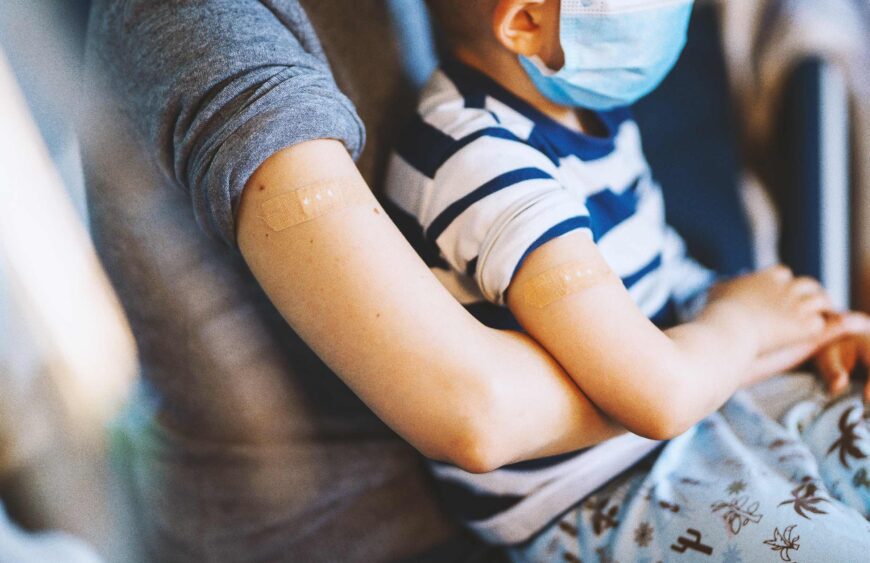
My baby had the early travel dose at 9 months. When do they get the next one?
The standard schedule resumes as normal. That means the first routine dose at 12 months and the booster at 18 months to 4 years depending on your country’s schedule. The early travel dose is additional, not a replacement for either of those. Your paediatrician should note the early dose in your baby’s records and confirm the timing of what comes next.
What if I'm not sure whether the MMR is needed for our trip?
Book an appointment with your GP or paediatrician and bring your full itinerary, including countries, regions, and travel dates. They can check the current travel health guidance for your specific destinations and give you a recommendation based on your baby’s age and health. If your GP doesn’t have travel health expertise, ask for a referral to a travel health clinic. Most can see you at short notice before an upcoming trip.
Are there any side effects from the early MMR dose?
The side effects from an early dose are the same as for the standard dose: mild fever, a temporary rash, or some fussiness in the days following the injection. Serious reactions are rare. Your doctor can talk you through what to watch for and when to call if you’re concerned.