Should You Give Flight Attendants Chocolate? And What Actually Gets You Better Treatment on a Plane
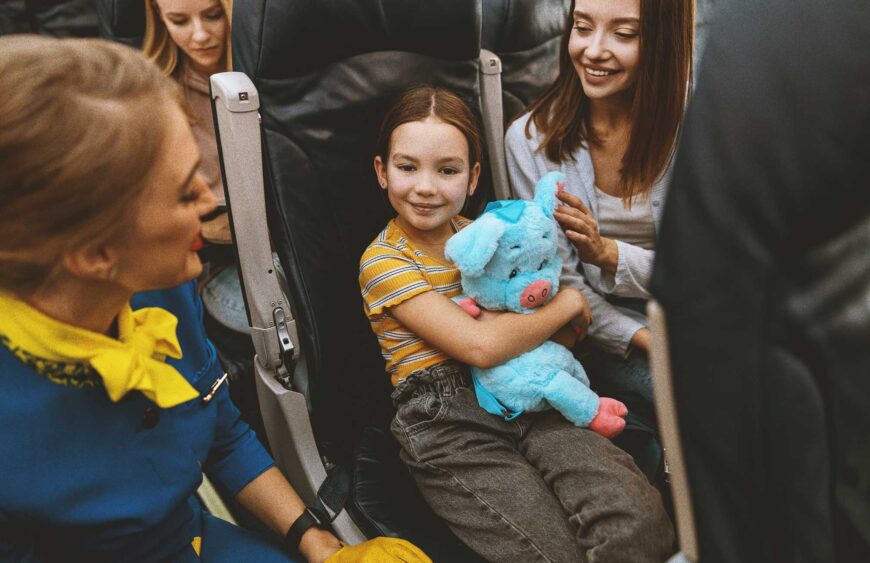
A little while ago, someone in our Facebook group posted a question that was so earnest it stopped everyone mid-scroll. She was travelling solo with her baby, and she had heard that bringing chocolate for the flight attendants might get her some extra help on board. She wanted to know if it was true.
54,433 people viewed that post. The comment section grew to 132 replies. Flight attendants weighed in. Parents shared experiences. And the answers, honestly, were worth more than any chocolate.
Here is the honest answer: kind of, sometimes, but not in the way you are hoping.
The premise behind the chocolate question is that a small gift will shift the cabin crew’s behaviour toward you specifically, unlocking better service, more attention, or extra help when you need it. And that is not quite how it works, because flight attendants who are good at their job are already giving every passenger their best. A bar of chocolate does not change that. What the chocolate actually does is set a tone. It signals, from the very first moment you step onto the plane, that you see the crew as people. Not as a complaints hotline or a vending machine, but as humans doing a physically demanding job in a small metal tube with a few hundred other people in various states of stress. That signal lands. It genuinely does.
Several flight attendants in our facebook group confirmed they appreciate the gesture when chocolate is sealed and individually wrapped. Some noted that their airline has policies about accepting gifts from passengers, so it is worth being prepared for a polite decline. And others were clear that while the warmth was real, it did not translate into anything they would not already do.
So: chocolate, fine. Chocolate as a strategy to extract better service, not quite. Chocolate as a genuine expression of “I see you and I appreciate you,” actually lovely. The more useful question, though, is what actually does make a difference when you are flying with young children and hoping for a smooth experience.
Before you even reach your seat, the crew has already formed an impression of every passenger. This is not judgement. It is professional habit. They are trained to read a cabin quickly, identifying who might need extra support, who is anxious, who is going to be difficult, and who is going to be straightforward and pleasant.
They notice eye contact. They notice whether you say hello or walk past them as if they are part of the furniture. They notice if you have a baby or toddler and whether you look calm or overwhelmed. They notice whether you slow down and acknowledge them or barrel through with your luggage.
None of this is to say that passengers who are stressed get worse service. But passengers who make a small, genuine human connection at the door are remembered. And being remembered by your cabin crew, in a good way, is one of the most useful things that can happen to you on a flight with a young child.
If you are flying solo with a baby, if you have a toddler who is already fractious at boarding, or if you are simply bracing for several hours of managed chaos, that first moment at the cabin door is worth more than any gift.
Rapport is not a trick. It is just basic human warmth applied consistently, starting before you sit down and maintained throughout the flight. Here is what that looks like in practice.
Say hello properly when you board. Not a vague nod, not a half-smile while you search for the row number. Actually pause for a second, make eye contact, and say hello. If you have a baby, you can acknowledge it directly: “We’re hoping for a smooth one.” That is it. Three seconds, and you have established yourself as someone who communicates like a person.
Tell them early what you might need. If you are going to need help with your bag, if your baby is likely to get fussy during descent, if you are breastfeeding and would prefer a heads-up before people start crowding the aisle, say so before it becomes urgent. Flight attendants manage dozens of passengers simultaneously. Information given early is information they can work with. Information shouted from a seat mid-crisis is much harder.
Use the call button appropriately. Using it once to ask for something reasonable is fine. Using it repeatedly for things you could wait for is not. If you know you will need warm water for a bottle at a specific point in the flight, ask the crew during a quieter moment rather than pressing the button mid-service. They will almost always accommodate a request made thoughtfully.
Be patient with delays in response. On a full long-haul flight, the cabin crew are managing safety, service, passenger health, and a hundred small emergencies simultaneously. If they do not get to you immediately, it is not personal. Stay calm, and they will get to you.
Say thank you like you mean it. Not the reflexive “thanks” you say while already looking away. An actual, directed thank you when someone has helped you. Flight attendants often go entire flights without a single passenger acknowledging their work. Being the person who does is genuinely memorable.
If this is your first time flying solo with a small child, our guide to flying solo with a baby or toddler covers the practical side in more detail, from boarding strategies to surviving the descent.
There is a whole separate tradition, particularly popular in parenting communities, of preparing little bags of sweets, earplugs, and apology notes to hand to the people sitting near you. The idea is to pre-emptively apologise for your child and soften anyone who might get annoyed.
This is genuinely controversial, and it is worth understanding why before you decide how you feel about it.
On one side: it is a considerate gesture, it tends to generate goodwill, and it acknowledges that travelling with a small child does affect the experience of people nearby. Parents who have done it often report that it relaxes the atmosphere around them and makes them feel less anxious about their child’s behaviour.
On the other side: your child being on a plane is not something that requires an apology. Babies cry. Toddlers fidget. This is known information to every person who purchased a ticket on a commercial aircraft. Pre-apologising can feel, to some people, like it sets an expectation that your child will be a problem. And it can reinforce a broader culture where parents feel they need to earn their right to fly.
Our position is that you do not owe the people around you anything beyond basic courtesy, which costs nothing and requires no packaging. If you want to do the goodie bags because you find it fun or it eases your own anxiety, that is a completely valid reason. If you are doing it out of genuine fear of the people around you, it might be worth questioning whether that fear is being amplified by online parenting culture rather than reality.
Most people on a flight are not lying in wait to complain about your baby. Most people will ignore you, offer you an understanding smile, or simply put their headphones on. The ones who will complain would probably do so regardless of whether they received a small bag of Haribo first.
What actually works with seatmates is the same thing that works with crew: a brief, warm acknowledgement of the situation. “We’ve got a baby, hoping for the best” said with a genuine smile tends to do more than any goodie bag.
For a broader look at how to manage the whole airport experience with a toddler, we have written that up separately.
The original question in the group was specifically from a solo parent travelling with a baby, and that context matters because the dynamics are quite different from flying as a couple.
When there are two adults, you can divide and conquer. One manages the overhead bag, one manages the baby. One uses the bathroom, one stays in the seat. When it is just you, every single task requires a plan and often a moment of asking a stranger for help.
The good news is that most people on a plane, crew included, are genuinely more willing to help a solo parent than the anxiety leading up to the flight might suggest. The key is asking before you need help, not in the middle of a crisis.
Before you board, tell the gate agent that you are travelling solo with a baby and ask if there is any chance of an extra seat if the flight is not full. No guarantees, but it costs nothing to ask and sometimes works. During boarding, if you use the family boarding option, use it. It is there for exactly this situation.
Once on the plane, identify the crew member assigned to your section and introduce yourself early. Not with a speech, just a quick “Hi, I’m on my own with a baby today, might need a hand with a bag at some point.” That is a thirty-second conversation that can make the whole flight easier.
On the question of lap infants versus buying a seat, solo parents navigating this decision often feel the pressure more acutely. A separate seat gives you somewhere to set the baby down, which is worth a lot over four hours or more.
And if you are dreading the long haul specifically, our long haul survival guide is probably the most useful thing we have written for this exact situation.
To bring it back to where we started: chocolate is a nice idea. Goodie bags are optional. But the things below are free, require no preparation, and work every single time.
None of this is groundbreaking. It is just the same social contract that makes any shared space work better. On a plane with a young child, where your anxiety is already high and the stakes feel enormous, it is easy to forget that the people around you are just people. The chocolate question, for all its simplicity, is really asking something bigger: how do I make this work? And the answer, most of the time, is the same one it always is. Be warm, be clear, ask for what you need, and say thank you when you get it.
For everything else, there is our carry-on packing list for flying with kids and our guide to what no one tells you about airline rules for families, both of which will make the practical side of the flight considerably less stressful than the social side.

Rental Gear. Adventure Kits for all ages, and family friendly destination recommendations. We’re here to make family travel less shitty.

No results found. Please try another keyword.
Don't have an account yet? Sign up for free
Please enter your username or email address. You will receive a link to create a new password via email. Remember now? Back to login
Already have an account? Log in