The rules nobody told you about
You’ve packed the snacks, checked the passports, and braced yourself for meltdowns. You think you’re ready. But then you’re stopped at the check-in counter, or told by a gate agent, or blindsided mid-boarding by a rule you didn’t even know existed. Suddenly you’re scrambling, paying unexpected fees, or rethinking your plan with minutes to spare.
It’s not your fault. Airline rules around babies and children are a maze of fine print, exceptions, and “it depends.” Even seasoned travelers get caught out. The good news is that once you know the common pitfalls, you can plan around them and keep the surprises to a minimum.
Lap infants aren’t always “free”
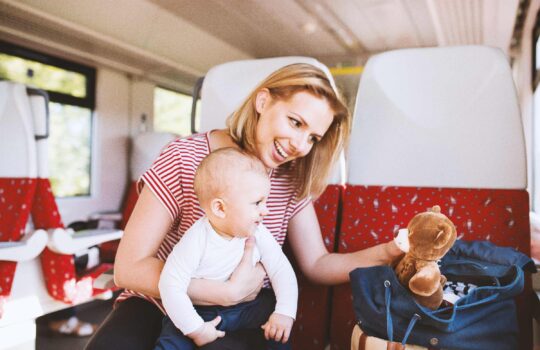
One of the most common misunderstandings is the idea that children under two fly free. It’s true on many domestic flights, where babies under two can ride on a parent’s lap at no extra cost. But on international flights, the story changes. Airlines often charge taxes, fees, or even a percentage of the adult fare for lap infants. Sometimes that “free” seat costs several hundred euros or dollars once the fine print is tallied.
Another detail parents often miss: even if you’re not paying for a seat, you usually still need to add your infant to the booking. Showing up at the airport without notifying the airline can cause delays, because infants are counted against the aircraft’s total passenger allowance.
If you’re weighing whether to book a seat for your baby, our long-haul survival guide for babies goes into the trade-offs in detail. But the short version is this: don’t assume “lap infant” automatically means free. Always double-check when booking, especially across borders.
The Bassinet Myth:
Reserve doesn’t always mean guaranteed
Parents planning long-haul flights often pin their hopes on the holy grail of air travel: the bassinet. Airlines advertise them as family-friendly, but here’s the catch, bassinets are limited, and reserving a bulkhead seat doesn’t guarantee you’ll get one.
Even if you score the right row, there are weight and age limits (usually around 10–12 kg or up to 12 months). Once your baby is past that, bassinets are off the table. And while many airlines will note your request, they still hand them out on a first-come-first-served basis.
Bulkhead seats themselves come with trade-offs. You can’t store bags under the seat, and the armrests are often fixed. That means everything you need, bottles, diapers, toys, has to be pulled down from the overhead bin each time.
If you don’t get the bassinet, you’re not out of luck. Sleep strategies like replicating bedtime cues, using a carrier for in-flight naps, and pacing naps to local time all help, and we dive into those more in our guide to sleeping on planes.
Car Seats on Planes:
Not always straightforward
Many parents buy FAA-approved car seats thinking that means smooth sailing. In practice, it’s more complicated. Not all seats fit on all airlines. Narrow seat widths, bulkhead rows, and some international carriers can cause problems.
Some airlines only allow car seats if they’re forward-facing, even for infants. Others require you to show the approval sticker. And while U.S. regulations protect your right to use an approved car seat on domestic flights, those protections don’t extend abroad.
Before you show up at the gate, confirm your seat’s dimensions against the airline’s specs. And always have a backup plan in case the seat doesn’t fit. For packing tips and how to manage car seats in transit, we cover it in our essential carry-on packing list for families.
Strollers and Baby Gear:
What’s Really Free
Most parents assume strollers and car seats fly free, and often they do, but the details vary. On many U.S. domestic carriers, you’re entitled to check one stroller and one car seat per child at no cost. International airlines, however, sometimes draw the line at larger strollers. Full-sized models may count against your luggage allowance, forcing you to pay extra or gate-check a smaller alternative.
Another common surprise is where your stroller shows up. Some airlines return gate-checked strollers right at the jet bridge after your flight. Others send them all the way to baggage claim, even on layovers. If your child depends on a stroller, that gap can be brutal. Before handing your stroller over make sure the crew tells you where it will be. Nothing is worse than a 5-hour layover without a Stroller for a really tired toddler.
This is why many parents invest in lightweight travel strollers that fold small enough to fit in overhead bins. They save the guesswork and guarantee mobility at every step. For more detail, we compare models and strategies in our guide to the best travel strollers for every age and trip type.
Family Seating:
Not always automatic
Parents often assume (us included) that airlines will never split up a family. Unfortunately, that’s not always the case. On many low-cost carriers, families are scattered unless they pay for seat assignments. Even major airlines sometimes “encourage” but don’t guarantee that kids will be seated with parents.
In the U.S., the Department of Transportation has issued guidance encouraging airlines to seat children under 13 with parents at no extra charge. But “encourage” isn’t the same as “require,” and plenty of families still get caught off guard.
If you don’t want to pay, your best bet is to check in as early as possible and speak directly with gate agents, who often have flexibility to move people around. But if sitting together is non-negotiable, paying for seat selection is the only guarantee. For tips on making sure your family doesn’t get split up (as “unfortunate” as that sometimes may be, see our guide on Understanding Airline Family Seating Rules.
Liquids, Formula, and Baby Food:
Security vs. Airline Confusion
Another area of confusion is liquids. Security agencies like TSA in the U.S. or EU equivalents allow exceptions for baby formula, breast milk, and food in “reasonable quantities,” even above the 100 ml liquid limit. You may need to declare them, but they’re permitted.
Once onboard, however, the rules change. Crew may not allow you to store items in refrigerators, and heating bottles isn’t always an option. Some airlines will provide hot water on request, others won’t. It’s not inconsistency for fun it’s about safety regulations and workload. Usually these rules can be skirted with a friendly smile but that depends on how some crews are feeling that day.
The lesson? Pack for self-sufficiency. Bring insulated bottles, formula dispensers, and enough baby food for the whole journey plus a little extra for delays. Snacks help too. And we share detailed packing strategies in our guide to snacks that save sanity on flights.
Early Boarding:
Not Universal Anymore
Once upon a time, airlines let families board first to get settled. Increasingly, that’s not guaranteed. Some carriers now board families with general groups, or even toward the end. Low-cost airlines in particular tend to skip family boarding altogether.
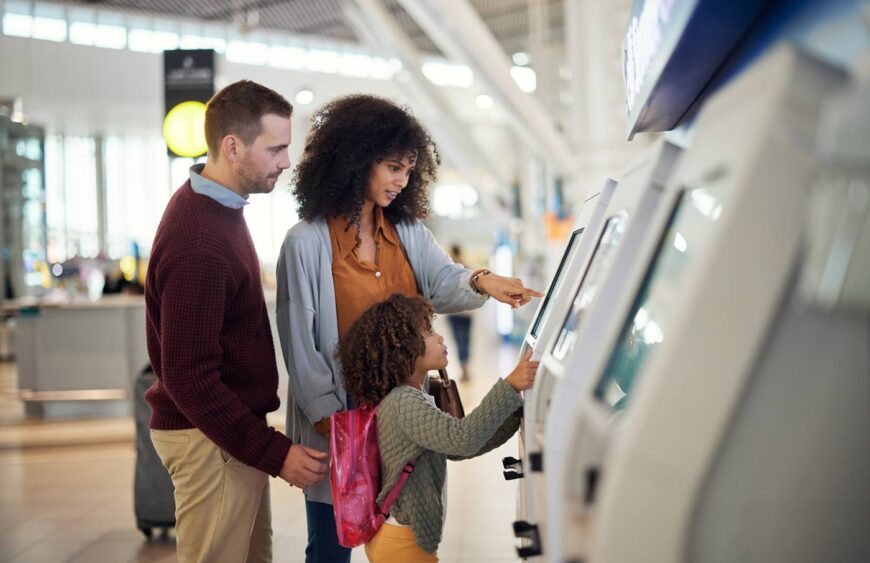
If you’re counting on early boarding, check your airline’s policy before you fly. Otherwise, plan as if you’ll be boarding in the regular crowd. That means having your bags organized, snacks and comfort items within reach, and strollers or car seats ready to fold in seconds. Also a strategy for overhead baggage. Since even that is not guaranteed anymore make sure to have your go-bag ready filled with everything you need in the case of a baby emergency. Blowouts. Spit ups. Snacks etc. Make sure the bag either fits below the seat in front of you. Or keep it as close as possible.
Baggage Allowances:
What Your Kids Actually Get
Parents are often surprised to learn that lap infants usually don’t get their own baggage allowance. No checked bag, no carry-on or nothing beyond what you’re carrying for yourself. Some airlines do allow a diaper bag in addition to your own, but others count it against your allowance.
Car seats and strollers are usually free, but in some cases they’re counted as part of your luggage if not clearly defined in the airline’s policy. Always double-check your ticket type and the airline’s family baggage rules before you pack. That way, you’re not repacking bags at the check-in counter with a line of travelers glaring behind you. When booking your tickets and choosing a ticket fare make sure to read the fine print for baggage allowances.
There’s always a fine print with baggage.
Knowing the rules before they surprise you
Every parent has been blindsided by airline fine print at least once. Maybe it was a lap infant fee you didn’t expect, or being told your car seat wasn’t allowed, or discovering that “reserved” bassinet didn’t mean “reserved for you”.
It feels unfair in the moment and in some ways, it is. Airlines bury family policies in small print, making it hard to prepare. But once you know the common pitfalls, you can plan around them. Whether that means budgeting for lap infant fees, bringing a compact stroller, or paying for seats together, you’ll feel more in control.
The surprises won’t stop, but they’ll rattle you less. Because the truth is, every parent traveling with kids is playing the same game. The difference is that now, you know the rules.
Too Long? Here are the most common questions we’re asked.
Not always. On most domestic flights, lap infants under two can travel at no cost. But on international routes, airlines usually charge taxes, fees, or a percentage of the adult fare. Always check before you book and remember, even “free” infants need to be added to the reservation.
Request one when booking, then confirm with the airline before departure. Bassinets are limited and assigned on a first-come-first-served basis, even if you’ve reserved a bulkhead seat. Weight and age limits apply, typically under 10–12 kg.
Not automatically. In the U.S., FAA-approved seats are allowed, but you may run into fit issues depending on the row and seat width. International carriers have their own policies. Always check dimensions and carry the approval sticker.
On most airlines, yes. Especially compact models. But larger strollers may count against your baggage allowance internationally. Policies also vary on whether you’ll get it back at the gate or baggage claim.
Lap infants usually don’t. Some airlines allow a diaper bag in addition to your own carry-on, others don’t. Children with purchased seats do get normal baggage allowances like adults.