Family Travel Medical Kit: The Parent Checklist
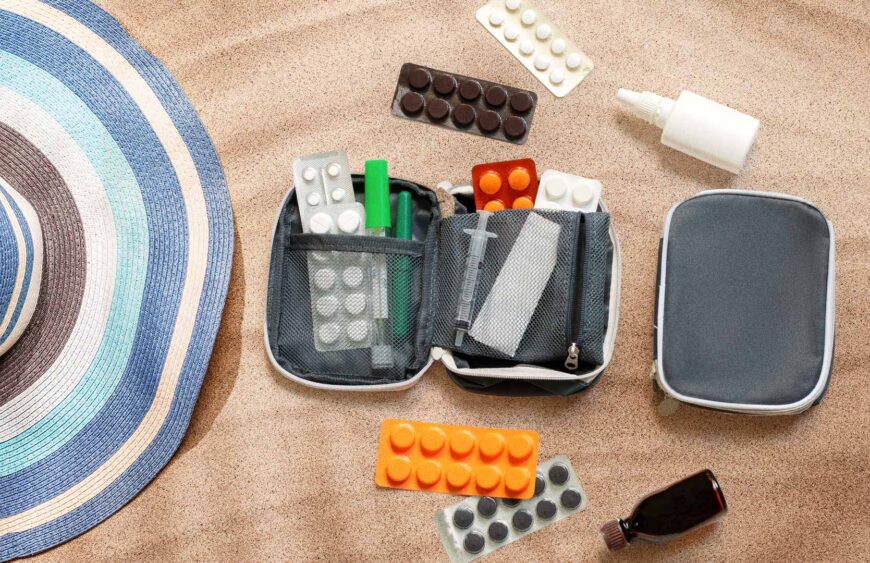
The Family Travel Medical Kit Parents Actually Use
Landing late with a feverish kid in a country where even the pain reliever has a different name is no one’s idea of adventure. A small, well-packed medical kit fixes most of that stress. What we want to give you below is a parent-ready checklist you can copy, and use it when you’re on the move. All you have to do is keep everything in your carry on, in original boxes, and you’ll glide through the rough patches (and airport security) a lot faster.
What you’ll find in this guide:
Quick-reach flight pouch
Fever and pain pouch
Allergy and anaphylaxis pouch
Tummy and hydration pouch
Motion sickness pouch
Respiratory pouch
Skin, bites and minor wounds pouch
Prescription-only pouch
Paperwork sleeve
Checked-bag backups (optional)
Quantity guide at a glance
FAQ’s
Quick-reach flight pouch
Why this matters: When a child spikes a temp mid-flight or needs a fast dose of something for their ear pressure, you do not want to unpack half the cabin. A top-layer pouch keeps the essentials at hand and calms everyone down in record time.
How to use: Stow this bad boy in an easily accessible and easy to find place. Top of your bag. Seat front pocket. Overhead bins. Announce at security that you have children’s medications so the pouch can be screened quickly and easily.
Checklist:
Fever and pain pouch
Why this matters: Fever and sore ears are the most common in-trip issues. Having both a paracetamol/acetaminophen option and an ibuprofen option covers most of your problems.
How to use: Don’t forget to dose by weight, not by age. Pack enough for 48 to 72 hours so you can stabilize and decide next steps without sprinting to a pharmacy at night. Nothing is worse than trying to find a late-night pharmacy.
Checklist:
Allergy pouch
Why this matters: Seasonal allergies, unexpected foods, and insect bites happen everywhere. Quick access keeps mild reactions mild and gets you ready if a serious one appears.
How to use: Since this can quickly spiral into a serious issue, keep this pouch on you, not buried in your checked bags at the hotel. If your child has an action plan, print two copies. One tucked inside the pouch and another in one of their pockets.
Checklist:
Tummy and Hydration pouch
Why this matters: Dehydration sneaks up fast on kids. ORS is the single most useful stomach item you can carry.
How to use: Offer small, frequent sips. Prioritize rehydration over “stopping” symptoms. Pack bland snacks your child actually eats when they’re beginning to feel off.
Checklist:
Motion sickness pouch
Why this matters: Boats, mountain roads, overnight trains. When you’re travelling there are many ways to suffer from motion sickness. The right product prevents a bad day from becoming a bad trip.
How to use: One tip we received was to test at home first so you know what your child tolerates. Follow your clinician’s age and dose advice.
Checklist:
Respiratory pouch
Why this matters: If asthma or wheeze is in the picture, you need your normal tools ready. Airport shops are almost guaranteed not have your spacer.
How to use: Pack reliever and controller devices exactly as you use them at home. A sticker with start date and expiry saves you guessing mid-trip.
Checklist:
Skin, bites and minor wounds pouch
Why this matters: Playgrounds, trails, and hotel carpets all bite back. Clean and cover quickly to avoid bigger problems later.
How to use: Clean first, then antiseptic, then cover. Hydrocortisone calms itch and bite reactions when used as directed.
Checklist:
Prescription-only pouch
Why this matters: Border agents and pharmacists relax when they see original boxes and a brief letter. It saves time at security and at check-in. Nothing is worse than the look a security agent will give you when they are faced with a bunch of small unlabelled baggies filled with pills of different colours and shapes.
How to use: Keep everything in original packaging with leaflets. If anything is injectable or looks like a tool, keep it with the documents and prescriptions from your doctor.
Checklist:
Paperwork sleeve
Why this matters: A one-page letter and copies of prescriptions end most questions before they start.
How to use: Store flat in the front of your carry on. Present it with the meds pouch at security.
Checklist:
Checked-bag backups (optional)
Why this matters: Duplicates are always handy, but checked bags can get lost. Never check the only set of medications in with your bags.
How to use: Backups go in the suitcase only if they are legal at your destination and only as duplicates.
Checklist:
Quantity guide at a glance
- Fever and allergy meds: enough for 2 to 3 days per child
- ORS: at least 3 sachets per child, more for hot climates or long trips
- Prescriptions: whole trip plus 3 to 5 extra days
Footnote on commonly restricted or controlled medicines ¹
Rules vary by country. These often trigger extra scrutiny or require permits or letters: stimulant ADHD medications, some anti-anxiety or sleep medicines, opioid pain medicines and codeine combinations, decongestants containing pseudoephedrine or ephedrine, strong cough syrups with narcotics, CBD or cannabis-derived products, injectables and needles for personal medical use, melatonin in certain countries, and loperamide use in children. Carry personal-use quantities in original packaging with documentation and check destination rules before you fly.
Security basics for meds in airports
Keep meds in original boxes or blister strips with the leaflet. Put everything in one top-layer pouch in your carry on. Say one simple line at the belt so screening goes faster: “I’m carrying children’s medications and medically necessary liquids in this pouch.” Medically necessary liquids and cooling packs are typically allowed when declared. Fill pill organizers after you arrive rather than flying with unlabelled tablets.
Gentle reminder
This article is for general travel prep. It is not medical advice. Always follow your clinician’s guidance and the laws of the country you are entering.