Family Travel Emergency Kit: Meds Parents Should Pack
A Small Kit That Solves Big Problems
Airports may get all the attention, but for many parents, the real challenge starts once you’ve landed. Suddenly you’re faced with metro maps in another language, ticket machines that eat your change, and buses packed tighter than your diaper bag. Add a tired toddler or a stroller that won’t fit through the turnstile, and you’ve got a recipe for stress.
Still, countless families rely on public transport every single day when they travel. Why? Because it’s cheap, it’s efficient, and it gives your kids a front-row seat to how a city really works. The good news is that with the right preparation, public transport can go from a dreaded obstacle to one of the most memorable parts of your family trip.
Why a dedicated family medical kit is worth it
Pharmacies close, languages differ, and children don’t schedule fevers for business hours. A dedicated kit gives you control over the first 12–24 hours of common childhood issues like fever, allergies, motion sickness, minor cuts, so you can stabilize, watch, and decide whether to seek care. It also avoids the “brand trap”: in many countries, the same medicine has a different generic name or a brand that means nothing to you. Carrying your own small supply lets you dose correctly from the start. The system you use for your kids’ carry-on such as grouping items by need and labelling clearly translates perfectly here, so your partner can grab “fever” at 3 a.m. without rummaging. The same cube-and-pouch habit you use for plane snacks and spare outfits works brilliantly for meds, too.
A quick pre-trip check-in with your paediatrician
Ten minutes of planning saves hours later. Ask for:
Country-specific advice if you’re headed somewhere with medicine restrictions (Japan, Singapore, UAE and others have rules that surprise many families). UAE Government Portal
For families managing food allergies, most UK and EU allergy services recommend carrying two in-date auto-injectors and an antihistamine, plus a doctor’s letter; that exact combo also makes airport screening easier. GOV.UK
A travel dosing sheet by weight for acetaminophen/paracetamol and ibuprofen, and if applicable motion sickness and allergy medicines. The CDC’s Yellow Book emphasizes weight-based dosing and ORS use for kids, which you can mirror on your personal sheet. CDC
A brief letter on practice letterhead listing any prescription meds (especially controlled or injectable items like epinephrine auto-injectors and insulin). This helps at security and border checks. CDC Travelers’ Health
The core medications parents should pack (with cautions)
1) Fever and pain
Acetaminophen (US) / Paracetamol (most of world): first-line for fever and pain, available worldwide under many names (Calpol, Panadol, Doliprane, Ben-u-ron, Alvedon). Dose by weight; carry a syringe or medicine cup. NHS and CDC both provide clear child dosing frameworks. (Source: nhs.uk)
Ibuprofen: excellent for inflammatory pain and fever (age and dosing matter). Bring the format your child accepts (liquid/chewables). NHS pediatric guidance is straightforward; follow your clinician’s sheet. (Source: Drugs.com)
A strict NO for aspirin/salicylates in kids due to Reye’s syndrome risk; watch for bismuth subsalicylate in some anti-diarrheals marketed to adults. This precaution is still standard across pediatric sources. (Source: CDC)
2) Allergies and anaphylaxis
Non-drowsy antihistamines like cetirizine or loratadine travel well and are widely available. Many regions use familiar brands under different names (for example, Benadryl-branded products in the UK may contain cetirizine or acrivastine, not diphenhydramine as in the US). Pack the generic you’ve used successfully to avoid brand confusion. (Source: nhs.uk)
Sedating antihistamines (diphenhydramine) can cause drowsiness and paradoxical agitation; use only as advised and never to “help a child sleep” on planes. (Source: U.S. Food and Drug Administration)
Epinephrine auto-injectors (EpiPen, Jext, Emerade): carry two, keep them in your hand luggage, and bring that letter. Check expiry dates before you go. (Source: GOV.UK)
3) Tummy troubles and dehydration
Oral rehydration salts (ORS) are the single most important stomach item in a child’s kit. Package sticks weigh almost nothing and follow WHO-type formulations. For kids, rehydration and zinc supplementation are emphasized in public health guidance; antibiotics are rarely first-line in mild illness. (Source: CDC)
Loperamide (Imodium) is not for young children unless a clinician specifically advises it; UK guidance limits OTC use to 12+ and many pediatric sources discourage routine use in kids. Focus on ORS first. (Source: nhs.uk)
If your clinician has given you a standby prescription for traveler’s diarrhea, follow those instructions exactly; many pediatric pathways prefer azithromycin in older children for specific scenarios. (Source: CDC)
4) Motion sickness
Family travel often includes boats, mountain roads, and overnight trains. Bring the specific agent your child tolerates:
- Dimenhydrinate (often the “original” Dramamine in the US).
- Meclizine (Bonine in the US; age limits apply).
- Cinnarizine (Stugeron in parts of Europe).
Discuss age-appropriate dosing with your pediatrician during that pre-trip call.
5) Breathing support
For asthma-prone kids, pack the reliever inhaler you use at home plus a spacer. Note the name difference: albuterol (US) is salbutamol (INN) in many countries; Ventolin is a common brand in both. Knowing both names helps if you need a replacement abroad. (Source: nhs.uk)
6) Skin and bites
A small tube of 1% hydrocortisone for itchy rashes and bites, an antiseptic (chlorhexidine or povidone-iodine) for cleaning minor scrapes, and your preferred wound coverings (assorted plasters plus a couple of hydrocolloids for blisters) handle most playground mishaps. In the US, families often carry a triple-antibiotic ointment; in the UK/EU many parents prefer antiseptic creams. Either approach can be reasonable for minor cuts; cleanse first. (Source: nhs.uk
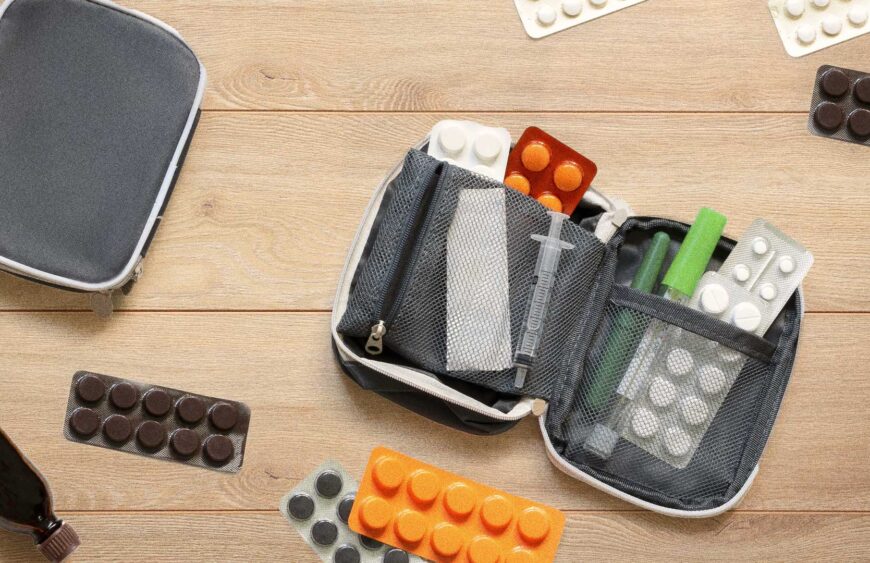
Also smart to include: digital thermometer, dosing syringe, mini scissors, tweezers, blunt-tip nail scissors, saline nasal spray, and a small laminated dosing-by-weight card. The CDC’s “Travel Health Kit” concept is a good mental model; adapt it for kids. (Source: CDC)
Airline security and border rules for medicines
Airport security: medicines are generally exempt from standard liquid limits when they’re essential for the flight; declare liquids over 100 ml, and bring your prescription or doctor’s letter if possible. This holds across TSA and UK guidance; EU airports largely follow similar exemptions, though implementation varies while new scanners roll out. Pack medications in your carry-on, not checked, to protect them from heat and loss.
Border controls: some countries strictly regulate or ban medicines that are common at home (examples include stimulant medications, codeine combinations, large volumes of cough syrups, and pseudoephedrine). Japan, Singapore, the UAE and others may require prior approval forms for some prescriptions—even when carried for personal use. Check official government pages before you fly and carry only personal-use quantities in original packaging.
Getting Through Airport Security With Kids’ Meds
Airport screening is easier when your kit looks organized and legitimate. Screeners want to see original labels, tidy pouches, and a calm parent who can hand over everything in one go. Treat it like show-and-tell: present the pouch, say what’s inside, and you’re usually through in minutes.
What screeners want to see
Keep medicines in their original boxes or blister strips with the leaflet inside. Labels matter because they prove what the medicine is and who it’s for. Put all medications in one top-layer pouch in your carry-on so you can lift it straight into a tray without rummaging. If you have prescription items, a short letter from your clinician and a copy of the prescription help end most questions before they start. For anything unusual like injectables, needles, devices, documentation is your friend.
Medically necessary liquids are allowed
Liquid medicines and gels that your child needs can exceed the usual liquid limits when you declare them. The officer may swab them or ask to see labels; that’s normal. Cooling is fine, too: small ice packs or gel packs are typically accepted for medicines that need to stay cold. Keep those with the meds, not buried in snacks, and be ready to say what they cool.
Pill organizers vs. original packaging
Pill organizers are convenient at your destination but confusing at the belt. Bring tablets in their original packaging for the flight, then fill the organizer after you arrive. Decanting into unlabelled baggies is what slows families down as it creates extra work for everyone because no one can verify what those pills actually are.
Devices, injectables, and sharp items
Auto-injectors, insulin, syringes, pen needles, and spacers are allowed when carried for personal medical use. Keep them together, in original packaging where possible, and travel with a brief note that lists the diagnosis and the generic names of the medicines. If you’re carrying anything that looks like a tool such as scissors or lancets, pack the smallest, blunt-tip versions and keep them with the medical letter, not in a random pocket.
Set up your bag so screening takes two minutes
Think of your bag in layers. Meds at the very top. Paperwork sleeve behind the meds. Electronics under that. When you reach the belt, lift out the meds pouch and paperwork in one hand and place them in a tray. Your goal is zero hunting, zero mystery items, and a quick, confident hand-off.
Your one-sentence script
Say it before they ask.
“I’m carrying children’s medications and medically necessary liquids in this pouch; there are also two auto-injectors.”
That single sentence tends to unlock faster screening because you’ve declared the exceptions up front.
Backups and what not to check
Keep the primary supply in your carry-on. If you pack duplicates, leave them in original boxes as well and only if they’re legal at your destination. Never check the only set of prescriptions your child needs. Heat, loss, or delays can ruin a trip and a treatment plan in one go.
Before you leave
Do a five-minute sweep the day before travel. Check expiry dates, add your dosing card, tuck in the doctor’s letter, and make sure every liquid has a readable label. Airport liquid rules change from time to time, but declared medicines remain an exception; planning for a quick declaration is what keeps the line moving.
Pre-Security Checklist
Buying medicine abroad without guesswork
The safest strategy is to shop by generic (international) name, not brand. The WHO’s International Nonproprietary Names (INN) system standardizes names across countries, which is why “paracetamol” means the same medicine in France and Australia (even though Americans know it as acetaminophen). Pharmacists worldwide can help you match the INN on the box to your needs. Drugs.com
Brand name caution: Some brands share a name but contain different actives country-to-country. A classic is Benadryl: in the US it’s diphenhydramine, while in the UK “Benadryl Allergy” products may contain cetirizine or acrivastine. Always verify the active ingredient on the label before dosing. (Source: benadryl.com)
When ear pressure or airplane sniffles are a concern, stick with your usual pain reliever and saline spray rather than unfamiliar decongestants for young kids; most parenting clinicians lean on these basics for flights and reserve decongestants for older ages or specific advice.
Smart ways to pack and label your kit
Organize by need: a small pouch labeled Fever, one labeled Allergy, another Tummy, and a Wounds pouch. Slip your dosing card and the pediatrician letter into the first pouch. Keep liquids in leak-proof bags. Put all medicines in your carry-on so they’re available during flights and protected from heat in the hold. The same “one-reach” philosophy you use for your plane-day bag with snacks, wipes, spare clothes within an arm’s reach belongs here, too.
Global medicine equivalents chart (what names to look for)
Use this to recognize familiar medicines on foreign shelves. Always check the active ingredient and dose on the local package. Brand examples below are common, not exclusive, and can change.
| Category | Generic Name (INN/USAN) | U.S.A | UK / Ireland | France | Germany |
|---|---|---|---|---|---|
| Fever / Pain | Acetaminophen / Paracetamol | Tylenol | Calpol, Panadol | Doliprane | Ben-u-ron; Paracetamol-ratiopharm |
| Fever / Pain | Ibuprofen | Advil, Motrin | Nurofen, own-label | Nurofen, Advil (less common) | Ibuprofen (generic widespread) |
| Allergy (non-drowsy) | Cetirizine | Zyrtec, store brands | Benadryl Allergy (cetirizine), Zirtek, Piriteze | Zyrtecset, Reactine generics | Cetirizin (generic) |
| Allergy (non-drowsy) | Loratadine | Claritin | Clarityn | Loratadine generics | Loratadin |
| Allergy (sedating)³ | Diphenhydramine | Benadryl | Benadryl¹ | Diphénhydramine (less common OTC) | Diphenhydramin (often Rx for sleep) |
| Motion sickness | Dimenhydrinate / Meclizine / Cinnarizine | Dramamine (dimenhydrinate), Bonine (meclizine) | Stugeron (cinnarizine), Kwells (hyoscine) | Nausicalm (dimenhydrinate) | Cinnarizin |
| Dehydration | Oral Rehydration Salts (ORS) | Pedialyte | Dioralyte | Adiaril | Oralpädon |
| Diarrhea (caution in kids) | Loperamide | Imodium | Imodium² | Imodium | Loperamid² |
| Skin antiseptic | Chlorhexidine / Povidone-iodine | Betadine (povidone-iodine) | Savlon (chlorhexidine mixes), Betadine | Bétadine | Octenisept, Betaisodona |
| Asthma reliever | Albuterol / Salbutamol | Albuterol (Ventolin, ProAir) | Salbutamol (Ventolin, Salamol) | Salbutamol | Salbutamol |
| Category | Generic Name (INN/USAN | Spain | Italy | Nordics | Aus / NZ |
|---|---|---|---|---|---|
| Fever / Pain | Acetaminophen / Paracetamol | Gelocatil | Tachipirina | Alvedon (SE), Pinex (NO), Pamol (DK) | Panadol |
| Fever / Pain | Ibuprofen | Dalsy, Espidifen | Nurofen | Ipren (SE) | Nurofen |
| Allergy (non-drowsy) | Cetirizine | Cetirizina | Cetirizina | Zyrtec (regional) | Zyrtec |
| Allergy (non-drowsy) | Loratadine | Loratadin | Loratadin | Loratadin | Loratadin |
| Allergy (sedating)³ | Diphenhydramine | Difenhidramina | Difenidramina | – | – |
| Motion sickness | Dimenhydrinate / Meclizine / Cinnarizine | Biodramina (dimenhydrinate) | Xamamina (dimenhydrinate) | – | Travelcalm (meclizine), Kwells |
| Dehydration | Oral Rehydration Salts (ORS) | Sueroral Casen | Rehidratación O.S. generics | Vätskeersättning (SE) | Hydralyte |
| Diarrhea (caution in kids) | Loperamide | Fortasec | Loperamide generics | Loperamid | Gastop/Imodium |
| Skin antiseptic | Chlorhexidine / Povidone-iodine | Cristalmina | Betadine | – | Betadine |
| Asthma reliever | Albuterol / Salbutamol | Salbutamol | Salbutamol | Salbutamol | Salbutamol |
- brand may not be diphenhydramine; check label
- Rx needed for kids
- *Sedating antihistamines can impair kids’ alertness and are not for routine “sleep on a plane.” Always follow pediatric advice. Benadryl-branded products abroad may contain different actives than the US. (Source: benadryl.com)
Selected references for brand recognition and regional naming: NHS medicines pages; EMA summaries; national formularies; and manufacturer information for ORS brands such as Dioralyte (UK), Oralpädon (DE), Adiaril (FR), and Hydralyte (AU).
Too Long? Here are the most common questions we’re asked.
Yes. Essential medicines are generally exempt when declared. Bring them in original packaging and carry a copy of the prescription or a doctor’s note. Procedures vary by airport as scanners roll out, so allow a few extra minutes.
None—they’re the same active ingredient under different naming systems (USAN vs INN). Shop by the generic name listed on the box. (Source: Drugs.com)
Not routinely. In many countries loperamide is only OTC for ages 12+ and discouraged for younger children. Focus on oral rehydration; ask a clinician before using loperamide in kids. (Source: nhs.uk)
Yes. Some nations restrict stimulants, codeine combinations, pseudoephedrine, and more. Check official guidance for your destination and carry personal-use quantities only. (Source: ncd.mhlw.go.jp)
Yes. Keep two auto-injectors in your hand luggage and carry a brief letter. Check expiry dates before travel. (Source: GOV.UK)
Products containing salicylates (like bismuth subsalicylate) are generally not for children due to the risk of Reye’s syndrome, especially in viral illnesses. Use ORS and speak with your clinician for alternatives. (Source: CDC)