Why food leaves the longest-lasting travel memories
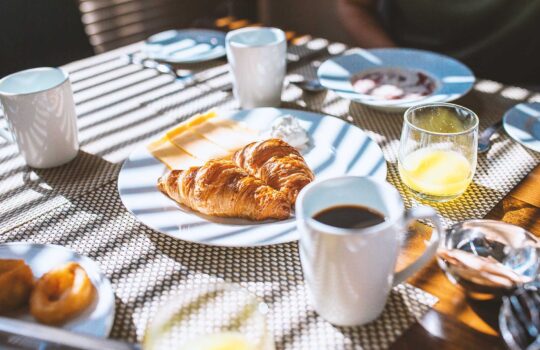
Families often come home with suitcases full of souvenirs, only to realize a year later they’ve forgotten which trinket came from which city. What lingers longer are the meals and flavours. The croissant eaten on a quiet Paris street, the fresh mango devoured in a bustling Thai market, the warm bread passed around a Moroccan table. For kids especially, food is one of the most direct and memorable ways to experience culture. It’s not abstract like architecture or history. It’s immediate, sensory, and shared.
When you invite your children into the food rituals of another country, you give them more than nourishment. You give them a living memory of what it feels like to belong, even briefly, in another place.
Everyday rituals that transform the ordinary into extraordinary
Japan: gratitude before and after eating
In Japan, children grow up learning to say “itadakimasu” before eating. “I humbly receive” and “gochisousama” after finishing. “Thank you for the meal.” These phrases turn every meal into a moment of gratitude, connecting food not only to hunger but to respect for the people who prepared it. For visiting families, this ritual is a simple, beautiful way to slow down and honor mealtimes together.
France & Italy: the long family lunch
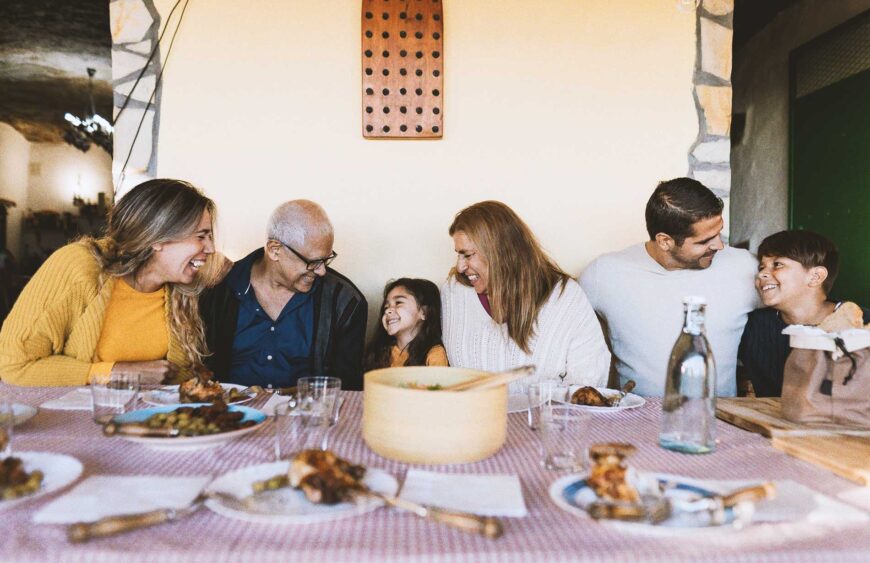
In France and Italy, meals often stretch over two or more hours, especially on weekends. Several courses, plenty of conversation, and the expectation that everyone lingers at the table turn eating into a daily ceremony. Children who are used to fast meals learn that food can be about patience, connection, and rhythm. For parents, it’s a reminder to loosen schedules and let the table itself be the day’s activity.
UK: pausing for afternoon tea
Afternoon tea is more than finger sandwiches and scones. It’s a cultural pause, a signal that time is made for togetherness in the middle of the day. Children often love the structure of tea service. The tiers of cakes, the small cups, the sense of occasion. For many families, it becomes one of the most surprisingly magical parts of a UK trip.
Spain: tapas as a rhythm of life
In Spain, tapas aren’t just tiny plates. They’re a way of structuring an evening around movement and sharing. Families hop between bars, ordering one or two plates at each stop. Children can nibble on patatas bravas or tortilla while absorbing the social rhythm of Spanish life. The food is tasty, but it’s the wandering and sharing that become the memory.
Morocco: bread and mint tea as welcome
In Morocco, bread isn’t simply food; it’s a sacred part of daily life. Families often share bread at every meal, and breaking it together is a gesture of community. Mint tea, poured with ceremony, is offered to guests as a sign of hospitality. For children, being invited into this ritual shows them that meals are not just private family events but bridges to welcome and belonging.
Food festivals and communal events that turn strangers into neighbors
Beyond daily rituals, some cultures celebrate food in ways that spill into the streets. Entire towns transform into dining halls, and strangers sit shoulder to shoulder at shared tables. For children, these experiences are unforgettable. They teach that food isn’t just personal, it’s collective.
Here are five kinds of food-centered events that show kids what it means to eat as part of a community:
1. Sagra Festivals in Italy
All over Italy, small towns host sagras, festivals dedicated to a single ingredient. There’s a truffle sagra in Alba, an artichoke sagra in Ladispoli, a chestnut sagra in Tuscany. Streets fill with food stalls, long tables stretch through piazzas, and entire communities gather to celebrate one simple food. Families traveling through Italy often stumble upon these by accident, and they’re consistently ranked as the most authentic, joyous experiences of a trip.
2. Oktoberfest in Germany (Family Days)
Though often associated with beer, Oktoberfest has family-friendly days filled with parades, traditional Bavarian dishes like roast chicken and giant pretzels, sweets, and carnival rides. The festival tents are boisterous, the music is constant, and children experience food as celebration, not obligation.
3. Night Markets in Taiwan
When the sun goes down, Taiwanese cities light up with night markets. Stalls line the streets, sizzling with dumplings, noodles, and skewers. For kids, the atmosphere is electric: bright lights, endless options, and the thrill of choosing one snack at a time. Even if a child only eats a simple bao bun or shaved ice, the sensory experience of the market itself becomes a highlight.
4. Thanksgiving in the United States
In the U.S., Thanksgiving isn’t just a meal. It’s a ritual of gratitude. Families and communities gather for potlucks, shared tables, and traditions that center food as the expression of thanks. For traveling families invited to a Thanksgiving meal, the experience is an immersion into American culture that goes far beyond the turkey.
5. Paella Festivals in Spain
In towns across Spain, massive paella pans are set up in plazas, feeding hundreds of neighbors. Everyone lines up, bowls in hand, to share in the same dish. For kids, watching a single giant pan turn into a meal for an entire town is both spectacle and lesson. They see food as something that brings people together across ages and backgrounds.
Why kids connect more deeply to culture through food than museums
For many parents, museums and landmarks feel like the “serious” parts of travel. They’re what we think our children should remember. The truth is, kids rarely hold onto dates, architecture, or long explanations. They might admire a castle for a moment, but what they’ll actually tell their teacher back home is, “I had the best hot chocolate in Spain” or “We ate noodles at midnight in a market.”
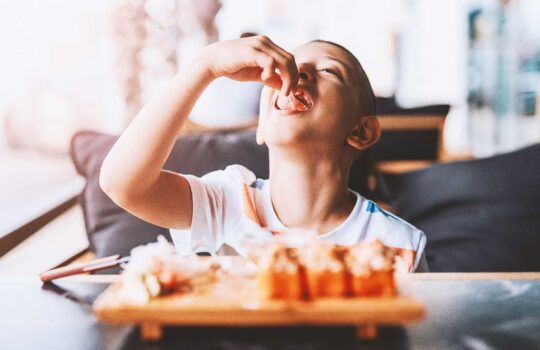
Food speaks to kids on their level. It’s tangible, immediate, and experienced with all five senses. They don’t need prior knowledge or context. They only need curiosity — and hunger. Biting into a pastry, slurping noodles, or tearing bread with their hands gives them direct access to culture without requiring translation.
Food also creates shared experiences that museums don’t always manage. Sitting shoulder to shoulder at a crowded festival table or waiting in line at a bustling market becomes a moment of belonging. Kids notice not just the taste, but the laughter, the smells, the rhythm of people enjoying food together. In a way, it’s a living exhibit — one they can join, not just observe.
Food as an emotional passport
Travel stamps fill a passport, but food experiences stamp the heart. They’re the moments children return to when they think about where they’ve been. Food is both comforting and adventurous. Basically a safe place to land when the world feels overwhelming, and at the same time a doorway into something new.
When kids sip tea in England, taste paella in Spain, or learn to say thank you before eating in Japan, they aren’t just eating. They’re participating in rituals that locals have practiced for generations. Those rituals plant seeds of empathy and curiosity that last far longer than the trip.
Parents often worry that children will be too picky or too young to appreciate cultural food. But appreciation isn’t measured by how much they eat. It’s measured by how present they are. Even if your child takes just one bite or simply sits at the table soaking in the atmosphere, they’re gathering emotional souvenirs that can’t be bought in a gift shop.
Food is the simplest, most universal way to connect across cultures. For families, it becomes the emotional passport and proof that you belonged, even briefly, to another rhythm of life, and carried that memory home in the form of taste, smell, and shared laughter.
Too Long? Here are the most common questions we’re asked.
They offer children a simple, sensory way to experience culture, teaching respect, patience, and community.
Yes, many food festivals worldwide are family-friendly and designed to welcome kids with music, parades, and communal meals.
Even observing or tasting a small bite is enough. The goal is connection, not forcing adventurous eating.
That’s fine. Being present, smelling, and watching others participate still builds cultural understanding.
Food is immediate and accessible for kids. It’s a direct way to engage their senses and create lasting family memories.