
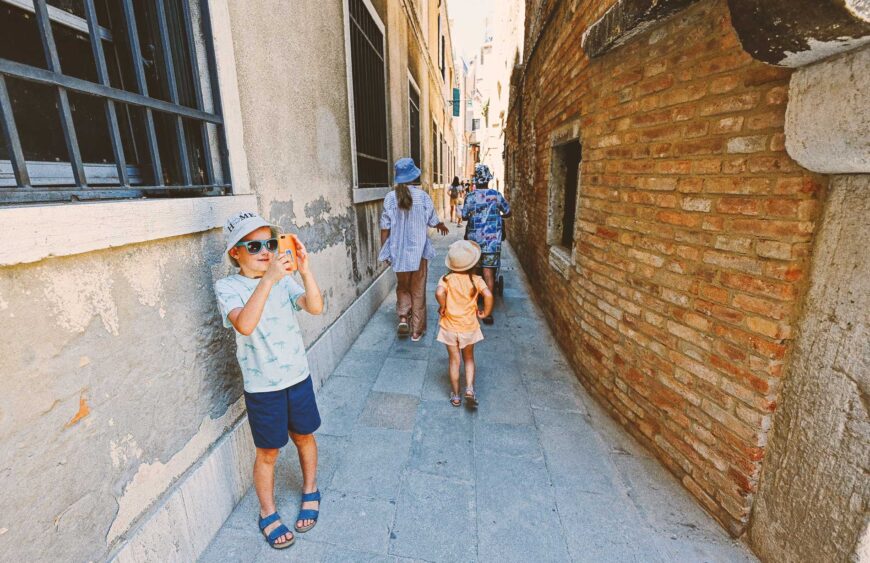
A Stroll Through Chaos and Wonder
You’ve just joined a walking tour in Rome. The guide’s waving a bright umbrella, your toddler’s clutching a melting gelato, and your six-year-old’s asking for the fifteenth time if you’re “done walking yet.” The cobblestones are ancient, the stroller wheels are squeaking, and you’re silently calculating how long until someone cries. Probably you. It sounds like hell on earth. We know. We’ve been there.
But then, you turn a corner. The guide kneels to show a handful of kids a secret carving on an old fountain, the kind of detail you’d have walked right past. Your oldest starts asking questions, your youngest perks up at the sound of the word gladiator, and suddenly the chaos turns into curiosity.
That’s the magic of walking tours with kids. When they work. The question is: are they worth it?
Why Families Try Walking Tours
Most parents sign up for a walking tour because they want to skip the stress of planning every step. You hand the logistics to someone who actually knows the city, and you get to just show up. On a good day, that means discovering hidden courtyards in Paris, secret gelato shops in Florence, or street art in Berlin while someone else handles the storytelling.
Walking tours also tick the “educational” box. It’s history, geography, and cultural immersion all rolled into one. And many parents like that it’s low-pressure sightseeing. No buses to catch, no lines to stand in, no maps to argue over. Just walking, listening, and (hopefully) a few wow moments along the way.
Oh, and they’re often affordable compared to private tours which is a a massive plus for families already watching their travel budget stretch thinner than a croissant flake.
When Walking Tours Go Wrong
In reality, most meltdowns happen because adults forget that kids aren’t just small versions of themselves. We’ve all made that mistake. Don’t sweat it. What sounds like a charming two-hour stroll through “Old Town highlights” to you is an endurance event to a five-year-old. Add in cobblestones, heat, hunger, and sensory overload, and you’ve got the recipe for a “we’re going back to the hotel right now” moment.
The fix? Start by managing expectations. Yours and theirs.
- Time it right: Avoid midday heat when the cobblestones start to shimmer and tempers rise. Early mornings work best. The city’s quieter, the air’s cooler, and your kids still have the energy to care about old statues and weird door knockers.
- Feed before you go: Hungry kids are a disaster on legs. A solid breakfast or a snack right before the tour can save your sanity. Keep easy-to-grab things on hand. The usual winners like granola bars, fruit, crackers, because once the whining starts, you’re best to just throw in the towel.
- Check stroller accessibility: Old European streets look charming until you’re wrestling a stroller over uneven stones while the group disappears around a corner. If your child still naps, check if you can bring a lightweight stroller or carrier that can handle bumps.
- Pick guides who love kids: A great guide can turn a potential meltdown into a teachable moment. Look for family-focused or storytelling-based tours. The ones who laugh with your kids make all the difference. Admittedly it is hard to tell, but the older the guide, the better the chance they also have kids.
- Keep it flexible: If the tour says “three hours,” that’s a polite way of saying “this will take four if anyone stops to pee.” There’s no shame in ducking out halfway through when the kids are done. The goal is to enjoy the walk, not survive it.
Choosing the Right Tour for Your Kids’ Age
So not every walking tour is kid-friendly, no matter what the brochure says.
For toddlers and preschoolers, short and sensory is key. A 45-minute stroll through a market or a route with playground stops beats two hours of architecture every time. Look for tours with frequent breaks, open spaces to run around, and a promise of snacks, ideally included.
For school-aged kids, pick tours that focus on storytelling or discovery. A guide who can say “pirates used to sneak through this alley” instead of “this structure was erected in 1522” will hold their attention longer. Bonus points if the tour lets kids touch, taste, or try something like bread at a bakery or masks at a crafts shop.
Take Amsterdam, for example. The best family walking tours there don’t just talk about canals, they turn the city into a treasure map. Kids search for gabled rooftops shaped like steps or dragons, listen for hidden bells, and even toss breadcrumbs to the ducks that paddle alongside the bridges. Meanwhile, parents get the history without feeling like they’ve dragged their kids through a lecture. That’s how a city walk becomes a shared experience instead of a battle of wills.
For teens, autonomy is everything. Let them pick the theme. A food crawl, graffiti walk, or haunted history tour. Teens tune out when they feel dragged along but light up when it’s their choice. Plus, it gives them bragging rights for later (“I found this tour, and it was actually cool”).
If you’ve got a mix of ages, a private guide is worth every cent. You can set your own pace, take snack breaks, and bail early without worrying about looks from strangers.k the seating and trunk capacity before confirming. Think of it like a dating app. Rarely looks like its profile pic.
Making Walking Tours Fun. For Everyone
Walking tours with kids don’t have to feel like dragging a reluctant pack through a museum on foot. With a little creativity, they can turn into mini adventures.
- Turn it into a game: Kids love a challenge. Ask them to spot the next statue, find the most colorful door, or count fountains. Suddenly, they’re hunting for details instead of complaining about walking.
- Give them a role: A “map reader,” “official photographer,” or “fact-checker” feels important and engaged. Even toddlers can be in charge of “finding the guide’s umbrella.” It keeps their minds busy and gives them ownership of the experience. We gave our kid a compass and a streetmap and told them to make sure we didn’t get lost.
- Use storytelling: Before the tour, watch a short video or read a kid-friendly story about the city. It helps them connect what they’re seeing to something familiar. When they recognize a landmark from a story, that sense of discovery is priceless. Kids love to say “I already knew that”. If you have a smartass like our daughter they’ll even try and correct the guide with something they saw on YouTube.
- Snack breaks = sanity breaks: Build in mini pit stops. A croissant, a cold drink, or even five minutes of sitting on a fountain edge does wonders. A few relaxed moments can reset everyone’s mood.
- Keep moving: Long pauses are a patience killer. When your guide dives into a lengthy explanation, quietly take a few steps aside, stretch, or walk a small loop with your kids before returning. Little movements keep big emotions in check.
If you’re not sure your kids can last the full tour, try a self-guided audio version. You can pause for breaks, detours, or naps without annoying anyone. (And if this sounds appealing, check out our upcoming article on Tech Tools That Make Family Travel Easier.)
When It’s Better to Skip the Tour
Here’s the honest bit most blogs won’t tell you: sometimes, a walking tour just isn’t worth it. No sweat. There are many reasons to skip the walk.
If your kids are jet-lagged, overtired, or barely holding it together after a long travel day, forcing them through a structured route is a guaranteed fail. The stress outweighs the benefit. You’re better off turning the same area into your own relaxed wander. Stop for a snack, follow your kids’ curiosity, and skip the commentary.
Also skip it if you’re traveling in extreme weather. No guide can make an hour in 35°C heat feel educational. And if you’re already doing multiple “must-see” attractions that day, consider spacing things out very step adds up, and every step subtracts energy.
Walking tours should add joy, not pressure. The city will still be there tomorrow, and sometimes the best stories come from unplanned strolls. No headsets required.
The Moment It Clicks
You know the moment we’re talking about. You’re standing in the middle of a city square, the guide’s mid-story, and you look down to see your kids actually listening eyes wide, curious, asking questions. Suddenly, the day feels lighter. You’re seeing history through their eyes, and they’re seeing travel as something exciting, not exhausting.
That’s when walking tours are worth every step.
So yes, walking tours can work with kids. They just need to be done on your family’s terms: shorter, slower, snackier, and with a guide who understands that little legs and big imaginations go hand in hand.
Too Long? Here are the most common questions we’re asked.
Some are, but choose short routes with lots of stops and stroller access. Avoid long historical tours.
Search family travel reviews, check GetYourGuide or Viator filters for “family-friendly,” and read guide bios for mentions of children or storytelling.
If your budget allows, yes. Private tours mean flexibility. Fewer stares when your kid needs a bathroom break.
Water, snacks, wipes, hats, sunscreen, and a small first aid kit. A lightweight carrier or stroller helps too.
Aim for 60–90 minutes max. After that, no one’s learning, they’re just surviving.