
Mobility Disabilities and Wheelchair Travel with Kids
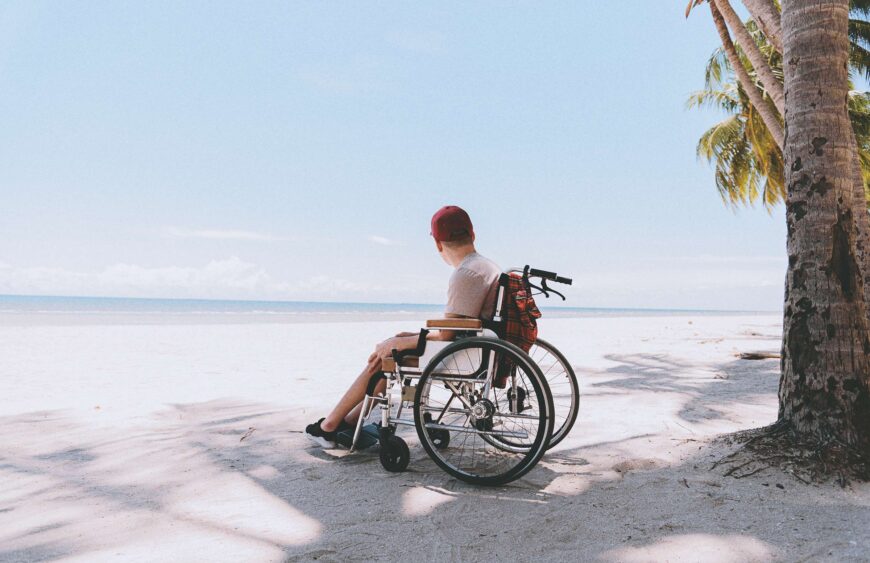
Mobility travel is not niche. It’s travel with more planning
Mobility disabilities and wheelchair travel are not a niche travel style. It’s just travel with more variables, most of them created by buildings, sidewalks, transport systems, and the occasional “accessible” label that clearly meant “we added a ramp somewhere, good luck finding it.”
If you are traveling with a child who uses a wheelchair or other mobility support, we don’t want you to feel like you have to prove anything or power through it. What we want is for you to book a trip that feels doable and fun. That usually means fewer unknowns, fewer last minute surprises, and a plan that assumes friction will happen sometimes because in reality new environments are sometimes inconsistent, not because your kid is the problem.
Booking and planning: where friction starts
This stage matters more for mobility disabilities and wheelchair travel than almost any other. If you book the wrong hotel room, you can tough it out. If you book a room that turns out to have steps to the lobby, a bathroom that is not usable, or a “lift” that is technically there but not working, you are not just inconvenienced. You are stuck. Planning is what keeps the trip from turning into a daily scavenger hunt for basic accesses that some of us have taken for granted.
The most common pitfalls happen when families assume two things: that “accessible” means the same thing everywhere, and that they can sort out details on arrival. In reality, “accessible” might mean step free entrance but a tiny shower lip, or a wide door but a bed you cannot transfer to comfortably, or elevators that exist but are out of service on the one day you need them. The only way around this is to ask very specific questions early, when you still have time to switch plans without paying a fortune in needless cancellation fees.
What to question early: the entrance route from street to reception, elevator size and reliability, room door widths, bathroom layout, shower type, bed height, and whether the accessible room is actually available for your dates. What can wait until later: airport assistance requests, transfer bookings, and the exact day by day pacing, once you know your base is solid.
Research and planning platforms
Wheel the World
What it helps with: booking hotels and experiences with accessibility details that are verified and presented in a way that is actually useful, not just a single “accessible” checkbox.
Best for: families who want one place to browse accommodation and activities with mobility needs in mind.
accessibleGO
What it helps with: searching and booking travel with accessibility needs as the starting point, plus a service layer that helps confirm specifics.
Best for: families who want help narrowing options without spending days emailing hotels.
SATH (Society for Accessible Travel and Hospitality)
What it helps with: a nonprofit resource hub that points to travel services, destination info, and practical access related resources.
Best for: families who want a directory style starting point and leads for accessible travel providers.
Mobility International USA (MIUSA) tip sheets
What it helps with: practical, grounded travel tips around transport and air travel realities, written for disabled travellers.
Best for: families who want checklists and “here’s what to think about” guidance, especially for logistics.
What existing travel infrastructure already supports this need
There is real infrastructure, but it is uneven. Airlines generally have processes for wheelchair assistance through airports, boarding support, and transfers, even if the experience can vary wildly depending on airport staffing and training. In the US, the Department of Transportation outlines required wheelchair and guided assistance, which can help you know what you can ask for without feeling like you are making it up on the spot.
On the ground, the strongest support usually comes from a mix of modern public transport, barrier free hotel stock, and destinations that treat accessibility as normal city design rather than a special request. Some cities publish accessibility resources directly through their transit agencies or tourism boards, which is a good sign because it means there is at least a system behind the promise.
Tours and experiences are improving, but still patchy. You can find accessible experiences, but you often need operators who clearly describe transfers, surfaces, and bathroom access, not just “wheelchair friendly” as a marketing sticker. When that detail is missing, assume you will do extra verification.
Prepping before departure
The more prep work done here the more control you have over situations. The more you can make the “access basics” boring and predictable, the more energy you have left for the actual trip. Which you will need, because this is just the beginning of the journey.
Start with documentation and communication. If your child uses a wheelchair, bring any key measurements that matter for transport and accommodation decisions, and keep photos of the chair from multiple angles. If you are flying, consider documenting the condition of mobility equipment before you hand it over. Not because you expect a problem, but because if something happens, you will want clear reference without trying to reconstruct it from memory while tired, stressed, and possibly jetlagged.
Equipment planning is also where families can get back a sense of confidence. Think through what is truly essential for daily function versus what is “nice if available.” Chargers, small repair basics if relevant, and a simple plan for wet weather protection can save a day. MIUSA has practical guidance on mobility equipment considerations that can help you sanity check what to pack.
Finally, set expectations in a way that respects your child so that you can build predictability into the parts of the day that usually carry the most friction: getting out the door, getting from A to B, and getting through transitions without rushing.
Airport security and transit friction
Airports are uniquely difficult because they compress a lot of unpredictable steps into a tight sequence: drop off, check in, security, long corridors, gate changes, boarding, and sometimes a sprint you did not ask for. For wheelchair travel, this is also where the environment can become the loudest and least flexible.
The most useful mindset is calm advocacy. You are not “being difficult” by asking how assistance works at that airport, where you meet staff, how transfers are handled, or what to do if there is a delay. The DOT guidance on wheelchair and guided assistance can be a helpful anchor for what airlines are expected to provide, even if the reality can still be inconsistent.
Also, plan for variability between airports. Some have smooth processes, some do not, and even the same airport can feel different depending on staffing that day. Build in more buffer than you think you need, not because your child cannot handle it, but because you do not want to be negotiating access while also racing against the clock.
Flying and long-haul transport
Flying with a wheelchair is a mix of logistics and dignity. Seat choice matters, but because it can reduce the number of transfers, shorten distances, and make boarding less chaotic. If you can choose seats that simplify your path to the aisle and the bathroom, do it. Not for luxury, for fewer moving parts.
Boarding strategies are also about controlling the tempo. Pre boarding can help you get settled without an audience, but it can also mean sitting longer on the plane before takeoff. Some families prefer boarding early, others prefer boarding last to reduce time confined. Neither is “right.” The right choice is whatever reduces friction for your child and your family that day.
It is worth saying out loud: the airplane environment is the challenge, not your child. Narrow aisles, tiny bathrooms, and rushed crew routines were not built with wheelchair users in mind. If parts of the journey feel awkward, that is a design problem. Your job is to make the experience workable, not to pretend it is inherently easy.
At your destination
This is where trips are either genuinely enjoyable or quietly exhausting. Destination time is the longest part of the journey, and it is where pacing makes the biggest difference. For mobility disabilities and wheelchair travel, the biggest drain is usually not the big sightseeing day. It is the repeated transitions: hotel room to breakfast, breakfast to transport, transport to attraction, attraction to bathroom, and back again.
A slower daily rhythm helps because it reduces the number of transitions you have to solve. If you plan one main activity per day with plenty of open space around it, you avoid stacking access problems on top of each other. When you stack, you end up making decisions while already tired, and tired decisions are the ones that turn into “fine, we will just skip it” frustration.
Energy management is not just physical. It is mental. Every curb cut that is missing, every elevator that is hidden, every “accessible entrance around the back” sends a small message that you are not the default traveller. That adds up. The most respectful thing you can do is plan days that include recovery time and predictable routes, so your child is not constantly asked to absorb the world’s poor planning.
Transport choices shape the whole experience. If public transport is reliably accessible, it is freedom. If it is only partially accessible, it can become a daily gamble. Many cities publish accessibility info directly, which helps you plan routes that actually work, not just routes that look good on a map. Vienna’s transit operator, for example, states that all underground stations and most tram and bus stops are accessible, and it provides infrastructure details like lifts and ramps. Barcelona’s transit authority provides accessibility guidance for metro and bus networks and notes accessible features like ramps and designated doors. Copenhagen’s official tourism site also outlines that metro stations are equipped with elevators or lifts, which can make day to day movement much less of a negotiation. When it comes to transport and using public transportation it is worth turning on “Wheelchair accessible” options in Google maps or any other maps app that supports this feature. This will help reduce a lot of research and give you a better idea how long you should give yourself between activities and sights.
Accommodations are your base camp, so protect it. If you have one “splurge,” make it a place that is genuinely usable. An accessible hotel room that works means mornings do not start with problem solving and nights do not end with improvising around a bathroom that is not fit for purpose. If you are choosing between a slightly better location and a truly usable room, pick the usable room. You can always take a taxi to the cute neighbourhood. You cannot taxi your way out of a shower you cannot access.
Destinations that tend to work better
Copenhagen (Denmark)
Why it tends to work: official destination resources highlight accessible public transport, including metro stations equipped with elevators or lifts. That usually translates into a smoother daily rhythm where you are not constantly hunting for the one accessible entrance.
Vienna (Austria)
Why it tends to work: the city and transit operator provide clear accessibility info, and Vienna’s underground stations are described as accessible with lifts and ramps, plus broad use of low floor vehicles across much of the network.
Barcelona (Spain)
Why it tends to work: the public transport authority publishes detailed accessibility guidance and highlights accessible features across metro and buses, including ramps and wheelchair access points. That kind of transparency makes planning more realistic.
London (UK)
Why it tends to work: Transport for London provides detailed accessibility resources including step free guides and wheelchair access info, which helps families plan routes that avoid stairs and reduce surprises.
Stockholm (Sweden)
Why it tends to work: Scandinavia tends to pair modern infrastructure with stronger norms around accessibility, which can reduce daily friction. It is still worth verifying specifics, but many families find the baseline environment more workable than older, tighter city layouts.
None of these are “perfect,” and they are not the only options. They are simply places where official infrastructure info is easier to find and day to day movement tends to be less of a constant negotiation.
When things don’t go to plan
The most common failure points are predictable: the “accessible” room is not truly usable, the elevator is out, the accessible taxi never shows, the route has surprise steps, or a transfer takes longer than anyone promised. When that happens, the best move is triage, not fixing everything.
Triage means deciding what matters today. If the plan was museum, café, and a long stroll, and the first part already took all your energy, call it. Go back, reset, and try again tomorrow. This is not quitting. This is how you protect the trip from turning into a spiral where everyone is miserable and no one wants to travel again.
It also helps to have a small “pivot list” that works even on rough days: a nearby accessible café, a park with smooth paths, a boat ride with step free boarding if available, or simply a hotel day with snacks and a movie. Sometimes the win is not seeing everything. The win is keeping the day respectful and manageable.
General tips that actually help
- Treat the hotel room like a piece of equipment, not a vibe. Verify the specifics that affect function before you book: steps, lifts, door widths, shower type, and true step free access.
- Ask for concrete descriptions, not labels. “Accessible” is vague. “Step free entrance from street, elevator to room, roll in shower” is useful.
- Build buffer into transit days like it is part of the itinerary. Airports and transfers are where friction compounds. Time is what keeps it from becoming a crisis.
- Plan one anchor activity per day. More activities do not equal more fun when every transition requires effort. One good thing, done calmly, beats three stressful things.
- Choose transport that reduces daily decision fatigue. If public transport accessibility is unclear, consider pre booked accessible transfers for key days and keep the rest flexible.
- Carry a “small problems” kit. Charger basics, weather protection, and whatever helps your child stay comfortable while waiting. Not everything, just the stuff that prevents a minor issue from becoming a trip killer.
- Normalize calling it early. Ending a day is sometimes the smartest travel decision you will make. It protects the next day.
It's only as difficult as you decide it will be
Mobility disabilities and wheelchair travel do not make a trip less real, less fun, or less worthwhile. They just require a travel style that respects logistics and pacing. The best trips in this category are not the ones where everything goes smoothly. They are the ones where the plan was built with enough realism that when friction shows up, it does not take over the whole experience.
Adapted travel is valid travel. Full stop.
Too Long? Here are the most common questions we’re asked
How do I know if a hotel is truly wheelchair accessible for a family?
Ask for specifics, not labels. Confirm step free access from street to reception, elevator access to the room, door widths, bathroom layout, and shower type. If they cannot answer clearly, assume you are taking a risk and keep looking.
What should I request from an airline when flying with a wheelchair?
Request wheelchair assistance early and be clear about what you need in the airport and during boarding. Many airlines are required to provide assistance through key parts of the airport journey, but processes vary by airport, so confirm meeting points and timing.
Is public transport realistic with a wheelchair when traveling in Europe?
It depends heavily on the city. Some cities publish detailed accessibility info through official channels, which is a good sign. Look for official transit accessibility pages and plan routes around elevators and step free stations rather than assuming the whole network is accessible.
What are good signs that a destination will be easier day to day?
Transparent accessibility information, modern metro systems with elevators, barrier free station design, and official guidance for travelers with reduced mobility. When the city itself publishes clear access resources, you are less likely to spend your trip guessing.
What do I do if an “accessible” booking turns out not to be usable?
Treat it as a logistics problem, not a personal failure. Document the issue, ask for an immediate room swap or solution, and be ready to pivot to a nearby alternative if needed. The goal is triage and comfort, not forcing a bad setup to work.