Does Sleep Training Actually Make Family Travel Easier?
on
30/08/2026
Someone in the group asked a simple question this week: has sleep training made travel easier, or harder? No gear recommendation attached, no destination, just parents comparing notes on something that quietly shapes every night of a trip.
This became one of the most honest discussions we’ve seen lately, since sleep training is a topic where parents have strong and sometimes conflicting experiences. We’re sharing the whole debate here because the different opinions are what make it helpful.
There was no quick agreement, which is rare for this group. Some parents were strongly in favor, others were strongly against, and both sides had clear reasons instead of just sticking to one method out of habit. This shows that there is no single answer, and what works depends on your baby, your travel style, and your usual routines at home. We tried to cover most of the variables.
The Case For: What Sleep-Trained Parents Say Changes
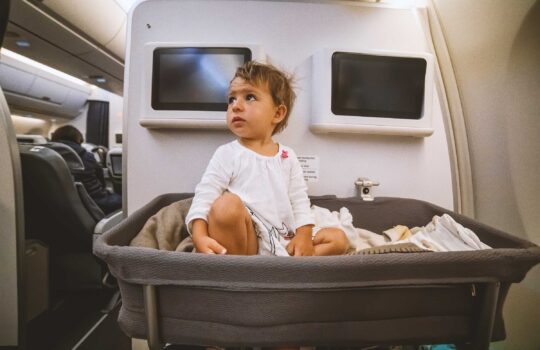
Parents on this side pointed to a few consistent benefits. A baby or toddler used to self-settling tends to adapt faster to an unfamiliar crib or travel cot, since falling asleep doesn’t depend on a specific person or routine that’s hard to replicate on the road. More predictable nap windows also make itinerary planning genuinely easier, you can build a day around a nap time you can actually count on. And several parents said the biggest win wasn’t the flight or the hotel night itself, it was not being tied to nursing or rocking to sleep in situations where that’s awkward or impossible, like a shared hotel room or a long layover.
The Case Against: Why Some Parents Skip It Entirely
The other side made an equally practical case. Several parents felt that sleep training routines are often the first thing to break down once the environment changes anyway, so the investment doesn’t fully transfer to travel the way you’d hope. Others said they deliberately kept a flexible, responsive approach to settling specifically because travel schedules are unpredictable, time zones shift, flights get delayed, and a rigid routine can cause more stress than it solves when it inevitably gets disrupted. A few co-sleeping and contact-napping parents also pushed back on the idea that their approach travels worse, pointing out that not depending on a specific room setup can actually be an advantage away from home.
What Actually Happens on the Road
The most useful part of the thread wasn’t either camp defending their method, it was the shared reality underneath both. Nearly every parent, trained or not, reported some sleep regression while traveling. Jet lag and unfamiliar environments disrupt sleep regardless of method. The real differentiator wasn’t the training approach itself, it was how quickly a family could reestablish a good enough routine after a few rough nights, and that skill seemed to matter more than which camp someone started in. So rest assured it will probably suck for a little while no matter what side of the argument you’re on. Which is really what being a traveling family is all about. Overcoming challenges and adapting to different realities. Does that make us really different from people without kids? Ok. Maybe a little.
Where the Group Landed
This was one of the rare occasions where no firm consensus emerged, but the conversation drifted toward a shared, more useful idea: sleep training seems to help more with predictability at home and easing the return to routine after a trip, rather than guaranteeing a good night’s sleep in a hotel room on night one. Several parents said they’d stopped expecting perfect sleep on trips altogether and built recovery days into their itineraries instead, which might be the most transferable takeaway of the whole thread, whichever camp you’re in. We’ve said it a million times, but if you lower your expectations and realise that your trip might not be instagram perfect, you should be able to roll with most of it.
The Quick Version
The case for: Self-settling babies tend to adapt faster to an unfamiliar crib or travel cot, nap windows stay more predictable so you can actually plan a day around them, and parents aren’t stuck relying on nursing or rocking in situations where that’s hard to pull off, like a shared hotel room.
The case against: A routine built at home is often the first thing to break down once the environment changes anyway, so the investment doesn’t always transfer. Rigid schedules can also backfire when travel inevitably goes off script, and co-sleeping or contact-napping parents say their approach travels just as well without depending on a specific setup at all.
What actually happens either way: Almost every family, trained or not, gets at least one rough night early in a trip. The real difference isn’t the method, it’s how fast you get back to something workable.
The takeaway: Lower the bar for night one, build a recovery day into the itinerary if you can, and stop expecting either method to guarantee a perfect night’s sleep in a strange bed.
We use cookies to ensure that we give you the best experience on our website. If you continue to use this site we will assume that you are happy with it.