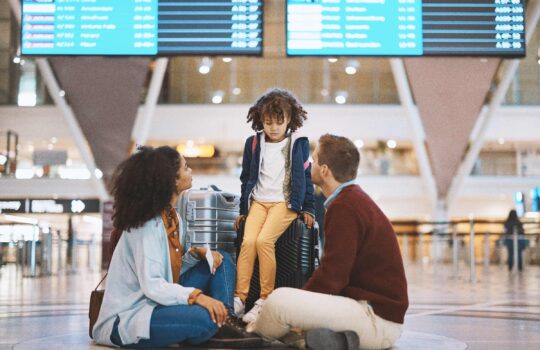
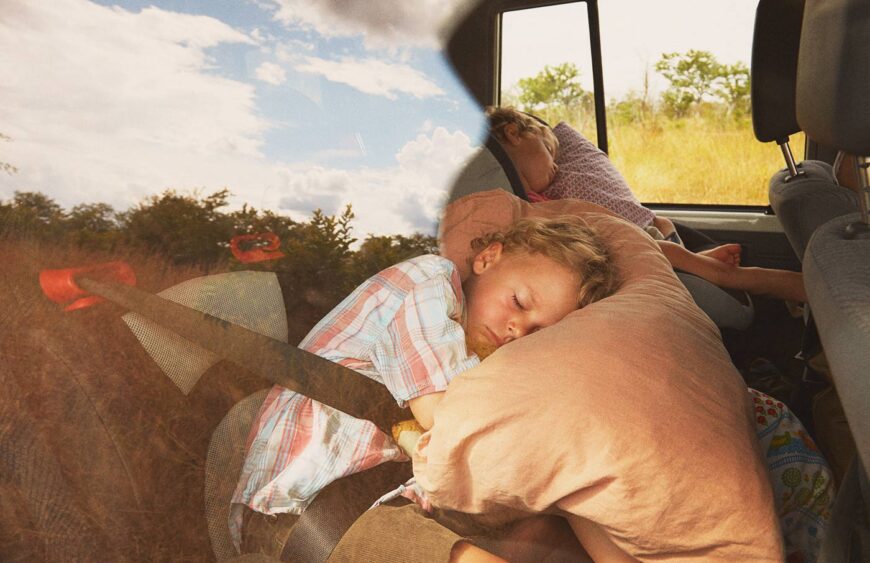
When the flight ends but the struggle begins
Most parents spend weeks dreading the flight. The cramped seats, the crying, the logistics of feeding and changing. But then the flight ends, and a new challenge begins: your kids are wide awake at 2 a.m., ready to party, while you’re begging them to sleep. Or they crash at 10 in the morning when you need them alert for the day ahead. Jet lag with kids isn’t just inconvenient; it can feel like the trip is falling apart before it even begins.
The good news? Jet lag is uncomfortable, not dangerous. It’s temporary, and children often bounce back faster than adults. With the right strategies, you can guide them through the transition and minimize the chaos. And even if you don’t nail it perfectly, you’ll still get through it because parents always do. Just with fewer hairs on our heads.
Why jet lag hits kids differently
Jet lag is the result of a disrupted circadian rhythm. Your body’s internal clock telling you when to sleep and wake. Crossing multiple time zones confuses that clock. Adults struggle, but kids react in their own ways depending on age.
Babies don’t yet have strong circadian rhythms, so they often adapt faster. But they still experience restlessness, irregular feeds, and increased fussiness.
Toddlers have established sleep patterns but no understanding of “time zones.” To them, 2 a.m. feels like 2 p.m., and trying to convince them otherwise can be an uphill battle.
Older kids are more aware but can struggle with fatigue, crankiness, and mealtime confusion. They may understand “we’re in a new country,” but their bodies aren’t convinced.
The key reassurance: jet lag isn’t harmful. It’s disruptive, sure, but temporary. Children’s bodies are flexible, and with some guidance, they settle into new rhythms faster than you think.
How to prepare before you fly
You can’t completely prevent jet lag, but a little groundwork helps. A few days before departure, start shifting your child’s bedtime by 15–30 minutes in the direction of your destination. Even a small adjustment makes the new schedule less jarring.
Flight timing matters too. Overnight flights can help kids sleep through much of the journey, but only if your child is a good sleeper in motion. Day flights may leave them awake but at least let you control naps more carefully.
Pack comfort items that signal “bedtime” no matter where you are: the same pajamas, a favorite blanket, a white noise app, or a beloved stuffed animal. These cues anchor your child’s sleep routine even when the clock is off. We go deeper into this prep in our long-haul survival guide for babies, but the principle is the same: small steps before you board make big differences when you land.
The first 24 hours: survival mode
No matter how well you plan, the first day is the hardest. Your kids may be bouncing off the walls at 3 a.m. or collapsing in the middle of breakfast. Don’t expect miracles in those first 24 hours. Focus on survival, not perfection. So try not to pack your first day with activities, or tours. Use it to settle in both physically, and mentally. Get your bearings and try to get a feel for how your kids are reacting to the time change.
Hydration is critical. Air travel dehydrates kids, and dehydration worsens fatigue. Keep water flowing, especially if you’re in a new climate. Exposure to natural light is another priority. Take your kids outside as much as possible during daylight, even if all you do is sit in a park. Bright light is the body’s strongest signal for resetting circadian rhythms.
Food helps too. Offer small meals at local times, even if your kids aren’t very hungry. It’s not about nutrition in those first hours; it’s about teaching the body when it’s “supposed” to eat. And above all, give yourself grace. The first day is about getting through, not getting it perfect. If your toddler eats crackers for dinner and collapses at 6 p.m., you’re still doing fine.
Using light to reset body clocks
If you remember nothing else, remember this: light is your strongest tool against jet lag. Morning sunlight tells the body “it’s time to wake up.” Darkness in the evening signals “wind down.” Kids are extra sensitive to these cues.
Spend mornings outdoors if possible. Take a walk, find a playground, or even just sit by a sunny window. In the evening, dim lights early and keep screens to a minimum. Blue light from tablets and phones delays melatonin release, making it harder for kids to fall asleep. If you’re desperate, use blue-light filter settings on devices, but ideally, keep evenings calm and screen-free.
Light is also your ally if your kids wake up too early. If they pop up at 4 a.m., resist turning on all the lights. Keep things quiet and dim, offer a cuddle or quiet play, and gradually push the wake-up closer to local time.
Meals and snacks as time zone anchors
Eating is another way to tell the body what time it is. When kids eat in line with the new time zone, their bodies start adjusting faster. This is where snacks play a surprisingly powerful role.
On the first day, offer meals at local times even if your kids only nibble. Fill the gaps with small, healthy snacks to bridge hunger. Familiar foods are especially comforting. A granola bar or fruit pouch from home may do more to ground a child than a fancy meal at your destination.
Parents often underestimate how helpful snacks are in transitions. They don’t just keep kids fed, they structure the day. We talk more about this in snacks that save sanity on flights, but the principle carries over after landing: food is rhythm. Use it to your advantage.
Managing naps without losing nighttime sleep
One of the trickiest parts of jet lag is balancing naps. Kids who nap too long during the day often refuse to sleep at night. But skipping naps altogether usually leads to meltdowns.
For babies, naps are inevitable. Just let them sleep. But keep them shorter than usual so they’re still tired at bedtime. Carriers and strollers are your friends here.
For toddlers, cap naps at an hour or two max, and avoid letting them crash too close to bedtime. If they’re fading, opt for a quiet activity instead of a full nap to get them through.
For older kids, encourage “quiet rest” instead of napping. Let them read, color, or watch a show lying down. Sometimes they’ll drift off, sometimes not, but either way, they get a recharge without completely wrecking bedtime.
Travel parents swear by keeping bedtime rituals consistent: pajamas, stories, same blanket, even if the clock says otherwise. Comfort cues help override confusion. For help packing those sleep items, our essential carry-on packing list for families covers the must-haves that make new sleep environments easier.
Coping with crankiness and meltdowns
Jet lag doesn’t just affect sleep. It messes with moods. Overtired kids swing from hyper to hysterical in seconds. Expect it. Plan for it. And remind yourself it’s not bad behavior. I t’s biology.
The best strategies are the simplest: keep routines familiar, offer comfort items, and stay calm yourself. Kids mirror their parents’ stress. If you look panicked and frustrated, they’ll feel it. If you look calm (even when you’re faking it), they’ll settle faster.
Sometimes, the best move is to lower expectations. Don’t schedule packed sightseeing for day one. Plan something light, outdoors if possible, and give everyone room to crash early if needed. As we talk about in first flight fears: helping kids cope with air travel, much of the battle is parents managing their own expectations.
How long jet lag lasts in kids
Parents often ask, “How many days until my child is back on track?” The answer depends on age, distance, and direction of travel.
- Babies and toddlers usually adjust in 2–3 days. Their schedules are flexible, and they often bounce back faster than adults.
- Older children and teens can take 3–5 days, especially after long eastward flights.
- Parents often take longer than their kids. Ironic, but true.
Flying east (say, U.S. to Europe) is typically harder than west (Europe to U.S.), because advancing the body clock is more difficult than delaying it. But no matter the direction, children almost always adapt quicker than adults, something that surprises many first-time traveling parents.
Jet lag as part of the adventure
Jet lag can feel like the thief of joy. You’ve planned this dream trip, only to spend the first few days exhausted and cranky. But like the flight itself, it’s just one phase of the journey. It passes.
Kids don’t remember jet lag the way parents do. They remember the silly things. Eating snacks in bed at 3 a.m., giggling in the dark of a hotel room, watching the sunrise from a new city with mom or dad. Those moments become part of the family story too. A lot can be experienced in the dead of night. One of my favourite memories is my daughter and I watching the Perseid Meteor Shower at 3am because neither of us could sleep. Then watching the sun rise shortly after.
So yes, jet lag is tough. But it’s also proof that you did something brave: you crossed oceans with your kids to see the world together. And that’s worth every bleary-eyed morning along the way.
Too Long? Here are the most common questions we’re asked.
Most kids adjust within 2–5 days depending on age and distance. Babies and toddlers usually reset quicker, while older kids take a little longer. Parents often take the longest to recover.
Generally, eastward travel is harder because you’re forcing the body to sleep earlier than usual. Westward travel stretches the day, which kids adapt to more easily.
Stick to familiar sleep cues like the same pajamas, blanket, and bedtime routine. Expose them to daylight in the morning and keep naps shorter so they’re tired at local bedtime.
If you’re only traveling for a few days, sometimes it’s easier to keep kids on their home schedule, especially if the time difference is small. For longer trips, shifting to local time works better.
Some parents use melatonin for older children, but always consult a pediatrician first. For most kids, natural adjustments through light, food, and routine are enough.