When one kid is tricky, but two or three feel like a circus
Flying with one child can feel like a challenge. Add another, and suddenly you’re running a full-blown operation. Picture it: one parent juggling passports and boarding passes while another wrangles a toddler in full meltdown mode, and the baby chooses that exact moment to fill a diaper. Families don’t just double the workload when the number of kids increases they multiply the moving parts, the emotional needs, and the potential for things to go sideways.
Still, parents manage it every single day. The trick is to stop approaching the trip as one giant ordeal and start breaking it down into roles, routines, and shared responsibilities. This divide-and-conquer approach doesn’t just keep things orderly; it helps everyone, kids and parents alike, feel less overwhelmed.
Why flying with multiple kids is its own challenge
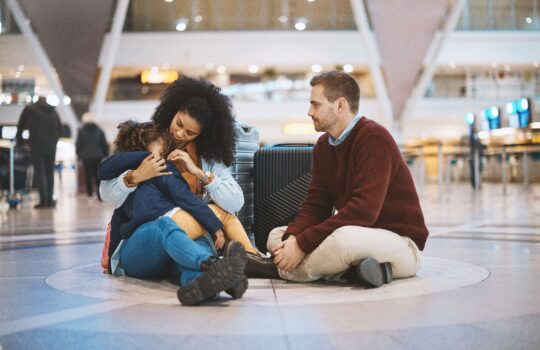
The biggest difference between flying with one child and flying with more comes down to unpredictability. With one child, you can focus all your energy on anticipating needs and adjusting. With two or more, you’re balancing competing schedules: one needs a nap, another needs food, and the third insists on using the bathroom right as the seatbelt sign switches on. It’s not just logistics, it’s emotional juggling too.
Many parents say the stress isn’t that they have “too much stuff” but that they have “too many scenarios” happening at once. Divide-and-conquer strategies exist to cut down that sense of chaos.
Who handles what: playing to your strengths
One of the smartest moves parents make is dividing responsibilities by child or by task. Sometimes it’s simplest to say, “I’ve got the baby, you’ve got the preschooler.” That way, each parent knows exactly who they’re responsible for during boarding, meals, and bathroom runs.
Other families prefer to divide by role instead of child. For example, one parent handles anything food-related, bottles, snacks, in-flight meals, while the other covers entertainment and bathroom breaks. It might sound rigid, but it means no confusion mid-flight when everyone is tired. And don’t forget: some children naturally travel better with one parent than the other. Lean into that rather than fight it.
Where you sit matters more than you think
Seating arrangements can make or break a flight with multiple kids. Families often find success sitting two and two across an aisle, giving each parent easy access to one child while still being able to pass things back and forth. If you’re in a row of three, one parent usually takes the middle seat between two kids while the other sits nearby. It’s not ideal for comfort, but effective for control.
Bulkhead seats are appealing because they often give extra space for bassinets and bags, but they also come with drawbacks: no under-seat storage during takeoff and landing, and sometimes armrests that don’t lift. Not to mention many airlines will charge extra for choosing your seats plus the added cost of additional legroom. Whatever layout you choose, the goal is to minimize seat swapping mid-flight, because shifting everyone around once you’re airborne is its own headache. If you’re uncertain, check out our guide to airline family seating rules for more on how to secure the right seats.
Getting through the airport without losing your mind
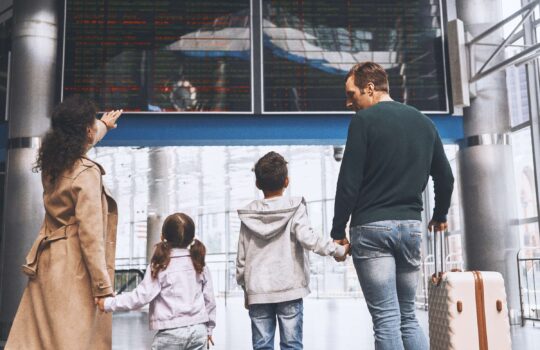
Airports are where divide-and-conquer really earns its stripes. At check-in, one parent can handle the paperwork while the other keeps kids occupied away from the counter. Security is smoother when jobs are assigned: one adult pushes the stroller and bins the bags, the other manages the children through the scanner. It feels less like a chaotic herd and more like a two-person team running a playbook. The more you go through it, the more it becomes almost second nature. Even your kids will adapt their behaviours once they understand the pattern.
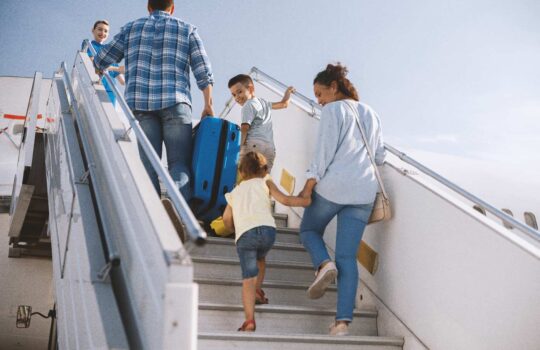
Boarding is another moment of decision. Some families like to board early to get settled, while others swear by boarding last so the kids have less time stuck in the seat. With multiple children, flexibility is key. Sometimes it’s better to send one parent on first with the gear while the other keeps kids moving until the last possible minute. For more smart airport tricks, see our guide to family airport hacks.
Surviving in-flight meals, naps, and bathroom breaks
Once you’re in the air, the real test begins. Meals can feel like a balancing act when two trays drop at once. Many parents choose to stagger eating times, with one adult eating first while the other helps the kids, then swapping. This prevents three sets of hands reaching across trays at the same time.
Nap schedules are trickier. Younger children may nap just fine in a parent’s arms, while older ones resist entirely. The best you can do is set the environment. Dimmed lights, comfort items from home, a bit of routine and accept that not everyone will sleep when they are supposed to. Or when you WANT them to.
Bathroom breaks are where teamwork really matters. If you’re traveling as two adults, one supervises while the other takes the child. If you’re alone, enlist flight attendants for quick support. They’re used to it. The key is to anticipate and rotate, so you’re not trying to do everything all at once.
Teamwork when you’re not actually a team
Divide and conquer works beautifully when there are two adults, but not every parent has that luxury. Solo travelers can still apply the same principles, but instead of splitting roles between adults, you split them between time and tasks. Handle one child’s immediate need first, then move on to the next. Keep expectations realistic: you won’t be able to respond to everyone simultaneously, and that’s okay. Also if the children are old enough to understand that it helps to explain that beforehand and every once in a while after. Just as a quick reminder that their needs will be attended to. Eventually.
Flight attendants are often a huge help. Whether it’s watching an older child for a minute while you change a baby or bringing an extra snack, they’ve seen it all and usually step up without being asked. Fellow passengers sometimes help too, especially if they see you’re doing your best.
Packing strategies when kids outnumber parents
Packing for multiple kids doesn’t just mean more items; it means smarter organization. Giving each child their own small bag, even if it’s just a backpack with snacks and one toy, makes them feel independent and reduces the number of times you have to dig for something. Essentials should be split between parents’ bags so that if one bag gets delayed or ends up overhead, you’re not stuck.
Shared family bags are great for backups, but try not to overload them. Think of them as reserves you may or may not need. The core items: bottles, snacks, comfort toys, should always be within arm’s reach. For inspiration on how to make this work, check out our essential carry-on packing list for families and our tips on packing light with kids, which can save you from hauling unnecessary extras.
Expect the unexpected
Even the best-laid strategies sometimes unravel. A child may vomit right after the seatbelt sign comes on, or your perfect seating plan might fall apart because another passenger refuses to swap. But the point of divide and conquer isn’t to eliminate problems. It’s to make them manageable.
By assigning roles, thinking ahead at key choke points like security and mealtimes, and keeping your bags organized, you’ll be able to stay calmer and react faster when things go wrong. Flying with multiple kids will always be more complicated, but it doesn’t have to be impossible. With the right strategies, it can even be just another family adventure. A messy, noisy, exhausting one, but still worth the trip.
Too Long? Here are the most common questions we’re asked.
It depends on your children’s ages and personalities. Some families do best sitting together in one row so everything is contained, while others prefer splitting into pairs across an aisle. Sitting separately allows each parent to focus on one child without distractions. If you’re flying solo, clustering in a single row is usually easiest so you can keep everyone within arm’s reach.
With two adults, one supervises while the other takes the child to the restroom. If you’re traveling alone, you may need to bring both kids with you. Flight attendants can help by holding an infant or keeping an eye on an older child outside the lavatory. It feels awkward the first time, but remember that crew members are used to families managing these exact scenarios.
Entertainment that doesn’t need much supervision is your best bet. Pre-loaded tablets, sticker books, or magnetic toys work well because they don’t spill all over the floor. Give older kids some sense of responsibility, like being “in charge” of their own bag or snack. Many parents find that having the older child help in small ways reduces jealousy and keeps them engaged.
Early boarding can be helpful if you need extra time to stow gear and set up seats. But many families find it backfires. Kkids get restless faster if they’re stuck on the plane longer. A hybrid approach often works: one adult boards early with the bags to claim those overhead compartments, and sets everything up, while the other stays in the gate area with the kids until the last call.
The trick is redundancy. Don’t put all the diapers or snacks in one bag. Divide essentials across bags so that if something gets lost, you still have enough to get through the flight. Give each child a small personal bag to reduce rummaging. And keep a change of clothes for everyone not just the baby. Older kids spill, too, and having spares ready can save a lot of stress.