Jump to Section:
Why Parents Struggle to Pack Light
The Minimalist Mindset: Shifting How You Pack
Packing Light with Babies
Packing Light with Toddlers
Packing Light with Young Kids
Strategies That Actually Work for Families
Capsule Wardrobe Packing
What You Can Borrow or Rent Instead of Bringing
Destination-Specific Adjustments
Final Thoughts
FAQs
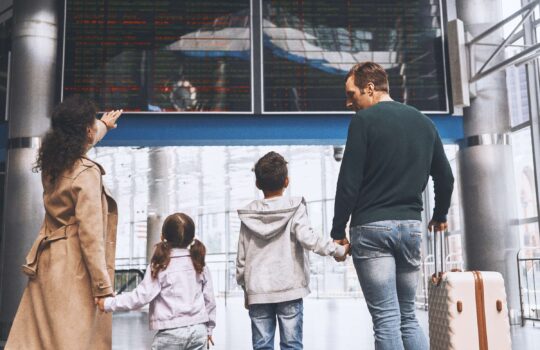
Every parent has had that moment at the airport: standing at the check-in counter with enough luggage to stock a small shop.
Sweating through security while juggling bags, and quietly envying the carefree traveler who glides past with only a backpack. Before children, many of us swore by the freedom of carry-on travel. But add diapers, bottles, snacks, strollers, and comfort items, and suddenly the idea of “packing light” feels laughable.
Yet families who’ve traveled extensively with children insist that it can be done. Not perfectly, but more realistically than most parents assume. The trick isn’t pretending you can live out of a single tote bag with three kids in tow. It’s learning what’s truly essential, trusting that you can adapt along the way, and letting go of the fear that drives overpacking.
Why Parents Struggle to Pack Light
Parents don’t overpack because they love heavy bags; they do it because of fear. Fear that their child will have a meltdown if their favorite toy is left behind. Fear of running out of diapers during a flight delay. Fear that the baby will only drink one particular brand of formula, which may not exist in the country they’re visiting. That anxiety is powerful, and it pushes parents to add “just in case” items until the luggage multiplies.
There’s also a cultural script that tells us good parents anticipate every possible need. But when you try to plan for every scenario, your suitcase starts to look like a survival bunker. The irony is that the heavier the luggage, the more stressful the trip becomes. Parents lugging massive bags through airports or onto trains often end up more frazzled than the ones who gambled on lighter loads.
The Minimalist Mindset: Shifting How You Pack
Packing light with kids isn’t about being reckless or underprepared. It’s about shifting your mindset from what if everything goes wrong to what do I need to handle it if it does. Experienced parents describe this as the turning point: realizing that shops, laundromats, and resourcefulness exist almost everywhere.
Families who succeed at lighter travel think in categories rather than item lists. Instead of writing down twenty separate things for feeding, they note “feeding supplies” and then choose the simplest versions that work. They also accept that laundry is part of travel life. A quick rinse in a sink or a local laundrette mid-trip saves kilos of clothing. Most importantly, they identify what one parent called “sanity items”. The few things that keep kids fed, calm, or asleep, and give those priority over everything else.
Packing Light with Babies
Babies seem to break every rule of minimalism. Their routines are fragile, and their needs feel non-negotiable. Still, even here, parents find ways to pare down. Clothing is often the biggest culprit. Instead of packing an outfit for every day, families stick to a handful of quick-dry layers and plan to wash along the way. Babies don’t need variety; they need comfort and clean clothes.
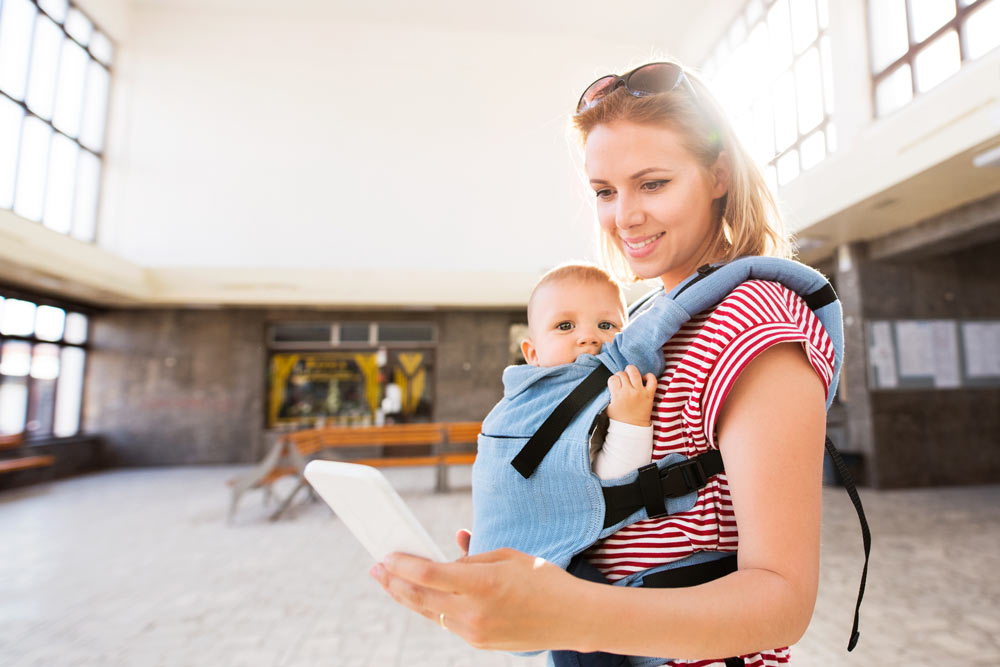
Feeding is another source of bulk. Formula tubs and jars of baby food fill bags quickly. Parents who travel light usually bring just enough to cover the journey and the first day or two, then restock locally. It feels risky, but in practice most cities worldwide carry the basics. The same principle applies to gear. A sling or soft carrier can replace a stroller on many trips, and parents often rent a crib at the destination rather than bringing one.
It may not look like “packing light” compared to pre-kids travel, but by trimming back to the essentials, parents find they can move with far less bulk than expected.
Packing Light with Toddlers
Toddlers are often the toughest age for light packing. They’re messy, unpredictable, and fiercely attached to specific objects. But again, families who’ve tested it on the road discover that most of what we’re tempted to pack goes unused.
Clothing is where most parents cut first. Instead of seven complete outfits, a few mix-and-match pieces that can be layered cover every scenario. Toddlers rarely notice if they wear the same jumper twice. Laundry, again, is the safety net. Shoes, too, are simplified: one pair for walking, one for water play, and little else.
Entertainment is another area of excess. Parents lugging a suitcase of toys often discover their toddler is happier with a hotel spoon or an airplane safety card. A better approach is to bring just a few distractions and rotate them. Some families swear by the “surprise toy” trick, producing one small new item at a moment of meltdown, rather than filling a bag with options.
Even gear can be minimized. Compact strollers and ride-on suitcases replace bulky travel systems. Some families skip the stroller entirely in favor of carriers or plan to rent one at their destination. The point isn’t to deprive toddlers but to recognize that convenience doesn’t always require extra luggage.
Packing Light with Young Kids
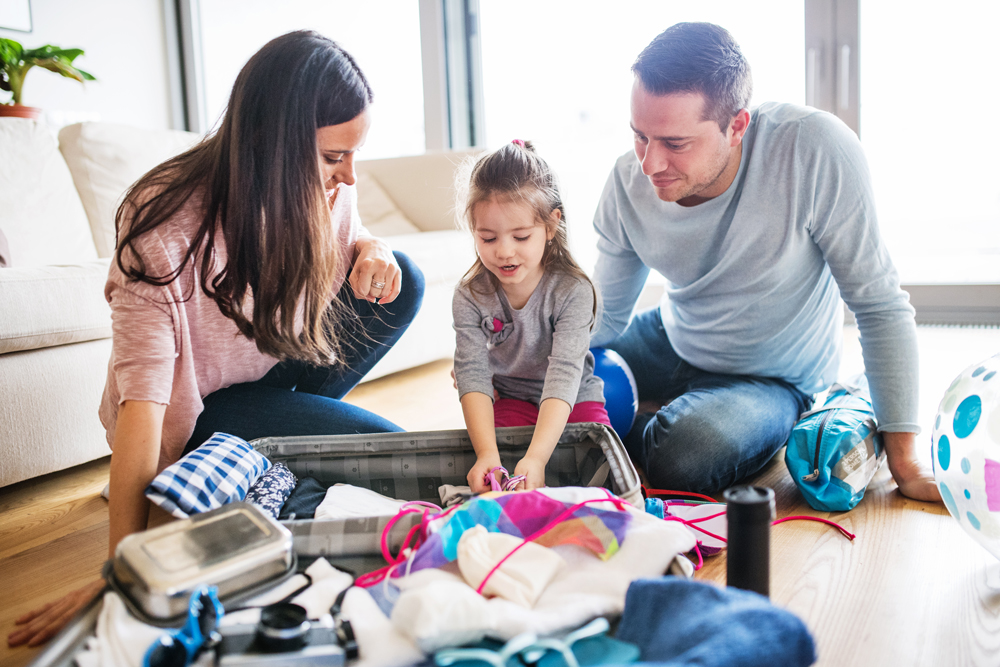
By the time children reach school age, packing light becomes more realistic. They can carry some of their own belongings, and they’re less dependent on specialized gear. This is the age where many families discover that minimalist travel is not only possible but genuinely enjoyable.
Clothing shrinks to the basics. A few favorite outfits, often chosen by the child themselves, prevent overstuffed suitcases and tantrums over clothes they never liked anyway. Entertainment shifts largely to digital: downloaded audiobooks, e-books, and apps weigh nothing and cover hours of downtime. Even sleeping arrangements are simpler, with most hotels able to provide rollaway beds or extra blankets rather than needing inflatable mattresses or travel cots.
Crucially, older kids can take responsibility. A small backpack with their own snacks, water, and comfort toy not only lightens the parent’s load but teaches independence. Parents often describe this stage as the breakthrough moment when family travel starts to feel manageable again.
Strategies That Actually Work for Families
Families who consistently pack light don’t achieve it through magic. They develop strategies that gradually reshape their habits. One common method is the “one bag rule,” where every family member, even young children, is limited to a single piece of luggage. This forces tough decisions but also prevents the creep of extras.
Another strategy is leaning on color-coordinated clothing. Choosing outfits within the same palette means fewer shoes and accessories are needed, reducing weight without sacrificing flexibility. Packing cubes also appear again and again in parent recommendations. They don’t just organize clothes; they create natural limits, helping parents edit down before the trip even begins.
Perhaps the most radical shift comes when families decide that not every need has to be met before leaving home. Renting strollers, buying diapers abroad, or shipping bulky items ahead of time can feel like a gamble at first but quickly proves to be a sanity-saver. Parents who embrace these options often wonder why they didn’t try sooner.
Capsule Wardrobe Packing: Less Clothes, More Options
One of the most effective ways parents cut down on overstuffed suitcases is by adopting what stylist Tan France popularized as a capsule wardrobe. In fashion, the term means owning a small collection of versatile, interchangeable pieces rather than closets full of one-off outfits. Applied to family travel, it’s a game changer.
Instead of packing ten outfits per child — most of which will never see daylight — parents who use a capsule approach choose a simple color palette and fabrics that all work together. A few tops, a couple of bottoms, and a couple of layers suddenly stretch into dozens of combinations. Kids might not care about coordination, but parents quickly notice how much easier it becomes to grab clothes from the suitcase when everything matches.
The beauty of a capsule wardrobe on the road is that it simplifies everything beyond the packing itself. Laundry is easier because any clean piece can be thrown in with the rest without clashing. Shoes can be pared down too, since you only need one or two pairs that match everything, rather than one pair for each outfit. Parents often describe the experience as surprisingly liberating: less stress over “what to wear,” less weight on their backs, and fewer arguments with kids who want to choose their own clothes.
It doesn’t require buying a whole new wardrobe — just a shift in planning. Choose a base color (navy, gray, or denim work well), add two or three accent colors, and make sure every piece can be mixed and matched. Suddenly, the family suitcase feels lighter without anyone missing a thing.
What You Can Borrow or Rent Instead of Bringing
The biggest game-changer in packing light is realizing how much you don’t need to carry at all. Many destinations, especially those popular with families, offer rental gear. Baby cribs, high chairs, strollers, even car seats can be hired on arrival, often at a fraction of the stress cost of lugging them through airports.
Hotels and holiday rentals also supply more than most parents expect. From kettles to warm bottles to extra bedding for toddlers, asking in advance saves space. Even toys can often be borrowed from kids’ clubs or community centers. Once families trust that these resources exist, they find their packing lists shrink dramatically.
Destination-Specific Adjustments
Packing light also means tailoring your approach to the trip. A beach holiday doesn’t need city clothes, and a city break doesn’t require a full set of sand toys. Parents who edit their packing by destination often discover how much they used to overpack simply by preparing for every possible climate and activity.
Stories from seasoned travelers highlight this point. One family admitted they carried snorkel sets across three countries, only to use them once. Another dragged winter coats through Europe in July, just in case, and never touched them. The families who learn to trust the local shops, rent equipment, and buy inexpensive gear onsite report far lighter loads — and no real loss of comfort.
Final Thoughts
Packing light with kids isn’t about reaching some ideal where your whole family lives out of one rucksack. It’s about finding the balance where your luggage supports your journey rather than burdens it. Parents who’ve made the shift consistently describe the same result: less stress, more mobility, and a surprising sense of freedom they thought was lost after having children.
Yes, you’ll forget things, and yes, sometimes you’ll buy replacements along the way. But the trade-off is worth it. Every kilo left at home is one less weight on your shoulders — literally and figuratively. And as many parents point out, the memories of the trip never come from the extra outfits or gadgets. They come from the moments you were free enough to enjoy.
Too Long? Here are the most common questions we’re asked.
A: Many families do, especially with school-aged kids. It requires strict editing, laundry during the trip, and sometimes renting gear at the destination.
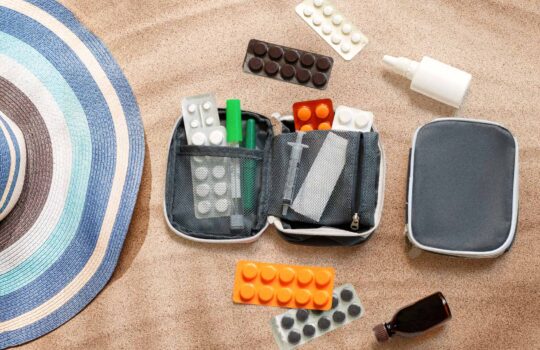
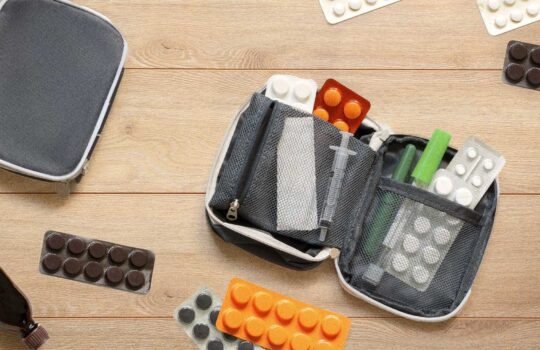
A: Medicines, comfort items for sleep, and travel documents are non-negotiable. Everything else can usually be replaced or improvised.
A: Parents often bring enough for the journey and the first day, then buy locally. Most destinations carry the essentials, even if brands differ.
A: Reputable rental companies *cough* like ours *cough* follow safety standards. Many parents report excellent experiences with strollers, car seats, and cribs rented onsite.
A: Overpacking toys, multiple pairs of shoes, and bulky “just in case” outfits top the list. Most of these items never get used.