Dealing with Seasickness in Children
When the worry of seasickness threatens the fun
You’ve booked the cruise. The kids are excited about water slides, kids’ clubs, and pizza at midnight. Then, as you’re scrolling through parent forums, it hits you: what if they get seasick? It’s the image every parent dreads, your child pale and miserable in a tiny cabin while the ship keeps rolling on. The truth is, seasickness is common, but it’s not inevitable. And even when it happens, there are ways to make it manageable so it doesn’t ruin your holiday.
What you’ll find in this guide:
Why kids get seasick (and what it feels like)
How to reduce the chances before boarding
Natural remedies and comfort strategies
Medications and when to consider them
Handling seasickness onboard when it strikes
When seasickness might mean canceling or seeking help
Don’t let the worry sink your trip
FAQ
Why kids get seasick (and what it feels like)
Seasickness is really just motion sickness at sea. It happens when the inner ear senses movement that the eyes and brain can’t quite match. Adults can usually identify the sensation: dizziness, queasiness, and sometimes a pounding headache. Kids often can’t describe it as clearly, but the signs are obvious once you know them.
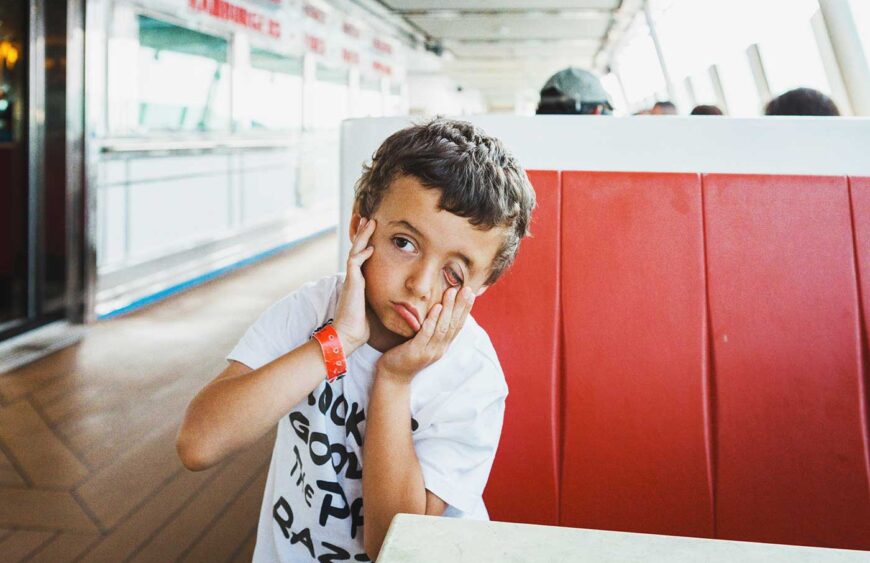
Children may suddenly look pale or glassy-eyed, complain of stomachaches, lose their appetite, or become unusually cranky. Some yawn a lot before nausea hits. For younger kids, it can look like fussiness that escalates quickly. The good news is that children often adapt after the first day or two at sea, once their brains adjust to the constant motion.
How to reduce the chances before boarding
Prevention starts with smart planning. Where you sleep makes a big difference. Cabins located midship and on lower decks feel the least motion, while those forward or high up tend to sway more. If seasickness is a big concern, this is one place where cabin choice is worth the extra research. We talked in our guide to the best cruise lines for families about how newer, larger ships with stabilizers generally ride more smoothly, which is worth keeping in mind if you’re choosing between itineraries.
The route matters too. Caribbean cruises, with mostly calm seas, are gentler for first-timers than transatlantic crossings where the ocean can feel more restless. If you’re worried about how your kids will react, shorter itineraries are a safer bet than committing to two weeks across the Atlantic.
Preschool and school-aged kids: clubs, pools, and shows
For kids between four and ten, ships are magical playgrounds. This is often the sweet spot where kids adore the clubs, have energy for scavenger hunts, and still think the family show in the evening is exciting. Disney’s Oceaneer spaces are themed story worlds; Royal Caribbean’s Adventure Ocean is a cheerful blend of crafts and games; Carnival and Norwegian lean into color, music, and dance; MSC adds Lego-themed days and science activities.
Pools and slides add another layer of fun, though parents should be aware that many ships do not allow swim diapers in pools only splash zones. Early evening entertainment tends to suit this age group best, from short musicals to family trivia. The best advice is to sample widely, but don’t force it. If your child bonds with the kids’ club and wants to return every afternoon, let that be the rhythm. If they prefer family pool time, lean into that instead.
Finally, talk to your children before the cruise. Explain in simple terms what seasickness is so they don’t feel blindsided if it happens. Sometimes just knowing “this might happen, and here’s what we’ll do” can prevent panic when nausea sets in.
Natural remedies and comfort strategies
Not every solution comes in pill form. Fresh air is one of the best fixes. If your child starts to feel queasy, head to an open deck, ideally midship, and encourage them to look at the horizon. This helps the brain reconcile what the eyes and ears are sensing.
Light, bland snacks are better than an empty stomach. Crackers, bread, or fruit can help settle nausea, while heavy or greasy foods make things worse. Ginger chews, ginger biscuits, or even a little ginger tea can help, and many parents swear by them. Seabands are elastic wristbands that apply pressure to an acupressure point. They don’t work for everyone, but plenty of families report success, and kids often like having a “special band” that makes them feel proactive.
Cool air helps too. A damp cloth on the forehead or neck, dimming cabin lights, and encouraging quiet rest can calm symptoms. These strategies also connect back to the routines we’ve talked about in our guide to making travel days blend into normal routines. A calm ritual like a snack, fresh air, quiet time, can turn seasickness management into something reassuring rather than frightening.
Medications and when to consider them
For some children, natural remedies aren’t enough. That’s where medication can help, but it’s important to plan ahead. Dramamine for kids and meclizine (often marketed as Bonine) are common options, though they come with age limits and potential drowsiness. Always check with your pediatrician before the cruise, and if possible, trial the medication at home so you’re not surprised by side effects at sea.
For younger children, doctors may recommend antihistamines like diphenhydramine (Benadryl) in small, controlled doses. But again, professional guidance is key. Never give a child a new medication for the first time mid-cruise.
Some parents also pack prescription options if they know their child has a strong history of motion sickness. It’s worth having these conversations with your doctor early, so you’re not scrambling later.
Handling seasickness onboard when it strikes
Even with planning, seasickness can sneak up. When it does, act quickly. Get your child out into the fresh air if possible, and encourage them to focus on the horizon. Offer sips of water to keep them hydrated. Avoid strong food smells, which often make nausea worse.
If things escalate to persistent vomiting, dehydration, or your child can’t keep fluids down, don’t hesitate to visit the ship’s medical center. Seasickness is one of the most common complaints at sea, and ship doctors are used to treating it. They can offer stronger anti-nausea medications, hydration, and reassurance. It’s not a failure to go; it’s exactly what they’re there for.
When seasickness might mean canceling or seeking help
Most cases of seasickness fade after a day or two, but sometimes it doesn’t. If your child is vomiting continuously, can’t hold down fluids, or is clearly dehydrated, you should always head to the ship’s medical center. Seasickness is one of the most common complaints at sea, and the staff are well prepared with stronger anti-nausea medication and hydration support.
In rare cases, a child simply doesn’t adapt to the motion. That’s when families face the difficult question of whether to continue or cut the trip short. While nobody wants to think about it, this is where travel insurance matters. Comprehensive policies often cover trip interruption for medical reasons, including seasickness if a doctor onboard deems it severe enough to disembark. Some policies also cover unused portions of the cruise and the cost of flying home early.
If you’re booking a cruise and seasickness is a concern, check the fine print on your insurance policy before you sail. Look specifically for “trip interruption,” “trip cancellation,” and “emergency medical evacuation” clauses. Ask whether seasickness documented by a ship’s physician would be covered. Families who skip this step sometimes discover too late that mild conditions are excluded, while others find that with the right policy, they can reclaim a significant portion of their costs if things truly go sideways.
The other layer of protection is booking with a cruise line that has flexible cancellation or credit policies. Some lines now offer “cancel for any reason” add-ons, which cost more but can give families peace of mind. Even if you never use it, knowing you have the option takes some pressure off when you’re weighing whether to push through or stop.
Don’t let the worry sink your trip
It’s easy to let the fear of seasickness overshadow the excitement of a cruise. But most kids either don’t get sick at all or adjust within the first couple of days. Preparation, from choosing the right cabin to packing remedies is the real game-changer. If it does strike, calm routines and quick responses usually keep it from ruining the trip.
Cruises offer so much for families, from splash zones to teen lounges to all-night pizza runs. Seasickness may be a bump in the journey, but it doesn’t have to sink your holiday.
Too Long? Here are the most common questions we’re asked.
Many kids never experience it, especially on calmer routes. Those who do often adapt after a day or two.
Midship and lower-deck cabins feel the least motion. Forward and high-up cabins tend to sway more.
They don’t work for everyone, but many families report success. They’re safe and worth trying.
Yes, but only under pediatrician guidance. Age, dosage, and side effects vary by child.
Seabands, ginger snacks, bland crackers, cool cloths, water bottles, and doctor-approved medication.