Comparing Train vs Plane Travel with Kids
Looking at the Whole Journey, Not Just the Destination
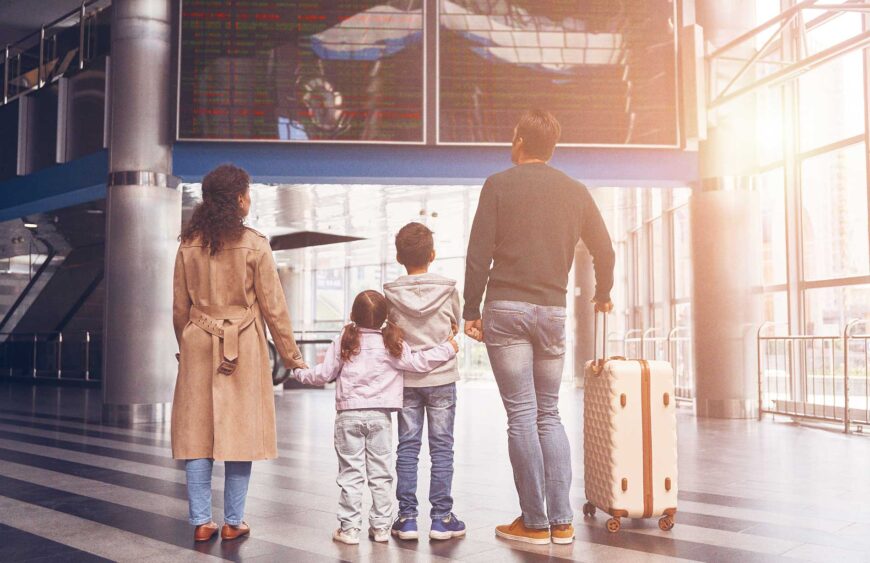
If you are planning a family trip, you are probably weighing up the classic question: train or plane? On paper, the answer seems obvious. Planes are faster and can whisk you across continents in hours. Trains take longer but offer a slower pace. Yet when you add children into the equation, the choice is far less straightforward. Time savings may not matter if your toddler melts down at airport security, and comfort may matter more when your seven year old cannot sit still for more than twenty minutes.
Families who have traveled both ways often find themselves trading speed for sanity, or cost for comfort, depending on the circumstances. There is no universal winner, but understanding how each option plays out in real life helps parents make better choices.
What you’ll find in this guide:
Why this comparison matters
The hidden stress and the rhythms
Cost breakdowns
Comfort in the cabin
Entertainment and movement
Food and drink realities
Safety, rules, and logistics
Environmental impact
When trains win and when planes make sense
Matching your family trip to the right ride
FAQ’s
The big picture
Parents do not compare trains and planes in the same way solo travelers do. A business traveler just wants to get from A to B in the fastest possible time. A family, however, needs to weigh time against cost, comfort, and how well their children will cope with the journey itself.
For example, a two hour flight sounds efficient until you add in the time it takes to get to the airport, check in, clear security, and then deal with the inevitable waiting before boarding. By the time you factor in the total door to door journey, the supposed time savings may shrink. A four hour train ride might in practice be only an hour longer overall, and for that you get the ability to sit together in wide seats and walk around without rules about seatbelts or trays.
Families often discover that the “best” choice is not about speed or cost alone but about what kind of stress they are willing to take on. Some accept the airport hassle in exchange for arriving quickly. Others prefer to avoid the tension of security checks and delays, even if it means spending more time in motion.
The hidden stress of airports vs the rhythm of train stations
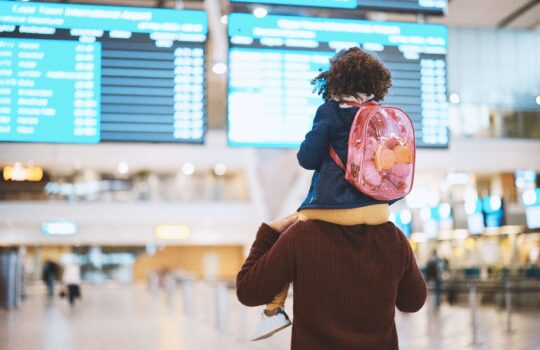
For many parents, airports are where travel stress truly begins. The journey to the airport is often long, especially if it is outside the city. Once there, you face check in counters, luggage rules, and long security lines. Every step feels designed to test children’s patience. Shoes come off, liquids are pulled out, and suddenly you are juggling strollers, bags, and toddlers in socks on a cold floor. Even before boarding, parents may already feel drained.
By contrast, train stations usually operate at a calmer rhythm. Families can arrive closer to departure time without worrying about missing flights. Boarding often involves walking straight onto the platform and finding your carriage. There may still be crowds, but the sense of urgency is lower. Parents describe the difference as “sliding into the journey” rather than fighting through barriers to reach it.
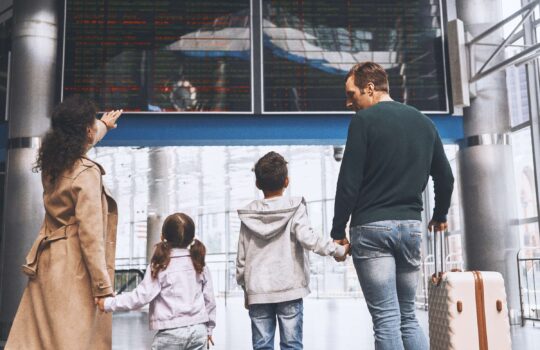
Children also notice the difference. Airports are full of queues where they are told to wait, stand still, or keep quiet. Train stations allow more freedom of movement. A child can look at the board, watch trains arrive, or walk along the platform without attracting the same scrutiny. For toddlers in particular, that freedom reduces meltdowns.
Cost breakdowns: tickets, luggage, and family extras
At first glance, budget airlines can look unbeatable. Families see a headline fare that promises incredible savings. Yet once you begin adding luggage, seat reservations, food, and infant fees, the total quickly climbs. Many parents have learned this the hard way, arriving at the airport only to be hit with unexpected costs for strollers, checked bags, or even just printing a boarding pass.
Trains often appear more expensive upfront, especially in countries like the UK. However, tickets usually include luggage and strollers without extra charge. European rail networks also offer discounts for children, sometimes allowing under fours to travel free if they sit on a parent’s lap. Rail passes can make multi country trips affordable, and families benefit from the ability to bring food without restrictions.
The value equation shifts depending on distance. For short regional trips, trains often compete directly on price once you add in the cost of airport transfers and extras. For long international journeys, flying still tends to be cheaper, though not always once the hidden fees are included. Parents planning carefully often find that the cheaper headline price is not always the cheaper choice once the details are tallied.
Comfort in the cabin: seats, space, and sleep potential
Comfort is not a luxury for families, it is a necessity. Airplane cabins are designed for efficiency, not for children who want be like papa and manspread. Seats are narrow, legroom is limited, and once the tray table is down, movement becomes almost impossible. Parents often find themselves holding children in cramped positions, especially if they are traveling with lap infants.
Trains offer a different experience. Seats are wider, rows have more legroom, and there is often space between carriages to stand and stretch. Overnight trains add another layer of comfort by providing bunks or couchettes, turning travel into a kind of moving hotel. While not every child sleeps soundly on a train, many parents prefer this option over trying to manage overtired kids in cramped airplane seats.
Of course, planes have one comfort advantage: speed. Even if the seat is tight, the journey is usually shorter. For some families, a few hours of discomfort is preferable to an all day train ride. The choice often comes down to how long your children can tolerate confinement.
Entertainment and movement: keeping kids occupied
One of the biggest differences between trains and planes is the ability to move. On a plane, movement is limited to narrow aisles, and turbulence can cut off even that. Children are expected to sit buckled in for takeoff, landing, and whenever the seatbelt sign lights up. For toddlers who are still learning patience, this can feel unbearable.
Trains are far more forgiving. Children can walk the length of the carriage, visit a dining car, or simply stand by the window watching scenery. Parents often note that being able to change the environment during the trip helps children stay calmer. Even a five minute walk to another carriage can reset their mood.
Planes, however, often offer built in entertainment. Seat back screens with movies, games, and shows can hold a child’s attention for hours. Some trains have Wi-Fi, but rarely the same curated options. Families who prefer trains often bring their own tablets loaded with shows and games to make up the difference. The trade-off is clear: trains give freedom of movement, planes give distraction without leaving the seat.
Food and drink realities on trains and planes
Food is a constant concern for traveling parents. On planes, restrictions begin at security, where liquids and certain foods are limited. Once onboard, families depend on the airline for meals and snacks, which may be expensive or poorly timed for a child’s hunger. Parents often resort to pre packed food, but even that must fit security rules.
Trains are much kinder in this respect. Families can bring full picnics onboard without issue. In many countries, stations have bakeries or supermarkets where you can stock up before departure. Dining cars on some long distance trains also provide hot meals, giving children a change of scenery and parents a break from their seats.
The freedom to eat when and what you want often makes trains feel less stressful. A child can snack gradually, meals can be flexible, and parents do not have to manage hunger within a rigid schedule of in flight service. For families with picky eaters or dietary restrictions, this difference alone can tilt the balance toward trains.
Safety, rules, and logistics for parents to juggle
Planes come with strict rules. Children must be buckled during takeoff and landing, and car seats are sometimes required for safety depending on age and airline policy. Liquids are restricted, devices must be turned off at certain times, and cabin crew enforce rules tightly. For parents, this means constant reminders and negotiations with children who may not understand why they suddenly cannot use the iPad.
Trains are more relaxed. Seatbelts are rare, rules are looser, and families have more control over their space. However, trains also bring different challenges. Platforms can be crowded, luggage storage may be open and unattended, and keeping track of belongings is entirely the parent’s responsibility. Parents also need to watch children closely in busy stations where trains arrive quickly and quietly.
Neither option is perfectly safe or unsafe, but the type of vigilance required is different. Airplanes demand compliance with external rules, while trains demand constant parental awareness of the environment.
Environmental impact: what to teach your kids about choices
Families are increasingly aware of the environmental footprint of their travel. Planes are efficient for covering long distances, but they also generate more emissions than trains, especially for short and medium haul journeys. Trains, particularly in Europe and Japan where many are electric, are significantly greener. Some, like the Deutche Bahn offer you to travel carbon neutral by offsetting the cost as a small increase in ticket price.
Some parents use this as a teaching opportunity. Explaining to children why the family chose the train for a regional trip helps them see travel as part of a bigger picture of responsibility. It can also spark conversations about energy, pollution, and the choices we make. For older children, this awareness becomes part of the adventure, not just the logistics.
Of course, environmental concerns compete with practical realities. A family may want to take the train but find that the cost or travel time is unmanageable. Recognizing that each trip involves compromises allows parents to make the best choice without guilt.
When trains win and when planes still make sense
Trains excel for regional travel, when cities are four to six hours apart and connections are frequent. They also win when children are young and need space to move, or when families value flexibility in food and luggage. Overnight trains can replace hotel nights and make long distances manageable.
Planes, however, remain essential for very long journeys. No train can match the speed of crossing oceans in a matter of hours. For international connections, especially intercontinental ones, planes are still the only realistic option. They also work best for families who prioritize reaching the destination quickly, even if the journey itself is less comfortable.
The decision is rarely absolute. Many families mix both options depending on the leg of the journey. They might fly into Europe from abroad, then switch to trains for regional travel once there. Seeing the choice as complementary rather than competitive makes it easier to plan trips that balance speed, cost, and comfort.
Matching your family trip to the right ride
There is no single winner in the train versus plane debate. Both have strengths and weaknesses, and both can work well or poorly depending on your children’s ages, your budget, and your tolerance for stress. What matters most is aligning the choice with your family’s priorities.
If your children need space to roam and you value flexibility in meals and luggage, trains may feel like the more humane option. If your schedule is tight and you need to cover long distances quickly, planes will always have a place. Neither is perfect, but both can be made workable with preparation and the right mindset.
In the end, family travel is not about choosing the fastest or cheapest option every time. It is about making the choice that allows your children and you to arrive not just intact, but in a state where you can enjoy what comes next.
Too Long? Here are the most common questions we’re asked.
It depends on the route. Budget airlines can appear cheaper, but once luggage and extras are added, trains often compete directly on price.
Trains usually offer more space and movement, while planes offer shorter journeys. Comfort depends on whether your children prefer freedom or speed.
Yes, but liquids are subject to security checks. Trains have no such restrictions, making them easier for families with infants.
Both are safe. Planes have stricter rules enforced by crew, while trains require parents to supervise children closely in stations and carriages.
Trains generally produce fewer emissions than planes, especially for short and medium distances.