Tiny Details Make a Big Difference
Most parents put all their planning energy into big ticket logistics like flights and hotels, then completely forget that buses and metros have their own cultural settings. Not rules written in a handbook, but the kind of silent expectations that you only notice once you’re the one breaking them. And kids, of course, have a magical ability to do exactly the thing that cuts through the quietest subway carriage like a foghorn.
Anyway, understanding cultural norms on public transport for families is about having a smoother day, avoiding the kind of awkward little moments that leave you replaying them hours later, and helping your kids feel confident instead of confused. Once you learn how to read the room in a new city, everything becomes easier. Kids naturally copy what they see, so if the whole metro is calm, they tend to settle. If the ride is lively, we can all bet that dthey’re delighted to join in. Public transport becomes less of a gamble and more of a travel tool that genuinely helps your day run better.
By the way, this awareness doesn’t just avoid embarrassment. It helps you see how different cultures move through everyday life, and kids love noticing these differences. It becomes part of the adventure rather than something stressful you just try to survive.
What you’ll find in this guide:
Cultural First Impressions
How to Be Good Public Transport Citizens
Where Families Fit
Invisible Social Rules
Navigating Payments, & Ticket Checks
Safety Basics from Country to Country
FAQ’s
Cultural First Impressions: What the First Thirty Seconds Can Teach You
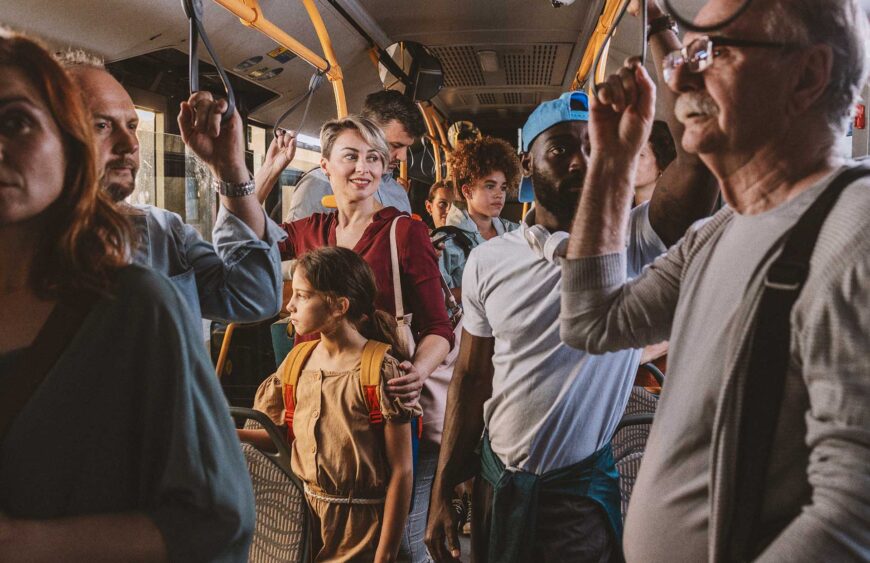
The moment you step onto a bus or train in a new country, you can feel the tone. Some places treat public transport like a calm retreat where people keep to themselves and speak softly, if at all. Other places feel like a casual extension of the street, full of chatter, music leaking from headphones, and kids giggling without anyone minding. Observing that first half minute is genuinely more useful than anything in a guidebook.
In Tokyo, for example, the shift is instant. The train doors close, and even teenage kids barely whisper. The quiet is so natural and complete that parents often find their children instinctively match it, almost like the environment resets their volume dial. On the other hand, in Mexico City, buses can feel bright and lively, with conversations happening across the aisle and toddlers pointing excitedly at vendors and street scenes without drawing any negative attention.
Most locals don’t expect tourists to understand every nuance, but they do appreciate when families try to adapt. Kids do especially well when you whisper something like, “Let’s watch how people behave for a moment.” That small pause often makes all the difference. And honestly, the more you do it, the faster you learn these subtle differences. It becomes second nature, and your kids start doing it too.
Teaching Kids to Be Good Public Transport Citizens Without Draining the Fun
Kids are natural chaos engines, but they also have this fascinating ability to adapt quickly when the expectations are clear. The trick is to frame public transport as part of the adventure, not a prison sentence where they must sit still and be quiet forever. A simple “Let’s use our travel voices here” works better than the frantic parent whisper that happens when you feel judged. Kids love having a role, and when they understand the rhythm of a place, they often rise to the occasion.
London is a good example of how kids can blend in without feeling stifled. Tube stations are busy, but once on the train, people often settle into a calm bubble of reading or scrolling. Kids see this and naturally soften their voices. And in Seoul, school children routinely stand and offer their seats to older passengers, something that surprises many parents until they realize it’s just part of the shared social rhythm. Mentioning this to your own child before boarding helps them understand how the norms differ from home.
The important thing is not to aim for perfect behaviour. Aim for awareness. Kids are allowed joy, curiosity, and commentary. You’re simply helping them channel it appropriately. By treating public transport as a shared space with its own invisible rules, you’re giving your kids a little social superpower for future travels.
Where Families Fit: The Unspoken Geography of Buses, Metros, and Trams
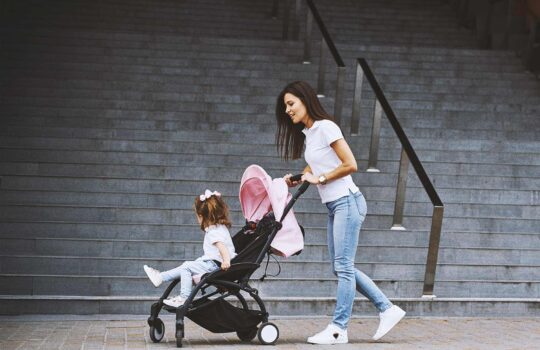
Every city has a secret map inside its public transport system, and families don’t always land in the same spot. One city expects strollers to park near the middle doors. Another fits them near the back. A third insists you fold it the second you board. None of this is written in bold letters, so watching what other parents do is worth its weight in gold.
In Berlin, for instance, parents often gather near the second door of the tram. It’s where the open multi use area is located, and it keeps the flow of boarding passengers smooth. You can feel the logic of it the moment you see it. Meanwhile in Barcelona, most buses have a designated spot for strollers positioned so that the child faces backwards, and drivers often help by lowering a ramp. Sitting right at the front, however, is usually reserved for passengers with mobility needs, so families instinctively drift a little further back without anyone needing to say so.
Kids love being the “navigator,” so letting them choose seats within the family friendly zone makes them feel involved. Older kids often benefit from understanding how priority seating works, because giving up a seat in some cultures is considered standard. When they know what’s expected, they’re proud to do it. And you, meanwhile, avoid that awkward moment where you realize your child is sitting in a clearly marked priority seat while an elderly passenger stands politely two feet away.
Noise, Space, and the Invisible Rules You Only Learn When You Break Them
Public transport has a language without words. Things like how loudly people speak, how close they sit, and what they do with their food are understood instinctively by locals but completely invisible to visitors until they get it wrong. And because kids are wired to narrate everything they see at full volume, parents feel these differences immediately.
Take Paris. People sit close, but the carriage is usually quiet. If a toddler suddenly announces something loudly, every head will turn for a second, not because people are upset, but because it breaks the stillness. The moment passes, and everyone returns to their silence. Meanwhile in New York, noise is part of the city soundtrack. People chat, music leaks from headphones, babies cry, and no one really cares. But stand in the doorway for even two seconds too long, and you’ll feel the collective irritation in the air.
Food rules also shift drastically from place to place. In some cities, even quietly opening a sandwich is considered rude. In others, a snack is practically expected during a commute. Watching the locals before you unpack anything saves you from becoming the family that unknowingly breaks the unspoken code.
Kids respond well when you narrate these differences calmly, like “People are pretty quiet here, so let’s try to match their volume.” It becomes a fun challenge rather than a correction. And they learn faster than you think.
Tickets, Validators, and That One Rule Every Parent Learns Too Late
The hardest part of public transport abroad is often the ticket system. Not the buying of tickets, but the hidden rules around activating them. Every city seems determined to invent its own way of tapping, scanning, validating, or stamping, each with its own fine for doing it wrong. This, of course, is always when a toddler insists on being carried exactly the moment you need both hands free.
In Milan, for example, the validation machine sits by the doors, and you’re expected to slide the paper ticket into it as soon as you board. Miss that step, and you’re technically riding without a ticket even if you paid. Inspectors are polite but strict, and the fine is expensive enough to haunt you. On the other hand, in Amsterdam, you tap in and tap out for every journey, and visitors often forget the tap out. That mistake doesn’t get you fined, but it can charge you the maximum fare.
Kids love being the “scan captain,” and giving them that responsibility actually reduces mistakes. Pre reading the system for the city you’re visiting takes five minutes and spares you a lot of anxiety. And remember, inspectors don’t care that you have kids. But they do appreciate when you clearly tried to follow the rules.
Safety Basics That Shift Depending on Where You Are
Safety on public transport looks different depending on the country. Sometimes the biggest danger is simply the gap between the platform and the train. Sometimes it’s the way buses lurch forward before you’ve even sat down. Sometimes it’s the pickpocket risk during busy hours. None of this is meant to scare you. It’s just about understanding what locals consider normal and safe so you can match it.
In Singapore, for example, everyone stands neatly behind a yellow line on platforms. It’s orderly, calm, and incredibly clear for kids to follow. Meanwhile in Rome, buses often pull away with enthusiasm, so locals brace themselves early. Kids do better when you prep them with something like, “Hold my arm, the bus moves quickly here.”
Giving children small jobs like “count the stops,” “hold the handle,” or “watch for our landmark” keeps them engaged and safe. It also turns the ride into part of the adventure rather than a moment your child gets bored and unpredictable. When kids feel involved, they tend to behave better, and you can actually enjoy the journey instead of sweating through it.
Public Transport Is a Cultural Crash Course for Kids
So, here’s the gentle truth. Public transport abroad is one of the fastest ways for kids to understand that the world moves differently depending on where you are. Every country has its own rhythm, its own sense of space, and its own ideas about what is polite. And children are remarkably good at picking these things up when we guide them.
Most parents worry about being judged, but locals usually give families far more grace than expected. What they appreciate most is effort. A quick observation, a gentle volume reminder, or choosing the right spot for your stroller goes a long way. And when things go sideways, which happens to every family, it becomes a funny memory rather than a travel disaster.
Public transport isn’t just a way to get around. It’s a small cultural classroom on wheels, and kids love learning from it.
Too Long? Here are the most common questions we’re asked.
Watch how locals behave during the first minute of the ride. If the carriage is quiet, try to match that tone. People usually appreciate effort more than perfection.
Most cities allow them, but rules vary. Some expect strollers to fold, others offer dedicated spaces. Checking the local transit website before you go makes everything easier.
In certain places, yes. Children often stand so older passengers or people with mobility needs can sit. A quick talk before boarding prevents confusion.
Sometimes yes, sometimes no. Snacks are fine in many regions, but some metros have strict no food norms. Stick to tidy, low smell foods when in doubt.
Validate or tap your ticket exactly as the system requires. Kids usually love doing this part and can help you remember.