When the Day Runs Longer Than Planned
Every family has that night. Dinner takes longer, the tram schedule changes, or the flight lands just late enough that you find yourself crossing a quiet street with kids in tow. You’re not in danger, you’re just hyper aware. The city sounds different at night, the light feels softer, and suddenly every parent instinct switches on.
Traveling after dark isn’t as scary as it’s made out to be. But we get it. You’re in an unfamiliar place. It’s dark. And the streets are empty. Cities slow down, crowds thin out, and the familiar daytime routes take on a new, yet ominus mood. Whether it’s walking back from an evening event, catching a late train, or arriving in a new city after sunset, being out at night doesn’t always have to feel uneasy. It just asks for a different kind of attention. Calmer, slower, more deliberate.
Why Families End Up Out After Dark
Sometimes the evening plans itself. Maybe your flight lands late, or you stayed longer at the amusement park because the kids were finally having fun. Maybe dinner ran over, or you’re catching the last train to your next stop. Parents don’t choose to be out at night. Sometimes s**t just happens. The thing is, cities don’t shut down after sunset; they just change tempo. What feels “late” to visitors is often the start of the evening for locals. In places like Barcelona, Tokyo, or Bangkok, families are still out eating and exploring well after 9 p.m. Once you accept that after-dark travel is a normal part of urban life, not a risk to be avoided, it gets easier to approach it with confidence instead of worry.
What Changes When the Sun Goes Down
At night, the energy shifts. Public transport runs less frequently, some metro entrances close, and the shops that kept streets lively during the day pull down their shutters. Areas that felt familiar can seem unfamiliar simply because the people are different. Fewer commuters, more night-shift workers, more quiet.
.This is where awareness matters more than anxiety. Before heading out, check how long your return route operates. Some systems like London’s Night Tube or Berlin’s night buses keep running all night, while others stop early. Always know your backup: whether that’s a taxi, a rideshare, or a quick call to your hotel for guidance. If you read our guide on Safety Tips for Crowded Transit Systems, you’ll already know that preparation builds confidence. The same rule applies here: plan your route, trust your instincts, and carry a working phone battery. Everything else will pretty much fall into place.
Smart Transit Choices at Night
When it’s dark, the fastest option isn’t always the safest or easiest. It’s the one that feels the most predictable. Major transport hubs and main roads tend to stay well lit and active, which makes them better for families moving with kids.
Official taxis and verified rideshares are usually your best bet if you’re unfamiliar with the area. If you’re using rideshare apps like Uber or Bolt, double-check the license plate before you get in. Always sit in the back, and if you’re traveling alone with children, send your route to a friend or partner through the app’s “share trip” feature.
Night buses can be a good alternative in cities that have them, especially those integrated into standard transport passes. (If you haven’t yet, our article on How to Get the Most Out of Your Family Transit Pass covers how those systems often include late-night services, too.)
The key is routine. Choose familiar stops, keep your tickets handy, and move at a steady pace. You’re not trying to be invisible; you’re just aiming to look like you know where you’re going.
Walking with Awareness (Not Fear)
Cities at night feel different, but not necessarily unsafe, they just ask you to notice things you might ignore in daylight. You’re not trying to predict danger; you’re simply being deliberate about your movements. Think of it as replacing autopilot with awareness.
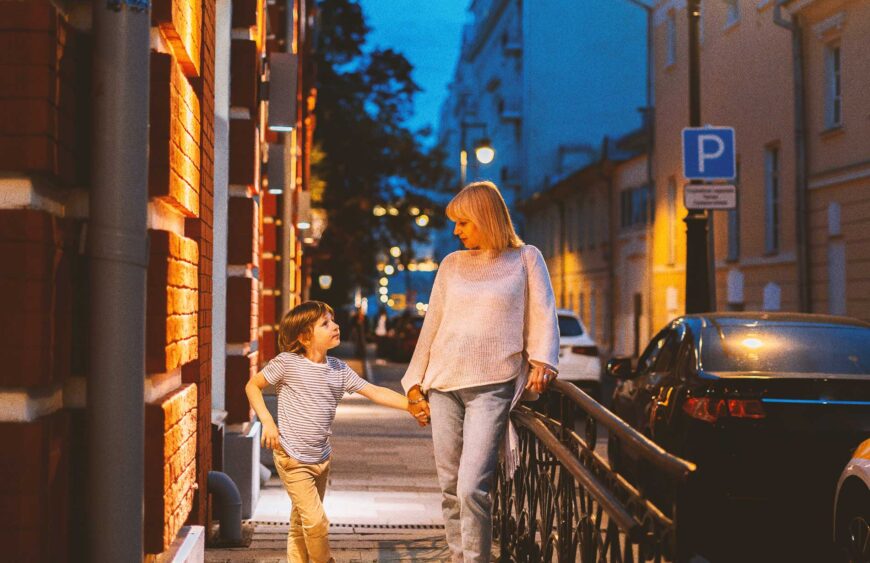
Choose routes that stay close to main roads, tram lines, or shopfronts. If you’re walking back to your hotel, open your route on a map before leaving so you’re not constantly checking your phone mid-walk. Avoid cutting through parks or shortcuts that save time but leave you isolated.
Lighting makes a huge difference. Even a moderately busy, well-lit street is safer and more comfortable than a quiet side road. If you ever find yourself in an area that feels off, maybe too empty, too quiet, or just not right, trust your instincts and turn back. You’ll never regret being cautious.
When walking with kids, assign small roles. One child can be “the light spotter” (looking for streetlamps ahead), another can keep count of crossings. It gives them something active to do while keeping them focused on staying close.
And remember, confidence shows. Even if you’re double-checking your route in your head, keep your body language calm and steady. People who look purposeful tend to attract less attention than those who appear anxious or disoriented.
Quick recap for walking safely at night:
- Trust your instincts. If it feels wrong, change direction.
- Stick to lit, active streets. Avoid shortcuts or parks.
- Review your route before heading out.
- Walk calmly, not hurriedly; confidence signals awareness.
- Keep your phone visible but not distracting you.
Teaching Kids Calm Nighttime Awareness
Children don’t need to be afraid of the dark, they just need to understand it better. Framing nighttime travel as “different” instead of “dangerous” makes all the difference. Before heading out, explain that things look and sound quieter at night but work the same way.
For younger kids, make staying close a game. Ask them to hold onto the stroller, your bag strap, or your pocket and count streetlights or crossings together. It keeps them focused while reinforcing that they should always stay within arm’s reach.
For older children, shift from instruction to involvement. Let them help you spot the next tram stop, or ask them to identify familiar signs so they’re learning to orient themselves. If they have phones or watches, teach them how to share their location or call in an emergency, not to scare them, but to show that independence and safety go hand in hand.
Use calm language and positive framing. Instead of “don’t run off,” try “stay close so we can walk together.” The tone you use becomes the tone they internalize.
And it helps to talk about what to do if you get separated. Just once, clearly, without turning it into a lecture. Tell them to stop where they are, go inside the nearest open business, and ask someone in uniform for help. Knowing there’s a plan reduces panic for everyone.
Quick recap for teaching kids nighttime safety:
- Discuss “what to do if lost” clearly, once, before you go out.
- Explain nighttime calmly. It’s just different, not scary.
- Give small roles to keep kids engaged and close.
- Encourage calm habits like hand-holding and looking for lights.
- For older kids: teach location sharing or safe contact points.
Cities That Feel Safe at Night (and How to Handle the Rest)
It’s no surprise that some cities are simply easier after dark. Singapore, Tokyo, and Copenhagen consistently rank among the world’s safest, thanks to clean, well-lit streets and public transport systems that operate deep into the night. Families walk freely, and even late trains feel orderly.
In London, Berlin, and Sydney, night travel is generally safe if you stick to main routes and know the last train times. Night buses fill the gaps, and stations are staffed. Other destinations, especially those with older infrastructure or less predictable transit, can feel trickier. Rome, Bangkok, and Istanbul have plenty of charm but also more inconsistent lighting, uneven sidewalks, or limited night schedules. The key is awareness, not avoidance. Choose reputable transport, plan your route, and stay in well-known areas. The more you know, the easier it is to relax once you’re there.
Staying Calm, Not Cautious
Traveling after dark with your family isn’t something to dread it’s simply another part of the experience. Most nights go smoothly, and the small details you plan ahead for a charged phone, a known route, a backup ride are what keep it that way.
You’ll remember the soft air after an evening walk, the lights reflecting off the streets, the way the kids fell asleep on the last tram home. Those are the kinds of travel memories that happen because you stayed out a little later.
So keep your pace steady, your wits about you, and your mind calm. Night doesn’t need to change your plans just your approach.
Too Long? Here are the most common questions we’re asked.
In most cities, yes. Use main lines, avoid empty carriages, and check when the last train or bus leaves.
Stick to well-lit streets, stay near crowds, and trust your instincts. Avoid alleys or shortcuts. Follow other families that are going in your general direction.
If you’re unsure of your route or traveling late, official taxis or verified rideshares are often the most reliable.
Keep things familiar. Hold hands, stay close, and keep your tone light. Kids follow your energy.
Poorly lit areas, unlicensed taxis, or getting caught between train schedules. A little planning ahead makes all the difference.