Camping and Glamping Come With More Assumptions Than Advice
Camping has a certain pull when you’re planning a family trip. It promises fresh air, simpler days, and kids who somehow entertain themselves without screens. Glamping offers the same idea, just with a real bed and fewer things to figure out. If you’ve never done either before, it can feel like something other families have unlocked and perfected and you’re late to the party.
The majority of parents that are trying out camping for the first time are usually tired, watching their budget, or craving a slower pace than the trips they’ve done before. The appeal often comes from the same place as choosing fewer stops or longer stays. We talk about that shift more in our piece on slow travel with children, where the focus is less on doing more and more on needing less. We’re not saying that camping is automatically the answer to all your busy travel problems. We’re just saying it deserves a serious look to see if this is the type of slow travel you didn’t know you needed without the huge learning curve.
So you think camping means easy going?
Camping doesn’t usually look simple. It looks relaxed. Slower days. Fewer plans. Kids roaming around without a schedule. From the outside, it gives off the impression that things will just sort themselves out once you’re there.
What’s easy to miss is how much of that “easy going” feeling depends on parents quietly picking up the slack. Camping removes a lot of the invisible support most trips rely on. There’s no housekeeping. Food takes planning and prep. Space is tight. Kids need closer supervision because the environment isn’t controlled or contained. You’re running a small, temporary household with fewer tools than usual. Everything still needs doing, it just happens outdoors and without the usual shortcuts. And that adds to your planning phase.
That dynamic shows up in other types of trips too. Short, intense travel works the same way. When there’s very little buffer, everything depends on how much energy the parents have going in. We talk about that more in our guide to city breaks with kids, where expectations often matter more than the destination itself.
What camping actually asks of parents
Camping with kids is physical in a quiet, constant way. Carrying things. Setting things up. Tidying all day. Managing dirt, weather, and wet clothes. You’re usually “on” from morning until bedtime, even when nothing dramatic is happening.
It’s also mentally busy. You’re always a step ahead. What’s for dinner. Is it getting cold. Do we have enough water. Where did the shoes go. That mental load doesn’t disappear just because you’re outside. This is where spending decisions start to show up. Paying for comfort isn’t about being fancy. It’s about reducing how much parents have to hold in their heads. That trade-off is something we look at more closely in luxury vs budget family travel, where the real question is often how much friction you can realistically handle and still make the time enjoyable for everyone.
How kids usually experience camping
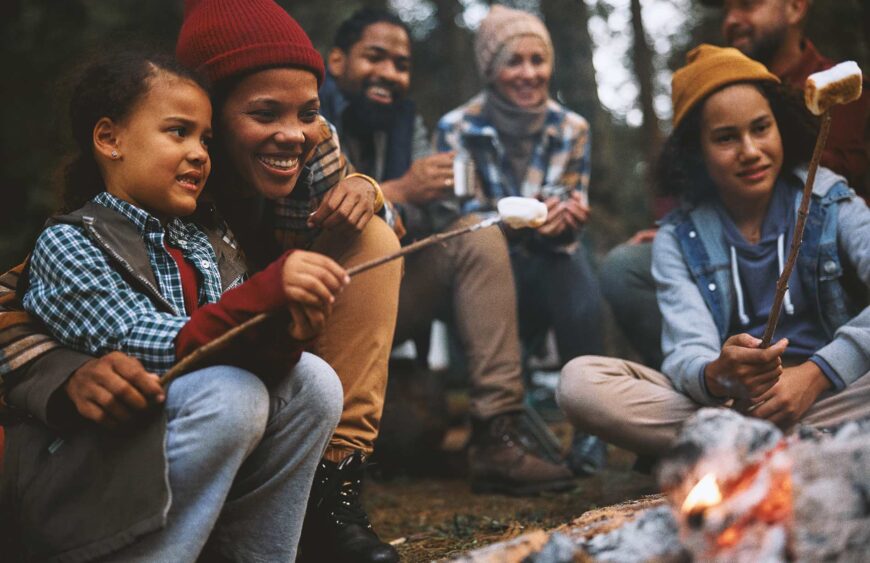
Kids often experience camping very differently than adults think they will. Things parents worry about, like smaller spaces, basic facilities, or the lack of routine, don’t always register the same way for children. For many kids, camping feels like permission to loosen up. Days don’t have to run on a schedule. Play doesn’t need organising. There’s room to wander, invent games, and be noisy without constant correction.
That doesn’t mean it’s all smooth. Sleep is often the biggest wildcard. Some kids sleep incredibly well after full days outside. Others struggle with unfamiliar sounds, darker nights, or different bedtime routines. Early mornings are common, especially when tents or cabins let in light and noise. This can catch parents off guard if they’re expecting evenings to feel restful.
What usually matters most to kids isn’t comfort in the adult sense, but emotional safety. If parents seem calm and available, kids tend to adapt quickly. If parents are tense, overtired, or frustrated, kids often mirror that energy. Camping amplifies moods more than it creates them.
When camping tends to work better for families
Camping tends to work best when expectations are realistic and your setup has room for mistakes and regrets. Short stays often go better than long ones, especially first timers. A couple of nights is more than enough to see how everyone copes without feeling trapped if it’s not working.
Familiar environments help too. Campsites with clear boundaries, nearby facilities, and other families around often feel easier than remote or wild locations. There’s less pressure to get everything right when help or infrastructure is close within walking distance.
Camping also suits families who don’t have problems spending most of the day together. There’s less separation between adult and child time, and very little opportunity to retreat. For some families, that feels like bonding and grounding. For others, it feels pretty intense. Paying attention to which camp you fall into (no pun intended) can save a lot of frustration.
What differences does glamping make?
Glamping changes the baseline, not the nature of the experience. Having a real bed, better insulation, and a more solid structure can dramatically improve the experience for both kids and parents. Better sleep alone can turn a stressful trip into a manageable one.
However add in a bit of luxury and Glamping can remove some of the practical friction you might experience with regular camping. Less setup. Less packing. Fewer weather-related surprises. That alone can free up mental space, especially for parents doing this for the first time. In essence you’re flattening the learning curve a bit.
What glamping doesn’t change is the closeness. You’re still sharing a relatively small space. Kids will still wake early. You’re still outside most of the day, and plans still depend on weather and energy levels. Glamping doesn’t magically turn camping into a hotel stay. But it does soften the edges a bit. For many families, that’s enough to make the difference.
A test run makes camping easier to say yes to
One reason camping feels intimidating is that it’s often framed as an all-or-nothing decision. Either you’re a camping family or you’re not. In reality, the families who enjoy it most usually didn’t start out loving it. They eased into it.
A test run lowers the stakes a bit. Instead of committing to a full week in an unfamiliar location, or brand-new setup, you’re gathering information. How do your kids sleep outside their usual environment. How do you feel after a day without many shortcuts. What parts are actually hard, and which ones just looked hard in your head.
Short, low-pressure trips are usually enough to answer those questions. One or two nights. Somewhere close to home. Somewhere you can leave easily if it’s just not working out. Treating the first experience as a trial rather than a “proper holiday” changes how parents experience it. There’s less pressure to make it perfect, and more room to notice what works and what doesn’t.
Learning from families who already know the ropes
Going with another family who camps regularly can make a big difference, especially the first time. Not because they’ll do everything for you, but because you get to see how things actually work in real life.
Experienced camping families tend to have systems that aren’t obvious from the outside. How they organise meals. What they bother bringing and what they don’t. How they handle bedtime when it’s still light outside. Being around that normalises the messier parts and gives you a clearer sense of what’s optional versus essential. It also gives kids built-in company, which takes pressure off parents to constantly entertain. And if something goes wrong, it feels less personal when you’re not the only ones figuring it out.
If going with friends isn’t an option, choosing a campsite known for being family-friendly can serve a similar purpose. Places with clear layouts, shared facilities, and other families around tend to feel less overwhelming than isolated or “wild” setups.
Get familiar before you commit
You don’t have to jump in cold. Many parents find it helpful to absorb camping from the sidelines first. That might mean following a few realistic family camping accounts rather than highly polished ones. Ones that show rainy days, muddy shoes, and tired kids as well as the nice moments. It might mean reading forum threads where parents talk honestly about what surprised them the first time.
There are also family-focused camping platforms and campsite directories that spell out what’s actually on offer, like whether there are proper bathrooms, playgrounds, on-site food, or car access. Knowing these basics ahead of time can prevent a lot of unnecessary stress. You don’t have to be an expert the first time around. But it helps just to remove the feeling that you’re walking into something completely unknown. And that alone will make all the difference.
Too Long? Here are the most common questions we’re asked.
Sometimes, but not always. Luxury can reduce decision-making and logistics, but it doesn’t remove normal parenting challenges.
Not inherently. Kids often adapt well to simpler travel. The strain usually shows up more for parents than for children.
No. Most families do this naturally. Mixing styles is often the most realistic and sustainable approach.
Because online content hides context. You’re seeing highlights, not logistics, exhaustion, or support systems.
Very likely. Many families shift priorities as routines, energy levels, and independence change.