Which Seats Should You Actually Book on a Long-Haul Flight With a Toddler?
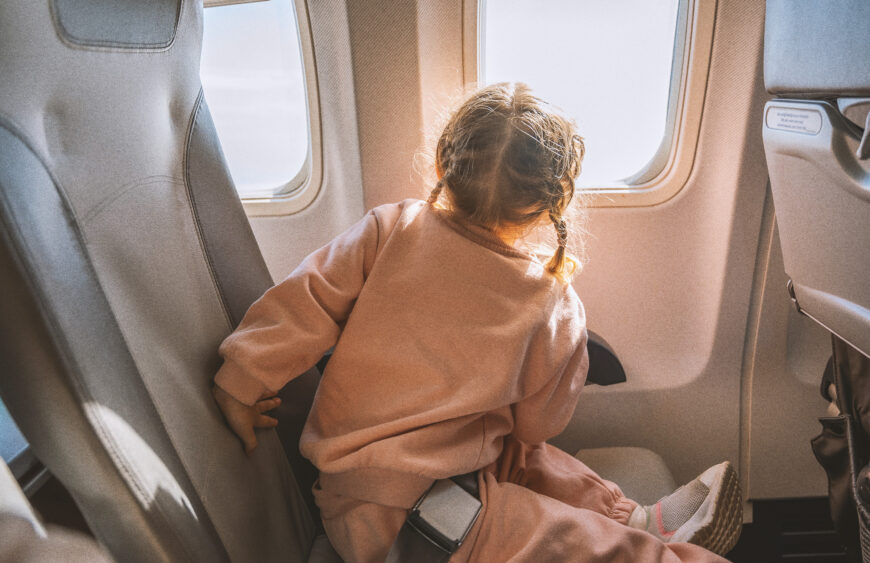
You’ve got the flights booked. Now you’re staring at the seat map, cursor hovering, wondering if it’s possible to make a bad decision that will haunt you for 15 hours at 35,000 feet.
The answer is: yes, absolutely, and plenty of parents have done it. But you don’t have to. This week three separate seat-related questions landed in our Facebook group on the same day, which tells you everything about how universal this particular anxiety is. So we pulled the community’s best answers together, added a few hard facts, and made the guide we all needed before our first long-haul booking.
The one thing is depends on
The Bulkhead Seats
Window v.s. Aisle
The Centre Block
Car Seats on Planes
The Seats to Avoid
The Seat Map
Before you get into rows and configurations, there’s one question that changes everything: does your child have their own seat, or are they flying as a lap infant?
If they’re on your lap, your priorities are comfort and survival. If they have their own seat, you also need to think about how a car seat fits and whether bulkhead armrests will work against you. Everything else flows from this. If you’re still deciding whether to buy a seat at all, this breakdown of lap infant vs. buying a seat covers the full picture.
The bulkhead row is the wall at the front of a cabin section. It comes up in almost every seat discussion in the group, and for good reason. You get extra floor space, nobody reclines into your face, and on long-haul widebodies it’s where the bassinets attach. If you’ve got a young baby who’s still bassinet-eligible, it’s genuinely the best place on the plane.
But the group is consistent about the caveats, and they’re worth knowing before you pay extra to sit there.
Bassinets cut off earlier than you think. Most airlines stop bassinet eligibility at around 6 months, 20 pounds, or when a baby can sit up independently. The exact limit varies by carrier. A few parents in our community have arrived at the gate expecting a bassinet for their 8-month-old and been turned away. Check your specific airline’s policy before you book, not after.
The armrests don’t lift. On most aircraft, bulkhead seats have fixed armrests because the tray table folds out of them. This means you can’t create the extra sprawl space that makes life easier on a night flight. On a 15-hour flight with a wriggly toddler, that matters.
No under-seat storage. Everything goes in the overhead bin for takeoff and landing. If you’re someone who likes your nappy bag at your feet, this will frustrate you. Pre-pack a small personal item that stays on your lap.
You’ll share the space. Other families with babies get assigned here too. That’s sometimes lovely. It’s sometimes a lot of noise in one concentrated area. Worth knowing.
The bulkhead is still a strong choice for babies under 6 months on long overnight flights. For toddlers with their own seat, it’s less of an automatic win.
This is the question that generates the most split opinions in the group, and it comes down to what you’re actually trying to do on the flight.
The case for the window: You can lean against the side wall, which is genuinely useful on an overnight. You won’t have passengers stepping over your legs to get to the toilet. If you’re breastfeeding, the window gives you more privacy. And for babies who get distracted by movement, having a wall on one side is containment. Several parents in this week’s thread said they’d choose window every time for a night flight, specifically because being able to wedge yourself against the wall with a sleeping baby on your chest is the closest thing to comfortable that long-haul economy offers.
The case for the aisle: When your toddler needs to move, needs a nappy change, or is losing their mind and needs a lap around the cabin, the aisle means you don’t have to climb over anyone. On a busy daytime flight where you know your child won’t sleep, aisle parents tend to be less stressed. The group’s general advice: if you’re expecting to walk the baby to sleep, take the aisle. If you’re hoping the baby sleeps on you for most of the night, take the window.
If there are two of you: Book window and aisle in the same row, not two adjacent seats. The middle seat between you will very often stay empty, especially if the flight isn’t full. If it doesn’t, most passengers are more than willing to swap one middle seat for an aisle. You’ll end up with a row to yourselves more often than you’d think.
Three adults and one toddler on a 15-hour flight was the specific question that sparked the most discussion in the group this week. The recommendation that came up most consistently was the centre block on a widebody.
On a Boeing 777 or Airbus A380, the centre section typically has four seats across in economy. For a group of three adults with a 2-year-old, taking the full block of four gives you the toddler in the middle with adults on either side and nobody dealing with strangers on the left or right. You can pass the child between seats when one adult needs a break. You have access to both aisles. And when the toddler eventually takes up two seats’ worth of horizontal sprawl at 2am, everyone can rearrange without disturbing other passengers.
Check the seat map for your specific aircraft on SeatGuru before you book. Not all centre blocks are equal. Some 777 configurations have a three-seat centre, not four. The layout matters.
Two separate posts this week asked about bringing a car seat on board, and the community’s experience was pretty clear: for babies and young toddlers who sleep well in their car seat, it’s worth every bit of the hassle.
The main argument for bringing it: familiarity. A baby who naps reliably in their car seat at home will very often nap in the same seat on a plane. Several parents described it as the single best thing they did on their first long-haul, because it meant their baby actually slept. The FAA recommends using a car seat on a plane rather than holding a child, and while it isn’t required on US domestic flights even when a seat is purchased, safety organisations are consistent that it’s the safest option.
A few practical notes from the community:
Your car seat needs to be FAA-approved. Check the label. It needs to say “This restraint is certified for use in motor vehicles and aircraft.” CARES harnesses are an alternative for children between 22 and 44 pounds if you want something lighter to carry.
Car seats go in window seats on planes, not aisles. Airlines require this so the seat doesn’t block exit access. Book the window and accept that you’ll be climbing over it to get out.
The baby should not be in the car seat for the entire flight. It’s for takeoff, landing, turbulence, and naps. This came up in this week’s thread specifically because one parent had added a clarifying edit to say exactly this, so it’s clearly a common concern worth addressing.
If you decide not to bring it on board, gate-checking is the better option over hold check-in. It reduces the chance of damage and you get it back at the jet bridge on arrival.
A few things the group and the data are consistent on:
Exit rows are not available for families with children. Airlines won’t seat you there. You can stop looking.
The very back of the plane is louder because of the engines and the proximity to the toilets. For a sleeping baby, the back is a harder environment than the front half of the cabin. Over-wing is the sweet spot for turbulence sensitivity if that matters to you.
Seats directly in front of the galley in the middle of a long-haul aircraft can be noisy and brightly lit throughout the night. The crew work in there on overnight flights. Worth checking on SeatGuru whether the row you’re booking sits against a galley wall.
One thing the community’s collective experience keeps showing is that the seat map tells you less than you’d think. Aircraft swap. Bassinets get double-assigned. Seats you paid to select end up moved at check-in. The parents who have the smoothest long-haul experiences seem to have one thing in common: they call the airline after booking to confirm bassinet requests, confirm car seat policies, and flag that they’re travelling with a young child. It takes ten minutes. It removes a lot of the uncertainty.
Do your homework on the seat map. Then call. Then board last and settle in. The flight is going to be what it’s going to be, but you’ll have given yourself the best possible starting point.
Drop your email and we'll keep you in the loop with what's happened in the community of 460,000+ parents, what's new on the site, and the occasional thing we think is genuinely worth knowing. That's it.
You have successfully joined our subscriber list.
Weekly community recap:
The best questions, tips and conversations from our 460+ family Facebook group
New articles:
The latest from the travel advice blog, as soon as they’re live
Product updates:
New rental gear, shop additions, and restocks worth knowing about
Brand news:
New cities, new features, and where Tots in Tow is headed next

Rental Gear. Adventure Kits for all ages, and family friendly destination recommendations. We’re here to make family travel less shitty.


No results found. Please try another keyword.
Don't have an account yet? Sign up for free
Please enter your username or email address. You will receive a link to create a new password via email. Remember now? Back to login
Already have an account? Log in