EU Just Banned Family Seating Fees. Here’s What It Actually Means for Your Next Flight.
on
05/07/2026
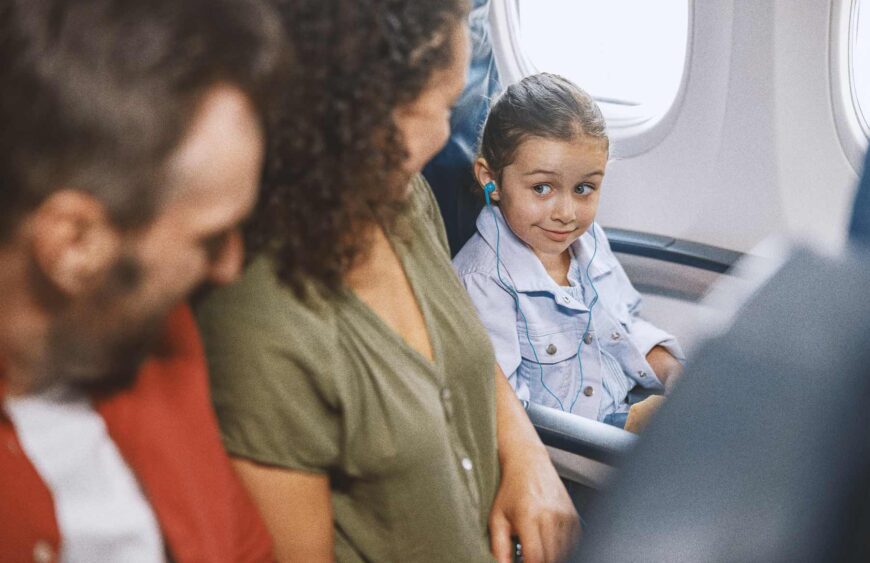
You’re booking a flight. You get to the seat map, and there it is: the little icons showing you exactly which seats are free and which ones cost extra to sit next to your own kid. You pay it, because what’s the alternative, hoping a stranger swaps with you at the gate?
That headline you saw last month, “EU bans family seating fees,” made it sound like this is already over. It isn’t. Not yet, anyway. Here’s what’s actually confirmed, what’s still up in the air, and what to do the next time you’re booking.
On June 15, 2026, negotiators from the European Parliament and the Council of the EU reached a provisional political agreement on a major overhaul of EU261, the regulation that governs air passenger rights across Europe. Buried in a package that also covers baggage fees and boarding passes is a rule aimed squarely at families: airlines will no longer be allowed to charge parents extra to sit next to their children under 14. The same free adjacent seating applies to passengers with disabilities and the person accompanying them.
It’s a direct response to something most of us have lived through. Budget carriers in particular have leaned on “reserve a seat together or risk being split up” as a quiet upsell, often €8 to €15 a segment. Under the new rules, that goes away.
What's still provisional (and the timeline)
Here’s the part that got lost in the headlines: this is a political agreement, not a law. It still has to clear two more hurdles. The European Parliament votes on it in a plenary session on July 8, 2026, and the Council needs to give formal sign off too. Assuming both happen, industry expectations point to the new rules taking effect sometime in 2027, giving airlines a transition period to update their booking systems and fare structures.
So right now, the current rules still apply. Nothing has changed for a flight you’re booking this week.
What this means for trips booked now vs. trips in 2027 and beyond
If you’re flying before the new rules kick in, you’re still in the old system. Airlines can still charge to guarantee a seat next to your child, and unless you pay, you’re relying on the airline’s goodwill (or a fellow passenger’s) to end up together.
If your trip is 2027 or later, this should be moot by the time you fly, assuming the plenary vote and formal adoption go as expected. Worth keeping an eye on, but not something to build your whole booking strategy around just yet.
Here’s the part that got lost in the headlines: this is a political agreement, not a law. It still has to clear two more hurdles. The European Parliament votes on it in a plenary session on July 8, 2026, and the Council needs to give formal sign off too. Assuming both happen, industry expectations point to the new rules taking effect sometime in 2027, giving airlines a transition period to update their booking systems and fare structures.
So right now, the current rules still apply. Nothing has changed for a flight you’re booking this week.
Which airlines this affects
Once in force, the rule covers any flight departing from an EU airport, regardless of which airline you’re flying, plus flights arriving into the EU on an EU based carrier. If you’re flying a non-EU carrier from outside the EU, this rule doesn’t reach you, and you’ll want to check that airline’s own family seating policy directly.
One airline has already moved early. Ryanair announced on June 25, 2026 that it would offer free seat allocation after check-in for families who don’t want to pay for reserved seating, following pressure from EU regulators and a UK Competition and Markets Authority investigation into its previous policy. There’s a catch: the free seats are typically toward the back of the plane. Front rows and other premium spots still cost extra.
What to do in the meantime
Don’t stop selecting seats yet. Until the new rules are formally adopted and in force, the safest move for a flight booked now is still to actively choose your seats, whether that means paying the fee or picking whichever free option your airline offers. If you’re flying Ryanair specifically, it’s worth checking their updated policy before you book, since the “free after check-in” seats aren’t the same as choosing your row upfront.
It’s also worth calling or messaging the airline directly if seat selection isn’t available or affordable. Most carriers already try to seat young children next to an adult when asked, even without a legal requirement to do so.
The bigger picture
This is real progress. An agreement between Parliament and Council after years of a stalled reform process is not nothing, and the direction of travel here is clearly in families’ favour. But “provisional agreement” and “law” are two different things, and there’s a real vote still to come in July. We’ll be watching it closely and will update this the moment it’s confirmed, but for now, treat the headline as good news on the way, not a rule you can rely on yet.
We use cookies to ensure that we give you the best experience on our website. If you continue to use this site we will assume that you are happy with it.