Renting a car with kids is one of those things that sounds stupidly simple.
You land, you grab your keys, you drive off into your holiday. In reality, it’s often the first moment where travel confidence gets quietly stress tested. You’re tired, out of routine, holding a baby carrier, and being asked about insurance upgrades while a toddler is licking something they absolutely should not be licking.
Parents rarely worry about the driving itself. What they worry about is everything wrapped around it. Car seats, unfamiliar roads, local rules you’re not fully sure about, and the creeping fear that you’ve already made a bad decision before the trip has properly started. None of this shows up on the booking page.
For many families, a rental car represents freedom. You leave when you want, stop when someone suddenly needs the toilet, and avoid dragging a stroller onto public transport at peak hour. Bliss. But at the same time, it adds responsibility. You are now navigating a new place while keeping small humans safe and relatively calm. That combination is where stress tends to sneak in without you even noticing it happen.
This article isn’t here to scare you off renting a car. It’s here to help you make a choices that actually support your trip instead of quietly undermining it. A rental car should make things easier. If it doesn’t, you feel it very quickly. We’re merely here to remind you that a lot of us parents felt the same way the first time we rented a car with a baby and had that “oh shit” moment.
Why renting a car with kids changes the whole rhythm of your trip
When you travel with kids, the car stops being just transport. It becomes a daily base of operations. Snacks get eaten there. Naps happen there. Arguments start there and, occasionally, end there. When the car works for your family, everything else feels smoother. When it doesn’t, even short outings feel more annoying than they should.
Most parents underestimate how much time they’ll actually spend in the car. What looks like a quick drive on Google Maps stretches out once you factor in traffic, missed turns, and the fact that children experience time very differently from adults. A cramped or uncomfortable car amplifies every small annoyance. Over a week, those annoyances will add up.
The car also sets the tone for your days. A calm, easy drive can carry into the rest of your plans. A stressful one tends to follow you around longer than you’d like. That’s why choices that feel minor at booking stage often matter far more once you’re actually on the ground.
This becomes especially obvious on trips where the car isn’t optional. Road trips, rural stays, beach holidays, and anywhere with limited public transport all place the car at the centre of your plans. If the car works, the trip feels flexible and forgiving. If it doesn’t, you start planning your days around avoiding it.
Car seats, local laws, and the part nobody enjoys researching
Car seat laws vary by country, and that alone is enough to send parents down a late night internet rabbit hole. Some places focus on age, others on height or weight, and enforcement ranges from very strict to surprisingly relaxed. What stays consistent is physics. A child unrestrained in a crash faces the same risk everywhere. It helps to browse our country guides. We try to keep the seatbelt laws updated for each country.
Parents often assume the rental company will guide them properly. Don’t. Sometimes they do. Sometimes they don’t. Sometimes you get a staff member who’s never installed a car seat in their life. Rental staff usually follow local minimum requirements, not best practice. That gap is where families get caught, usually when they’re tired and least in the mood to debate safety standards.
There’s also the uncomfortable reality that what’s legal is not always what feels safe to you as a parent. Some destinations allow children to ride without seats at ages that would never fly at home. That doesn’t suddenly make it a good idea, especially on unfamiliar roads with unfamiliar driving habits. Just because your cab driver Niko says it’s okay to ride with your infant in your lap for the 45 minute drive to your hotel in Rhodes doesn’t mean you have to be cool with it. Also put your cigarette out Niko.
This is why many families default to their home standards. If your child uses a car seat at home, they use one on holiday too. Deciding that early removes a lot of stress later when energy and patience are already running low.
Bring your own car seat or rent one
This is the question that comes up every single time in parent forums, and the answer is frustratingly unspecific. It depends.
Bringing your own car seat gives you control. You know its history, you know it hasn’t been in an accident, and you know how to install it properly. That familiarity takes one big unknown off your plate when everything else is new.
The downside is obvious the moment you try to carry it through an airport. Car seats are bulky, heavy, and oh so inconvenient. They complicate transfers and can make already long travel days feel even longer, especially if you’re juggling more than one child.
Renting a car seat sounds easier until reality kicks in. Availability is not always guaranteed, even if you booked it. Quality varies wildly. Some seats are modern and well maintained. Others look like they’ve lived more lives than cats already. You usually don’t know which one you’re getting until it’s too late to change your mind.
Many experienced parents choose based on destination and trip length. Short stays might justify renting. Longer road trips often push families toward bringing their own. What matters most is deciding in advance and planning around that choice, not improvising while jet lagged.
Installation, compatibility, and why practice beats confidence
Even the best car seat is only safe if it’s installed properly. This is where unfamiliar cars and unfamiliar systems start causing trouble. ISOFIX anchors may differ. Seat belt paths may not match what you’re used to. Suddenly something you’ve done a hundred times feels weirdly stressful.
Parents who rely on base installations at home often forget to practice seat belt installs. On the road, that flexibility matters. Knowing how to secure a seat without a base can turn a frustrating situation into a manageable one.
Language barriers add another layer. Instructions may not be in a language you understand. Staff may want to help but, honestly they usually lack proper training. Practicing at home removes guesswork when you’re tired and under time pressure.
The goal is to feel confident in how you instal it. A calm installation sets the tone for the drive ahead and removes one more thing from your mental load.
Choosing a car that actually fits your family, not just the booking category
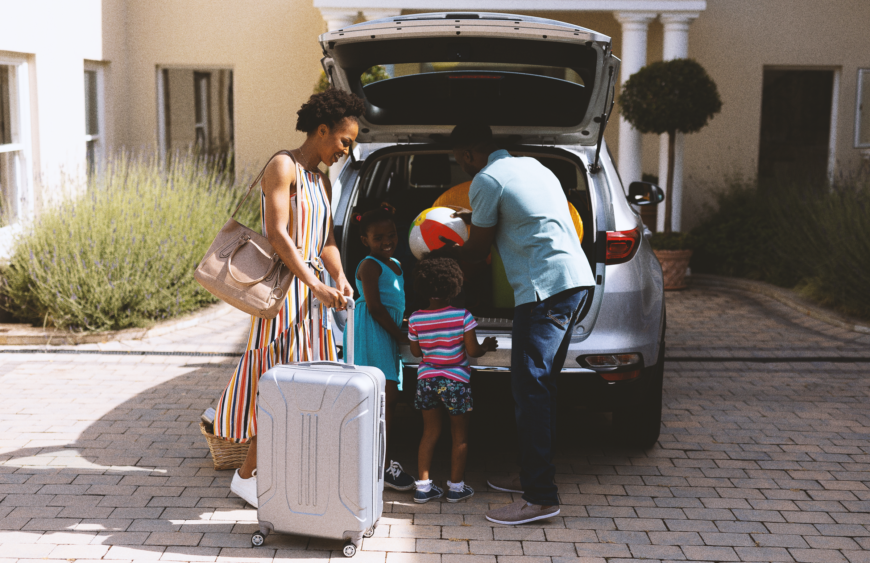
Rental car categories are optimistic at best. An “economy” car that works fine for two adults often collapses under the reality of family travel. Strollers, suitcases, diaper bags, and all the extra stuff children require take up space very quickly.
Parents often focus on passenger numbers, but boot space is usually the real issue. A car that technically seats five may struggle to fit a stroller and two suitcases. That forces compromises that affect comfort every single day.
Going one size up usually costs less than expected and pays off constantly. More space means easier packing, fewer arguments, and less swearing under your breath when loading the car. It also gives flexibility for groceries, beach gear, or the souvenirs you swore you wouldn’t buy for your kids.
On longer trips, this becomes even more obvious. When the car is part of daily life, space isn’t a luxury. It’s self preservation.
Driving culture, confidence levels, and knowing your limits
Driving rules are one thing. Driving culture is another. Some places are calm and predictable. Others are loud, fast, and creative with lane markings. Both are manageable, but not everyone enjoys both.
Parents need to be honest about their own comfort level. White knuckle driving with kids in the back drains energy fast. That stress doesn’t magically disappear when you park. It tends to bleed into the rest of the day. If you’ve ever driven in the south of Italy, you will know what we’re talking about. Or if you’re German, driving anywhere else… we feel your pain. We always recommend going on Youtube and searching any videos on “driving culture in XYZ country”. Sometimes there are often videos of people explaining the culture differences and what to look out for. We personally do this before every trip to a new country. It reduces the mental load, and helps us know what to expect when we are behind the wheel. You don’t want to be flipping off people who honk at you, only to find out, they actually are trying to help you out. It helps to be a little strategic in other ways as well. Some families rent only outside cities. Others avoid night driving or limit long distances. Small adjustments can dramatically improve how a trip feels. Your rental car should expand your options, not keep you in a constant state of alertness.
Insurance, mess, and why peace of mind matters more with kids
Rental insurance feels abstract. And that’s before you actually need it. With kids, small incidents are more likely. Spills happen. Sand gets everywhere. Vomit is unfortunately always a high probability. Not many rental companies are forgiving about this.
Understanding what counts as normal wear versus chargeable damage matters more than parents expect. So does knowing your deductible. The last thing you want is a surprise bill at drop off while managing tired kids. Or even worse, three weeks later in the mail.
Full coverage often feels expensive upfront. Many families still choose it because it removes a layer of anxiety. When traveling with kids, reducing mental load has real value. Peace of mind is not indulgent. It’s sadly practical.
It also changes how you drive. Feeling protected allows you to focus on safety instead of worrying about financial consequences every time you hear a strange noise.
Pacing, breaks, and accepting that kids do not travel like adults
Adults power through drives. Kids don’t. They need breaks before they ask for them. They need movement, snacks, and resets. Ignoring that reality turns short drives into emotional endurance tests.
Planning regular stops isn’t inefficient. It’s realistic. Parks, rest areas, and scenic pull offs become tools for keeping everyone regulated.
This also affects daily planning. A destination that looks close on a map might feel far once broken into child friendly segments. Building that reality into your itinerary avoids frustration later.
A rental car gives flexibility. Using that flexibility intentionally is what makes it family friendly instead of exhausting.
Too Long? Here are the most common questions we’re asked
Do I legally need a car seat when renting a car abroad with kids?
In most countries, yes. Laws vary, but many destinations require appropriate car seats based on age, height, or weight. Always check local regulations before you travel.
Is it safer to bring my own car seat or rent one?
Bringing your own guarantees familiarity and condition, but it adds hassle. Renting can be convenient, but quality and availability vary. Many parents choose based on trip length and destination.
Can I use my home car seat in another country?
Usually yes, but you must ensure it can be installed with seat belts if ISOFIX anchors differ. Always check compatibility before you go.
Are rental car seats always available if I book them?
Not always. Availability can be limited and substitutions happen. This is why some parents prefer to bring their own or confirm repeatedly before arrival.
Is full insurance worth it when traveling with kids?
For many families, yes. For ours? Definitely! It reduces stress if something goes wrong and covers scenarios more likely with children, like interior mess or minor damage.