When screen time isn’t enough
There’s a special kind of panic that sets in the night before a flight: parents hovering over backpacks, shoving in random toys, and wondering which ones will actually save the day at 30,000 feet. Every parent knows the gamble, what works at home might flop on a plane, and what looks genius on Pinterest might just end up under the seat, lost forever. Screens help, of course, but even the best tablet battery won’t last a transatlantic flight, and toddlers can only binge Peppa Pig for so long before they (or you) melt down.
That’s where smart toy choices come in. The best plane toys aren’t flashy or complicated. They’re portable, quiet, and engaging enough to stretch out those long, cramped hours in the sky. And most importantly, they’ve been tested in the wild by parents who’ve lived through the screaming, the seat-kicking, and the desperate bargaining.
What you’ll find in this guide:
Why Some Toys Don’t Travel Well
What Makes a Great Toy
Parent Tested Winners by Age
Toys For Multi-Kid Families
Let’s Talk About Screen Time
What Parents Regret Packing
Rotate and Survive
FAQs
Why not every toy works at 30,000 feet
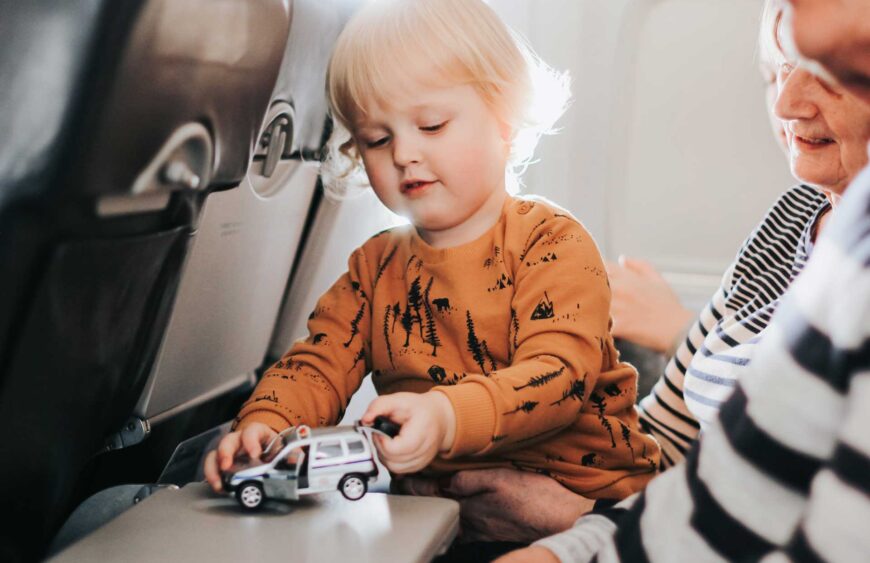
The plane is its own environment, and many toys that seem perfect at home are total disasters in a cabin. Anything noisy will win you glares before you’ve even left the gate. Toys with tiny detachable pieces quickly scatter across the floor and disappear into that mysterious gap under the seat. Even markers and crayons can turn into a mess when turbulence sends them rolling three rows back.
Parents who’ve been through it will tell you: the goal isn’t to replicate the playroom, it’s to pack selectively for this strange, confined space. That means thinking less about what entertains your child in a living room and more about what entertains them in a space the size of a shoebox, surrounded by people who did not sign up to babysit your toddler.
What makes a great plane toy
So, what actually works? A good plane toy usually ticks a few simple boxes. First, it has to be portable. If it doesn’t fit in a carry-on, it’s obviously not worth the space. Second, it needs to be quiet. Buttons that sing or beep will make you some enemies real fast. Third, it should involve as few loose parts as possible. That 50-piece puzzle may look like “hours of fun,” but once three pieces vanish under the seat, it’s “hours of whining” and you bending into positions that would make a pretzel jealous.
The best toys also tend to be versatile. Reusable sticker books, for example, can amuse a toddler who just wants to peel and stick, while a preschooler can create entire little worlds with them. And finally, don’t underestimate the comfort factor. Sometimes the toy that works best isn’t even new (or a goddamn toy) it’s the worn stuffed animal that smells like home or the wrapper a toy came in. Seriously. Kids are frustratingly weird.
Parent-tested winners by age
Parents who travel a lot with little ones end up swearing by a few categories of toys. For babies, it’s often soft books, crinkle fabric, or high-contrast toys that can be clipped to a car seat or your bag. They don’t last long, but even ten minutes of interest is worth gold when you’re strapped in with a squirming infant.
Toddlers, who are notorious for short attention spans, usually do best with reusable sticker books, magnetic drawing boards, or small sensory toys they can fidget with. A small notepad with chunky crayons (in limited colors, to reduce the number you’ll be chasing) is another staple. Parents often mention fidget spinners, pop-it boards, or anything that involves pressing, sliding, or turning knobs. They keep little hands busy without creating noise.
By the preschool years, attention spans stretch just enough for slightly more complex options. Travel-friendly activity books, magnetic travel games, and even tiny Lego sets packed into a zip bag can all work, provided you manage expectations. Some parents like to prepare “surprise bags” filled with small, inexpensive toys from a dollar store and hand them out every couple of hours. The novelty factor is half the fun.
Across all ages, one constant remains: kids eventually want a screen. Tablets or phones with downloaded shows are still the single most reliable “toy,” but when paired with these hands-on options, they work as part of a rotation rather than the only fallback.
Juggling toys when you’ve got more than one kid
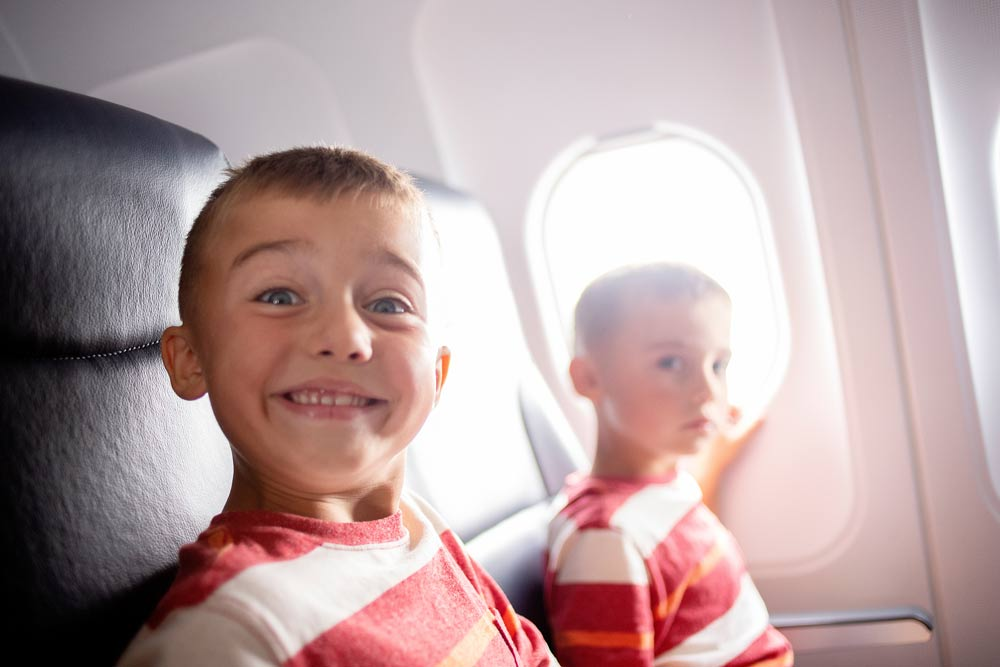
Traveling with siblings brings its own challenges. What entertains a toddler for twenty minutes may bore a six-year-old instantly, and the big kid’s intricate puzzle might be full of choking hazards for the baby. The trick isn’t packing twice as much, it’s finding the overlap.
Magnetic drawing boards, for example, are surprisingly adaptable. Toddlers scribble randomly, preschoolers draw stick figures, and older siblings create guessing games out of it. Sticker books work the same way: one child sticks, another arranges, another narrates the story. By choosing toys with layers of play, you avoid carrying separate bins for each child.
It also helps to plan for fairness without obsessing over equality. If there’s one tablet, assign turns and set timers so the handover feels predictable. Rotate toys between kids rather than trying to duplicate everything. Often, the toy your toddler rejected an hour ago becomes thrilling once their sibling picks it up. The goal is not to eliminate squabbles but to keep the rotation moving enough that boredom doesn’t have time to turn into chaos.
Let’s talk about screen time on planes
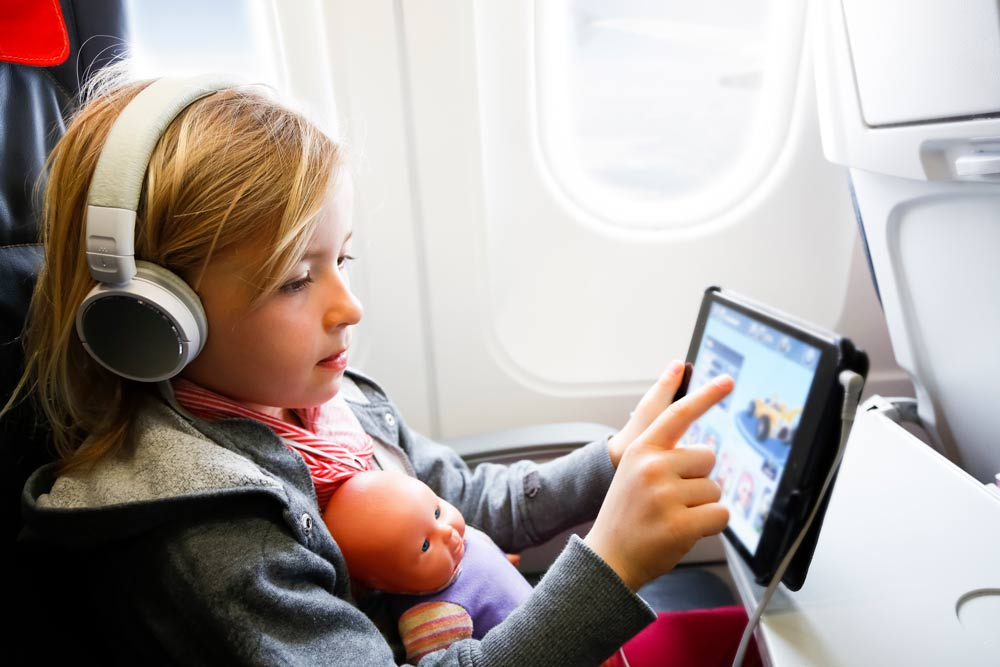
For many families, the tablet is both a lifesaver and a guilt trigger. The truth? It works, and long flights are not the time to start a zero-screen policy. The American Academy of Pediatrics (yes, we did some research) recommends keeping screen use balanced, but they also acknowledge that travel days are exceptions where survival matters more than routine. Yes. Even scientists understand what it’s like to be a parent.
The best approach is to treat the tablet as part of a rotation, not the whole plan as tempting as it may be. Load it up before you fly with shows and apps that don’t need Wi-Fi. Parents often recommend apps like Endless Alphabet, Peekaboo Barn, Sago Mini World, and Toca Boca games for toddlers and preschoolers, while PBS Kids and Netflix Kids downloads cover older ranges. In terms of shows, Bluey is a runaway favorite for its calm, short episodes. Paw Patrol, Peppa Pig, and Octonauts also make frequent appearances, while a full-length Disney or Pixar movie can cover a longer stretch. We like to encourage new fathers to watch Bluey. Just to watch them cry. We can recommend a few episodes if you want 😉
Child-sized headphones are essential, ideally volume-limited ones to protect little ears and your seatmate’s sanity. When used in bursts, a cartoon after takeoff, a game during cruise, a film before landing. Screen time becomes less about zoning out and more about spacing out moments of peace across the journey.
What parents regret packing
Every parent learns the hard way that some toys are better left at home. Top of the regret list: anything noisy. Even if your child loves it, your seatmates won’t. Closely behind are toys with too many small pieces. A puzzle that scatters across the floor or Lego bricks that vanish into the cracks of an airplane seat are more stressful than fun.
Messy toys also get low marks. Play-Dough seems like a smart travel activity until it’s ground into upholstery. Glitter pens, slime, and kinetic sand are equally messy and can turn you into the most unpopular family on board. We recommend sticker books, but for the love of God, don’t just stick them everywhere. The takeaway? Stick to simple, self-contained options that don’t create more problems than they solve. And don’t ever let us hear about you not cleaning up after yourself. Yes the “post-it note hack” on Pinterest works at distracting but holy hell don’t leave hundreds of post-it’s for the crew to clean up.
How to rotate and survive the flight
Even the best toys lose their magic if handed over all at once. Savvy parents stagger the entertainment. Start the flight with something small and familiar, then introduce new toys gradually as boredom creeps in. Some wrap tiny toys like gifts. Not because the wrapping paper is fancy, but because peeling it off burns an extra five minutes.
Think of toys as one tool in a kit that also includes snacks, stories, a walk down the aisle, and hopefully a nap. By mixing and matching activities, you stretch each one longer and keep your child from burning out on any single thing too quickly.
Conclusion: It’s less about the toy, more about the strategy
Parents often believe there’s a magical toy that will guarantee a peaceful flight. The truth is less glamorous. It’s not about finding the “perfect” toy, but about combining a few smart, parent-tested options with a strategy that includes timing, rotation, and flexibility. The right toys make a big difference, but so does how you use them.
If you pack thoughtfully, keep expectations realistic, and rotate between activities, your kids may surprise you, not by being angelic for ten hours straight, but by giving you enough peaceful stretches to make the journey manageable. And on a long-haul flight with kids, that’s the definition of success.
Too Long? Here are the most common questions we’re asked.
A: Parents find that reusable sticker books, magnetic drawing boards, and simple sensory fidgets keep toddlers busiest. Pacifiers or sippy cups can also double as ear-pain relief tools during takeoff and landing.
A: Stick to toys with few pieces, attachables like pacifier clips, and consider a travel tray that sits on the seat. Many parents also pack a “toy leash” which is a strap that clips lightweight toys to the tray table or car seat.
A: Tablets are incredibly effective, but they work best when balanced with hands-on play. Load them with offline apps like Endless Alphabet or Toca Boca, and download shows such as Bluey or Paw Patrol for predictable calm moments.
A: Skip noisy, messy, or piece-heavy toys. Play-Dough, glitter pens, and anything with multiple small parts usually cause more problems than they solve in the air.
A: Think in terms of rotation, not quantity. A small mix of four to six activities. Ssome familiar, some new, is usually enough for most children. The trick is pacing them out instead of unloading everything at once.