Jump to Section:
When Tiny Ears Meet Cabin Pressure
Why It’s Tough on Toddlers
Timing Tricks
Other Tricks That Work
What to Skip
Comfort Beyond the Ears
When it Doesn’t Pass
From Dread to Doable
FAQs
When tiny ears meet cabin pressure
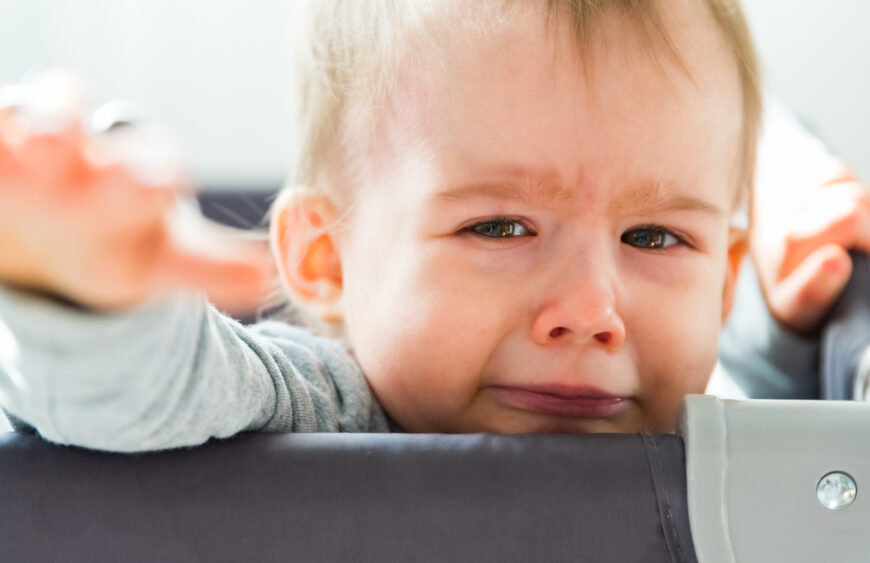
If you’ve ever sat through takeoff with a toddler on your lap, you already know the soundtrack: fussing, then crying, then full-blown shrieking as the cabin climbs. It’s not that your child suddenly hates airplanes (although let’s be honest, they might). It’s that their little ears can’t handle the pressure shift the way an adult’s can. For parents, it’s a helpless moment you can’t stop the plane from climbing, but you can help your child cope.
The good news? You’re not doomed to spend every flight consoling a toddler in tears. Ear pain on planes is temporary, predictable, and most importantly, manageable. With the right mix of preparation, distraction, and a few tricks borrowed from parents who’ve been there, you can keep your toddler far more comfortable and maybe even save your own sanity in the process.
Why airplanes are tough on toddler ears
Airplane ear, or “ear barotrauma,” happens when the air pressure in the cabin changes quickly during takeoff and landing. Adults usually just swallow, yawn, or chew gum to equalize. Toddlers, though, are not built for that kind of self-regulation. Their eustachian tubes, the tiny passageways that equalize pressure between the ear and nose are narrower and less efficient. Add in the fact that toddlers don’t yet understand how to yawn on command or “pop” their ears, and you’ve got a recipe for discomfort.
What parents need to remember is that this is common and not dangerous. The pain feels sharp and unfamiliar, but it doesn’t damage their ears under normal circumstances. It’s simply uncomfortable, and toddlers are not exactly known for their ability to tolerate discomfort quietly.
Timing tricks:
Setting yourself up before takeoff
Parents often think the fight begins when the wheels leave the ground, but really, it starts in the planning phase. A good first step is to consider their health. If your toddler has a bad cold, sinus infection, or ear infection, the swelling in their eustachian tubes can make flying excruciating. Pediatricians generally advise postponing flights in those cases if possible. If travel can’t be delayed, it’s worth calling your doctor to talk through safe options.
The way you time feeds also matters. Children who nurse or take a bottle should ideally start right as the plane begins rolling down the runway or as the descent starts, since the sucking motion is one of the best natural ways to equalize pressure. Waiting until the right moment gives you the most benefit. And then there’s the bigger decision about what time of day to fly. Morning flights often mean less congestion at the airport and fewer delays, which helps everyone stay calmer. Some parents swear by nap-time flights, but that only works if your child reliably sleeps in motion. For a toddler who fights every nap outside their crib, being both tired and in pain is a recipe for disaster.
Tricks that actually work
When the pressure change hits, your best bet is to keep your toddler swallowing or chewing. For babies and young toddlers, bottles and breastfeeding are almost always the most effective because the sucking and swallowing motion works wonders. Pacifiers can be just as helpful and are often easier to whip out at the right moment, though it pays to pack a backup in case one disappears under a seat mid-flight.
As toddlers get older, sippy cups and straws are excellent tools, since even slow sips of water keep the swallowing reflex going. Chewy snacks like raisins, fruit gummies, or small pieces of granola bar can also do the job, provided your child is old enough to handle them safely. Some parents turn it into a game by encouraging their child to “chew like a cow” or pretend they’re blowing out birthday candles. The sillier the better. Anything that makes them open and close their jaw or swallow more often will help.
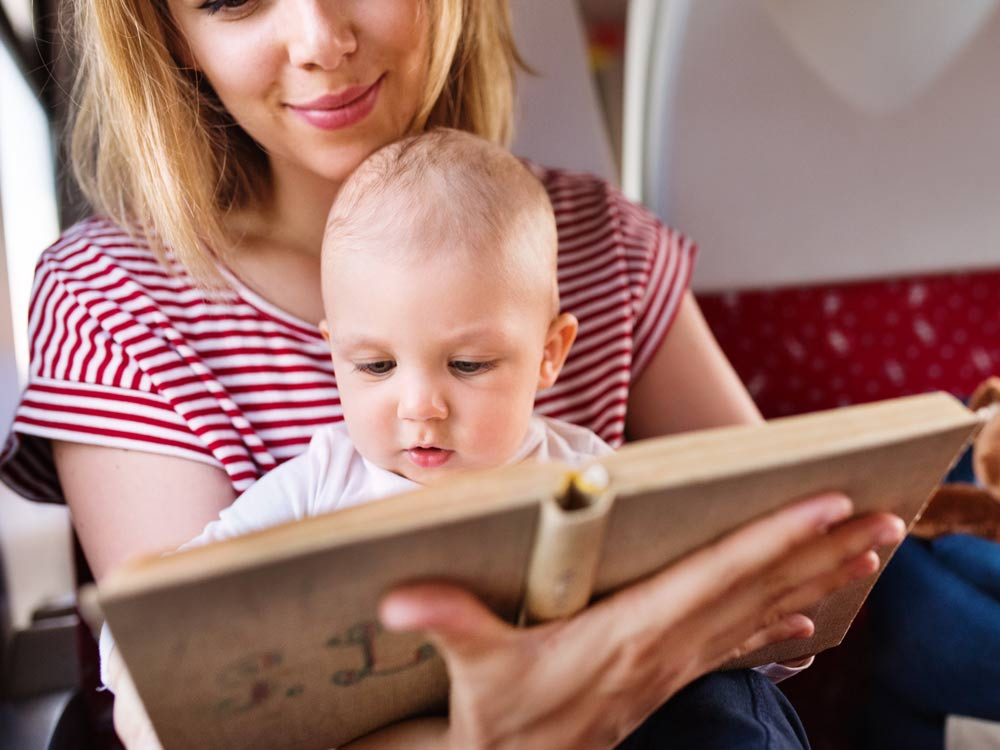
At the same time, distraction buys you extra minutes of calm. Singing a favorite song, showing them a new toy, or queuing up a video can keep their mind off the strange sensation until their ears equalize. It rarely works as a standalone solution, but in combination with sucking or chewing it makes those 20 minutes far more bearable.
What to skip:
And what doctors actually recommend
Because parents trade tips like currency in travel forums, you’ll run into advice that sounds convincing but isn’t always safe. Hard candies and lollipops, for instance, may help older kids, but they’re a choking risk for toddlers and best avoided. We’ve seen that one more times than we can count. Medications are another hot topic. Antihistamines and decongestants are not recommended for young children unless prescribed specifically by a pediatrician; they can have side effects and usually don’t solve the problem anyway.
Some parents try pressure-regulating earplugs made for kids. These can help in certain cases, but they’re not a guarantee. More importantly, a toddler who has never tolerated anything in their ears is unlikely to cooperate the first time you try on a crowded plane. If you want to experiment, do it at home during play so it doesn’t become a battle at boarding.
Above all, remember that there is no miracle fix. Ear pain sometimes takes a few minutes to fade even when your child is sucking, chewing, or swallowing. Staying calm yourself makes a bigger difference than you might think. Toddlers are experts at reading their parents’ stress levels. Not only do they feed off of your last bit of patience, they can also feed off your energy. So try to be P for Positive.
Comfort beyond the ears
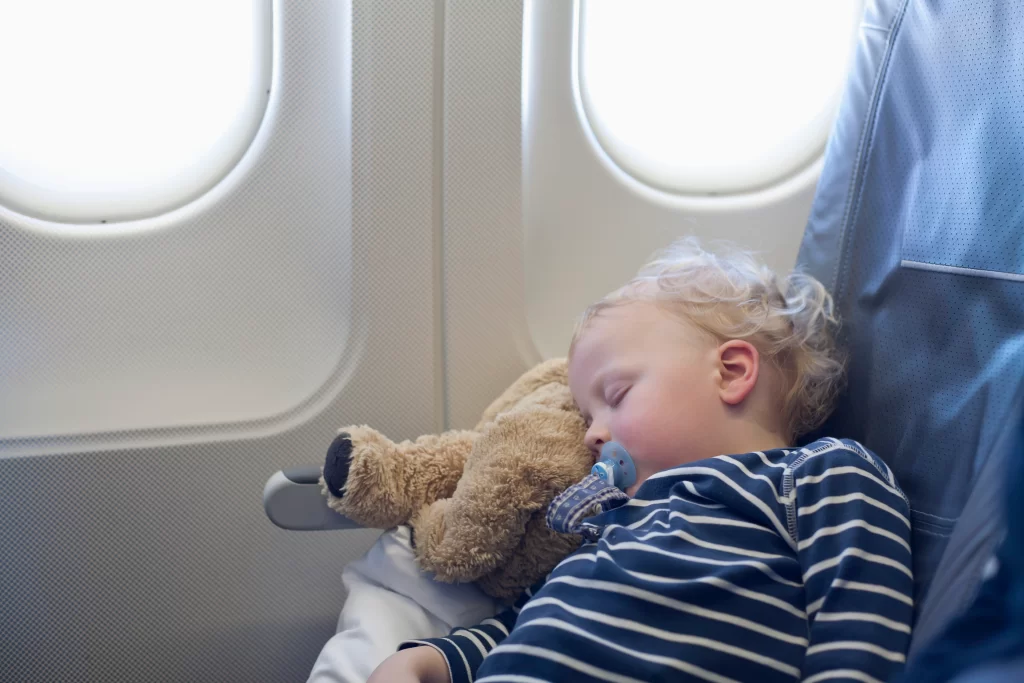
Sometimes what sets a toddler off is less about the ears and more about the experience of being confined, overstimulated, and overtired. Comfort objects like a favourite blanket or stuffed animal are not just emotional crutches; they’re proven sources of calm when everything else feels overwhelming. Distraction plays a role here too, though the goal isn’t to fill the whole flight with entertainment. It’s to have something in reserve for those pressure-change moments.
Think carefully about seating as well. Some toddlers settle instantly when held tight in a parent’s arms; others are far calmer strapped into their familiar car seat where they feel secure. Neither is better or worse, it depends on your child’s temperament. And finally, remember that your own demeanour matters. A parent who tenses up, braces for screaming, and looks panicked only feeds the cycle. If you can manage a smile and a steady voice, your child is far more likely to follow your lead.
When the pain doesn’t pass
Most ear discomfort fades as soon as the cabin levels off or after the plane lands. Occasionally, though, the pain lingers. If your toddler spikes a fever, keeps tugging their ear, or seems miserable long after the flight, it’s worth a visit to the doctor to rule out infection. Temporary muffled hearing is common, but if it lasts more than a day, it also deserves a check-up.
If every single flight turns into a repeat performance despite all your efforts, your paediatrician may suggest an ear exam to check for underlying issues. The good news is that most children simply outgrow this stage. By four or five, their ear structures are more developed, and they can swallow or yawn on command. The screaming toddler eventually becomes the bored kid asking for snacks, which, let’s be honest, is a problem most parents would happily trade for.
From dread to doable
Every parent dreads the moment when their toddler’s ears start to hurt mid-flight. But like most phases of parenting, it doesn’t last forever. With preparation, a handful of practical strategies, and a willingness to stay calm through the chaos, you can turn those painful minutes into something manageable.
And if it doesn’t go perfectly? That’s normal too. Toddlers are very unpredictable, and flights are rarely smooth sailing. But you’ll survive it and so will they. That’s all that matters.
Too Long? Here are the most common questions we’re asked.
A: The quick change in cabin pressure makes their eustachian tubes struggle to equalize, which causes discomfort or pain.
A: Safe options include breastfeeding, bottles, pacifiers, sippy cups, or chewy snacks. Medications should only be given if prescribed by a doctor.
A: If possible, yes — flying with an active ear infection can be extremely painful. If you can’t postpone, check with your pediatrician for advice before flying.
A: Pressure-regulating earplugs can help some kids, but they’re not a guarantee. Always test them before the trip to see if your toddler will tolerate them.
A: Most children experience less discomfort by age four to five as their ear structures mature and they learn to swallow or yawn on command.