Overnight Flights with Kids: Worth It or a Nightmare?
When red-eyes sound easier than they are
On paper, overnight flights with kids seem brilliant. Board in the evening, get everyone into pajamas, and let them sleep through the flight. You land in the morning, refreshed and ready to go. At least, that’s the dream. The reality for many families is closer to a bad sleepover in a noisy dorm: kids too wired to settle, meal service arriving just as they’re drifting off, and parents who age a decade trying to soothe an overtired toddler at 2 a.m. in a cramped seat.
So is it worth it? The answer depends on your child, your tolerance for chaos, and how willing you are to gamble with sleep at 35,000 feet.
What you’ll find in this guide:
Why parents consider overnight flights
The upsides when it works
The downsides no one warns you about
How age and temperament change the equation
Setting kids up for sleep in the air
Managing food, meltdowns, and mid-air wakeups
Overnight alternatives: hubs and stopover perks
Choosing what’s best for your family
FAQs
Why parents consider overnight flights
Red-eyes promise efficiency. If your child’s body clock lines up, you swap hours of “Are we there yet?” for hours of quiet. An evening departure can also protect precious vacation time. You’re not burning a whole day in transit, and you might land early enough to check in, shower, and sightsee. Fares can sweeten the deal: overnight long-hauls are often cheaper or the only nonstop option.
Timing matters. Families who do best with red-eyes usually book departures after the child’s normal bedtime or at least late enough to build genuine sleep pressure. Too early and you get a wired second wind; too late and you’re boarding with a meltdown brewing. The day before travel, many parents protect a solid nap (or gently cap it) and let kids burn energy outside before heading to the airport. You’re not trying to exhaust them; you’re trying to line up the first sleepy window with wheels-up.
The upsides when it works
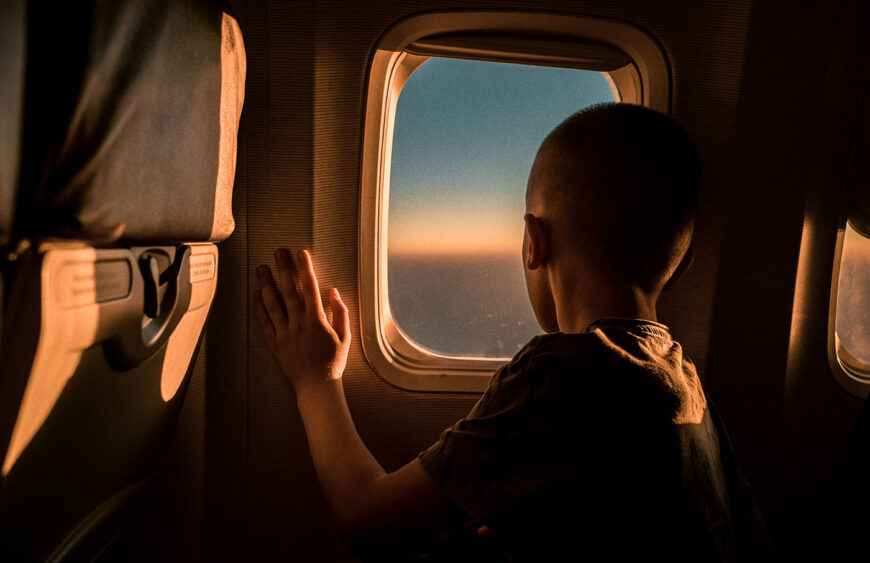
When it clicks, it’s absolutely glorious. A baby who feeds and settles in a bassinet, a preschooler who nods off after the movie, a school-aged child who curls against the window and sleeps through the night and suddenly the flight compresses. Parents get a long stretch to breathe, maybe even doze, and the cabin’s natural white noise becomes your ally. Arriving in the morning with children who’ve had some sleep can also blunt jet lag; shifting meals and light exposure as soon as you land helps the body believe the new morning is real.
There’s a psychological upside, too. Kids who sleep en route often associate flying with rest rather than boredom, which pays off on future trips. For babies and “good sleepers,” red-eyes can feel like cheating time.
The downsides no one warns you about
Overnight flights magnify small problems. The cabin dims, but the first service trolley clatters past; your toddler’s eyes pop open. Meal service collides with bedtime, when trays appear just as you’ve created a calm cocoon. Even when kids sleep, economy-seat ergonomics can mean fractured, fidgety rest. Parents end up half-lying, half-twisting, and wake with the kind of neck that makes you rethink the definition of vacation.
There’s also jet lag asymmetry: children sometimes bounce back after a short nap, while adults feel absolutely wrecked for 48 hours. If nobody sleeps, the first two days of your trip become damage control. Moving dinner earlier, holding the line on bedtime, and surviving the “witching hours” in a city you came to enjoy. Overnight flights aren’t a guaranteed shortcut; they’re a calculated risk.
How age and temperament change the equation
Age changes everything.
- Infants (<12 months): Often the easiest on red-eyes. Feeding and swaddling mimic bedtime, and bassinet rows (if you snag one) can be a game-changer.
- Toddlers (1–3): The wildcard years. They’re too big to snooze peacefully on you, too young to rationalize sleep in a seat, and very committed to standing just as the seatbelt sign pings. Red-eyes can be the hardest here.
- School-aged kids (4–10): Usually manage short bursts of sleep and recover faster next day, especially with a window seat and a familiar routine.
- Tweens/teens: With headphones, hoodies and downloaded shows, many self-regulate well and nap around service windows.
Temperament cuts across age. A clingy child may sleep best in-arms on a red-eye; an independent sleeper might only settle in a car seat or with a footrest “nest.” Parents know their child’s tells and that predictability is your superpower when choosing overnight vs. daytime.
Setting kids up for sleep in the air
Overnight success is 80% setup. Start the routine on the ground: pajamas on in the lounge or gate area, teeth brushed, story or lullaby, a calm hand on the shoulder. Boarding then feels like continuing bedtime rather than starting from scratch in chaos.
Seats and space: If you can, choose a window for the primary sleeper. Fewer disturbances and somewhere to lean. Avoid rows near galleys and lavatories if noise wakes your child. Bassinets in bulkhead rows are fantastic for eligible infants, but remember: no under-seat storage at takeoff/landing and you’ll need to remove the baby when the seatbelt sign comes on.
Sleep aids (within airline rules):
- Inflatable leg rests/seat extenders can turn a child’s space into a “flat(ish)” bed. Policies vary by airline; they mustn’t block aisles or be used in exit rows.
- Car seats add both safety and familiarity for babies/toddlers who sleep well strapped in. They’re heaviest to haul but often yield the best sleep.
- Soft kit: thin blanket, small pillow or rolled hoodie, socks, and a lightweight beanie as cabins can run chilly.
Light & noise: Switch tablets to night mode and reduce blue light. Dim the cabin light over your row, close the shade, and let engine hum act as white noise. If your child uses a sound app, keep it low; the plane already does most of the work.
Expect partial wins: Two 90-minute cycles can be enough. Aim for “functional on arrival,” not perfection. If you’re considering supplements like melatonin, that’s a pediatrician conversation, not a travel hack.
Managing food, meltdowns, and mid-air wakeups
Food timing is half the battle. If you can, feed before boarding so you’re not juggling trays during your child’s sleep window. When that’s not realistic, pre-order a children’s meal (they often arrive earlier) or politely ask crew to hold your trays until the child is down. No crew wants hot food on a drowsy toddler’s lap.
Pack “quiet snacks” that don’t spike blood sugar: buttered rolls, cheese, bananas, plain crackers. A warm drink (ask for hot water to mix cocoa or to warm a bottle) becomes a cozy cue. Hydration matters in dry cabins. Sip often, not gulps, to avoid bathroom sprints just as they drift off.
When wakeups happen and they will, think in micro-resets: a calm whisper, a short cuddle, a sip of water, a cool wipe on a warm forehead, a quick loo trip if they’re old enough. Keep lights low and voices softer than bedtime at home. The goal isn’t “back to sleep instantly”; it’s “back to drowsy and comfortable.”
Overnight alternatives: hubs and stopover perks
You don’t have to pick the red-eye fight. Many families break a long-haul into two daytime legs with a proper sleep in the middle. This can be especially effective if your child is in the restless toddler window. Choose hubs that are kind to families and the stop feels restorative, not punishing: Munich and Helsinki in Europe; Doha and Dubai in the Middle East; Singapore in Asia.
Airlines sometimes sweeten stopovers: Turkish Airlines offers free hotel nights in Istanbul on qualifying itineraries, Emirates’ Dubai Connect covers hotel, meals and transfers for long connections, and Qatar Airways has discounted Doha stopover packages. In the right hub, a layover becomes a pressure-release valve: real beds, real food, and kids who wake up human again. For deeper planning, see our guides to Best Airport Hubs for Families and our upcoming Stopover Perks Article (Coming Soon).
Choosing what’s best for your family
Overnight flights are neither magic nor madness by default, they’re a strategic tool. If your child sleeps reliably in new places, if you can time departure to their first true sleepy window, and if you’re comfortable engineering a cozy “nest,” a red-eye can feel like you’ve stolen extra vacation time. If your kid is deep in the toddlery “I must stand now” phase, buying peace with a daytime-leg + stopover plan can save the first 48 hours of your trip.
Whichever path you choose, set expectations low, prep like you mean it, and measure success in quiet chunks rather than perfect nights. The destination is the point; your job is just to get there with everyone’s sense of humor intact.
Too Long? Here are the most common questions we’re asked.
For babies under one, they’re often better. The cabin’s white noise plus familiar feeding and swaddling cues can mimic bedtime. The challenge is practical: keeping them warm, supported, and safely settled when the seatbelt sign dings. If your airline offers bassinets and your baby fits the limits, grab that bulkhead early.
Rehearse the routine: pajamas at the gate, teeth brushed, a short story, then lights low. Create a nest. A window seat if you can, footrest or soft bag under feet, blanket tucked along the armrest to block drafts. Keep screens dim and shift tablets to night mode. Think in sleep chunks; two or three cycles are a win.
Yes. It’s a simple cue that says “bedtime,” and it keeps them comfortable when cabins swing from warm to chilly. Add socks and a lightweight layer you can peel on and off without waking them fully.
Anchor to local daylight as soon as you land: outdoor time in the morning, mealtimes on destination schedule, and short naps capped so bedtime doesn’t derail. Keep the first day light on commitments and heavy on sunshine. Everyone’s mood improves with a park stop and an early dinner.
It happens. Shift goals from “sleep” to “calm.” Quiet activities, low light, frequent sips of water, and gentle reassurance. On arrival, bake in recovery: an easy first day, early dinner, and a bedtime that’s firm but kind. If overnights repeatedly fail for your family, consider the hub-stopover strategy next time. It’s not giving up; it’s choosing sanity.