Road Trip Safety: Car Seats and Safety Rules Parents Must Know
When safety collides with sanity
The first thirty minutes of a family road trip can feel like a wrestling match: someone’s buckle is twisted, the harness is suddenly too loose, the toddler is sweating, and the rental car’s headrest won’t play nice with your seat. Meanwhile the sun is already creeping across the dashboard and your patience is evaporating. Car seats are non-negotiable, but making them work in the real world (multiple kids, unfamiliar cars, nap schedules, heat, snacks, bathroom breaks) is where many parents feel their resolve fray.
This guide is your calm voice in that moment. It won’t drown you in technical jargon. It will show you what actually matters for crash protection, how to set up seats correctly, and how to balance safety with comfort over long hours on the road. Think of it as your co-pilot minus the backseat driving.
What you’ll find in this guide:
Why car seat rules confuse parents
Car seat safety basics every parent should know
Common mistakes families make on road trips
Bringing vs renting a car seat for travel
Crossing borders with kids: what changes in the rules
Comfort and safety on long drives
Departure Safety Checklist
Final thoughts: safe kids, calmer parents
FAQ
Why car seat rules confuse parents
Parents aren’t confused because they’re careless; they’re confused because the rules are a patchwork. Laws differ by country, and sometimes by state or province. Terminology shifts (ISOFIX vs LATCH, i-Size vs height/weight stages, “harnessed booster” vs “combination seat”). Rental counters hand you a seat with a manual you can’t find. A well-meaning friend swears your child can “move up” because theirs did at the same age. Parenting forums add ten more contradictory opinions. In other words. It’s a bit of a shitshow.
Two truths help cut through the noise. First, legal minimums aren’t the same as best practice. The law often allows a step earlier than safety experts recommend. Second, crash physics don’t change. A correctly installed, age-appropriate seat reduces serious injury risk dramatically, regardless of brand or trend. When in doubt, follow evidence-based guidance and fit the seat to your child and your vehicle not to someone else’s timeline.
Car seat safety basics every parent should know
Forget the thousand product options for a moment. Crash protection comes down to four decisions: the right stage, the right fit, the right install, and the right position in the car.
The right stage. Babies ride rear-facing because their heads are heavy and necks are developing; in a crash, a rear-facing shell spreads forces across the back and head. Keep children rear-facing as long as they fit within the seat’s height and weight limits (often well past age two). Once they outgrow rear-facing, a forward-facing seat with a 5-point harness and top tether is next. Boosters come later, when a child is mature enough to sit upright 100% of the time and tall enough that the vehicle belt fits correctly (typically lap belt low on the hips, shoulder belt centered on the chest, not the neck).
The right fit. For rear-facers, harness straps should come at or below the shoulders; for forward-facers, at or above. Buckle so the chest clip sits armpit level (if your region uses chest clips) and perform the “pinch test” at the collarbone. If you can pinch slack, it’s too loose. Recline angles matter: newborns need a deeper recline to protect the airway; older babies can be more upright. Most seats have angle guides. Use them, and recheck when you move cars or add passengers.
The right install. A proper install moves less than 2.5 cm / 1 inch when you tug firmly at the belt path. Use either the vehicle belt or ISOFIX/LATCH, not both (unless your manual explicitly allows it). For forward-facing seats, attach the top tether to its anchor; it dramatically reduces head movement in a crash. If you’re traveling in an older car without anchors, plan ahead. Many vehicles can be retrofitted; otherwise use a seat designed for belt installs and consider a different seating position.
The right position in the car. The “safest seat” is the one that gives you the best install. Middle rear is statistically great, but if the fit is poor or the buckle stalk is awkward, move outboard and install rock-solid. Never place a rear-facing seat in front of an active airbag. If you must use the front seat in a two-seater or single-cab truck, consult the vehicle manual for disabling/positioning the airbag and push the seat fully back.
If this sounds like a lot, that’s because it is. For about twenty minutes. Then muscle memory kicks in, and each buckle-up gets faster. Just like most things, practice makes perfect. You’ll be doing this with your eyes closed soon enough. But please don’t for obvious reasons.
Common mistakes families make on road trips
Puffy coats under harnesses. That snuggly parka compresses in a crash, leaving dangerous slack. Buckle kids without bulky layers, then add blankets or zip the coat over the harness.
Loose installs and loose harnesses. If the seat wobbles at the belt path or you can pinch the strap, fix it before driving. Two extra minutes now is the difference between “protected” and “pretend protected.”
Aftermarket add-ons. Strap covers, head positioners, seat protectors, or mirrors that didn’t come with (or aren’t approved by) the seat manufacturer can interfere with crash performance. If it wasn’t in the manual, assume it’s a no.
Recline creep. Long drives + heavy heads can lead to chin-to-chest slumps, especially for infants. Recheck recline after you reload the car; added luggage can change the angle.
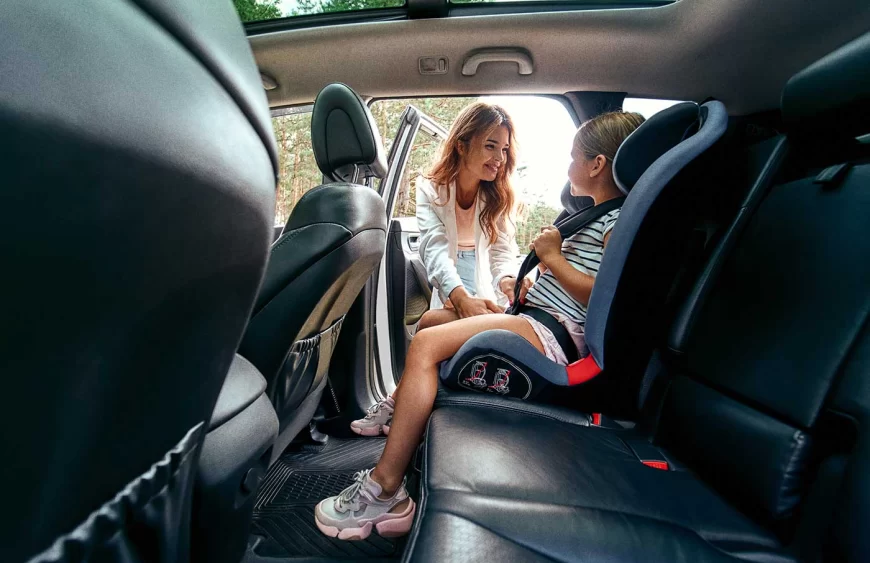
Booster misuse. Boosters aren’t mini-thrones (no matter how many times we tell our daughter they are). They’re belt positioners. If a child slouches, puts the shoulder belt behind the back, or falls asleep flopped over, they’re not ready. Go back to a harnessed seat for road trips if needed.
Expired or unknown-history seats. Plastic degrades; labels fade; important parts go missing. If you can’t verify the seat’s age, manual, and crash-free history, don’t use it. Especially not for hours at highway speeds.
Projectiles. Hard toys, tablets without tethers, water bottles, even a loose stroller can become missiles in a sudden stop. Pack heavy items low and wedged, and use soft toys or tethered entertainment in the child’s reach zone.
Bringing vs renting a car seat for travel
Bringing your own gives you a known seat, known history, and a dialed-in fit. Kids are calmer in familiar gear, and you won’t waste time at a rental desk arguing about sizes. Downsides? Bulk, potential airline handling, and hauling it through terminals. A padded travel bag or a wheeled cart helps; so does gate-checking if you’re flying to the start of your road trip.
Renting from the car hire company sounds convenient…until you meet a frayed strap, missing manual, or the wrong stage for your child. Quality varies wildly. If you must rent, inspect before accepting: check labels for expiry, ensure all parts are present, confirm it matches your child’s height/weight, and insist on the manual. Practice the install in the lot, not at the first rest area.
Travel-friendly alternatives. Foldable boosters for older, booster-ready kids can be a lifesaver when used within their limits (they are for specific ages/sizes and typically require a lap-shoulder belt). Wearable travel vests can work in vehicles with lap-shoulder belts where a robust install is tough. For harnessed ages, a lightweight convertible seat often beats any gadget in real-world safety and comfort.
A good rule: bring your own for babies and harnessed toddlers, consider reputable portable options for booster-ready big kids, and treat rental seats as a last resort you’ll thoroughly vet.
Crossing borders with kids: what changes in the rules
Crossing a state line or a national border doesn’t change crash physics, but it can change what’s legal. Europe’s i-Size/UN R129 standard emphasizes height-based stages and rear-facing to at least 15 months; some countries and experts recommend significantly longer. North American rules are a mix of federal performance standards and state/provincial use laws; best practice is rear-facing to seat limits, forward-facing with tether, then booster when belt fit is correct. The UK/Europe commonly lack chest clips by design; North American seats often have them. Follow the design for your seat in the market where it’s certified.
If your itinerary spans regions, the simplest approach is to choose the stricter rule and stay within your seat’s manual. For example, if your child is on the cusp of forward-facing at home but your destination’s best practice is longer rear-facing, stick with rear-facing for the trip if your seat allows. Rental agreements often say “follow local law” but your child’s seat must also be certified for that market. Don’t assume your U.S. seat is technically legal for use in the EU (and vice versa), even if no one checks. From a safety perspective, using the correctly installed, familiar seat you brought is far better than accepting an ill-fitting local loaner; just be aware of the legal nuance and make an informed choice.
Driving through multiple U.S. states or Canadian provinces? Laws can differ on booster ages, front-seat use, and taxi exemptions. You likely won’t be stopped for using more protection than required, so err on the side of caution and consistency for your child.
Comfort and safety on long drives
Heat and airflow. Overheating is the fastest path to meltdowns. Dress kids in light layers, use rear window shades (stick-on or built-in), and direct vents toward, not at them. A small, clip-on stroller fan mounted safely out of reach can help move air; avoid dangling cords near the seat.
The two-hour rhythm (and when to break it). For young babies, many pediatric providers suggest keeping stretches in the car seat to about two hours at a time before a break to stretch, feed, and check posture. On road trips that’s not always exact, but use it as a rhythm: drive, pause, reset. For older kids, plan fuel/loo/snack breaks even if you could push on, the stop does more for safety than you think.
Sleep without slump. For rear-facing kids, check the recline line or bubble indicator; for forward-facing, ensure the headrest supports sleep without pushing the seat off-angle. Avoid “sleep positioners” not approved by the manufacturer; a safe recline and a well-fitted harness do the job.
Motion sickness without compromising safety. Keep the cabin cool, offer sips of water, try bland snacks, and consider placing the more sensitive child in the rear seat position with the best forward sightline. If you use anti-nausea medication, confirm it’s appropriate for their age and won’t cause unsafe drowsiness.
Snacks and choking awareness. Hard candies, whole grapes, and chunky nuts are poor car snacks. Choose soft, low-choke options and build in snack stops where kids sit upright and you can supervise closely.
Managing the backseat ecosystem. Tether soft toys to the seat, use fabric organizers, and keep only squishy items within arm’s reach. Headphones should be volume-limited; tablets secure in a seat-back mount designed to break away safely (never loose in hands during heavier traffic).
Three-across reality. If you’re fitting three kids in the back, test the configuration before the big day. Narrow, high-quality seats with independent belt paths are your friend. Sometimes the best solution is pairings that create space e.g., a rear-facer next to a backless booster won’t work if the booster user can’t access the buckle.
Departure Safety Audit: 90 Seconds Before You Drive
1. Seat Install Check
Grab the seat at the belt path and shake firmly. If it moves more than 2.5 cm (1 inch) side-to-side or front-to-back, tighten.
2. Harness Fit
Straps snug? Chest clip at armpit level? Try the “pinch test” at the shoulder. If you can pinch slack, it’s too loose.
3. Coats and Layers
No bulky jackets under the harness. Add warmth with blankets or a coat zipped over the straps after buckling.
4. Tether and Angle
For forward-facing seats, attach the top tether. For rear-facing, double-check recline so baby’s head doesn’t flop forward.
5. Cabin Safety
Remove or secure heavy items. Stash water bottles, toys, or tablets so nothing becomes a projectile.
Safe kids, calmer parents
There’s no medal for the quickest departure. Take the extra five minutes in the driveway. Tighten the install until the seat doesn’t budge. Rethread the harness so it sits just right. Stash hard water bottles in the footwell and zip the coat over the straps. These tiny choices compound into something powerful: peace of mind at 70 mph.
Your kids won’t remember the fiddly bits. They’ll remember the roadside picnic, the hotel pool, the weird roadside dinosaur, the playlist sing-along. Set them up safely, then go collect the memories.
Too Long? Here are the most common questions we’re asked.
When they outgrow the rear-facing height or weight limits of their seat. Not just at a certain birthday. Many children can rear-face well past age two in modern convertibles, which provides excellent neck and head protection.
They can be, but quality is inconsistent. Inspect for expiry labels, missing parts, correct stage, and a solid install. If anything feels off, ask for a different seat or use your own.
Yes. If the seat is at the correct recline and the harness is snug with the chest clip at armpit level (where applicable). Avoid add-on head positioners not approved by the seat maker.
Yes. Standards and legal minimums vary. Best practice is consistent: rear-face to the seat’s limits, use a forward-facing harness with a top tether, then a booster with good belt fit. When crossing borders, following the stricter guidance is a safe default.
For harness ages, a lightweight convertible you already know how to install. For booster-ready kids, a reputable portable/high-back booster that fits your child and your vehicle belt path. Always use within the product’s limits.