Flying Long-Haul with Babies: Survival Guide
Facing the marathon flight
There’s a special kind of anxiety that sets in when you book a long-haul flight with a baby. Short hops are one thing; anyone can manage an hour or two of fussing. But ten hours, twelve hours, fifteen hours in the air? That feels like a parenting endurance test. You start imagining the worst: a baby screaming nonstop, dirty looks from strangers, running out of diapers halfway across the Atlantic.
Here’s the truth most parents only learn once they’ve survived it: long-haul flights with babies are rarely easy, but they are survivable. Not perfect, not peaceful, but survivable. Babies cry, messes happen, and routines get thrown off, but with smart prep and a realistic mindset, you’ll step off that plane tired but intact. This isn’t about chasing perfection. It’s about getting through with your sanity (mostly) in place.
Jump to Section:
Aisle v.s. Window: Choosing the right seat
Feeding at 30,000
Packing Smart
When the Crying Won’t Stop
Sleeping in the Sky
Diaper Change in a Shoebox
When Sickness Strikes
Dealing with Baby Jet Lag
Survival. Not Perfection.
FAQs
Choosing the right seat before you ever board
One of the first decisions you’ll face is whether to keep your baby as a lap infant or buy them their own seat. Airlines allow children under two to sit on a parent’s lap for free or at a reduced fare, which is tempting when ticket prices are already sky-high. But here’s the catch: lap infants are less secure, harder to manage if you want to rest, and far more exhausting on a ten-hour flight. If you can swing it financially, buying a seat and bringing an FAA-approved car seat can make a huge difference. Babies are safer buckled in, they tend to sleep better in familiar seats, and your arms get a break.
That said, not every family has the budget for that, and plenty survive with lap infants. If you go that route, look into bulkhead seats with bassinets. Many long-haul airlines offer these. They are a small crib that attaches to the wall in front of your seat. They’re a godsend if your baby actually sleeps in them. But they come with caveats: weight limits (usually under 10–12 kg), first-come-first-served availability, and the fact that some babies hate being put down in a strange bed. Still, if you can snag one, it’s worth trying.
Seat location matters too. Some parents prefer the aisle for easier bathroom runs; others swear by the window for fewer disruptions and more privacy while feeding. And don’t forget: many airlines have specific family-seating policies, so it’s worth checking the fine print before you book so you don’t get stuck at the back of the plane. We suggest taking your child’s personality into consideration. If they are squirmy or at the age where they want to crawl or walk everywhere, you might opt for an aisle seat. See our guide to airline family seating rules (Coming Soon).
Feeding at 30,000 feet without losing your mind
Feeding is often the biggest worry parents have before a long-haul. Luckily, it’s also the most reliable comfort tool you have. Babies cry less when they’re sucking, which makes breastfeeding or bottle-feeding during takeoff and landing a double win: it soothes hunger and helps equalize ear pressure. Score!
For breastfeeding parents, the main challenge is comfort and privacy. Some mothers are fine nursing openly, others prefer a cover. Airplanes are generally supportive spaces. Most flight attendants will back you up if anyone complains but planning for your comfort makes the experience less stressful.
Bottle-feeding comes with logistics. Airlines will usually provide hot water, but it may not be the temperature you want, and sometimes crew are busy during critical moments. Parents swear by pre-measured formula dispensers so you’re not juggling powder scoops in turbulence. Some bring ready-to-feed formula cartons, which are pricier but foolproof. If your baby is eating solids, airport security usually allows small amounts of baby food and pouches, even above the 100ml liquid limits, though rules vary by country. However, most countries will just give your stuff a quick swab at security. So make sure it’s ready to be examined, and not at the bottom of your bag.
The key is redundancy. Pack more milk or formula than you think you’ll need, and spread it out across your carry-on in case one stash spills. And time feeds strategically. A baby offered a bottle mid-landing descent often avoids the worst of the ear-popping pain (more tips in our guide to easing toddler ear pain on planes).
Packing smart so you don’t run out at hour ten
Every parent debates the magic number: how many diapers do you pack for a 12-hour flight? The rule of thumb is one per hour, plus extras for delays. That sounds excessive until you’ve sat on a runway for three hours with a baby who’s already soaked through their backup outfit. Which brings us to clothes: pack at least two full changes for your baby and one spare shirt for yourself. Blowouts, spills, spit-ups don’t respect your boundaries.
Organization is everything. Parents swear by “grab bags”: gallon zip bags pre-packed with one diaper, a handful of wipes, a burp cloth, and a spare onesie. When you need a quick change, you just pull out a bag instead of fumbling through your entire carry-on. Used ones can double as dirty-clothes bags until you land.
Don’t forget wipes beyond diaper duty. They’ll save you from sticky hands, tray tables, and mystery smears. Burp cloths or muslin squares pull double duty as spit-up catchers, sunshades, and impromptu blankets. And while babies don’t need a suitcase of toys, a couple of small rattles, teething rings, or soft books give you something to rotate in between naps and feeds (Essential Carry-On Packing List for Families for more smart packing hacks).
When the crying won’t stop and you feel every stare
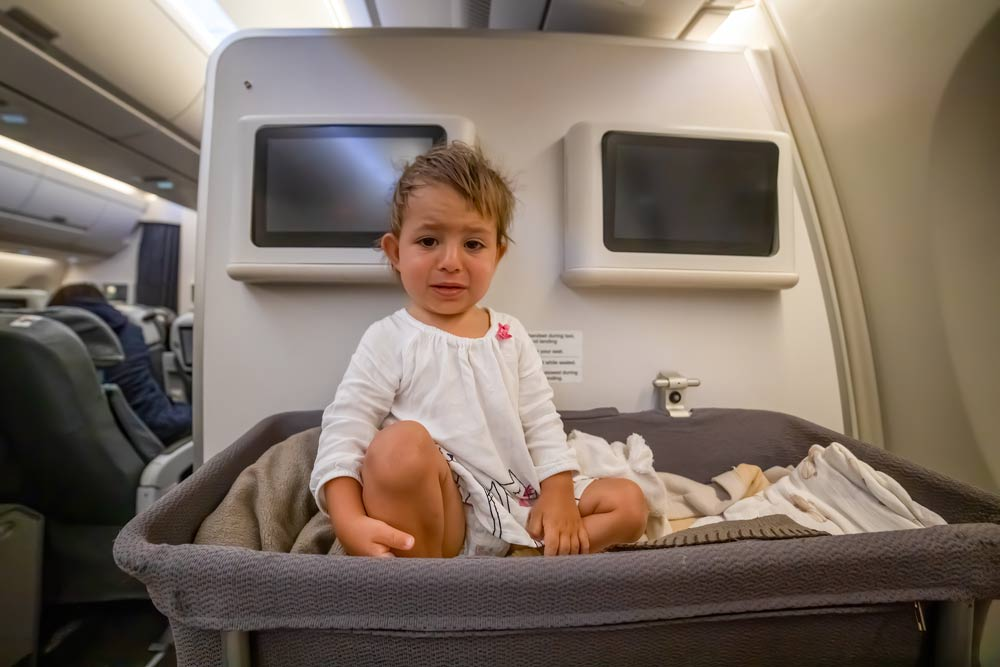
One of the hardest realities of long-haul flying with a baby is the crying. At some point, your baby will cry. Maybe it’s for five minutes, maybe it’s for an hour. What matters is how you cope, because your stress often fuels theirs.
Soothing starts with basics: offer a feed during takeoff and landing, walk the aisles with a bounce when safe, try white noise apps or shushing. Some parents swear by gentle rocking in the galley or holding baby in a carrier while pacing. The key is rotating through strategies before frustration peaks.
What about the other passengers? Here’s the surprising truth: most people are more sympathetic than you imagine. They’ve been on flights with crying babies before; it’s part of air travel. The ones who roll their eyes are the minority, and they’ll get over it. Your job isn’t to keep a cabin of 200 people happy. It’s to keep your baby as comfortable as possible. Flight attendants can often lend a hand, even if it’s just reassuring you that you’re doing fine. The fear of being “that family” is one of the most common first flight fears parents share, but there are ways to cope with the stares and still stay focused on your baby.
Sleep in the sky: the messy truth about bassinets and night flights
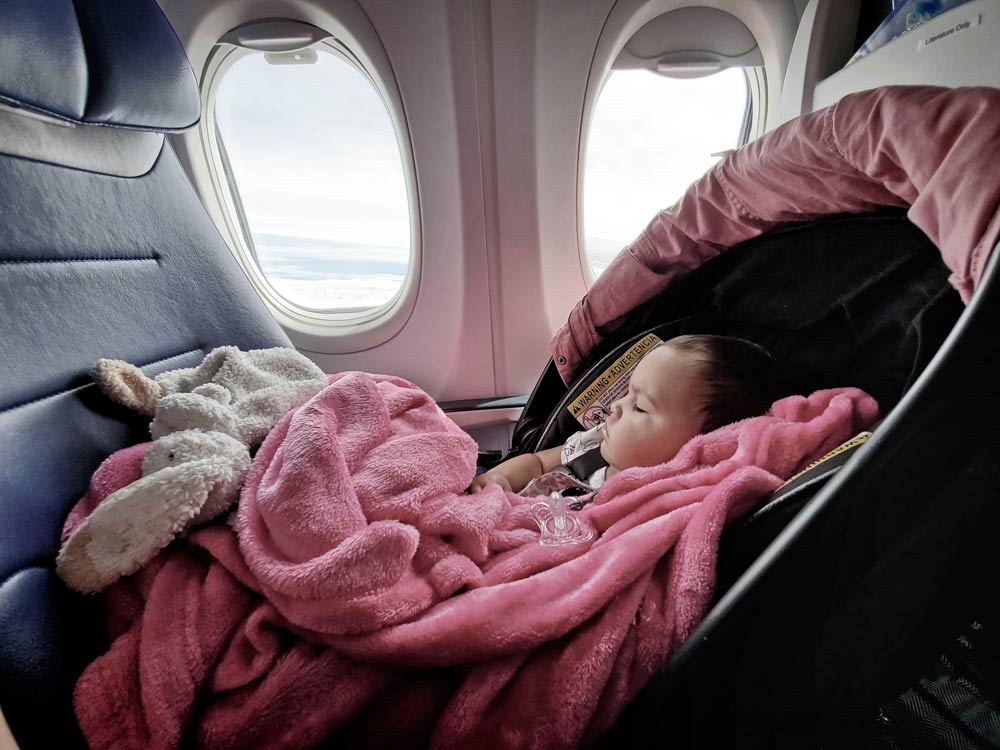
Ah, sleep. The golden prize. Some babies snooze like champs on planes, others fight it every minute. Bassinets can be a lifesaver if your baby tolerates them. They give you hands-free time, but don’t bank on them. Some babies hate being put down in an unfamiliar place, and bassinets can be cramped once a baby is past six months.
To improve your odds, recreate bedtime cues: put them in pajamas, use the same sleep sack, read the same book. The familiar routine helps signal “sleep time” even in a strange environment. White noise apps and portable sound machines are also common tricks.
Then there’s the big debate: day flight or night flight? Some parents swear by overnight flights, hoping baby will sync to their normal sleep. Others find day flights easier because everyone stays awake and crashes at the destination. The truth is, it depends on your child’s age and temperament. Under six months, babies often nap frequently enough that any timing works. Older babies sometimes benefit from a night flight to keep them aligned.
And don’t forget yourselves. If you’re traveling with a partner, take turns napping. The baby may not sleep much, but you need to, even in small doses, to avoid total collapse on arrival.
The dreaded diaper change in a bathroom the size of a shoebox
Airplane bathrooms are comedy sketches waiting to happen, especially with a baby. Like a stinky clown car. The good news is that most long-haul planes do have at least one or two lavatories with fold-down changing tables, though you may have to wait your turn. Pro tip: scope them out early in the flight so you know which direction to dash when the blowout hits.
When you can’t get to a changing table, parents improvise. Some do lap changes in their seat (please only out of desperation), others spread out a changing mat on the bassinet row floor for speed. One hack many parents swear by is the double-diaper method: put a clean diaper under the old one before removing it. If turbulence hits or baby kicks mid-change, you’ve got a safety net.
Timing also matters. Try to change just before boarding so you’re starting fresh, and again right before landing to minimize urgent mid-descent disasters. During the flight, you’ll often be at the mercy of the seatbelt sign. If it’s on, you may have to do a quick lap change until you’re allowed up. Don’t be shy about asking flight attendants which lavs are best equipped. They’ve seen it all, and most are glad to point you to the roomier option.
What to do if sickness strikes before or during the flight
Few things spike a parent’s stress faster than a sick baby before a long-haul. If your child has a fever, ear infection, or any illness that makes them unusually fussy, call your pediatrician before flying. Sometimes it’s better to delay, especially with ear infections, since the pressure can be unbearable. But life isn’t always flexible, and sometimes you have to go. If that’s the case, ask your doctor about safe pain relief and hydration strategies.
Mid-flight, airlines are equipped for emergencies more than most parents realize. Crew members are trained in first aid, carry medical kits, and can sometimes reseat you for more space if needed. Many long-haul flights also carry passenger doctors or nurses who volunteer help if things get serious.
Still, the best peace of mind comes from preparation. Travel insurance may feel optional when you’re thinking about lost bags, but it becomes essential when your baby spikes a fever abroad. Policies often cover urgent care visits, medication, and even hospital stays. A little paperwork before you leave can save enormous stress later. Good family policies cover both trip disruption and medical support, which means you’re not trying to Google pediatricians in a jet-lagged haze while your baby cries.
Landing is just the beginning: handling baby jet lag
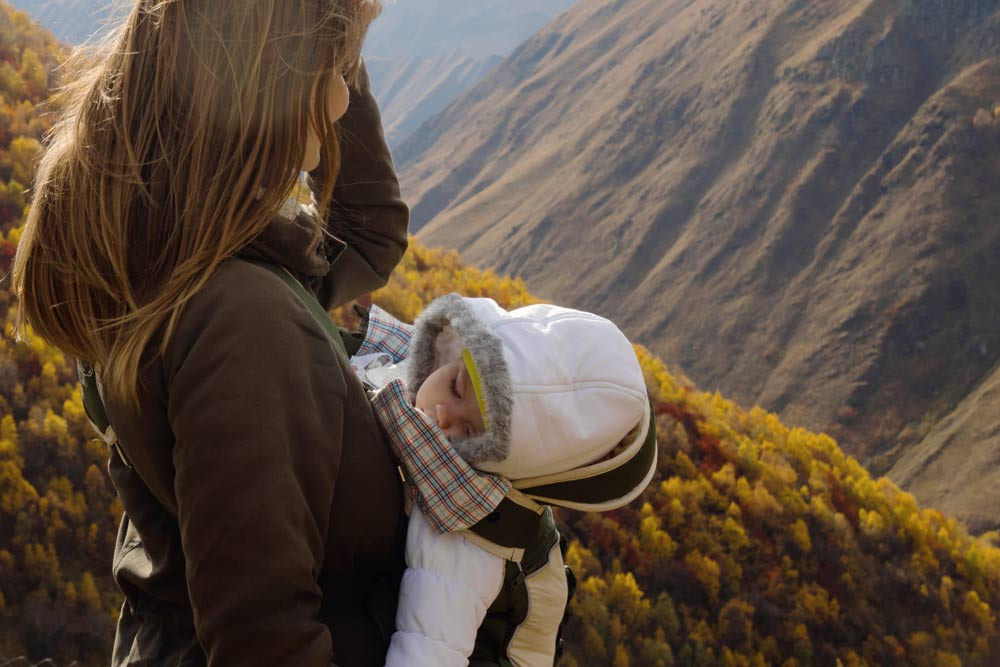
The flight ends, but the adjustment begins. Babies do get jet lag, though it often looks different than adult exhaustion. Their circadian rhythms tend to reset faster, especially under six months, but older babies can struggle for a few days.
The fastest way to help them adjust is through light and routine. Expose them to natural daylight as soon as possible at your destination. Try to stick to local feeding times, even if it means offering a snack or smaller feed to bridge the gap. Resist the temptation to let them nap endlessly during the day. Short naps are fine, but marathon sleep will just delay the adjustment.
Parents often underestimate how much they will feel it compared to their child. Babies usually bounce back in a couple of days; adults can take much longer. Build a recovery day into your itinerary so you’re not dragging an overtired baby to sightseeing straight off the plane. And if you need more guidance, we share specific tricks in our guide to dealing with jet lag in kids.
Survival, not perfection
No parent walks off a long-haul flight with a baby saying, “That was fun.” What they say is, “We survived.” And that’s enough. Survival is the goal. You don’t need perfection, and you’re not being graded by your fellow passengers. Every parent on that plane has been through their own tough trip. Yours just happens to involve a small human who can’t self-soothe yet.
But here’s the part that often gets forgotten in the stress of planning: this is why you’re traveling in the first place. The flight is hard, but it’s only the bridge to the real reward. Introducing your baby to grandparents who live across the ocean, dipping their toes into a new sea, taking that first family photo in a place you’ve dreamed of visiting. These trips are exhausting, yes, but they’re also the raw material of the family stories you’ll tell years from now.
When you look back, you won’t remember the cramped bathroom changes or the stranger’s looks. You’ll remember the sleepy weight of your baby’s head against your chest at 30,000 feet, or their wide-eyed wonder at a new city on the other side of the world. That’s the whole reason we do it: the memories. And every part that sucks along the way? It’s part of the story that makes those memories sweeter.
Too Long? Here are the most common questions we’re asked.
Parents often wonder if there’s a “sweet spot” for flying. Many families find the first 6–8 months to be the most manageable because babies still sleep frequently, aren’t mobile yet, and can be soothed with feeds or rocking. The hardest stage is usually around 9–18 months. That in-between age when babies want to crawl and walk but can’t, which makes confinement frustrating for them and exhausting for you. After two years, things often get easier again, as children start to engage with toys, shows, and routines for longer stretches.
Yes! And this is one of the few times you get an exception to the dreaded liquid rule. Most airport security agencies, including TSA in the U.S. and their equivalents abroad, allow “reasonable quantities” of breast milk, formula, and baby food even if they exceed the 100 ml limit. You may need to declare them, and sometimes they’ll be tested separately. Baby food pouches, purees, and formula powder are usually fine, but always check the rules for your departure country to avoid last-minute stress.
There isn’t a single magic trick, but there are patterns that help. Feeding during takeoff and landing is often the simplest solution, since sucking both soothes and prevents painful ear pressure. Walking the aisles with baby in a carrier can also buy you some calm. White noise apps or even a steady “shhh” in their ear can recreate a soothing environment. Comfort objects like blankets or sleep sacks sometimes work better than any gadget. And here’s the honest truth: sometimes nothing works for a stretch, and that’s okay. The important thing is that you’re trying, and most passengers will recognize that.
The process isn’t automatic. You usually have to call the airline after booking and specifically request a bulkhead seat with a bassinet. They’re limited and often given on a first-come-first-served basis, which is why parents are advised to reserve as early as possible. Bassinets also come with weight limits (usually around 10–12 kg), so they’re best for infants under a year old. Even if your baby doesn’t love being put down, the extra space for storage and the option of laying them down for a break is worth the effort of booking.
It depends on your child’s age and temperament. Younger babies under six months often nap so frequently that either option works. Older babies may benefit from overnight flights that align with their usual sleep schedule, though this can be a gamble. Not every baby sleeps soundly on planes. Day flights have their advantages too: you’re less stressed about forcing sleep, and everyone arrives tired enough to crash at the destination. The choice comes down to what you know about your baby’s habits. If they’re a routine sleeper, a night flight may work in your favor. If they fight sleep outside the crib, a day flight may save your sanity.