Family Airport Hacks Every Parent Should Know
Why airports can feel harder than the flight itself
Parents often picture the flight as the toughest part of traveling with kids, but for many families, the real stress begins long before takeoff. Airports are designed for efficiency, not toddlers. Between the long lines, heavy bags, confusing signage, and overtired little ones, it’s easy to feel like you’re starting your trip already drained.
The good news is that with a little preparation, airports don’t have to feel like battle zones. Parents who’ve been there pacing terminals with strollers, juggling snacks and passports, trying to soothe meltdowns mid-security line eventually pick up tricks that make the experience smoother. Here are the hacks every parent should know before heading to the airport with kids in tow.
Jump to Section:
Getting Through Security
Strollers, Car Seats, and Gate Check-ins
Navigating Terminals
Finding Kid-Friendly Corners
Food Hacks
Managing Bathroom Breaks
Coping With Delays
FAQs
Getting through security without losing your cool
Security checkpoints are where even the most patient parents break. Kids don’t understand why their teddy has to ride the conveyor belt, or why their shoes suddenly matter. The best approach is preparation. Talk kids through what will happen before you get there: “We’ll put your bag on the belt, your shoes too, and then they’ll come out on the other side.” When kids know what to expect, they’re less likely to panic.
Most airports now have family security lanes, which move slower but are designed for strollers and extra bags. Take them. Speed is less important than sanity. When packing, keep snacks and liquids for children in a clear bag and place it on top of your carry-on. Formula, breast milk, and baby food are allowed in reasonable amounts, even above liquid limits, but having them easy to pull out makes security faster. Electronics should be equally easy to grab.
We go into more detail about how to pack bags for exactly these moments in our essential carry-on packing list for families, but the short version is this: make the items security will question the most accessible.
Strollers, car seats, and the gate-check shuffle
Airports and strollers have a complicated relationship. Some airlines return gate-checked strollers immediately at the jet bridge after your first flight, others send them all the way to your final destination. Nothing derails a layover faster than realizing your stroller is gone until baggage claim.
Lightweight travel strollers solve a lot of headaches. Many fold small enough to fit in overhead bins or under seats, letting you bypass gate-check altogether. For parents who prefer carriers, baby-wearing through the terminal frees your hands for bags and boarding passes, and makes shuttle buses or escalators far less stressful.
Car seats are another hurdle. You’ll need to put them through security scanners, which can feel ridiculous when you’re already juggling everything else. But once on the other side, they can either gate-check easily or be strapped into a paid seat for your child. If you’re weighing whether to bring one, our guide to the best travel strollers for every age and trip type also compares when strollers or car seats make more sense.
Navigating terminals with kids in tow
Airports are huge, overwhelming spaces, and kids tire quickly when asked to trek across them. Make use of moving sidewalks, trains, or shuttle buses whenever possible. They’re not just time-savers, they’re mini adventures for kids who love the novelty.
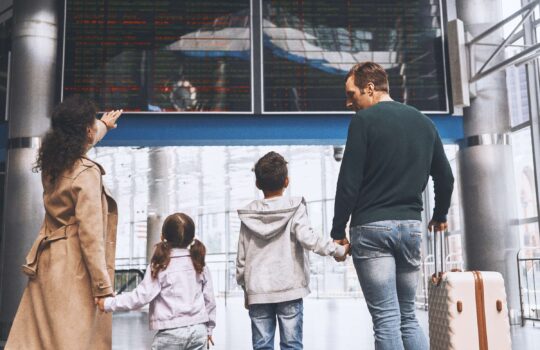
Download airport maps or use the airport’s own app to scout bathrooms, play areas, and food spots before you land. Knowing where you’re going keeps wandering to a minimum. In crowded terminals, keep toddlers close with “buddy systems”. Holding a parent’s hand, a sibling’s hand, or even using a child harness (hey no judgments here) if you’re worried about them bolting.
We cover longer pauses between flights in detail in our guide on how to handle layovers with children, but even in short connections, the key is conserving energy. Don’t waste your child’s stamina walking in circles. Move with purpose.
Finding kid-friendly corners in a concrete jungle
One of the best things you can do in an airport is hunt for family-friendly corners. Many major hubs have play areas or kids’ zones, often tucked away near gates or in quieter terminals. These can be lifesavers for burning off energy before boarding. Observation decks are another underrated gem. Even ten minutes of watching planes take off can keep kids entertained.
If your budget allows, airport lounges can be worth the splurge. Some credit cards and apps (like Chase Sapphire Reserve®, Capital One Venture X, or Amex Platinum) include lounge access, and families often find the upgrade life-changing. Lounges mean quieter seating, better food, and sometimes even play spaces or family rooms. For kids, they feel like a treat, and for parents, they provide one rare thing airports lack: calm. And free alcohol.
When none of those are available, improvise. Look for quieter corners of the terminal near less-used gates. Spread out a blanket for a toddler crawl space, or let older kids sit and color away from the crowd. Even a little breathing room goes a long way. And don’t forget the basics. Snacks keep kids grounded, something we talk about in detail in snacks that save sanity on flights.
Food hacks before you board
Airport food courts are designed to drain wallets, not fill bellies. To avoid the stress of overpriced nuggets your child refuses to eat, pack a stash of reliable favorites. Most security agencies allow formula, breast milk, and baby food in reasonable quantities, so don’t feel pressured to rely on the airport alone.
Still, eating at the airport can serve a purpose. A sit-down meal gives everyone a break, and can sometimes double as the calmest part of the layover. If you know you’ll want hot food, research in advance where family-friendly restaurants are located. Some airports even allow you to pre-order meals online for pickup. A lifesaver if you’re rushing but don’t want to rely on chips from a vending machine.
We share more strategies for feeding on the go in our long-haul survival guide for babies, but the bottom line is this: snacks and meals work best when you treat them as both fuel and distraction.
Managing bathroom breaks and diaper changes
Ask any parent. The most stressful moment isn’t security or boarding, it’s finding a place to change a diaper when the blowout hits. Most larger airports now have family restrooms with changing tables, but they’re not always easy to find. Scouting bathroom locations as soon as you enter a terminal can save you from desperate searches later.
Family bathrooms aren’t just for diapers; they’re great for potty-training toddlers or managing kids who need more privacy. Some even include nursing rooms or small play spaces. If lines are long, don’t be afraid to ask staff where priority restrooms are located. Many airports quietly allow parents to use accessible facilities in a pinch. We have been ushered to the front of the line on a few occasions.
Quick changes on the go are sometimes unavoidable. Having a foldable changing mat in your bag makes it easier to improvise. And just like with flights, timing bathroom breaks around feeding helps minimize disruptions. This ties closely to what we talk about in our guide on easing toddler ear pain on planes. Routines around feeding and comfort often overlap with bathroom needs too.
Coping with delays without losing your mind
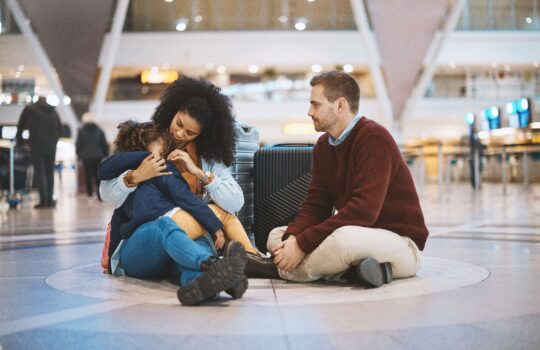
Delays are the airport reality no parent wants but every parent eventually faces. Whether it’s a weather delay or a missed connection, your survival depends on what you’ve packed. A mini “delay kit” with spare diapers, wipes, pajamas, snacks, and a toothbrush can transform a nightmare into something merely inconvenient.
Airport hotels, though rarely planned, are worth embracing when delays stretch overnight. Even a few hours in a bed beats trying to sleep upright in a terminal with kids. For shorter delays, rotate activities: a little screen time, then a walk, then a snack, then a toy. Stretching out each activity buys you more time.
We break down longer strategies in our guide to dealing with flight delays and cancellations, but the core lesson is this: delays feel catastrophic in the moment, but with a little planning, they become just another story you’ll tell later.
Airports don’t have to be chaos
Airports will never be anyone’s favorite part of the trip, but they don’t have to be the most stressful. With a few hacks, prepping for security, knowing where to find rest areas, packing your own food, and keeping a delay kit ready, you can shift the airport experience from panic to manageable.
Your kids won’t remember the lines, the bag checks, or the overpriced sandwiches. What they’ll remember is the excitement of watching planes take off, the scavenger hunt you made up to pass the time, or the moment they got to ride a moving walkway like it was a ride at an amusement park. And that’s the point. Airports aren’t obstacles; they’re part of the family story you’re creating along the way. Betcha didn’t think of them that way before did ya?
Too Long? Here are the most common questions we’re asked.
Use family lanes when available, and keep all liquids and snacks in clear bags on top of your carry-on. Talk kids through the process in advance so they know their favorite stuffed animal isn’t gone forever — it’s just taking a ride on the belt.
Yes, strollers go through security just like bags, often with a quick scan or swab. Most can be gate-checked for free, though some compact travel strollers fold small enough to fit overhead. Whether you get it back during a layover depends on the airline.
Singapore’s Changi, Munich, Doha, and some U.S. airports like Dallas-Fort Worth and Minneapolis-St. Paul stand out for kid zones, play areas, or family rooms. Even less family-friendly airports usually have hidden corners or observation decks if you look hard enough.
Break the time into rotations: snack, toy, bathroom, walk, screen, repeat. Hunt for play zones, spread out in quieter corners, or treat yourself to lounge access if possible. Packing a mini overnight kit helps if waits stretch into the unexpected.
For many parents, yes. Lounges mean quieter spaces, better food, and sometimes dedicated family rooms. Credit cards like Chase Sapphire Reserve®, Capital One Venture X, or Amex Platinum often include lounge access, and even a few hours of calm can make the upgrade worthwhile.