Themes that turn “are we there yet?” into “what’s next?”
Most family road trips start the same way: pack the car, argue about who forgot the toothbrush, and hit the highway with a vague plan to “get there.” The problem? Hours of highway start to feel the same. Gas stations blur together, kids get restless, and even parents start counting down the miles instead of enjoying them.
That’s where themes come in. A themed road trip gives the journey its own story. Instead of just grinding through the miles, you’re chasing something together. The best doughnut shop, the quirkiest statues, the castles of a region, or even all the playgrounds on your route. Suddenly, kids stop asking “are we there yet?” and start asking “what’s the next stop?” That tiny shift changes everything.
What you’ll find in this guide:
Food trails: eating your way down the road
Storybook and movie-inspired trips
History and culture kids can actually enjoy
Nature and animal themed adventures
Quirky themes that make great family stories
How to create your own family theme
When a theme is fun or too much
Make the road trip part of the story
FAQ’s
Food trails: eating your way down the road
Kids might not care about mountain views or scenic highways, but mention ice cream and suddenly you’ve got their attention. Food themes are some of the easiest to pull off because they combine something everyone needs (eating) with a sense of discovery.
You can make it as simple or as ambitious as you like. Maybe it’s “find the best milkshake in the state” or “try one new bakery every day.” Some families go big and follow official food trails. Barbecue in the American South, pizza in Italy, chocolate in Switzerland. For younger kids, even something silly like a “french fry rating contest” can keep them entertained.
The point isn’t gourmet eating, it’s giving meals a sense of purpose. Instead of arguing about where to stop, you’ve got a built-in mission. And as we talked about in Budgeting for Road Trips with Kids, pairing these fun stops with picnic meals in between helps balance the splurge.
Storybook and movie-inspired trips
If your kids are obsessed with a particular book or movie, why not lean into it? A Harry Potter fan will be more excited about seeing an old castle if you frame it as “Hogwarts training.” A Frozen fan might suddenly be on board for a mountain hike if you call it “Elsa’s kingdom.”
Even if you’re not near official filming locations, you can still bring stories to life. Fairy-tale hunts (castles, forests, cottages) work anywhere. Create scavenger hunts for characters like dragons, giants, superheroes, and let kids “spot” them in landmarks, statues, or even clouds.
The beauty of this theme is that it overlays imagination onto whatever route you’re already taking. In Keeping Kids Entertained on Long Drives, we talked about how screens only go so far. Storytelling and imagination games like these stretch entertainment further without costing a dime.
History and culture kids can actually enjoy
Let’s be honest: most kids don’t jump for joy when they hear the word “museum.” But if you package it right, history and culture can be a surprisingly fun theme. Instead of dragging kids through endless exhibits, choose things with a hands-on or larger-than-life element. Old forts they can climb on, open-air museums with costumed actors, castles with towers to explore.
You can frame it as a quest: knights and castles, explorers and ships, inventors and machines. The key is keeping stops short and interactive. A 30-minute visit to a small-town museum is often more effective than an all-day slog through a massive one.
We touched on this idea in Family-Friendly Roadside Stops Worth Planning. Not every stop has to be silly or food-related. Sometimes, a little history mixed with play can give kids stories to take home that go beyond “we saw cows out the window.”
Nature and animal themed adventures
Nature themes are perfect when you want kids to move. Build your trip around hiking trails, waterfalls, or animal encounters, and suddenly the car ride becomes the bridge to something exciting.
Animal themes are especially powerful. Zoos, petting farms, bird sanctuaries, even spotting wildlife along the way. Kids light up when animals are involved. You can even gamify it: who can spot the most cows, horses, or birds before lunch? For older kids, geocaching adds a treasure-hunt element that turns even ordinary trails into adventures.
This also ties nicely into Overnight Road Trips with Kids: How to Make It Work. If you’re breaking the journey into two days, a nature or animal stop makes the overnight feel less like a delay and more like a highlight.
Quirky themes that make great family stories
Sometimes the best theme is the weirdest one. Families have done trips based on the world’s largest objects (giant ball of twine, anyone?), funky roadside statues, or unusual museums. Others pick a color like “everything red” and challenge kids to find stops that fit.
These themes don’t have to make sense. In fact, the sillier they are, the more kids buy in. A “giant food” theme where you stop at every oversized fruit or burger statue? A “superhero” trip where kids wear capes at playgrounds? These become the stories your family tells for years.
Remember in Cross-Country with Kids: Lessons from Parents we talked about how families look back and laugh at the odd moments more than the perfect ones? Quirky themes practically guarantee those moments.
How to create your own family theme
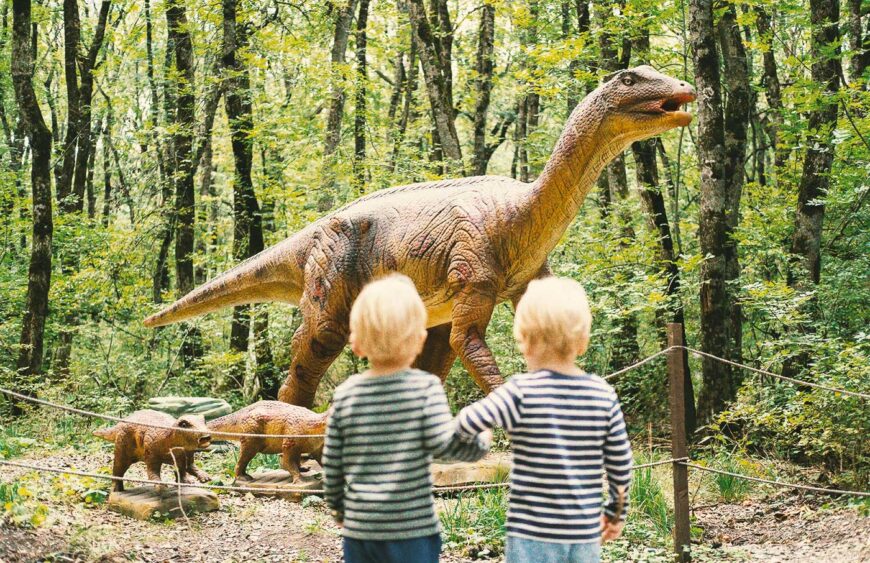
Themes don’t have to come from a guidebook. Some of the best ones come straight from your kids’ obsessions. Is your child into dinosaurs? Map out fossil sites, museums, or statues. Do they love trains? Plan stops around rail museums or working locomotives. Even a “dessert first” trip where you start every meal with a sweet treat can become your signature theme.
The trick is keeping it manageable. A theme doesn’t mean you have to hit every possible stop, it just means you frame the trip around a thread that makes kids feel like they’re on a mission. You can even mix themes: food plus animals, history plus quirky statues. The only rule is that it should excite your kids enough to distract them from the endless miles.
When a theme is fun and when it’s too much
Themes are meant to add fun, not stress. If planning stops around the theme starts to feel like work, it’s time to dial it back. Nobody needs a meltdown because you missed one doughnut shop or couldn’t find the “perfect” castle.
Think of the theme as a flexible overlay, not a rigid itinerary. If you hit a few stops that fit, great. If not, it’s still a road trip, and your kids will remember the adventure anyway. The goal is to make the drive less about endurance and more about discovery.
Themes make the road trip part of the story
At the end of the day, themed road trips are about fun and padding the trip with memories. They take something that can feel monotonous and give it a sense of purpose. Whether it’s ice cream, dinosaurs, fairy tales, or giant roadside fruit, themes shift the focus from “how long until we get there” to “what’s the next thing we’ll find?”
And that’s the whole point. With a little imagination and planning, the road trip itself becomes part of the story your family tells. Not just the miles between point A and point B.
Too Long? Here are the most common questions we’re asked.
Food trails are the easiest. Ice cream, milkshakes, bakeries, or even french fries. Pick something kids already love.
Focus on interactive sites like castles, forts, or open-air museums. Keep visits short and hands-on.
Not necessarily. Food or attraction themes can add costs, but nature, playground, or quirky statue themes are usually free or low-cost.
Ask about their current obsessions like dinosaurs, trains, superheroes and build the theme around that. They’ll be more invested if it’s their idea.
Absolutely. Even a two-hour trip can be framed around spotting animals, stopping for ice cream, or chasing down one quirky landmark.