A Parent’s Practical Guide
There’s something oddly universal about the way kids react to heat. The sun comes out, the temperature climbs, and suddenly the smallest member of your family has turned into a sweaty and slippery koalas who needs to be carried, fanned, and emotionally supported through each step. If you’ve ever tried walking through an unfamiliar city while your child wilts like a spinach leaf, you already know why this topic matters. Heat safety for kids is more than just a “nice to know” thing. It’s the foundation for keeping everyone safe, sane, and still speaking to each other by dinner.
Anyways, the tricky bit for parents is that heat abroad behaves differently than heat at home. The sun feels sharper. The humidity sits differently. Kids forget to drink. Days out always stretch longer than planned. And you’re still trying to pretend this family holiday is the relaxing reset you dreamed of. So here’s what this guide really aims to do. It’s a calm, grounded conversation about how to keep kids cool on holiday without the drama, the guilt, or the frantic Googling about heat exhaustion in children while you’re already out there dealing with it.
What you’ll find in this guide:
Understanding How Kids React to Heat
Why Hydration Abroad Is Trickier
Building Realistic Cooling Routines
Spotting Early Warning Signs
Practical Cool-Down Strategies
Managing Hot Weather on Travel Days
When Heat Safety Meets Real-World
What Actually Makes a Difference
FAQ’s
Understanding How Kids React to Heat Abroad
So here’s what I think most parents underestimate. Kids feel heat differently, and they show it differently too. One child becomes clingy, another turns into a tiny dictator, and another might suddenly develop a renewed interest in lying on public benches and refusing to move. This isn’t them being dramatic. Their bodies simply aren’t as efficient at regulating temperature as ours. And once you add “travel excitement,” unfamiliar routines, and sunlight that seems brighter than it should legally be, you’ve got the perfect recipe for overheating.
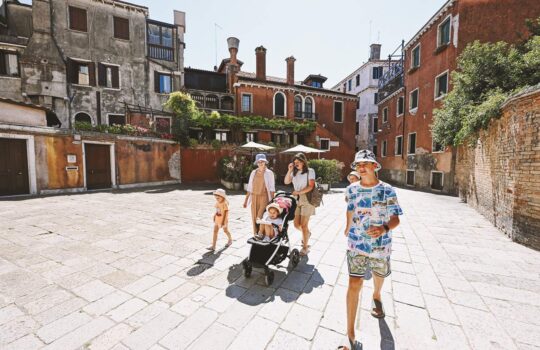
The first clue that your child might be struggling in hot weather is often their behaviour rather than anything medical. Maybe your toddler who was thrilled about gelato ten minutes ago now cries because the spoon is the wrong colour. Or your older child goes quiet and drags their feet even though you’re only halfway through your “fun family walk.” Parents in forums share these stories all the time because it’s so easy to mistake heat stress for bad moods. When you learn to read those subtle signals, it becomes easier to change course early rather than firefight a full meltdown later. Something else worth remembering is that heat abroad often pairs itself with sensory overload. Busy markets, long queues, street noise, bright light, crowds moving in every direction. For a child, those layers stack on top of the physical discomfort. That’s why even short outings can feel exhausting. Thinking ahead about their limits isn’t overprotective. It’s the thing that allows you to see more than just the inside of your accommodation because the day didn’t crash by lunchtime.
Why Hydration Abroad Is Trickier Than At Home
Hydration tips for children while traveling can feel laughably obvious when you’re reading them at home. You think, “Sure, I’ll offer water regularly.” Then you arrive in a hot destination and realise you’ve somehow gone the last three hours without seeing your own water bottle, because it’s in the bottom of a bag under three sun hats and someone’s emergency crackers. Kids also don’t register thirst the same way adults do. They can be dehydrated long before they ask for a drink.
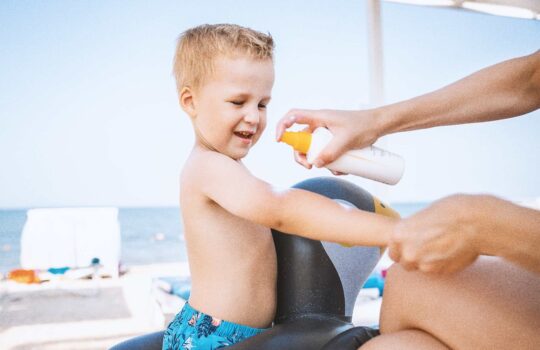
Here’s a real example parents mention often. You’re at the beach, and your child is so absorbed in building a questionable sand castle with zero architectural integrity that you assume they must be fine. Then suddenly they’re flushed, cranky, and convinced you ruined their life by suggesting sunscreen. That’s dehydration sneaking up. Abroad, it creeps in faster because heat, excitement, and physical activity speed up fluid loss.
Another reason hydration is tricky is that travel days involve long stretches without easy access to cold water. Airport security means empty bottles. Train platforms involve waiting under harsh sun. A bus ride might come with questionable air conditioning. So part of keeping kids hydrated is simply planning your day with more water moments built in. Think of it as a rhythm. Drink before leaving, drink during transitions, drink when arriving somewhere new. Not in a rigid “every 20 minutes” kind of way. More like gentle nudges that keep your entire day from derailing.
Building Realistic Cooling Routines While Traveling
Cooling routines abroad are less about perfection and more about consistency. You don’t need to carry half a pharmacy. You just need a few small habits that you repeat without thinking. For example, choosing shade automatically whenever you stop walking. Parents in travel groups swear by this because it becomes effortless. You see a bench? Check for shade first. Need to pause to look at Google Maps? Step under an awning. These micro-choices reduce heat exposure in ways that genuinely help.
Oh, and regular indoor breaks are not a failure. They’re strategy. Museums, supermarkets, cafés, and public libraries are all part of your toolkit. Families who intentionally alternate indoor and outdoor time usually find that their kids stay calmer longer. You can still see everything on your list. You just pace it differently. Even a short ten-minute air-conditioned break can make a big difference in preventing heat exhaustion in children later in the day.
There’s also a practical trick many parents use without realising it. They frame cooling routines around the things their kids already enjoy. Snack break? Offer fruit with high water content. Playtime? Choose shaded playgrounds or splash fountains that are common in many European cities. Walking distance? Cover it early in the morning while the sun is gentle. These small adjustments don’t feel restrictive because they slip naturally into your day.
Spotting Early Warning Signs Before They Escalate
Heat stress rarely appears out of nowhere. Kids usually show signs long before it becomes serious. A child who suddenly gets quiet, irritable, or oddly floppy might be telling you more than they realise. When you’re traveling to hot countries with kids, paying attention to these small signals is what prevents a long afternoon of chaos.
Another common early sign is a child refusing to walk even short distances. Parents sometimes assume this is tiredness or stubbornness. It can be, but it can also be overheating. So if your child suddenly needs more physical support or wants to be carried more than usual, it might be time for a cool-down break rather than a pep talk about “trying your best.”
And here’s the part most parents don’t talk about because it feels like a personal failing. Sometimes we’re slow to notice because we’re also hot, tired, and a little overwhelmed. Heat affects adults too, especially when you’re managing logistics, navigation, and everyone’s emotional well-being. This isn’t about catching problems instantly. It’s about recognising that when a child acts “off,” there’s usually a physical discomfort hiding underneath the behaviour. Responding early makes the whole trip feel easier.
Creating Practical Cool-Down Strategies for Every Destination
Cool-down strategies don’t need to be fancy. They just need to be repeatable. One of the easiest things parents do is carry a small cloth or cooling towel that can be dampened quickly at public restrooms. Kids surprisingly love this because it feels like a mini spa moment in the middle of their day. It’s far more effective than waving a leaflet while silently regretting your decision to schedule afternoon sightseeing.
Another strategy is choosing activities with built-in water access. Not necessarily swimming. Think public fountains kids can dip their hands in, shaded riverside paths, or cafés that serve icy drinks. Parenting forums often mention how a simple cold drink break can reset a child’s mood faster than any pep talk. It’s the combination of hydration, sugar, and shade that brings them back from the brink.
And when all else fails, sometimes the smartest heat safety decision is returning to your accommodation for a bit. Families often describe this moment as “giving up,” but it’s actually the opposite. It’s recognising the limit before it becomes a meltdown. A short rest in a cool room can give everyone the energy for an evening adventure when temperatures drop and cities feel alive again.
Managing Hot Weather on Travel Days
Travel days are a completely different beast. You can’t predict queue lengths. You can’t control transport delays. And kids are strapped into seats, which makes them hotter. So keeping kids cool on holiday starts before you even reach your destination.
Parents who travel often recommend dressing kids in layers that peel easily, especially for airports where temperatures swing between icy gate areas and warm jet bridges. Keep water visible and reachable so you’re not digging for it under everyone’s belongings. And use any chance you get to refill bottles, because dehydration during travel happens much faster than people expect.
By the way, don’t be afraid to tell staff politely if your child is overheating. Most airport and airline staff deal with families every day and will help you move to shade, find water, or settle comfortably. You’re not inconveniencing anyone. You’re preventing a meltdown that benefits everyone around you.
When Heat Safety Meets Real-World Parenting
Here’s the honest truth. Even with the best planning, kids will still get hot, tired, and overwhelmed. You’re not failing. You’re dealing with weather you cannot control while managing small humans with developing bodies. What matters is recognising when to slow down, when to cool off, and when to pivot your plans.
Parents in travel communities often share how much guilt they feel over this. But guilt isn’t useful. Awareness is. Flexibility is. And the ability to say, “Let’s rest and try again later,” is one of the most underrated travel skills. It keeps travel fun, safe, and memorable, even in destinations where the sun refuses to behave.
What Actually Makes a Difference
Heat safety for kids abroad isn’t about perfection or elaborate preparation. It’s about simple, steady habits. Offer water more often than feels natural. Break up your day with shade and indoor pauses. Watch behaviour for early signs of overheating. Choose activities that don’t trap kids in direct sun for hours. And stay flexible, because rigidity and heat are natural enemies.
When you travel with kids in hot climates, your goal isn’t to avoid discomfort entirely. It’s to manage it in ways that keep everyone calm enough to enjoy the holiday. With a few realistic strategies, you’ll find that hot destinations become far more manageable, and you’ll come home feeling proud of how well you navigated it all.
Too Long? Here are the most common questions we’re asked.
Offer water frequently, pair drinks with natural breaks, and use fruits with high water content. Kids often don’t recognise thirst early, so gentle reminders help.
Behaviour changes are usually early indicators. Look for irritability, sudden tiredness, clinginess, or refusal to walk. Physical symptoms like flushed skin may follow.
There isn’t one universal number, because humidity, sun intensity, and activity level all matter. If your child struggles at home in 28°C, they’ll likely struggle more abroad at the same temperature.
Light clothing, a small cooling cloth, a refillable bottle, and a hat with good shade coverage are usually enough. The goal is practicality, not overpacking.
Absolutely. Mornings and evenings are ideal. Midday outings should include shade, breaks, and easy access to water. Adjusting the pacing makes outdoor fun safer.