There is a special ring in hell dedicated to kids that start coughing on holidays.
All of a sudden you get flashbacks of that one winter daycare virus that took down the entire household for two weeks, and suddenly every sneeze abroad sounds like a potential plot twist. Traveling with kids is amazing, but the germs you meet along the way can feel like tiny, invisible saboteurs. And the truth is, kids share everything. Snacks, toys, questionable rocks, the straw from your drink, and of course, germs.
The good news is that you can avoid most of the common travel bugs with a few practical habits. Nothing extreme, nothing that ruins the fun, just small moves that keep your child’s immune system from getting ambushed by a buffet of new microbes. And because this is Tots in Tow, we are not going to tell you to bleach your way through your holiday or treat your kid like the bubble boy. As tempting as that may be. These are simple, realistic things parents already do when juggling tired kids, jet lag, and new surroundings.
Along the way, we will connect naturally to related guides, like food safety abroad, what to pack in your family first aid kit, and how to handle minor issues without panicking.
What you’ll find in this guide:
Why kids get sick more easily
Smart hygiene habits
Managing food and water safety
Protection from mosquitoes and bites
Handling weather, climate shifts, and exhaustion
What to do when illness starts
When to seek local medical help
Preparing before the trip
FAQ’s
Why kids get sick more easily
Children get sick faster on holiday for the same reason they touch every railing and lick every airplane window. They are curious, their immune systems are still developing, and they experience everything with full sensory commitment. Add in long travel days, lack of sleep, and the fact that most destinations have different bacteria and viruses than home, and it is the perfect storm.
Many parents also notice that their kids fall sick right at the start of a trip, often because travel days disrupt routines, naps, and meals. A tired child is an easier target for germs. And if you have just landed from a long haul flight, the cabin air will have dried out everyone’s throat and nose, making it easier for viruses to settle in. This connects closely to our guide on dealing with jet lag in kids, since exhaustion plays a bigger role in travel illness than most people expect.
There are also climate differences. A child from a cold country walking straight into tropical humidity might sweat, dehydrate faster, or spend too much time in sudden heat. Others might visit cooler destinations and face temperature swings that trigger colds. The key is not to worry, but to help you understand what your child’s body is adjusting to.
Smart hygiene habits that actually work
Let us skip the unrealistic stuff. You are not going to sanitize every surface your child touches, and nor should you try. But you can build a few habits into the day that genuinely help.
Start with handwashing. It sounds too simple, but it is still the most effective thing. Wash hands before eating, after play areas, and when you return to your accommodation. If you cannot access soap and water, use a small, familiar hand gel. Kids tend to prefer ones they know from home.
Next, keep fingers out of mouths as much as possible. This is easier said than done with toddlers, but gentle reminders help. If you have a baby in the chewing phase, offer a clean teether instead of letting them chew random objects. Parents who travel often say this one trick reduces “mystery fevers” more than anything else.
Also consider surfaces in transit. Airplane tray tables, armrests, and seatbelt buckles are handled by hundreds of passengers. A quick wipe with a gentle baby-safe antibacterial cloth is enough. You do not need to create a sterile chamber, just reduce the high touch contact before meals. This pairs naturally with our pre flight checklist for parents, which highlights the essentials to pack in your carry-on.
Finally, try to keep your child well rested. No amount of hand sanitizer will compete with a child who is overtired, sweaty, and overdue for a nap. Rest is an underrated immune booster, especially during the first few days of a trip.
Managing food and water safety
Food is a highlight of travel for adults but a minefield for parents. Still, most families navigate this without fuss by following a few realistic steps. Start simple. Choose busy places where you see lots of locals eating. High turnover means fresher food. Then check that hot foods are genuinely hot. Lukewarm food is where bacteria win.
For raw foods, trust your instincts. If you are somewhere where raw salads might be washed in unsafe water, stick to cooked vegetables. Many parents prefer to introduce new foods slowly during the first two days so their child’s tummy adjusts. And if you need guidance on eating safely abroad, our food safety abroad guide goes deeper into what is recommended for kids by region.
Next, water. In countries where tap water is unsafe, rely on sealed bottled water or filtration bottles. Remind kids not to use tap water for brushing teeth. It is a tiny habit but it prevents many holiday stomach upsets. Some families also pack hydration tablets to help recover quicker from heat and mild dehydration, especially in hot climates. This ties in with our heat and hydration guide, since water related issues are among the most common illness triggers for kids abroad.
Lastly, ice cubes can be tricky. If you are not sure whether the ice is made from purified water, skip it. Kids will not care if their juice is room temperature.
Protecting kids from mosquitoes and bites
In many destinations, the biggest illness risks come from insects, not food. Mosquitoes, sand flies, and midges can carry diseases depending on the region. You do not have to panic, but you should protect exposed skin and avoid bites as much as possible.
Use a child safe insect repellent recommended for the country you are visiting. Apply it to clothing as well as skin, especially around ankles where mosquitoes love to attack. Light, long sleeves can help in the evenings, even in warm weather. Families who stay in rentals might want to check windows for gaps or request a mosquito net if you are in a tropical area.
Avoid standing water near your accommodation. If your rental has a garden, look around for puddles or buckets that collect rainwater. This is something locals often know well, so ask your host for advice.
At night, close windows or use screens. A simple habit, but one that saves you from late night buzzing and itchy mornings. Parents who have survived buggy destinations swear by this routine.
Handling weather, climate shifts, and exhaustion
Climate shock can make kids feel off for days. Even healthy children get overwhelmed by humidity, sudden heat, or strong sun. These shifts can lead to dehydration, headaches, or mild dizziness that feel like illness but are actually just adjustment.
Dress children in breathable clothing in warm climates. Take breaks in the shade. Keep hydration steady. In cold climates, focus on layers and dry socks. Kids who sweat in cold air often catch colds faster. Remember that kids release energy differently on holiday. They run more, swim more, climb more, and sleep less. This combination alone can create fatigue that looks like the onset of illness.
On busy trips, balance activity days with slow days. This is something we also emphasize in our guide on avoiding over scheduling for families abroad. Slowing down is not losing time. It is preserving energy for the rest of the trip. If you’re going 100% every day, you’re in for a bad time.
What to do when illness starts
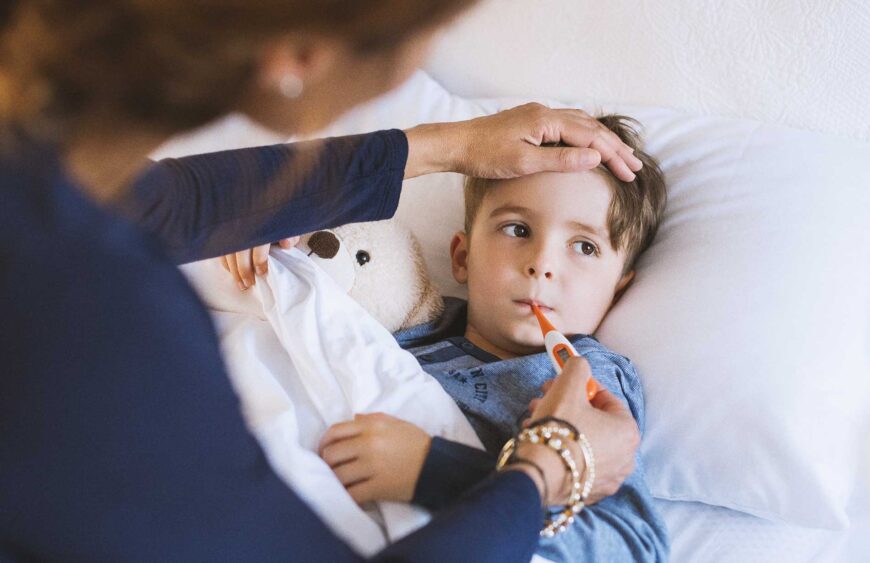
Even with precautions, kids sometimes get sick. What matters is recognizing early signs and responding calmly. 99% of the time it’s a nothingburger. Just their little bodies adapting.
However, If your child develops a mild fever, stomach upset, or cough, start with rest and hydration. Offer small sips regularly. Many parents carry oral rehydration salts in their first aid kit because they work well when kids do not want to drink. This is why our first aid kit packing guide includes them at the top of the list.
Use age appropriate medication if needed, but stick to medicines you know. Do not try something new while abroad unless recommended by a local doctor. Keep meals simple and avoid heavy foods until symptoms settle.
Also observe how your child behaves. A playful child with a fever is usually less worrying than a lethargic child with a mild cough. Trust your instincts but stay calm. Kids recover faster when routines slow down and they feel secure.
When to seek local medical help
Parents often hesitate to visit doctors abroad, but many countries have excellent pediatric care. You should seek help if:
- Your child has persistent high fever
- They show signs of dehydration
- Vomiting or diarrhea lasts more than a day
- Breathing becomes fast or labored
- You suspect an allergic reaction
- You feel unsure or uncomfortable
Most travel destinations have clinics used to seeing foreigners. Ask your hotel reception for the nearest pediatric clinic. If you are staying in a rental, contact the host immediately. They usually know the quickest local option.
To prepare for this possibility, review our guide on emergency contacts and local hospitals, which walks you through how to find reliable care abroad.
Preparing before the trip so you worry less
A little prep goes a long way. Pack familiar medications, oral rehydration salts, a thermometer, fever reducers, insect repellent, hydration tablets, and any prescribed medicines your child needs. This gives you a sense of control and reduces last minute panic.
Make photocopies or digital copies of medical documents and prescriptions. If your child has allergies or chronic conditions, keep a short health summary on your phone. It makes communication with foreign doctors much easier.
Before you leave, also check whether your destination has any health advisories. You do not need to memorize everything, just be aware of common risks. This is where our travel insurance guide becomes helpful, since many parents forget it covers more than emergencies. It often covers basic medical visits too.
Finally, be gentle with yourself. Parents can do everything right and still face a little illness on the road. It is part of raising tiny humans in unfamiliar environments. The goal is to keep things manageable, not perfect.
A calmer approach to staying healthy abroad
Travel is unpredictable. You will meet new foods, new climates, and new microbes, but that does not mean you need to stress through your holiday. With a few steady habits, a prepared first aid kit, and a calm mindset, most travel illnesses stay small, temporary, and manageable.
Kids bounce back quickly. And the memories they build while traveling last much longer than a sniffle or a mild fever. Keep your routines flexible, stay observant, and trust your instincts. The world is full of exciting places waiting for your family, and with a little preparation, you can explore them confidently.
Too Long? Here are the most common questions we’re asked.
Focus on handwashing, safe drinking practices, rest, and balanced schedules. Small habits reduce most common travel illnesses.
Yes, if you choose clean, busy vendors with high turnover. Stick to hot, freshly cooked foods and avoid raw items in high risk regions.
Rest, hydration, oral rehydration salts, and simple foods help most cases. Seek medical help if symptoms persist or your child looks dehydrated.
It depends on the country. When unsure, stick to sealed bottled water or a reliable filtration bottle.
Seek care for persistent fever, dehydration signs, breathing problems, or if you feel uncomfortable assessing symptoms alone.