Why Settling Into a New Space Takes a Minute
So you finally checked in. You survived the flight, the transfer, the lobby meltdown, and the part where your toddler tried to reorganize the minibar. And now, as you finally sit on the edge of that neatly made hotel bed, something hits you. This room is full of potential hazards. Sharp corners, unlocked balconies, mystery switches, and a bathroom that looks like it was designed by someone who has never met a small child.
Hotels and rentals can be wonderful, of course. They give kids a sense of adventure and parents a break from dishwashing. But when you are traveling with little humans who see a glass table and think, “Perfect surface for parkour,” a few simple precautions can turn an unpredictable environment into a safe base for the whole trip.
Anyway, let’s walk through how to make any room safer without turning your holiday into a risk assessment seminar. These are practical things many parents swear by, mixed with lessons learned the hard way, plus a few crosslinks to other posts that help you build the full safety picture, like understanding local hospitals or keeping kids safe around water. We will keep it calm, realistic, and parent to parent.
What you’ll find in this guide:
Setting up the room
Hazards that hide in plain sight
What to double check in bathrooms
Balcony safety that works
The great escape attempts
Sleep setups that help everyone sleep
What to teach your kids on day one
Handling rentals, villas, and Airbnbs
FAQ’s
Setting up the room without losing your mind
The moment you enter a hotel room with kids, you have around fifteen seconds before someone claims the most dangerous object as their new favorite toy. So, well, the first thing many parents do is a quick scan. It does not have to be a military sweep, just a calm look around to see what needs adjusting. If this is your first time traveling with toddlers, this step alone can save you later. And if you have done this before, you already know the drill by instinct.
Start by moving anything breakable or bizarrely expensive. Hotels love decorative vases, glass trays, and bowls of fruit that practically scream “toddler missile”. Just move them to a high shelf or the top of the closet. Staff do not mind and will thank you silently when they do not have to vacuum mango pulp off the curtains.
Then look at the furniture layout. If the room has a table with sharp corners near the bed or the path to the bathroom, shift it slightly. You are not redesigning the space; you are just preventing the midnight head bonk when a child half asleep tries to climb into your bed. This is quite common on longer trips, especially when time zones throw routines off track. If you want more help with that piece, our guide on adjusting to new time zones can smooth out that first night chaos. And by the way, if your hotel offers a complimentary crib, always check the stability. Give it a little shake, check the mattress fit, and make sure it is not placed next to any lamps or cords a curious hand might reach. Many parents also prefer to bring a small travel sheet from home, since familiar smells help kids settle into the new environment faster. This is especially helpful after long flights, particularly when you are fighting the effects of jet lag in children.
Watching out for hazards that hide in plain sight
Hotels and rentals have their own logic. Light switches are never where you expect. Power outlets appear in clusters right where your baby crawls. TV cables dangle at perfect grabbing height. So the next part of settling into your room is spotting these sneaky hazards.
Start with power outlets. Most hotels abroad do not include child safe covers, so check what is reachable. If you travel often, you probably already keep a few cheap plug covers in your medical kit. They weigh nothing and solve the problem instantly. If you do not have any, tuck furniture in front of the exposed ones or tape over outlets using medical tape from your first aid kit. Many parents do that instinctively, especially those who have read our post on what to pack in a travel first aid kit, since medical tape ends up saving the day more often than expected.
Next, tame the cords. Pull phone chargers, kettle cables, and lamp wires out of reach. Kids love to tug these. If the room has a kettle or coffee machine at the edge of a counter, place it higher or unplug it entirely. The steam and heat are not worth the risk. And if you are staying in an apartment rental, double check appliances as well, especially if you plan to cook. This ties in closely with our guide to staying safe in rentals, which highlights what families should check before unpacking.
Finally, lock balcony doors or terrace doors immediately. Many hotel doors look locked when they are not. Some parents even place a suitcase in front of the door for peace of mind. If the lock looks flimsy, ask reception for a safety latch. It takes two minutes and can make a big difference.
What to double check in bathrooms
Bathrooms are the biggest risk zone in most accommodations. The tiles get slippery, the water temperature varies wildly, and the amenities scream “do not put this in your mouth,” which is, of course, exactly what toddlers attempt.
Start with the water temperature. Run the tap and shower to test whether the water comes out scorching at first. Many hotels, especially in older buildings, have unpredictable systems. If the water heats too quickly, keep the child as far back as possible during bath time, or fill the bath using only the cold tap first.
Then check for non slip surfaces. If the shower or bathtub is slippery, use a towel inside as a temporary mat. It is not glamorous, but it works. Plenty of parents have shared this workaround in travel forums when they forgot to pack their lightweight bath mat.
Also hide everything. The vanity items, the razor kit, the body lotion, the tiny soap shaped like a moon. Move them all. Toddlers do not distinguish between toothpaste and conditioner. And if you are traveling with older kids, make sure they understand which tap water abroad may not be safe to drink. This connects to our article on avoiding common illnesses while traveling, which covers hygiene and safe water tips.
Lastly, if you have a child who likes to explore the toilet bowl (it happens), place something on top of the lid. A towel works. It blocks casual curiosity.
Balcony safety for your sanity
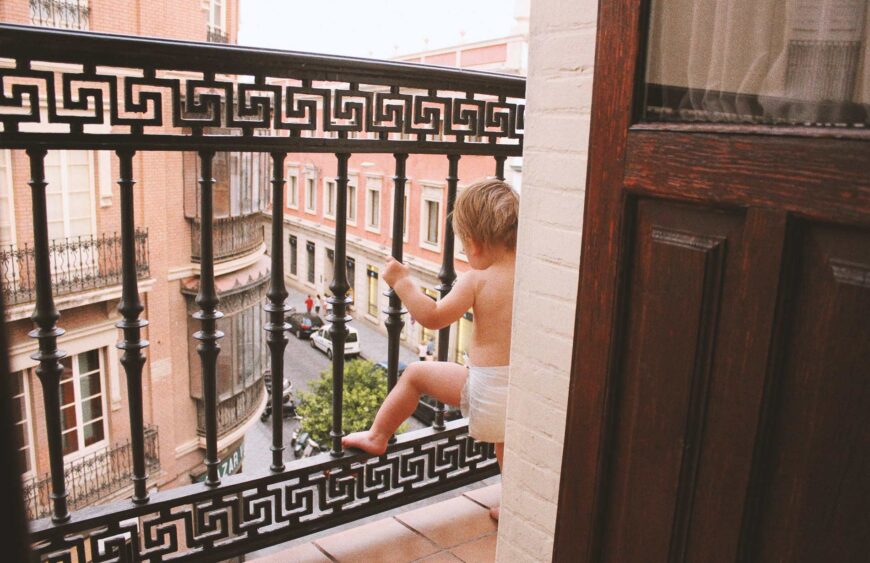
Balconies stress parents more than anything else in hotels. They look lovely in photos and terrifying in real life. If you have kids under five, treat the balcony like a restricted zone. This is not paranoia. Many parents do exactly that until they check the railing height, the gaps, and the furniture.
First, inspect the railing. Kids climb anything. If there are chairs near the edge, move them inside. If the bars have large gaps, keep the door locked at all times. You are not ruining your holiday. You are simply making sure nobody performs an unplanned stunt.
Some families use a portable door latch or travel lock for extra peace of mind. These are great for balcony doors but also for the main entrance, particularly if you have a sleepwalker or a curious preschooler. It fits neatly into your carry on, and you will be glad you packed it.
If you do plan to use the balcony, supervise actively. Sit with your kids, have snacks there, and enjoy the view together, but never leave them out of sight. Many parents find that once kids understand the boundaries early in the trip, they relax faster.
Hotel pools, doors, and the great escape attempts
If your hotel has a pool, treat it with the same caution as any body of water. Many parents underestimate how easily a child can wander toward the pool area while you unpack. Make a habit of locking the main room door or using a latch. This is especially important if your accommodation has direct pool access from a terrace. The setup looks dreamy in photos, but it means you need a water safety plan from the first minute.
Always check whether the pool has lifeguards, and never assume they are supervising actively. Bring your own flotation devices, and do not rely on inflatable toys. If you have not read our water safety guide yet, this is a good time. It covers how to manage pools, lakes, and oceans during family holidays.
Also assess the pool deck. Tiles are often slippery and sloped. Show kids where they can walk without sliding. Some parents even give quick “here is how we behave near the water” reminders right when they arrive. It helps more than you would think.
Sleep setups that help everyone rest
Sleep is where hotel safety and sanity merge. You want your kids safe, but you also want the whole room to stay standing after bedtime. If you are using a travel crib, place it away from lamps, curtains, and light switches. If the crib the hotel provides looks too deep or too shallow, ask for another one. There is no shame in this. They have dozens in storage, and you should use the one that feels secure.
If your child sleeps in a regular bed, inspect for gaps between the bed and the wall. Kids roll. Slide a blanket into the gap if needed. Or push the bed against the wall entirely. If you worry about falls, place extra pillows on the floor.
For toddlers and preschoolers, consider bringing a small nightlight from home. Hotel rooms get dark, and unfamiliar darkness often causes nighttime wandering. A soft nightlight helps them orient themselves safely and helps you avoid stepping on stray toys at 2 AM.
What to teach your kids on day one
Even young kids can learn simple hotel rules. Keep it light and friendly, but clear.
Show them which doors they cannot open, where they should not climb, and how to press the elevator button without sprinting inside alone. You can even make it slightly fun. Kids love feeling included in “grown up information.”
If your kids are older, teach them the room number in case they get separated in a hallway. Many parents also take a quick photo of each child every morning before leaving the room. This helps enormously if anyone gets lost in busy hotels. If you are concerned about crowded places, we also have a helpful guide on child safety in busy tourist areas that many parents rely on for city trips.
Handling rentals, villas, and Airbnbs
Rentals give you freedom and space, but they also require more vigilance because they are not designed with children in mind. Before booking, always check reviews that mention families. They are usually honest about steep stairs, open pools, or balconies with wide gaps.
When you arrive, do a faster version of the hotel safety scan but add appliances, doors, windows, and outdoor spaces. If there is a pool, check how easily accessible it is from bedrooms and living areas. If needed, block the patio door or move furniture to prevent accidental access.
Also look out for cleaning supplies. Rentals often store them under the sink, within toddler reach. Move them immediately. Families who cook in rentals say this is the number one thing they forget. If the property has a loft, spiral staircase, or fireplace, set clear boundaries early. And when in doubt, ask the host for safety items. Many have baby gates, outlet covers, or high chairs available even if they are not listed.
A calmer, safer stay wherever you go
Traveling with kids means accepting that hotel rooms will transform into obstacle courses within minutes. But with a bit of preparation and a quick setup routine, your accommodation can feel just as manageable as home. The goal is not perfection. The goal is fewer surprises and more relaxing evenings, where you can finally enjoy that balcony view without worrying about someone wedging themselves between the chairs.
Hotel safety is one of those topics parents wish they thought less about, but once it is in place, you get to enjoy the trip with a clearer mind. And if you want to go deeper into destination routines, time zone adjustments, or medical prep, the Tots in Tow blog has your back with related guides on first aid kits, water safety, and adjusting to new time zones.
Too Long? Here are the most common questions we’re asked.
A quick room scan helps. Move breakables, block outlets, shift furniture with sharp edges, and lock balcony doors. These small steps make most rooms toddler ready in minutes.
Test water temperature, ensure surfaces are not too slippery, hide toiletries, and place a towel in the tub if it lacks grip. Bathrooms are often the most hazardous room.
Use the latch or deadbolt, and consider a portable travel lock for peace of mind. Suitcases placed in front of the door also work well with younger kids.
They can be if supervised consistently. Always lock the door, move furniture away from railings, and avoid balcony play with children under five.
Look for unlocked pools, steep stairs, low windows, and cleaning products within reach. Rentals need more active checking than hotels because setups vary widely.