Making Friends Abroad: Helping Kids Socialise While Traveling
on
28/01/2026
Travel is one of the easiest places for kids to connect
One of the quiet gifts of traveling with kids is how naturally social it becomes, often without anyone trying very hard. Take kids out of their usual routines, drop them into a new place, and something interesting happens. They notice other children faster. They watch more closely. They’re curious in a way that feels lighter than at home.
There’s no school hierarchy, no class clown, no shy label that follows them around. Everyone is new. Everyone is figuring things out at the same time. That alone lowers the stakes and makes interactions feel simpler. Travel strips socializing down to its most basic form: movement, play, and shared curiosity.
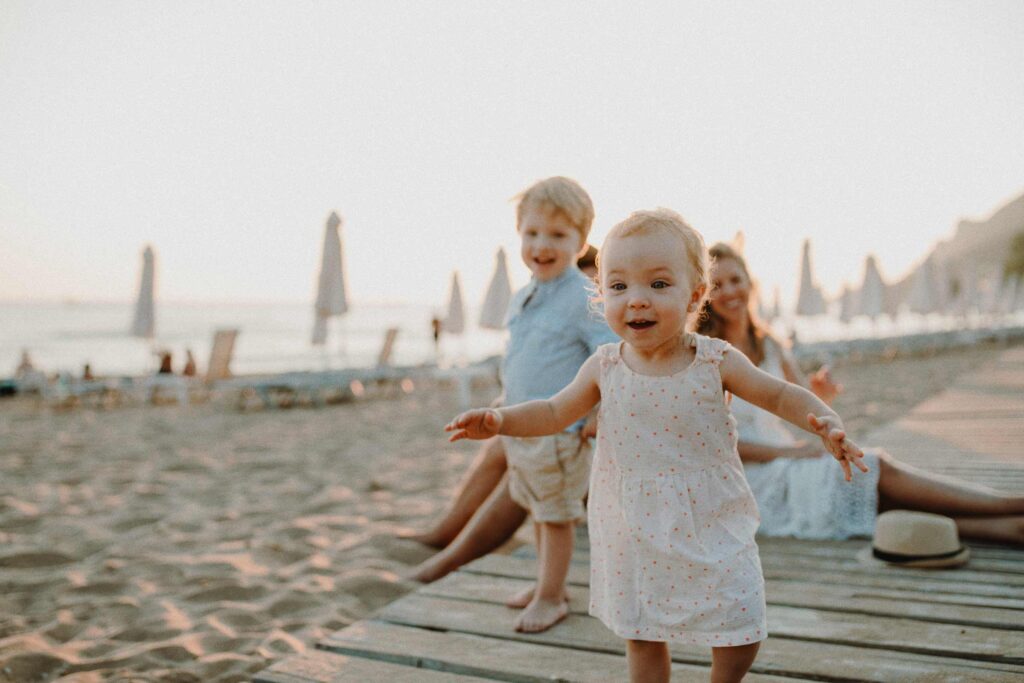
Parents often discover that helping kids socialize abroad requires far less effort than organizing playdates at home. You don’t need icebreakers or introductions. A playground, a ball, a patch of sand, or a hotel pool does most of the work for you. Kids instinctively know how to enter these spaces and test the waters.
What’s especially fun is that kids tend to remember these moments vividly. Not because they made a lifelong friend, but because they felt free, capable, and included. That feeling becomes part of how they remember the trip, just as much as landmarks or food.
This is one of those areas where travel does the heavy lifting for parents. You just have to let it happen.
Parents don’t need convincing that kids don’t need a shared language to play. Anyone who has watched children meet on a beach or a playground knows how quickly communication shifts from words to action. Running, climbing, splashing, and inventing games together comes naturally.
Kids making friends while traveling often happens through imitation. One child jumps off a step, another follows. Someone starts collecting rocks, suddenly there’s a group. Laughter fills in where vocabulary might be missing. It’s messy, joyful, and incredibly efficient.
What makes this special is that kids aren’t distracted by how they sound or whether they’re saying the right thing. Without a shared spoken language, there’s no pressure to perform socially. Kids rely on instincts instead, which often makes interactions feel more relaxed and genuine.
Parents sometimes underestimate how much kids enjoy this kind of communication. It’s freeing. They don’t have to explain themselves. They just show what they mean. That’s why kids playing with local children often looks so fluid, even when they technically have nothing in common.
As adults, we tend to overthink connection. Kids remind us that play was always enough.
Different kids, different social styles, all perfectly fine
Not every child approaches new kids the same way, and travel highlights that beautifully. Some kids walk straight into a group and start playing within seconds. Others hang back, watch carefully, and join when they feel ready. Both approaches are completely valid.
Outgoing kids often thrive in travel settings because there’s constant novelty. New places mean new potential friends every day. These kids tend to collect short, intense play sessions and move on happily. They’re energized by variety and quick connections. More observant or reserved kids often surprise their parents abroad. With fewer expectations and no familiar roles to live up to, they sometimes feel safer taking social risks. Watching first becomes part of their strategy, not a sign of hesitation. When they do join in, it’s often on their own terms.
Shy kids traveling aren’t necessarily less social. They’re often just more selective. Travel gives them space to choose interactions that feel right, whether that’s one child at a time or a quiet shared activity rather than loud group play.
Parents don’t need to steer kids toward a certain style. The goal isn’t to change how your child interacts, but to give them opportunities that match who they already are.
Places where connections happen almost automatically
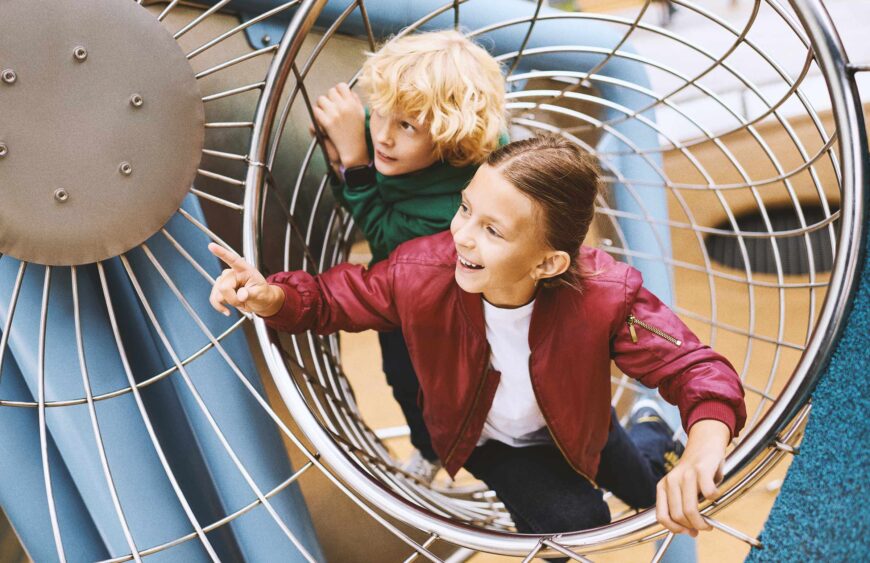
Some environments make socializing effortless. Playgrounds are the obvious favorite, especially local ones where kids gather naturally. They’re low pressure, open ended, and designed for exactly this kind of interaction.
Hotel pools, beaches, ferry decks, and campgrounds are equally powerful. Kids tend to see each other repeatedly in these spaces, which builds familiarity quickly. By the second or third encounter, playing together feels normal.
Accommodation choice can quietly influence this too. Smaller hotels, family friendly guesthouses, and apartment complexes often create more opportunities for kids meeting friends on vacation than large, anonymous resorts. Seeing the same faces at breakfast or in shared spaces makes connection easier.
One underrated factor is time. When families aren’t rushing from attraction to attraction, kids have the chance to settle in and notice others. Unscheduled afternoons are often when the best social moments happen.
Parents planning trips with a bit of breathing room often notice the same pattern we talk about in Helping Kids Feel at Home Abroad. When kids feel settled, social curiosity follows naturally.
How parents can gently encourage interaction without hovering
Helping children make friends abroad doesn’t require managing or directing play. In fact, kids often do better when parents take a step back. The most helpful role is creating access and then letting kids lead.
Simple choices matter. Sitting near other families. Staying a little longer at the playground. Packing something shareable like a ball or bubbles. These small decisions open doors without forcing anything. It also helps to stay relaxed about outcomes. When parents aren’t scanning the situation for success or failure, kids feel less pressure. Socialising becomes something they explore, not something they’re evaluated on. Parents can model openness by being friendly themselves. A smile, a brief comment, or a casual greeting signals that interaction is welcome. Often, kids follow that lead without any further prompting.
And when nothing happens, that’s fine too. Observation is part of social learning. Watching how other kids play, interact, and move through space is valuable in itself.
Short connections still count
One of the most charming things about travel friendships is how temporary they are. Kids may play intensely for an afternoon and never see each other again. That doesn’t make the connection less meaningful.
These brief interactions teach kids how to enter play, adapt quickly, and move on without drama. They learn flexibility and emotional ease, skills that are surprisingly useful back home. Travel helping kids build confidence often happens in these short bursts. A child learns that they can connect anywhere, with anyone, without needing familiarity or preparation. Parents sometimes wish these friendships would last longer. Kids rarely mind. For them, the joy is in the moment, not the continuation.
Those moments accumulate quietly. Over time, kids carry that confidence into new situations, knowing they’ve done this before.
Why this is one of the best parts of traveling with kids
Children social development through travel isn’t something parents need to manage carefully. It unfolds naturally when kids are given space, time, and interesting environments.
Travel removes many of the invisible rules kids navigate at home. Without those constraints, social interaction becomes lighter and more playful. Kids try things, retreat if needed, and try again. Parents get to watch their children in a different light. Sometimes more independent. Sometimes more adventurous. Often more socially capable than expected. This is one of the reasons so many families look forward to travel. Not because it’s perfect, but because it reveals sides of their kids they don’t always see at home.
And for kids, these moments become part of how they understand the world. Open, shared, and full of possibility.
Too Long? Here are the most common questions we’re asked
How can I encourage my child to play with other kids while traveling?
Choose places where kids naturally gather, like playgrounds, pools, or beaches, and give them time to settle in. Staying nearby without directing play usually works best.
What if my child prefers to watch instead of joining in?
That’s completely normal. Observation is part of social learning, and many kids join when they feel ready.
Do kids really connect without speaking the same language?
Yes. Play, movement, and imitation do most of the communicating. Shared language is rarely necessary.
Is it okay if my child only plays briefly with other kids?
Absolutely. Short interactions still build confidence and social ease, which is often the real benefit.
Should parents step in to help start interactions?
Usually no. Creating opportunities is enough. Kids tend to take it from there on their own.
We use cookies to ensure that we give you the best experience on our website. If you continue to use this site we will assume that you are happy with it.