The Best Travel Strollers for Flying with a Baby (According to Parents Who’ve Actually Done It)
Some links are affiliate links. Everything on this list earned its place through thousands of member recommendations. The commission comes after, not before.
No Influencers Were Consulted in the Making of This Article
If you’ve ever typed “best travel stroller for flying” into a search engine, you already know the problem: every result is a listicle written by someone who may have never left a showroom. What you actually need is the answer your mum friend who’s flown 14 times with a baby would give you.
That’s exactly what we’ve got here. We went through hundreds of real questions and answers inside our Tots in Tow community and pulled out the patterns, the winner picks, and the honest caveats. These are parents who’ve pushed these strollers over cobblestones in Europe, through Turkish bazaars, and down the jetways of budget airlines. This is what they told each other.
First Things First: What Does "Travel Stroller" Actually Mean?
Before you spend a cent, you need to know which kind of travel stroller you actually need. Our community asks this question constantly, and it turns out there are three distinct use cases that often get confused.
The overhead bin stroller is the golden ticket. A compact travel stroller that folds small enough to fit in the overhead compartment means you never have to part with it at the gate, never worry about damage, and can use it right up to your seat. This is the most sought-after category in the group.
The gate-check stroller is your everyday or near-everyday stroller that you use right up to the aircraft door, fold it, hand it over, and collect it on arrival. It doesn’t need to fit overhead, but it does need to fold quickly, and you’ll want a padded bag to protect it.
The “do I even need one?” stroller is a real category too. Quite a few parents in the group have questioned whether a stroller at age 3+ is worth the hassle. The community verdict on this is almost unanimous: yes, bring it. Heat, long walking days, and late evenings mean even kids who never use a stroller at home will collapse into one on holiday. One mum put it perfectly: “I’ve never regretted taking a stroller. I’ve definitely regretted not taking one.”
The Overhead Bin Champions: What the Community Actually Recommends
This is the big one. When parents ask for strollers that fit in the overhead bin, a handful of names come up again and again across hundreds of comments. Here’s what they say about each.
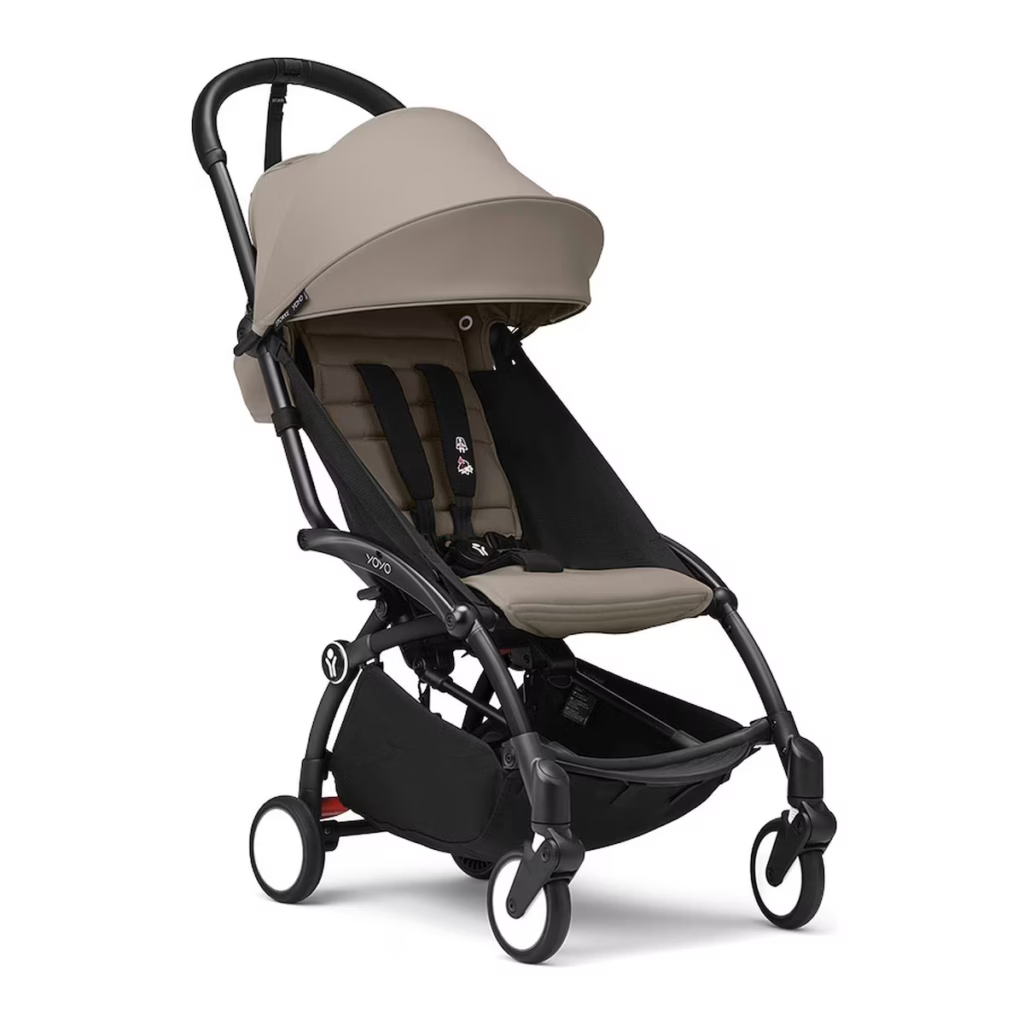
Babyzen YOYO (Stokke YOYO3)
No stroller gets mentioned more in the group than the YOYO. It’s the benchmark everything else gets compared to. Parents love it because airlines know it, gate staff recognise it, and cabin crew have seen it go overhead a thousand times before yours. On budget airlines where overhead space is fiercely contested, being able to say “it’s a YOYO” carries real weight.
The main caveats: it doesn’t do a full flat recline (which matters if you have a baby under around 6 months), and accessories are sold separately which adds up. A few parents also noted that the older models sit lower than ideal for taller babies.
One parent who’s flown over 15 times with it summed it up well: it’s not the cheapest and it’s not the most feature-rich, but it’s the one that causes zero headaches at the gate.
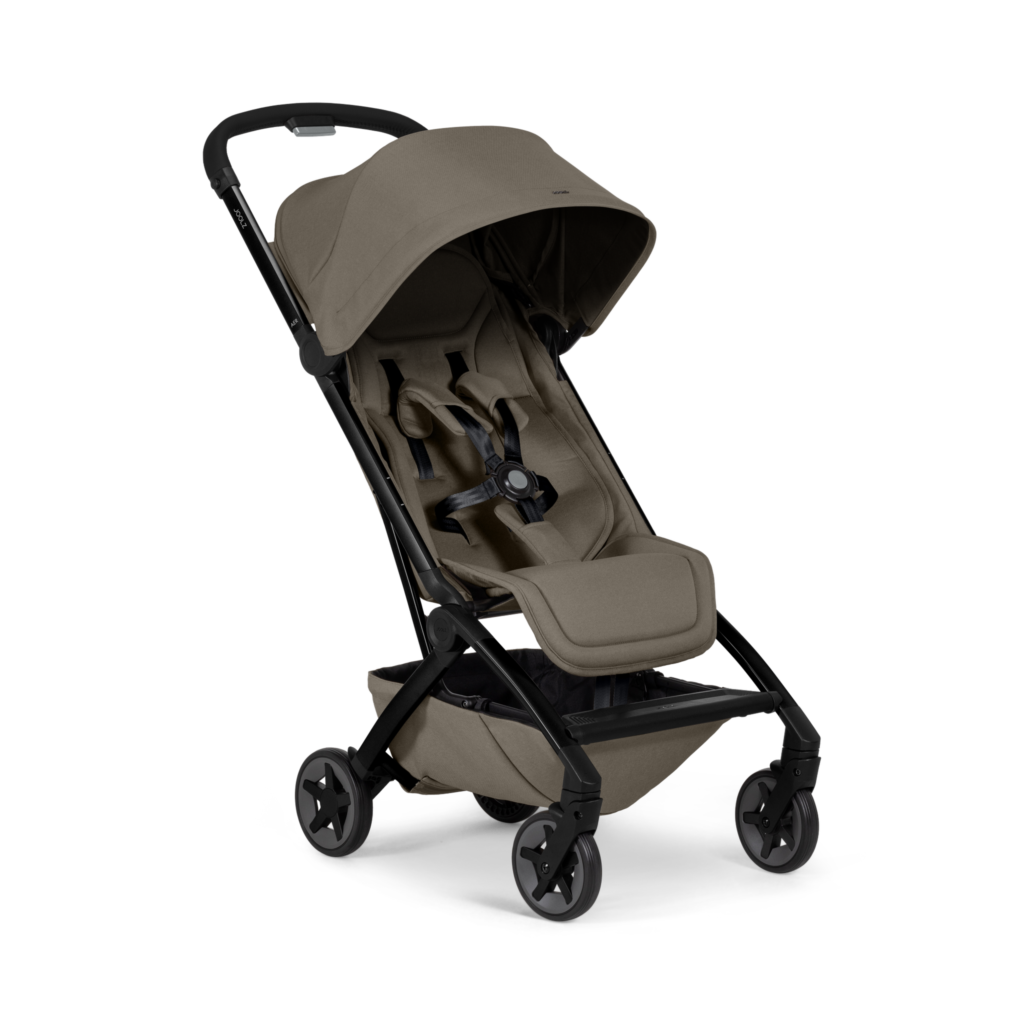
Joolz Aer / Aer+ / Aer2
The Joolz Aer has developed a cult following in this community. Multiple parents mentioned using it on 10, 15, even 20+ flights. The one-handed fold is genuinely impressive, and numerous parents who bought it specifically for travel have ended up using it as their everyday stroller because it’s just so easy.
The Aer2 (the latest version) addressed one of the main complaints about the Aer+: the recline. The older version’s zip recline frustrated parents of younger babies. The new model and the European version both offer a better flat position.
One note for Australian parents specifically: a Joolz commenter flagged that the European version of the Joolz lies flatter than the version sold in Australia, so it’s worth checking the specs for your region.
The honest downside: a few parents felt the Joolz doesn’t handle rough terrain as well as beefier options, though most found it fine for European cobblestones and city streets.
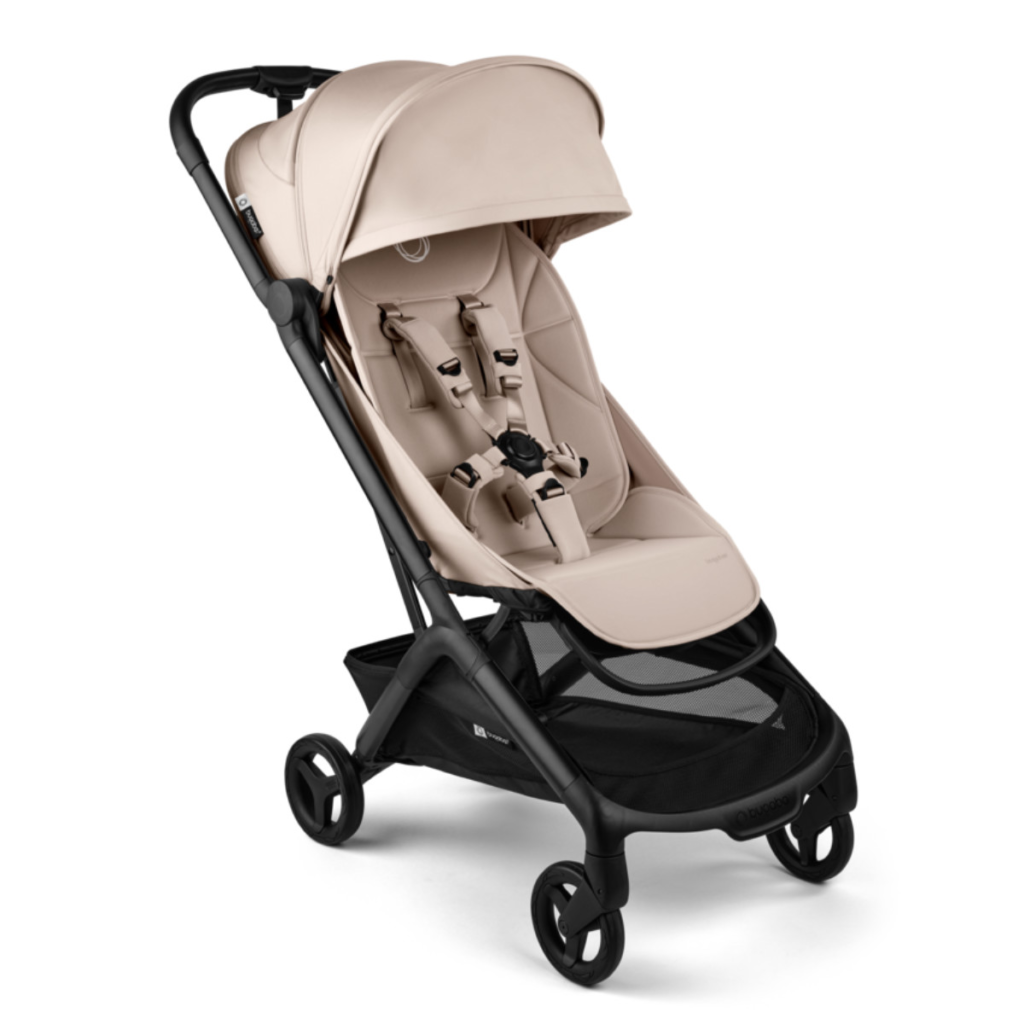
Bugaboo Butterfly (and Butterfly 2)
The Bugaboo Butterfly generates passionate reviews. Parents who love it really love it. It’s lightweight, genuinely compact when folded, and multiple parents reported using it as their main everyday stroller, not just for travel. Several mentioned carrying it in its bag like a backpack while managing a baby, boarding pass, and security tray simultaneously.
The key caveat: the original Butterfly doesn’t fully recline, which frustrated parents of younger babies or those who wanted nap-on-the-go capability. The Butterfly 2 addresses this. If recline matters to you, hold out for or seek out the newer version.
One parent who had both the Butterfly and the Joolz Aer+ rated the Bugaboo as higher quality overall, while another found the opening mechanism sometimes stuck when the baby was screaming to get out. Worth testing the fold/unfold mechanism in the shop before buying.
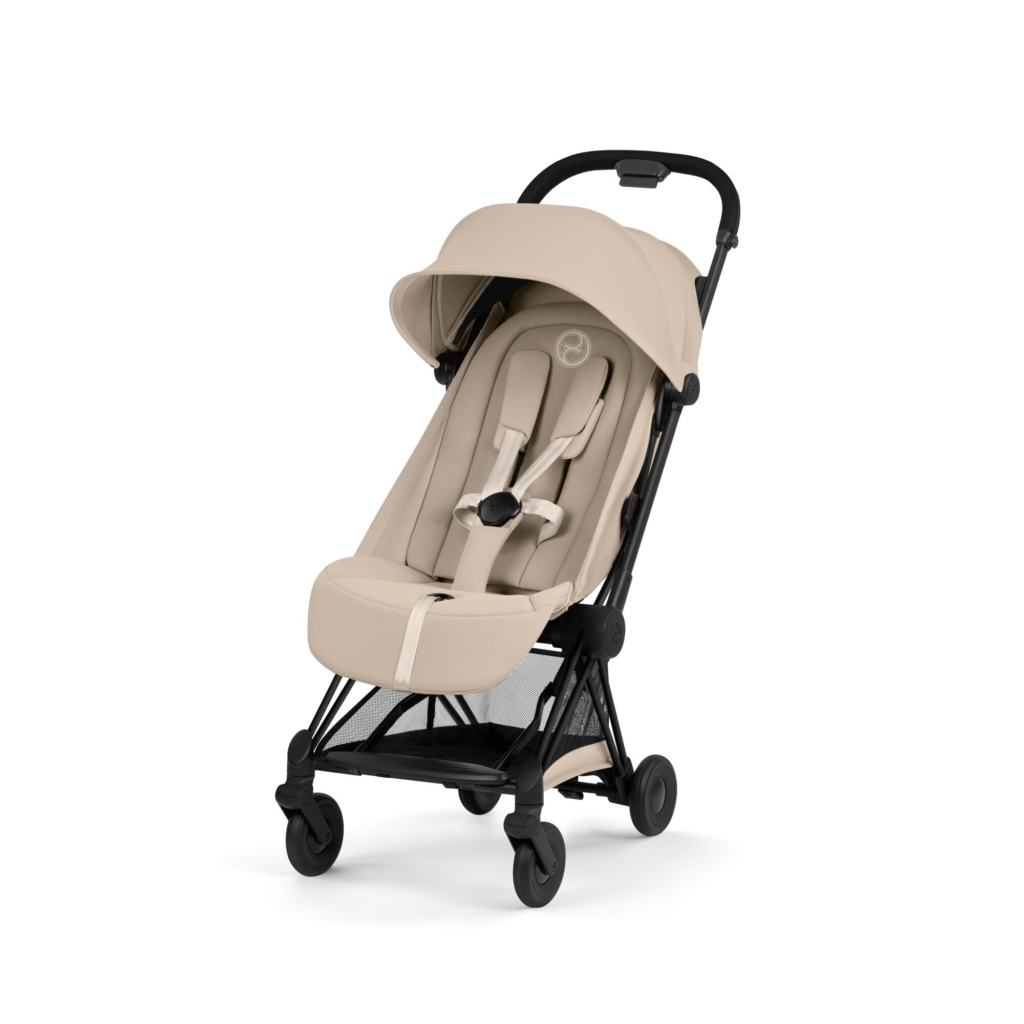
Cybex Coya and Cybex Libelle
The Cybex options come up regularly, particularly the Coya and Libelle. The Coya gets strong reviews for recline, comfort on European streets, and car seat compatibility. One parent highlighted that it comes with a rain cover included, unlike the YOYO which charges separately for accessories.
The Libelle is the more budget-friendly Cybex option. Good reviews overall, with the honest caveat that the recline isn’t as deep as some parents want.
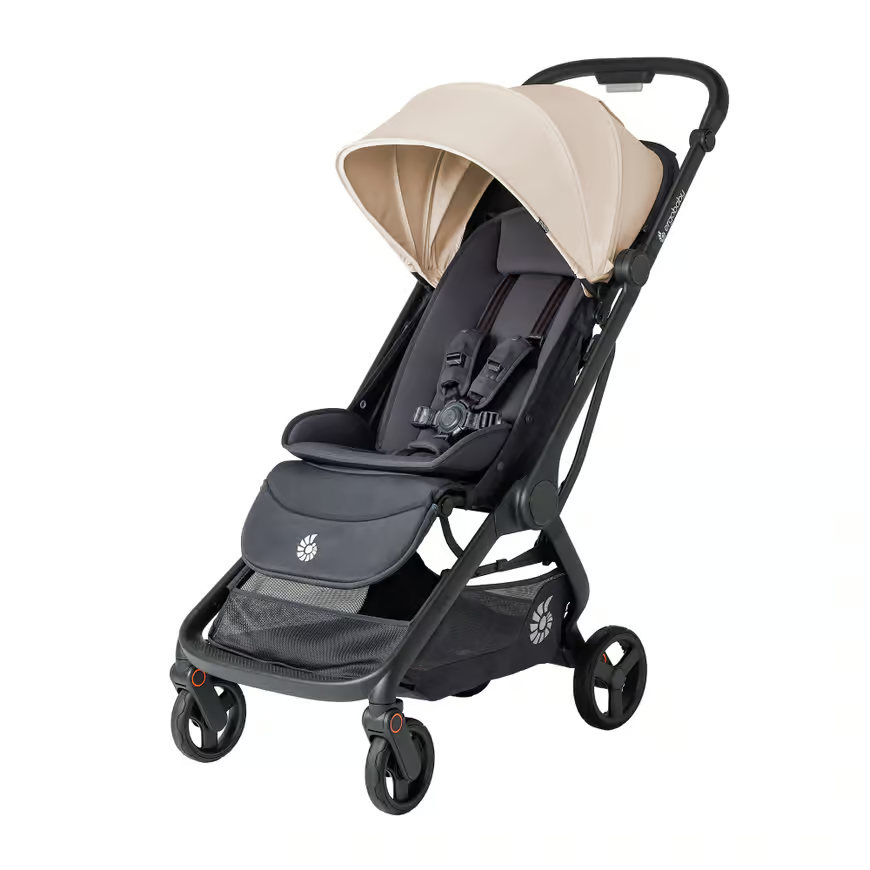
Ergobaby Metro+
A quieter recommendation but consistently positive. Parents love that it folds down specifically for overhead airplane storage, is car seat compatible, and can carry up to 50 lbs. If you’re looking for something that works from newborn through toddler years, the Metro+ is worth a look.
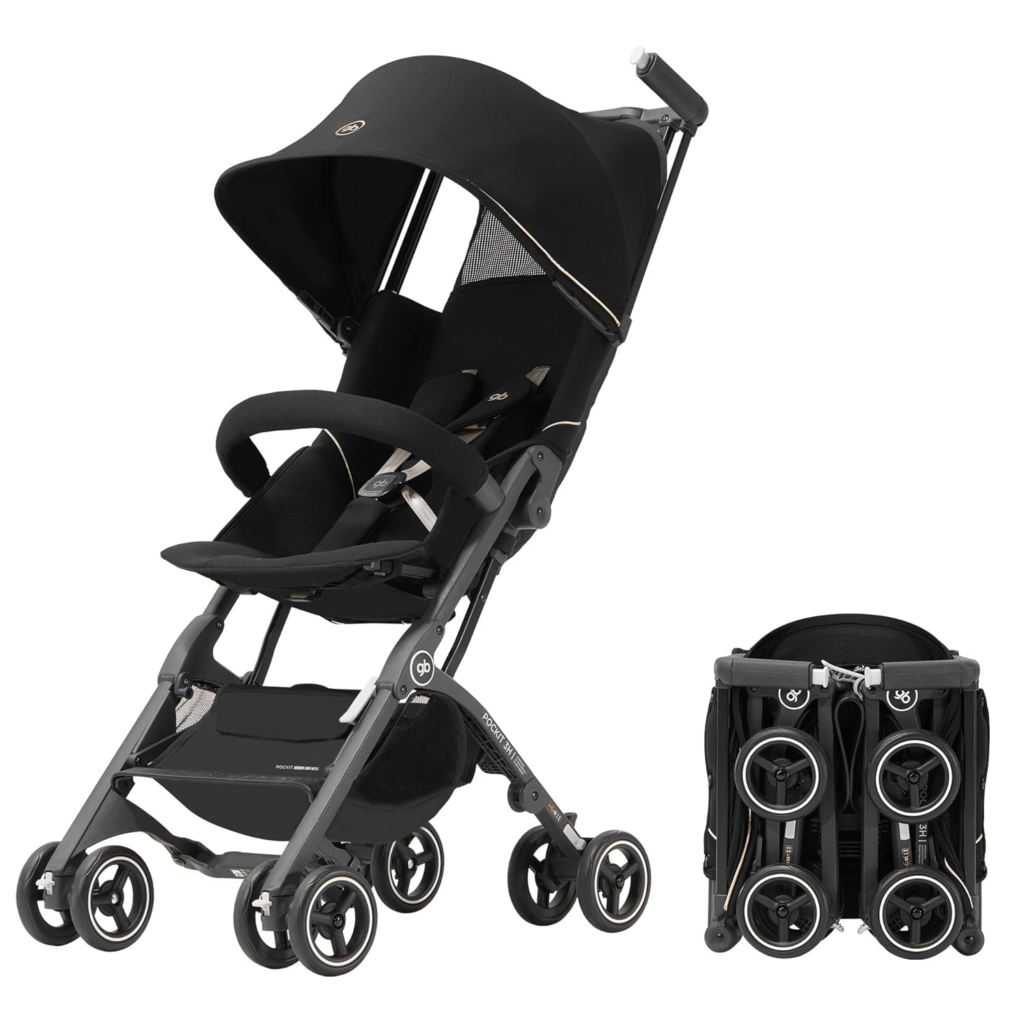
GB Pockit / Pockit+
The GB Pockit is the ultra-compact option for parents who prioritise portability above all else. It folds into roughly the size of a handbag, which makes it genuinely unique. One parent bought it on Facebook Marketplace to use with her 4 year old and called it life-changing for days when she needed something simple and small.
The trade-off is storage space. The basket is minimal. If you’re travelling solo and need somewhere to stash a nappy bag, a snack bag, and everything else, you’ll need to think about how you’ll carry it all.
The Gate-Check Question: Should You Protect Your Stroller?
This comes up constantly in the group, and the answer is simpler than most people think. Whether you gate check or hold check, strollers travel free on most airlines. How you handle the handoff is what separates a smooth trip from an unnecessary headache.
The community wisdom on gate checking:
Use a padded bag. Unprotected strollers that go in the hold do get scuffed. The plastic contact points on the bottom are the most vulnerable. One parent put cardboard in the bottom of her bag after her first trip and never had a problem again.
Photograph everything before boarding. Take pictures of the stroller with the gate tag attached. If it comes back damaged, you have proof and can claim with the airline immediately. Report damage on arrival, not after you’ve left the airport.
Gate check vs. hold check. Gate checking means you use the stroller right up to the aircraft door and collect it on the airbridge on arrival. Hold checking means it goes in with your luggage. Parents consistently recommend gate checking your stroller if you can, because you get more use out of it through the airport and it’s handled more carefully.
It’s typically free. Whether gate checked or hold checked, strollers are generally carried free of charge by most airlines. Always confirm this when you book.
Strollers and Car Seats: The Questions Nobody Tells You to Ask
Car seats and strollers on planes is one of those topics where a little knowledge goes a long way. The group has been through it enough times to have cut through most of the confusion, and the answers are simpler than the anxiety around it.
If your car seat has an FAA sticker (or equivalent aviation approval), you are entitled to use it in the aircraft if you’ve purchased a seat for your child. Airlines cannot refuse you. One parent in the group keeps the relevant regulation saved in her notes to show at the gate if challenged. We go into the full detail on certification, rules by airline, and what to do if you’re challenged in our do you really need a car seat? guide
On the stroller-as-travel-system question: several parents use their travel stroller with a compatible car seat clipped on, rolling through the airport as a combined unit and separating them at the gate. The Bugaboo Butterfly, Cybex Coya, and Joolz Aer all have car seat compatibility options worth investigating.
For longer trips, a few full-time travelling families buy a dedicated travel car seat rather than checking their everyday one. The weight difference and lower replacement cost if it gets damaged are the main reasons.
What Solo Parents Flying with Babies Actually Need
The original question in the group was specifically from a solo parent travelling with a baby, and that context matters because the dynamics are quite different from flying as a couple.
When there are two adults, you can divide and conquer. One manages the overhead bag, one manages the baby. One uses the bathroom, one stays in the seat. When it is just you, every single task requires a plan and often a moment of asking a stranger for help.
The good news is that most people on a plane, crew included, are genuinely more willing to help a solo parent than the anxiety leading up to the flight might suggest. The key is asking before you need help, not in the middle of a crisis.
Before you board, tell the gate agent that you are travelling solo with a baby and ask if there is any chance of an extra seat if the flight is not full. No guarantees, but it costs nothing to ask and sometimes works. During boarding, if you use the family boarding option, use it. It is there for exactly this situation.
Once on the plane, identify the crew member assigned to your section and introduce yourself early. Not with a speech, just a quick “Hi, I’m on my own with a baby today, might need a hand with a bag at some point.” That is a thirty-second conversation that can make the whole flight easier.
On the question of lap infants versus buying a seat, solo parents navigating this decision often feel the pressure more acutely. A separate seat gives you somewhere to set the baby down, which is worth a lot over four hours or more. And if you are dreading the long haul specifically, our long haul survival guide is probably the most useful thing we have written for this exact situation.
Specific Situations: What the Community Recommends
For solo travel (just you and baby): The priority shifts to storage and stability. A stroller you can hang a nappy bag on without it tipping over matters more than ultra-compact folding. The Graco Premier Modes Lux came up in one thread specifically on this point: at just 9 lbs without the seat, the weight difference versus a frame stroller is negligible, but the real basket and stability are worth it for solo travellers doing repeat trips.
For flying with a toddler (2.5 years+) and a baby: The community has tested various combinations. Single stroller plus carrier is a popular approach: youngest in the stroller, eldest carried when tired. A ride board attached to a single stroller is another option. Full side-by-side doubles like the Bombi Twin, UPPAbaby GLINK, and Valco Duo come up for families who want both children seated.
For European cobblestones: Almost every stroller gets tested on European streets eventually. The Redsbaby Skip 3 gets special mention for cobblestone performance. The Joolz Aer and Bugaboo Butterfly also get positive reviews. The GB Pockit, while brilliant for compactness, has smaller wheels that some parents found trickier on rough terrain. For more on navigating European cities with a stroller, our navigating busy cities with strollers piece is worth a read before you go
For Australia-based families: The Redsbaby Skip 3 dominates this thread. Multiple parents describe it as half the price of the Bugaboo Butterfly with comparable performance. It fits in the overhead bin, reclines well for sleep, and has a generous under-basket. The Skip 3 has a small but passionate fan base in this community.
For budget-conscious parents: You don’t have to spend premium prices for a good travel stroller. Several parents in the group have had great results with the Cosatto Yo!, the Graco Jetset, and budget carbon-fibre options from brands like Mamazing. One parent used a stroller that cost under £100 across Istanbul, Cairo, and Hurghada with zero complaints.
The Question the Community Keeps Asking: Do I Need a Stroller at Age 3?
We touched on this above, but it deserves its own section because the community is very clear on this.
Yes. Take one.
Three-year-olds run out of steam. Holiday heat in destinations like Turkey or Spain is brutal for little legs. Late dinners mean tired kids who won’t walk home. Busy airports need you to move fast with a child who can’t keep pace.
If they don’t use it, it can stay in the hotel. If you don’t have it, you’re carrying a 15kg child at midnight through an airport. Over cobblestone streets after a few glasses of Italian wine. Through Pompeii. You get the picture. One parent put it succinctly: “Peaceful evening meals and strolls with a buggy are a huge win for us and our kid even at 5.” Judge all you want other parents. We’re happy!
The GB Pockit came up multiple times as the compact solution for older kids whose parents weren’t sure they’d use it. At the size of a shopping bag, the risk of bringing it and not needing it is low.
The Strollers Worth Knowing About (Even If Less Talked About)
A few names that came up consistently enough to flag but may fly under the radar:
Nuna TRVL / TRVL LX: Highly rated for quality and ride smoothness, particularly noted for bigger wheels that handle cobblestones well. Doesn’t fit in the overhead bin, but gate checks easily. The LX version has a near-flat recline.
Redsbaby Skip 3: The Australian community’s top pick. Flat recline, fits overhead, lightweight, good basket. Limited awareness outside Australia but worth a look wherever you are.
Baby Jogger City Tour 2: A bassinet option that fits overhead and doubles as an everyday pram. A specific following among parents who want the newborn bassinet functionality without YOYO prices. See on Amazon
Bombi (single and twin): A newer brand that comes up with enthusiastic reviews. Described as feeling like “two Joolz Aer side by side” in twin form. Good value, comes with accessories included, and has all-terrain wheel options.
All you need to know in a paragraph
There is no single best travel stroller. But there are clear patterns in what 462,000 parents have found works in real travel conditions.
If overhead bin access is your priority and budget isn’t a constraint: the Babyzen YOYO3 or Joolz Aer2 are the safest bets with the widest airline acceptance.
If you want full flat recline for a young baby or nap-on-the-go: the Bugaboo Butterfly 2, Cybex Coya, or Joolz Aer2 are worth looking at closely.
If you’re on a budget: the Cosatto Yo!, Graco Jetset, and Redsbaby Skip 3 (Australia) deliver most of what parents need at significantly lower cost.
Whatever you choose: photograph it before every flight, use a padded bag for gate checking, and remember that the stroller you’ll actually use is better than the perfect stroller you’ll leave at home because it’s too complicated.
Too Long? Here are the most common questions we’re asked
Can I bring a stroller on the plane as carry-on?
Yes, but only if it’s compact enough to fit in the overhead bin. Strollers like the Babyzen YOYO, Joolz Aer2, and Bugaboo Butterfly are specifically designed for this. Budget airlines can be stricter about overhead space, so the YOYO has an advantage — cabin crew recognise it instantly and rarely question it.
What happens if I gate-check my stroller -- will it get damaged?
It can, especially if it goes unprotected in the hold. The community’s fix: always use a padded bag, put cardboard in the bottom to protect the plastic feet, and photograph the stroller with its gate tag before handing it over. If it comes back damaged, report it to the airline before leaving the airport.
Do I need a travel stroller or can I just use my regular one?
You can gate-check your regular stroller at no extra cost on most airlines, so it’s not a must. That said, parents who travel frequently almost universally end up buying a compact travel stroller — the difference in navigating airports, taxis, and cobblestone streets is significant enough that most say they wish they’d done it sooner.
At what age can I stop bringing a stroller on holiday?
The community consensus is later than you’d think — many parents still bring one for 4 and 5 year olds, particularly for hot destinations and late evenings. If you’re worried about the bulk, the GB Pockit folds to the size of a shopping bag and removes almost all the hassle of bringing one just in case.
Can I use my regular car seat on the plane?
Yes, as long as it carries FAA approval (or equivalent). Airlines are legally required to accommodate it if you’ve purchased a seat for your child. Keep a photo of the approval sticker on your phone, and if challenged at the gate, you’re within your rights to insist.