Jump to Section:
Why Travel Car Seats Stress Parents Out
The Safety Question: When It’s Non-Negotiable
Airline Rules and FAA/EU Regulations
Car Seats at Your Destination: Taxis, Rental Cars, and Beyond
Types of Travel-Friendly Car Seats
Renting vs. Bringing Your Own Car Seat
The Emotional Side: Peace of Mind vs. Practicality
Final Thoughts
FAQs
Few pieces of baby gear spark as much anxiety as the car seat when it comes to travel.
At home, it’s simple: your child rides in the seat that lives in your car. But travel throws every variable into chaos. Should you lug it through the airport? Trust the rental company to provide a good, clean one? Take your chances with taxis?
Scroll through any parenting forum and you’ll see the split. Parents either swear they’d “never travel without a seat again” or proudly declare that leaving it behind was the smartest choice they ever made. The truth lies somewhere in between. Whether you really need a travel car seat depends on your child’s age, your destination, and how you’re planning on getting around.
Why Travel Car Seats Stress Parents Out
Car seats are not designed for portability. They’re big, heavy, and awkward to carry, which is exactly what makes them safe at home. Dragging one through an airport while juggling a toddler and luggage feels like an endurance sport. Parents dread gate-checking them, only to find broken buckles or missing parts on arrival.
Then there’s the uncertainty. Airline rules are confusing. Different countries have different laws. Taxis rarely provide car seats. Add in the emotional weight that parents worry about safety and judgment from others and it’s no wonder this topic leaves many in knots before every trip.
The Safety Question: When It’s Non-Negotiable
Safety is the bottom line. If your trip involves regular car rides, whether it’s a road trip, a rental car, or daily taxi use a car seat isn’t optional anymore. The American Academy of Pediatrics stresses that car crashes remain the leading cause of injury for children, and that risk doesn’t go on vacation.
The details depend on age:
- Infants should always use a rear-facing car seat, even on trips.
- Toddlers belong in forward-facing seats with a harness if they’ve outgrown rear-facing limits.
- Older kids may be fine with a booster, but only if the seatbelt fits properly.
Where it gets murkier is when car rides are rare. If your itinerary is 90% walking, buses, and trains, that car seat might spend more time in the hotel closet than on the road. Parents often regret hauling one “just in case,” only to use it once. The key is to evaluate your actual transportation plan, not just vague “what if” scenarios.
Airline Rules and FAA/EU Regulations
Flying introduces a whole new set of headaches.
In the United States:
- The FAA only allows car seats that carry the label: “This restraint is certified for use in motor vehicles and aircraft.
- These are usually lightweight convertible car seats like the Cosco Scenera NEXT, which is famous in travel forums for being cheap, light, and FAA-approved.
- Car seats must be installed in a forward-facing seat (not in exit rows). Flight attendants sometimes restrict them to window seats to avoid blocking other passengers.
In Europe:
- Airlines follow EASA rules, which recognize seats certified under ECE R44/04 or R129 (i-Size).
- Some EU airlines allow FAA-approved seats, but not all. Parents traveling internationally often get caught in the crossfire when a seat is approved in one jurisdiction but not another.
Dual-certified seats:
- A handful of models, like the Joie Every Stage or certain Maxi-Cosi models, meet both US and EU standards. These can be a lifesaver for families who fly transatlantic often.
- The key is checking the sticker labels on your seat. If it doesn’t have the certification in writing, airlines can (and sometimes do) deny its use onboard.
Practical tips from parents:
- Always book a window seat if you plan to install a car seat — it prevents crew objections.
- Print out your airline’s car seat policy in advance. Parents in forums say this has helped countless arguments at boarding.
- Be prepared for pushback; not all crew members are trained in car seat rules.
Car Seats at Your Destination: Taxis, Rental Cars, and Beyond
After the flight, the next question is: how will you actually get around?
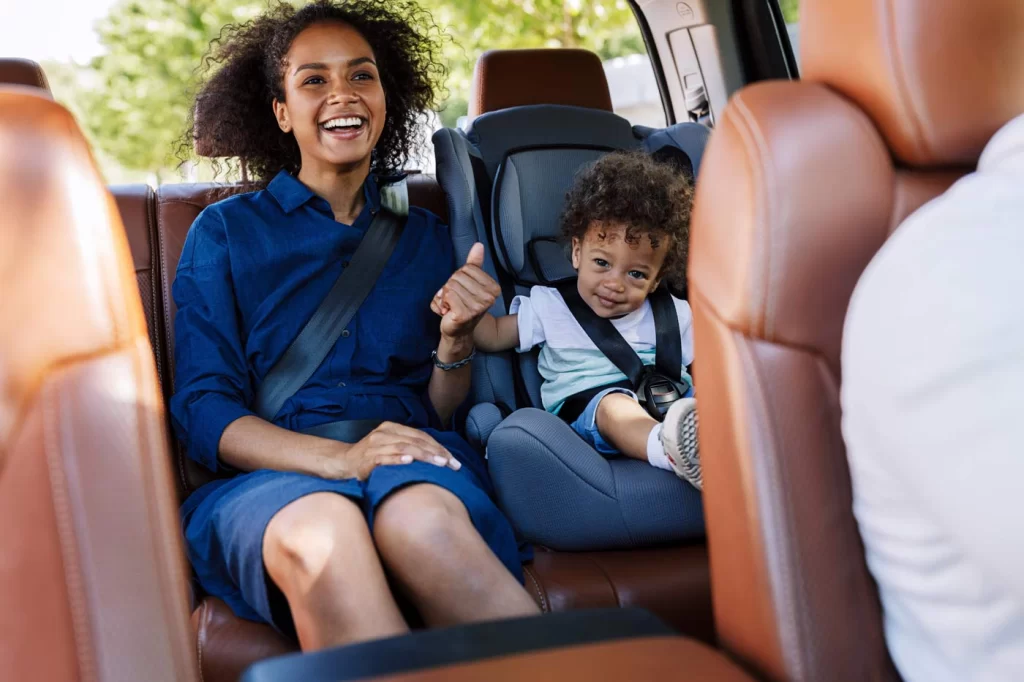
Taxis & rideshares: In many countries, taxis are exempt from child restraint laws. That doesn’t mean it’s safe. Some parents choose to hold kids on their laps, while others insist on always using a seat. Apps like Uber Family (in certain cities) now offer cars with car seats, but availability is often limited.
Rental cars: Most companies offer child seats for an added fee, but the quality is normally hit or miss. Parents have reported everything from brand-new Britax models to seats that looked like they’d been sitting in storage for years. If you do rent, always check the expiration date, cleanliness, and correct installation.
Public transport: Buses, metros, and trains don’t require car seats. For families traveling in Europe or big cities like New York, this makes skipping the seat feasible. But it does limit flexibility if you need a taxi unexpectedly.
Types of Travel-Friendly Car Seats
Over the past few years, gear companies have stepped in with lighter, more portable options designed specifically for travel. Some popular examples include:
Lightweight convertible car seats:
Cosco Scenera NEXT (about 3 kg, FAA-approved, often recommended for toddlers).
Evenflo Tribute LX (slightly heavier but still compact).
Parents love these because they’re cheaper, lighter, and easier to haul through airports than their everyday seat
Folding travel car seats:
WAYB Pico folds into a backpack-sized case, weighs only 4.5 kg, and is FAA-approved. Best for kids 2+. This one comes up in nearly every parenting forum thread about international travel. Downsides: expensive and doesn’t recline.
Booster alternatives:
Mifold grab-and-go booster. It folds down to the size of a book, suitable for older kids.
BubbleBum inflatable booster. It deflates and packs flat, popular with frequent flyers.
Airplane-only harness systems:
CARES Child Aviation Harness is FAA-approved for use on planes, secures kids 22–44 lbs. Parents love it for flying, but it can’t be used in cars.
Wearable vests:
RideSafer Travel Vest is great for older children, and approved in some US states as a legal car restraint. Folds flat, ideal for taxis, though not recognized everywhere.
Each option has trade-offs, but seeing concrete examples helps parents imagine what’s possible beyond dragging a giant seat through three airports.
Renting vs. Bringing Your Own Car Seat
This is one of the most polarizing debates in family travel.
The case for renting:
- Saves enormous hassle in airports.
- Parents say this is a game-changer for city trips where car use is limited.
The case against renting (with other companies):
- Quality control isn’t guaranteed. Many parents have reported receiving outdated or filthy seats.
- Rental company staff may not know how to install them correctly.
- Costs add up quickly if you’re renting for more than a few days.
The case for bringing your own:
- You know the seat, its history, and how to install it.
- Your child is familiar with it, which can help with naps.
- Peace of mind that you’re not relying on someone else’s gear.
Some parents compromise: they bring a lightweight travel seat for flights and short rides, but rent a bigger model if they’re doing a road trip. The decision often comes down to how much control vs. convenience you want.
The Emotional Side: Peace of Mind vs. Practicality
Travel decisions aren’t just about rules and gear. They’re about what lets you relax. Parents admit they sometimes bring a seat “for peace of mind” even if they never use it. Others regret dragging it through airports, vowing never again.
The key is recognizing your own threshold. If worrying about safety will overshadow your trip, bring the seat. If you know you’ll barely use it and stressing over carrying it will make things worse, skip it. Either choice is valid. Parenting is hard enough without guilt-tripping yourself over luggage.
Final Thoughts
So, do you really need a travel car seat? The honest answer is: it depends. If your trip involves daily car rides, yes it’s essential. If not, you may be able to skip it, rent locally, or use lighter alternatives.
The best approach is to evaluate your actual travel plan, not the what-ifs. Kids will remember the beaches, the gelato, and the family adventures, not whether they sat in a Cosco Scenera NEXT or a BubbleBum. Your job is to balance safety with sanity, and that balance looks different for every family.
Too Long? Here are the most common questions we’re asked.
A: No, but an FAA-approved seat is recommended for infants and toddlers. Some parents find kids sleep better in their own seat.
A: Parents often recommend the Cosco Scenera NEXT or the WAYB Pico. Both are FAA-approved, light, and designed for portability.
A: FAA seats must carry the red sticker label. EU airlines only accept seats certified under ECE R44/04 or R129. A few seats are dual-certified for both.
A: It depends on the provider. Some rentals are modern and clean, others outdated. Always check the expiration date and installation before use.
A: Yes, options like the mifold or BubbleBum work well for kids who meet booster age/weight requirements, but they don’t replace harnessed seats for younger children.