Baby Travel Carriers: Backpacks vs. Slings vs. Strollers
Jump to Section:
How you carry your baby shapes your trip
Slings and Wraps
Carriers and Backpacks
Strollers
Why to Combine
How to Decide
Common Mistakes
Wrap up
FAQs
Why how you carry your baby shapes your trip
Traveling with a baby is already a juggling act — add in luggage, boarding passes, and tight connections, and suddenly the way you carry your child makes or breaks the trip. Parents often obsess over what to pack but overlook how to move. And yet, ask any family who’s hauled a stroller up a flight of cobblestones in Florence, or wrestled with a wrap in a cramped airplane aisle, and they’ll tell you: the right carrier can turn chaos into calm.
The problem? There isn’t one perfect choice. Each option — sling, structured carrier, backpack, or stroller — solves certain problems beautifully and creates others. What feels like a dream on one trip might feel like punishment on another. That’s why experienced parents stop talking about “the best” carrier and start talking about “the right one for the situation.”

Slings and wraps: close comfort with limits
For newborns and young infants, slings and wraps are often the first love. Parents describe them as “wearing a sweaty hug”. Babies snuggle against your chest, lulled by heartbeat and motion. In stressful travel environments, that closeness can be a magic trick: an overtired baby suddenly calms in the sling while you inch forward in the security line, or drifts to sleep as you pace the gate.
Another perk is sheer portability. A fabric sling folds smaller than a T-shirt, slipping easily into a diaper bag. That’s gold when you’re juggling tight luggage limits or trying to keep carry-ons light. For city breaks, quick flights, or times when you just need hands free to juggle passports, slings can feel like lifesavers.
But reality sets in as babies grow. A three-month-old may snooze contentedly in a wrap; a nine-month-old feels like you’re carrying a sack of bricks on one shoulder. Slings don’t distribute weight evenly, which means back and shoulder pain creep in fast. And while experienced parents can tie or clip them blindfolded, newcomers sometimes find themselves sweating and swearing while trying to adjust fabric in the middle of a crowded terminal.
Slings shine as short-haul tools. Absolutely unbeatable for soothing and bonding, but rarely the only carrier you’ll want for an entire trip.
Structured carriers and backpacks: built for the long haul
As babies get heavier, most parents graduate to structured carriers with padded straps and buckles, or full backpack carriers designed for toddlers. These are the workhorses of family travel. Unlike slings, they distribute weight across your shoulders and hips, so you can carry comfortably for hours. Parents often say the difference is night and day where you go from dreading long walks to actually enjoying them once switching to a backpack carrier.
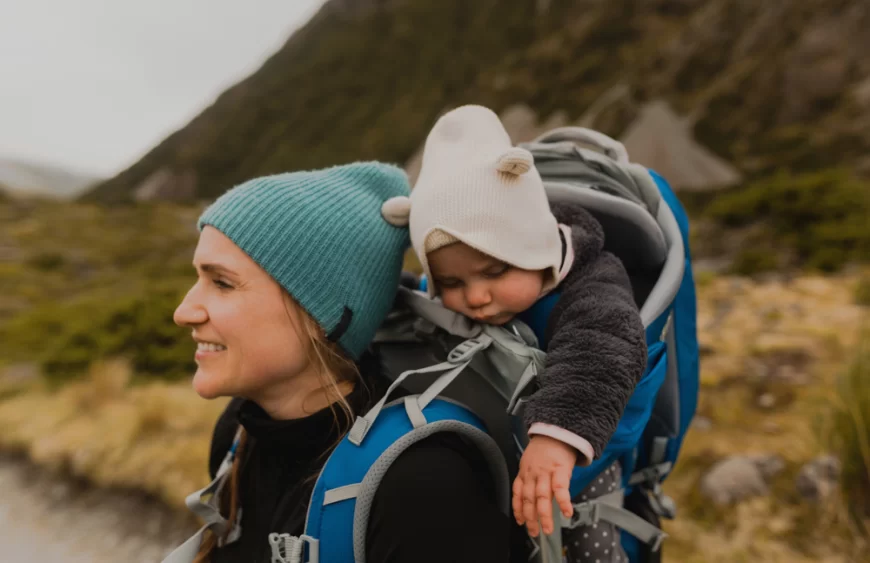
Structured carriers are flexible. Many allow front, back, or even hip carrying as your child grows. Backpack carriers, often with built-in frames and storage pockets, are especially beloved for outdoor adventures. Hiking trails, cobblestone cities, even museum days become manageable when you’re not also dragging a stroller. The extra storage space for snacks, diapers, and water bottles doesn’t hurt either.
But these carriers aren’t without drawbacks. They’re bulkier than slings, often hot in warm climates, and not great if you’re already short on luggage space. Backpack carriers also require your child to sit up steadily, which usually doesn’t happen until six to nine months. And some kids simply don’t nap well in them. Meaning you might be stuck with a grumpy toddler on your back while everyone else admires the view. Typical.
Still, for active trips and sightseeing-heavy days, structured carriers are often the most practical choice.
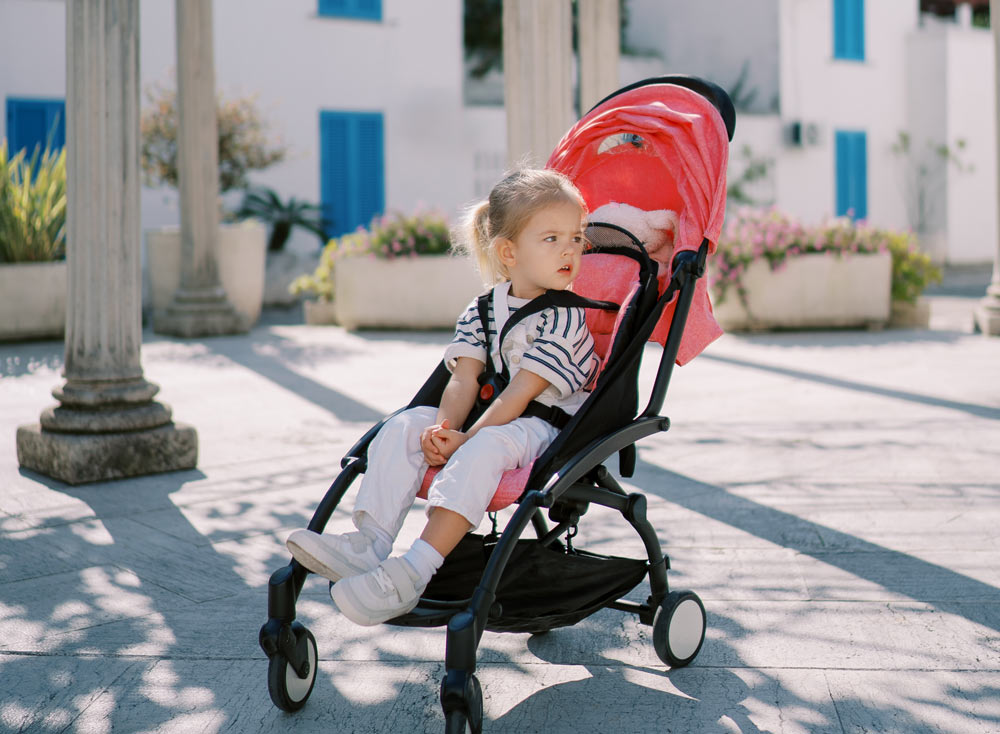
Strollers: convenience with caveats
For many families, the stroller is non-negotiable. It’s not just about pushing the baby — it’s about having a rolling storage cart for all the extras that come with family travel. Parents laugh about how their “stroller basket” ends up crammed with jackets, water bottles, snacks, and souvenir bags. And when a baby or toddler finally crashes, nothing beats the flat recline of a stroller seat for a solid nap on the move.
Travel strollers have come a long way, and parents now tend to think of them in categories:
- The Workhorse: These are sturdy, full-featured travel strollers like the UPPAbaby Minu or Bugaboo Butterfly. They’re not as tiny as ultralight models, but they balance comfort, recline, storage, and durability — perfect for families who travel often and don’t want to compromise on features.
- The Quick Trip Companion: Ultralight, overhead-bin-approved strollers such as the Babyzen Yoyo2 or GB Pockit+ fold down so small they can slip under a restaurant table or into an airplane overhead locker. They’re lifesavers in airports and city breaks when portability matters more than storage.
- The Cobblestone Warrior: All-terrain strollers like the Baby Jogger City Mini GT2 or Thule Spring handle rougher ground, uneven pavements, or cobblestone streets that would make lighter models rattle. They’re heavier and bulkier, but if your trip includes a lot of historic towns or outdoor walks, they’ll save you from endless frustration.
Of course, even the best stroller has limitations. Stairs, narrow sidewalks, sandy beaches, and crowded trains can turn wheels into liabilities. Parents often confess they overestimated how useful their stroller would be, only to curse it halfway through a trip. But for urban destinations, long-haul airports, and kids who nap best lying flat, the right stroller can be a genuine sanity-saver.
Why most families combine carriers
Here’s the truth most parents discover after a few trips: it’s rarely about choosing just one. Instead, it’s about mixing and matching depending on the destination and stage of travel. A sling for calming a newborn during a flight, a structured carrier for exploring a city, and a stroller for naps and heavy lifting. Together, they cover all bases.
Families traveling to Rome often say they rely on carriers for sightseeing but wouldn’t give up the stroller for evenings when kids crash. Parents headed on hiking trips swear by backpack carriers, but pack a sling for airports. Resort travelers sometimes skip carriers altogether and roll with just a stroller.
The trick is being realistic. Overpacking gear “just in case” often backfires, leaving you frustrated with heavy luggage and duplicate tools. But choosing one single option also risks being caught out. The sweet spot is bringing a combo that matches the actual trip you’re taking, not the one you imagine.
Factors that tip the balance
Instead of lists, think of these as lenses that shift the decision:
- Destination matters. Cobblestone streets, jungle paths, and subway stairs each change what’s practical.
- Age and stage. Slings comfort newborns, carriers suit older babies, strollers fit toddlers who nap on the go.
- Parent comfort. If your back hurts at home after 15 minutes in a sling, it’ll feel worse in a new city.
- Sleep style. Some kids nap only in motion, others only lying flat — and your gear should reflect that.
Parents who weigh these factors honestly often find the decision makes itself.
Mistakes parents confess to making
No matter how carefully you plan, baby carriers and strollers have a way of humbling you. Parents admit the biggest lessons usually come from mistakes. The ones that turn into funny stories later but feel like disasters in the moment.
One common regret is bringing the wrong gear for the destination. Countless parents have wheeled a slim city stroller straight onto cobblestones in Rome or Lisbon, only to end up carrying both the stroller and the baby because the wheels rattled to pieces. On the flip side, families have dragged heavy jogging strollers through airports only to realize they barely fit in the taxi trunks or needed to be gate-checked before boarding.
Another mistake is assuming one carrier fits all stages. New parents sometimes head off on a two-week trip with just a sling, only to find their seven-month-old is far too heavy for comfort. Others pack only a bulky backpack carrier, then realize it’s useless for naps on planes or crowded buses. Parents often discover mid-trip that they needed a mix but by then, they’re stuck improvising.
Not practicing at home before the trip is another pitfall. Parents have tried to figure out ring slings in a departure lounge, or wrestled with complicated structured carriers while boarding, with an overtired baby screaming in their arms. What felt “fine in theory” became chaos in practice. It’s always best to give your gear a good run through before you leave. Not only to find the quirks but if the quirks become something worse, you still have time to return your product for something else.
Then there’s the overpacking trap. Families worried about being unprepared sometimes bring a stroller, two carriers, and a sling “just in case.” They end up weighed down by options they never actually use, with half the gear left sitting in the hotel room while they lug the rest around resentfully.
Finally, many parents admit they forget to factor in climate and comfort. A thick, padded carrier that works well in Germany in spring becomes miserable in Thailand in July. Babies get sweaty, parents overheat, and suddenly the gear designed to help feels like a punishment. We always recommend having a look at historical weather charts to make sure you know what to expect. Not in terms of will it rain or not, but rather the average temperature and average rainfall. Then you can make an educated decision.
These mistakes aren’t about bad parenting. They’re about learning through experience. But knowing them ahead of time means you can avoid the classic pitfalls and spend more of your trip enjoying the adventure instead of cursing your gear.

Wrapping it up: choosing your travel companion
Baby carriers aren’t just gear, they’re companions on the road. The one you choose changes how you move, what you can see, and how much stress you carry. Slings bring closeness, structured carriers bring freedom, and strollers bring convenience. Most families end up using all three at some point, but which one earns a spot on this trip depends on the trip itself.
So don’t ask “which is best?” Ask “which is best for us right now?” When the carrier matches the journey, traveling with a baby feels less like an obstacle course and more like an adventure you’re sharing together.
Too Long? Here are the most common questions we’re asked.
A sling or structured carrier keeps you hands-free and calm while navigating security and boarding.
Many families find a combination works best. Strollers for naps and storage, carriers for mobility.
Most require your baby to sit independently, usually around 6–9 months.
Lightweight slings or breathable mesh carriers are more comfortable than heavy structured carriers.
Think about your destination, your child’s age, and how they sleep. Match the gear to the trip, not the catalog.