The airport as a one-parent circus
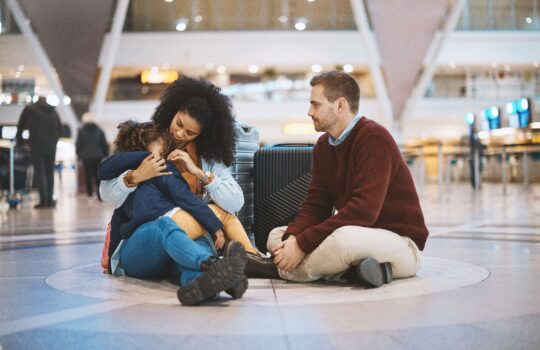
Traveling with kids is hard enough. Doing it without backup? That’s parenting on expert mode. You’re juggling bags, wrangling kids, checking documents, and trying not to lose your cool while a line of strangers sighs behind you. Flying solo with kids feels like a circus act where you’re both the ringmaster and the clown.
But here’s the truth: parents do it every single day. It’s tough, but survivable. And while you might feel stretched to your breaking point in the moment, it’s also empowering because when you land, you’ll know you pulled it off on your own.
Jump to Section:
Why Flying Solo Feels So Overwhelming
Paperwork Parents Often Forget
Packing and Luggage Strategy
Surviving Security as a Single Parent
Boarding and Seating without Backup
How to do Bathroom Breaks
Keeping Kids Entertained
Surviving Solo Long-Haul Flights
Coping with Judgement
When everything just goes wrong
FAQs
When flying solo feels so overwhelming
The hardest part of flying solo isn’t just the logistics. It’s the overwhelming and daunting mental load that haunts you in the days and weeks leading up to the travel date. You’re responsible for everything: the booking, the seat selection, the flight times, the layovers, the strollers, the carriers, the boarding passes, the bags, the snacks, the passports, the toys, and every meltdown. There’s no one to tap out with when you need a break.
Parents often describe the lead-up to solo flights as exhausting before they’ve even left home. But the truth is, once you’re in the middle of it, you switch into survival mode. The overwhelm doesn’t disappear, but it becomes manageable when you break the journey down into smaller stages.
Paperwork and Consent Forms:
The hidden rule many parents miss
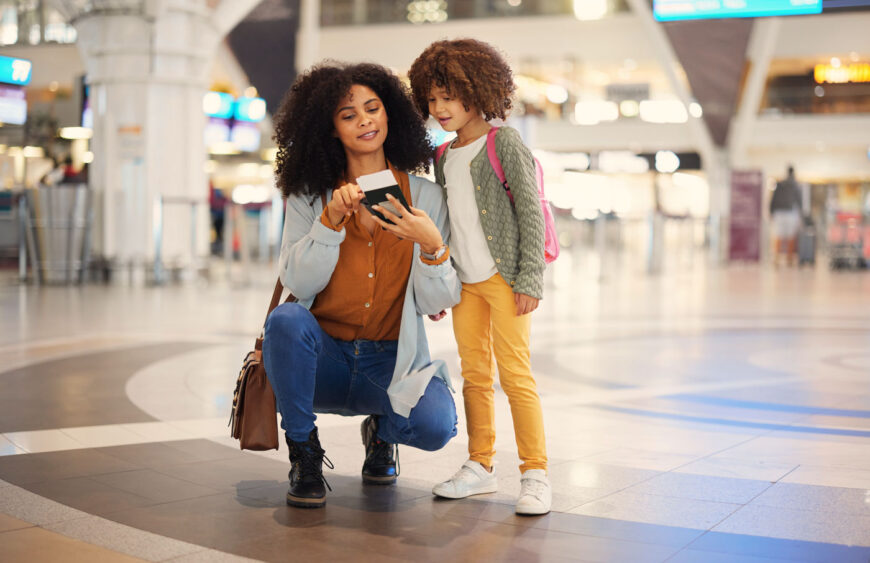
Airline websites love to talk about strollers and lap infants, but one of the rules that catches parents most off guard has nothing to do with gear, it’s paperwork. If you’re traveling alone with your child, or if your family has different last names, you may be asked for documents you didn’t know you needed.
Many countries require proof that both parents have agreed to the trip. This usually comes in the form of a notarized consent letter from the non-traveling parent. Airlines may check it at the counter, and border officials in places like Canada, South Africa, and parts of the EU are strict about asking on arrival. Without it, families have been delayed for hours or in rare cases, denied entry altogether.
The letter itself doesn’t need to be complicated: it should include the absent parent’s signature, contact information, travel dates, and sometimes a copy of their ID or passport. Some parents carry a birth certificate as well, especially if their child has a different surname. It feels like overkill until the day someone asks, and then it’s the one piece of paper that keeps your trip moving.
Paperwork isn’t only about consent, either. Passports and visas can be another trap for families. Many countries require children’s passports to be valid for at least six months beyond the date of travel, and visa rules vary by destination and age. We break down those requirements in detail in our guide to passports and visas for kids, but the short version is this: never assume your child’s documents are fine just because your own are.
Another common oversight is medical documentation. Prescriptions, allergy information, or a doctor’s note for carrying liquid medication and suddenly paperwork becomes just as critical as snacks or strollers. Most of the time, no one asks. But when they do, having the right forms ready can mean the difference between breezing through customs and spending your first vacation hours in an airport office explaining yourself.
Packing and luggage strategy when you’re on your own
With only one set of hands, your packing strategy matters more than ever. Solo parents quickly learn that overpacking is their worst enemy. Check bags whenever possible, so you’re only managing essentials in the terminal. A backpack-style diaper bag keeps your hands free, while a small roller carry-on that you can push one-handed adds storage without overloading you.
Organization is survival. Pack grab-and-go kits: a zip bag with diapers, wipes, and a spare onesie; another with snacks; another with small toys. When chaos hits, you won’t be digging. A spare shirt for yourself is equally essential, because nothing derails a flight faster than being stuck in spilled milk, juice or worse for hours. We dive deeper into these strategies in our essential carry-on packing list for families, but the principle is simple: lighter and smarter is better when you don’t have backup.
Surviving security as a single-parent traveling act
Security checkpoints are often the hardest part of traveling solo. You’re asked to fold strollers, pull out liquids, manage electronics, and keep your children from wandering off all at once.
The key is preparation. Talk your kids through what to expect before you reach the line. Explain that teddy bears and backpacks will take a “ride” through the scanner and come back. Use carriers for babies and toddlers so your hands are free. Keep all liquids and snacks in a clear, top-layer bag for easy access. And whenever available, head for family security lanes. They move slower, but they’re designed with kids in mind and will take a huge mental load off of yourself since you won’t feel rushed and judged by non-parents.
We share more of these tricks in family airport hacks every parent should know, but think of it this way: simplify every step you can before you’re standing in line.
Boarding and seating without backup
Boarding solo with kids is its own strategic choice. Pre-boarding gives you time to settle without the crush of other passengers, but it also means wrangling restless kids in a confined space for longer. Some parents prefer to wait and board last, minimizing seat time and extending active times in hopes of wearing out toddlers by making them walk the moving sidewalk. Whatever gets them tired is a win in our books.
Once on board, seat the kids first, then stow bags. Don’t hesitate to ask crew for help lifting luggage into overhead bins. They expect these requests. Keep an emergency distraction ready in the seat pocket, whether it’s a snack, a toy, or a tablet. If you’re worried about being separated, our post on understanding airline family seating rules explains how to avoid last-minute surprises.
Bathroom breaks with no one to hold your bags
Few scenarios terrify solo parents more than bathroom breaks. For babies, in-seat changes are sometimes easiest, but for the sake of your seatmates, only use this as a very last resort. For toddlers, you’ll often need to escort them into the lavatory and squeeze into the stall together. Believe it or not, it’s actually doable.
Keep bathroom trips light. Prepare a small kit with wipes, a diaper, and sanitizer saves you from hauling everything. And yes, there may be times you need to use the lavatory yourself while your child comes with you. Flight attendants occasionally watch your seat for a moment if you ask, but always plan as if you’ll be managing alone. I have had to once wedge the lavatory door open with my foot to give my kid the “evil eye” while peeing just to keep them from doing something stupid. Because, kids are like that.
We explore more diaper strategies in the long-haul survival guide for babies, but the short version is this: bathroom breaks are awkward, and necessary. But not impossible.
Keeping kids entertained while you juggle everything
Without another adult to rotate shifts, entertainment becomes more critical than ever. Solo parents often lean on surprise toys that buy novelty time, sticker books and coloring sets that keep little hands busy, and snacks that double as both fuel and distraction.
Screens are valuable allies, but they work best when used as part of a rotation. Switch between toys, snacks, and quiet time to extend the window of calm. The pacing matters more than the activity itself. For more inspiration, see the best plane toys for kids and snacks that save sanity on flights. Both articles cover in detail practical, parent-tested options that travel well.
Surviving long-haul flights solo
Crossing oceans with kids on your own requires a different mindset. Sleep will be scarce, and you may feel like you’re running on fumes, but small strategies help. Night flights work if your children are good sleepers in motion, while day flights make it easier to manage routines with less pressure to force naps.
Bedtime cues are powerful even in the air. Pajamas, sleep sacks, blankets, and white noise apps can trigger sleep associations. For older kids, “quiet time” with a book or movie can provide the rest you need even if they don’t nap.
Recovery may take longer without another adult to lean on, but kids often bounce back quicker than parents expect. We share more ideas in dealing with jet lag in kids, but the bottom line is: survival is success.
Coping with judgment and finding small wins
Flying solo means you’ll sometimes feel like every eye is on you. A crying baby, a spilled drink, or a meltdown in the aisle can feel like the whole cabin is judging. It’s hard not to internalize the sighs or side-eyes. But the truth is, most passengers are more sympathetic than they look, and the few who aren’t don’t deserve your mental energy.
Instead, focus on the small wins. Celebrate the meltdown-free trip through security, the unexpected nap that bought you thirty minutes of peace, or the stranger who helped with your bag. These moments matter more than the stares. They’re the reminders that even on your own, you’re getting through. And that at times, it is okay to ask a stranger for help. You would be surprised how willing other parents are when they see a parent struggling solo.
When everything goes wrong: coping in the chaos
Even the most carefully planned solo flight can unravel in seconds. A sudden diaper blowout during boarding, a toddler screaming louder than the engines, or a gate change halfway across the airport when you’re already carrying more bags than hands. When you’re alone, those moments can feel crushing.
The first instinct is to panic, but panic only makes things worse. Children mirror our stress, so the quickest way to calm them is often to calm ourselves first. Some parents find simple breathing techniques are enough to reset. Inhaling slowly, holding for a moment, and exhaling longer than the inhale. Others lean on small rituals: washing your hands slowly in the lavatory, stretching in the aisle, or counting silently to ten before responding. These pauses don’t fix the crisis, but they stop the spiral.
It also helps to keep a mental “emergency drawer” of tricks. That could be a favorite snack you’ve saved, a toy wrapped like a present, or a downloaded show queued up. These aren’t permanent fixes, but they’re lifelines that buy you just enough time to regroup, reset, and keep moving forward. Take the trip inch-by-inch. If you need inspiration, think of Al Pacino’s Inch by Inch speech in “Any Given Sunday”. Seriously. Give it a watch and pump yourself up.
Too Long? Here are the most common questions we’re asked.
Often yes, especially for international travel. Many countries require proof that the other parent has given permission if only one parent is present. Airlines or border agents may ask for it, so bring a notarized letter just in case.
Pre-book seats if you can. If not, check in as early as possible and ask gate agents for help. Sitting together is critical when you’re solo. Don’t leave it to chance.
For babies, use in-seat changes as a last resort. Almost every plane has a few lavatories with fold down change tables for you to use. For toddlers, always go together. Keep supplies minimal to make it easier.
It varies. Some crews go above and beyond, others stick to the basics. Ask for help when you need it, but plan as if you’ll need to manage on your own.
Talk them through the journey in advance: who will be there, what the steps are, and what to expect. Kids handle travel better when they know the plan.