Organizing Packing Cubes for Kids’ Gear: A Parent’s Guide to Sanity
Jump to Section:
The Psychology of Less Chaos
Choosing the right cubes
Strategies that work on trips
Unpacking without losing your mind
Common Pitfalls
Teaching Kids Responsibility
Wrapping it up
FAQs
Parents don’t really pack light.
Between clothes, snacks, toys, emergency medicine, and the five “just in case” items you swore you wouldn’t bring but did anyway, family luggage has a way of multiplying. What should be a weekend away somehow looks like a small migration. And once you reach the hotel, everything seems to explode out of the suitcase into a chaotic heap. This is where packing cubes come in. For many parents, they’re less of a trendy travel hack and more of a lifeline.
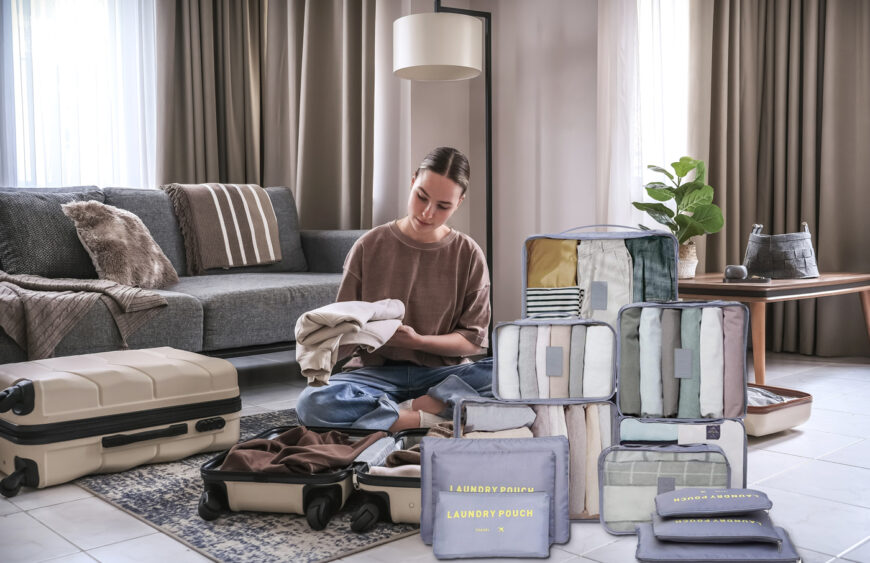
Packing cubes help turn the endless chaos of kids’ stuff into neat, labeled compartments you can actually find things in. When your toddler needs pajamas at midnight, or your seven-year-old has a meltdown because “the blue shirt is missing,” cubes mean you know exactly where to reach without tearing apart the whole suitcase. Let’s dive into how to make them work for family life on the move.
The psychology of less chaos
There’s a reason packing cubes reduce stress: they give both parents and kids a sense of order. Many parents in forums like Reddit’s r/travelparents say their kids actually enjoy helping because cubes create boundaries they understand. Instead of a giant, messy pile, children can see that their clothes and toys have their own space. For anxious or easily overstimulated kids, having one cube with just their things also helps them feel in control.
Step one: choosing the right cubes
Not all cubes are equal. Some are structured and firm, others are ultralight mesh. When packing for kids, durability matters. Sticky fingers, spilled juice boxes, and airport floor encounters are inevitable. Look for:
- Water-resistant material for accidents and leaks
- Mesh tops so you can spot what’s inside at a glance
- Color coding so each child gets their own set
- Variety of sizes because socks and hoodies don’t fit the same way
Many parents swear by giving each kid one bright color so there’s no arguing. If your oldest has red cubes and your youngest has green, you’ll never grab the wrong pile in the dark
Strategies that actually work on trips
The magic of packing cubes isn’t in owning them. It’s in how you use them. Here are approaches families find most helpful:
Divide by child
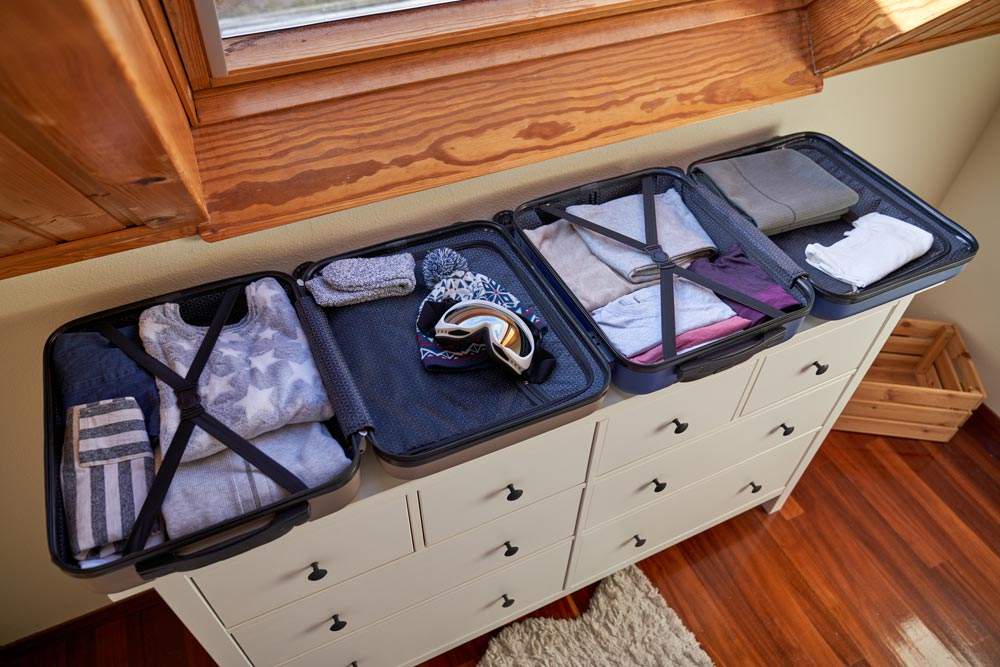
Each child gets their own set. Clothes, underwear, pajamas, even small toys live in their designated cubes. This makes it easy when kids share a suitcase, you just pull out the right color.
Divide by category
If your kids swap clothes or share items, category packing works better: one cube for pajamas, one for swimwear, one for snacks, one for art supplies. This method means you never have to dig for that one missing bathing suit.
Hybrid approach
Most parents end up blending the two. Each child gets their own clothing cubes, while shared categories (like first-aid or swim gear) get their own.
Keeping things accessible in transit
Long journeys test even the most organized parents. That’s why it helps to keep one cube in your carry-on dedicated to “flight survival gear”: snacks, spare clothes, small toys, wipes, and medicine. Instead of rummaging through five bags mid-flight, you just grab one cube and slide it under the seat.
Some parents also use a small cube inside the car or stroller basket for essentials like diapers, wipes, and a change of clothes. When accidents happen, you don’t have to dig through the trunk. Some even go as far as creating a smaller one within that with just one item of everything that can easily be grabbed on the way to the airplane lavatory without even having to look in a bag.
Unpacking without losing your mind
The moment you arrive, everyone is tired, hungry, and slightly cranky. This is when most hotel rooms end up looking like a rummage sale. Packing cubes let you skip the explosion stage. Instead of dumping everything on the bed, you pull out cubes and slot them straight into drawers or onto a shelf.
Some parents even keep cubes sealed and treat them like portable drawers. Kids open them, grab what they need, and zip them closed again. It sounds simple, but it means you never lose track of what’s clean, what’s dirty, and what’s meant for later in the trip.
A bonus trick: assign one cube as the “arrival cube.” This has the first night’s essentials. Pajamas, toothbrushes, bedtime toy so you don’t have to dig through everything when the kids are already melting down. Think of it as a survival kit for the first evening.
Common pitfalls and how to avoid them
Packing cubes are not a cure-all. Many parents hit the same traps when starting out:
- Overstuffing: jam too much in and the cube loses shape, making it harder to close and defeating the point.
- Mixing categories without logic: pajamas and swim gear in the same cube is a recipe for confusion (and damp clothes).
- Skipping labels or color codes: if everyone’s cubes are black, you’ll be back to playing suitcase detective.
- Forgetting dirty laundry: without a plan, worn clothes end up mixed in with fresh ones. Keep one cube or bag just for laundry.
Another pitfall is assuming kids will magically stay organized. They won’t. They’ll happily dig through cubes unless you set clear rules. Parents who succeed with cubes often make it part of the daily routine: everyone repacks their cube before leaving the hotel in the morning. It’s a few minutes of discipline that saves hours of frustration later.
The surprising bonus: Teaching kids responsibility
This is where packing cubes really shine beyond logistics. By giving each child their own cube, you’re quietly teaching them ownership. A five-year-old may not care about folding shirts, but they love the idea that “this is my cube.
Some parents let their kids pack their cube at home using a simple checklist. The first time, a child might forget socks or pajamas, and that becomes a natural lesson: what you pack is what you have. Unlike nagging, the cube creates a built-in consequence. Kids quickly learn to think ahead and prioritize. Skills that matter far beyond travel.
For older children, cubes are a way to practice independence on trips. They can manage their outfits, keep track of swim gear, or organize school supplies for a worldschooling day. Many parents in forums say it’s the first step toward kids pulling their own weight on family trips and that feels like a small miracle.
Wrapping it Up: Calm Parents, Calm Kids
Family travel is never mess-free. But with packing cubes, it can at least be organized chaos instead of meltdown-inducing chaos. They give kids a sense of ownership, make your life easier in airports and hotels, and save you from the 11 p.m. pajama hunt.
- Variety of sizes because socks and hoodies don’t fit the same way
- Water-resistant material for accidents and leaks
- Mesh tops so you can spot what’s inside at a glance
- Color coding so each child gets their own set
Divide by child
Each child gets their own set. Clothes, underwear, pajamas, even small toys live in their designated cubes.
Divide by category
If your kids swap clothes or share items, category packing works better: one cube for pajamas, one for swimwear, one for snacks, one for art supplies.
Hybrid approach
Most parents end up blending the two. Each child gets their own clothing cubes, while shared categories (like first-aid or swim gear) get their own.
Too Long? Here are the most common questions we’re asked.
A: Yes, but only if used wisely. Rolling clothes and compressing with zippered cubes can make luggage more compact, though the bigger benefit is organization.
A: Most parents find color-coding cubes per child avoids confusion and arguments, especially when sharing one suitcase.
A: Absolutely. Many parents dedicate a cube to in-flight survival gear — snacks, toys, wipes, and a change of clothes.
A: Compression cubes are useful for bulky items like hoodies, but standard cubes are easier for kids to open and repack themselves.
A: Most are machine washable. For sticky or wet items, use waterproof or mesh-lined cubes and wash them after trips.