Booking & Logistics From the Community Group Questions Answered

The Bulkhead Myth: What Parents Really Think About Paying Extra for the Front Row

bulhead_large

You’ve got a long-haul flight booked, a baby who might need to sleep horizontally, and approximately zero desire to spend twelve hours contorted around a carry-on bag. So you pull up the seat map, spot the bulkhead row, and think: obviously. That’s the one.

A lot of travelling parents do exactly this. The bulkhead row has a reputation as the family seat, the sensible choice, the upgrade worth paying for. And sometimes it absolutely is. But a thread in our Flying and Travelling with Kids Facebook group reminded us recently that “sometimes” is doing a lot of heavy lifting in that sentence.

Here’s what parents who’ve actually sat there have found, and what to check before you hand over the extra fee.

The promise of the bulkhead seat

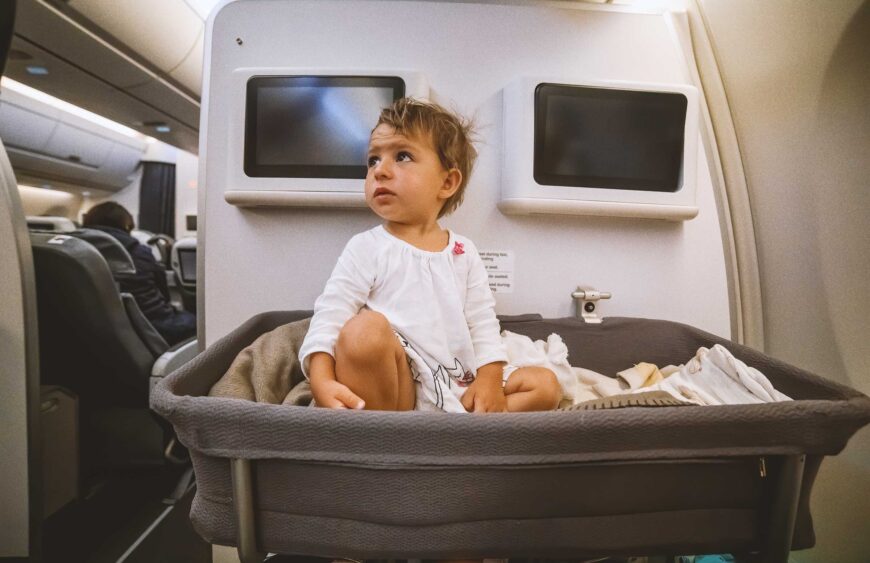
The pitch makes sense. The bulkhead row is the first row in a cabin section, which means there’s no seat in front of you. That translates to more legroom, more floor space, and, for families travelling with infants, access to the bassinet attachment points on the bulkhead wall.

If you’ve got a baby who’ll sleep in a bassinet for a decent chunk of a long-haul flight, that last point alone can feel like a game-changer. Airlines know this, which is why they often charge extra for these seats and market them to parents without much additional context.

The additional context is what this article is about.

What the upgrade fee doesn't mention

Bulkhead rows come with a specific set of trade-offs that aren’t usually front and centre when you’re clicking “select seat.”

The most immediately annoying one for most parents: there’s no under-seat storage. Everything goes in the overhead bin, including the snacks, the nappy bag, the toy that prevents a meltdown, and the spare change of clothes you’ll need access to every twenty minutes. Every time you need something, you’re up, you’re rummaging, and your seatmates are thrilled.

The tray tables fold out of the armrests rather than the seat back in front of you, which sounds fine until you’re trying to balance a meal on your lap with a baby on the other one. The armrest housing makes the tray feel more cramped, and it can also mean the armrests themselves don’t move, which limits how you can position yourself with an infant.

Depending on the aircraft, you may also be directly adjacent to a galley or lavatory. That means crew foot traffic throughout the flight, the mechanical noise of meal service being assembled, and, on long flights when people are queuing for the loo at 3am, a steady stream of strangers standing next to you while you’re trying to sleep.

Then there’s the bassinet itself. The mounting points are built into the bulkhead wall, which sounds convenient, but bassinets have weight and age limits that vary by carrier and are often smaller than parents expect. Many cap out at around 11 to 14 kilograms. If your baby is on the larger side, or if you’re booking far enough in advance that they’ll be older and heavier by the time you fly, there’s a real chance they won’t be eligible by departure day. Worth confirming with the airline before the seat selection fee appears on your credit card.

Some bulkhead rows on older aircraft also have maintenance access panels, storage hatches, or infrastructure built into the wall directly behind or beneath the seats. This isn’t common, but it’s not unheard of either.

What our community actually found

A parent in our Flying and Travelling with Kids group booked bulkhead seats on a Philippine Airlines flight from JFK to Manila: sixteen hours, a baby’s very first flight, the kind of trip you plan carefully. They arrived to find a leaking sink behind them, a soaking wet floor, and a smell they described as mould that stayed with them for the entire journey. Their daughter’s books were ruined. The crew were apologetic but there was nowhere else to move the family.

Some parents loved their bulkhead experiences wholeheartedly. The extra space genuinely helped. The bassinet worked well. The galley noise wasn’t a problem. For a few, it was the only reason a long-haul flight with an infant was survivable.

Others found the trade-offs caught them completely off guard. One parent hadn’t anticipated the storage issue at all and spent the flight unpacking and repacking the overhead bin. Several mentioned that the lack of a recline option in some bulkhead rows (a restriction that applies on certain aircraft and airlines) was a problem they’d had no idea about when they booked.

The thing that kept coming up in the thread was the airline and aircraft combination. Parents who’d had good bulkhead experiences were often flying carriers with well-configured family rows on modern, well-maintained aircraft. Parents who’d had bad ones were often on older planes, or carriers where the family row policy hadn’t kept pace with what families actually need.

The seat is only as good as the plane it’s on.

What to check before you pay

This is the part that the upgrade confirmation page skips entirely.

  • Look up the specific aircraft type for your route. Airlines often operate the same route with different planes at different times of year. A seat map site like SeatGuru will show you what’s actually in front of and behind the bulkhead on that particular plane. Check whether there are any notes about galleys, lavatories, or maintenance access in that section.
  • Confirm the bassinet limits with the airline directly. Don’t rely on general guidance online. Weight and age limits vary by carrier and sometimes by aircraft. Get the specific numbers for your flight in writing.
  • Check whether the row has restrictions. Some bulkhead seats don’t recline. Some have fixed armrests. Some have the in-flight entertainment system built into the armrest rather than the seatback, which affects both screen angle and armrest usability. These things matter on a long-haul flight.
  • Read recent passenger reviews for that airline and route. Not just the aircraft type. Route-specific reviews on forums like FlyerTalk or Tripadvisor often flag maintenance issues, crew quality, and seat-specific problems that don’t show up anywhere else.
  • Consider the alternative. If you’re not planning to use the bassinet and you mainly want the legroom, check whether an exit row or a premium economy legroom seat offers comparable space without the storage or armrest limitations. It’s not always a better option, but it’s worth running the comparison.

When bulkhead genuinely is the right call

To be clear: this isn’t an argument against the bulkhead row. It’s an argument for making the choice properly.

If you have a young baby who’ll realistically sleep in the bassinet for a significant portion of the flight, and the airline you’re flying has a solid reputation for its family row configuration, and the seat map shows nothing alarming in terms of galley proximity or infrastructure concerns, and you’ve confirmed the bassinet limits apply to your child, then yes. The bulkhead is worth it. The extra space is real. The bassinet access is a genuine help. For a lot of families, this is still the best seat on the plane.

The point is to know what you’re buying before you buy it, not to avoid it on principle.

If it's not what was promised

If you get to your seat and find something genuinely wrong, don’t wait. Take photos immediately, before you’ve settled in and before anyone could argue you caused the problem. Report the issue to the crew straight away. A leaking sink or structural maintenance issue isn’t a quirk of the seat, it’s a fault, and it gives you grounds to ask to be moved. Be specific with the crew: this is a safety or hygiene issue, not a preference.

If the airline can’t or won’t move you, document everything throughout the flight. Note the times you reported the issue and what you were told. Keep any receipts for items damaged, and photograph those too.

After the flight, follow up in writing with the airline’s customer service team. Use the documentation you’ve collected. Many airlines have formal complaints processes that can result in compensation, partial refunds, or vouchers, but you need a paper trail to support it. If you’re not getting anywhere directly, the Aviation ADR scheme or your national consumer authority may be able to help.

Bulkhead seats aren’t bad seats. They’re just not automatically the right seats for every family on every flight the way they get talked about. A little digging before you pay the upgrade fee, and a minute on a seat map, can tell you more about what you’re actually getting than any blanket recommendation can. Go in with eyes open, and you’ll make the right call either way.