Using Travel to Inspire School Projects for Kids
Turn your trip into an A plus at school
You get home from a trip, the laundry mountain starts breeding, and your kid casually announces they need a school project by next week. Cool cool cool.
Here’s the good news. Using travel to inspire school projects is one of the rare parenting wins that feels like cheating. You already did the hard part by leaving the house and surviving airports, snacks, and other people’s opinions about bedtime.
And teachers usually love it because it makes geography, history, and culture feel real. Many parents find their kids remember more from a single museum visit or local market than from three weeks of worksheets. This is real world learning through travel, and you can package it into something school friendly without turning your holiday into a full time classroom.
The trick is keeping it simple, kid led, and doable on a tired Tuesday. You want a project that looks thoughtful, feels personal, and does not require you to build a replica of the Colosseum out of cereal boxes at 11 pm.
What You'll Find in this Guide
Pick the project angle for your kid
Collect project material while traveling
Turn memories into a finished school project
Keep it respectful, accurate, and teacher proof
FAQ’s
Pick the project angle that actually fits your kid
Start by asking one question: what did your kid actually care about on the trip. Not what you cared about. Not the cathedral you dragged them through. The thing they kept talking about in the back seat or at dinner is your clue for travel inspired school projects that feel natural.
If they loved maps and trains, you have an easy geography project inspired by travel. If they were obsessed with animals, you have a science project ready to go. If they kept noticing food, clothing, or languages, that is cultural learning through travel, and it can be turned into something surprisingly strong.
You also want to match the assignment style to the child’s age. Younger kids shine with visuals, short captions, and a few bold facts. Older kids can handle comparisons, timelines, and a simple reflection on what surprised them or what felt different.
A useful trick is to pick a single theme instead of “our whole trip.” One city, one tradition, one meal, one landscape, one animal, one historical site. Teachers can spot a focused topic instantly, and it looks more mature than a giant messy collage of everything.
If your kid gets stuck, give them three safe lanes to choose from. “Place” is geography, “people” is culture, and “how it works” is science or systems. Most travel homework ideas for kids fall into one of those lanes, and it prevents the blank page panic.
By the way, this is also where travel based learning for kids is at its best. You are not trying to force a lesson. You are helping them tell a story about something real, which is exactly what schools pretend to want and sometimes actually do.
Collect project material while traveling without turning it into homework
This part is where parents either win big or overcomplicate it. You do not need a suitcase of souvenirs. You need a small set of “proof of life” materials that make the project feel authentic.
Think in categories. One visual, one written note, one small artifact, and one fun detail. A photo of a sign or landscape, a quick voice note about what they noticed, a ticket stub or brochure, and one weird or funny observation they will remember.
Travel journals for school work best when they are not perfect. A few messy sketches, a couple of sentences, a sticker, or a pressed leaf is enough. The goal is to capture moments, not create a masterpiece. Many parents find their kids are more willing to write when it is short and specific, like “Today I saw…” instead of “Write about your trip.”
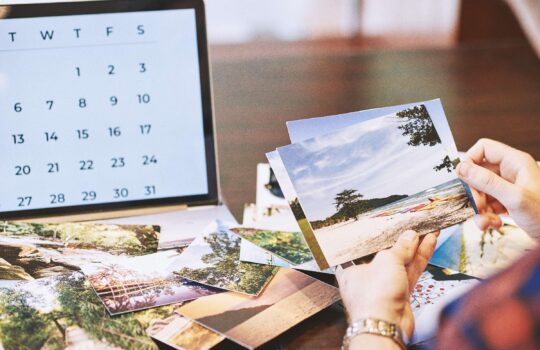
If your child loves taking photos, let them be the “trip photographer” for ten minutes a day. Give them a simple rule like “three pictures that tell the story.” That is it. You will end up with usable images for school projects after family trips, and they will feel ownership.
If they are younger, use quick prompts at bedtime or breakfast. “What was your Favorite thing today.” “What smelled different.” “What did we eat that you would eat again.” Those answers become captions later, and you barely have to do any writing therapy.
And yes, you can collect physical stuff, but keep it light. A transit map, a museum leaflet, a restaurant receipt with a funny dish name, a pressed ticket, a small coin rubbing on paper. These are perfect for turning travel into school assignments without making your carry on situation even worse.
Turn travel memories into a finished school project fast
Now you are home, everyone is tired, and the assignment clock is ticking. This is where you want a clear format, so you are not reinventing the wheel on a Wednesday night.
The easiest “structure that looks like effort” is the three part project. Part one is “Where we went and why.” Part two is “What we saw and did.” Part three is “What I learned or what surprised me.” That framework works for posters, slide decks, oral presentations, and even short essays, which is why it is such a strong option for post travel school projects.
For younger kids, a poster is the fastest win. Use one main photo in the centre, three smaller photos around it, and four short caption boxes. Add a simple map with a dot and an arrow, and suddenly you have turning travel into school assignments without tears. Keep captions short and let the kid speak in their own voice.
For older kids, a short slide deck feels modern and teacher friendly. Slide one is the overview, slide two is the map and basic facts, slide three is the theme, slide four is the highlight, slide five is a reflection. Add one fun “did you know” fact and one personal observation, and it feels like educational travel experiences for children with a clear learning outcome.
If the assignment is a written report, keep it practical. Start with a mini intro that answers “who, where, when.” Then three paragraphs on the theme, with one specific detail in each. End with a short “what I would tell a friend” reflection. That is real world learning through travel in a form teachers can grade without guessing.
If your kid is a hands on builder, go for a small model that is not insane. A simple diorama of a market, a beach ecosystem, a mountain landscape, or a transport system works. Do not build a whole city. Build one scene. This is travel inspired school projects with an actual end point.
The other secret is timing. Do the project while the memories are still warm, not three weeks later when your kid cannot remember the name of the place and you are scrolling through 900 photos like a detective. Many parents find that doing a first rough outline within 48 hours of being home makes everything faster.
This also pairs nicely with the “settle back in gradually” approach a lot of families use after big travel days. If you already do gentle routines and short debrief chats, you are halfway to a project without realizing it. If you want a calmer reset after long journeys, the approach we mention in Helping Kids Adjust After a Trip can make the school transition smoother too
Keep it respectful, accurate, and teacher proof
This is the part people skip, and it is also the part teachers quietly care about. When your child talks about another country, you want them to sound curious and respectful, not like they are narrating a cartoon.
Start by separating “different” from “better or worse.” If your kid noticed something unusual, frame it as “I noticed” and “I learned” instead of “they are weird.” That tiny shift turns cultural learning through travel into something mature and kind.
Help them include one or two accurate basics. Country, region, language, currency, and one historical or environmental fact is enough. If you are unsure, look it up together and use a reliable source. This is not about being a walking encyclopedia, it is about not accidentally saying something wrong in front of a class.
If your child wants to compare home and the destination, keep it grounded. Compare daily life details like transport, meals, school schedules, playgrounds, or weather. That is educational travel experiences for children without slipping into stereotypes.
A simple technique is the “three senses rule.” One thing they saw, one thing they heard, one thing they tasted or smelled. This makes the project vivid and personal while staying respectful. It also helps kids who struggle with big abstract writing, which comes up a lot in parenting forums when parents share travel homework ideas for kids that actually get finished.
If your kid is presenting, practice once, but do not overcoach. Teachers can tell when the child did not write the words. Keep it in their voice, even if it is a little goofy. It is a school project, not a TED talk.
Finally, if the trip included anything sensitive like poverty, conflict history, or religion, keep it age appropriate and factual. Focus on what you learned and how you felt, not on judging. That is how using holidays for school projects can build empathy without turning into a heavy adult conversation your kid is not ready for.
And yes, you can absolutely mention the practical side of travel too. A short note about how you planned, how you got around, or what you packed can be a mini “systems” lesson that fits travel based learning for kids really well. It is also a nice way to connect the experience back to everyday skills, which many parents find schools are starting to value more.
The easiest way to keep the trip alive after you unpack
Using travel to inspire school projects works because it keeps the story going. Your kid gets to relive the best parts, you get a structured way to talk about what you all experienced, and the teacher gets something real to build a lesson around.
Keep it focused, keep it simple, and let your child choose the angle they actually care about. Collect a few easy materials while traveling, then pick a project format that fits their age and their personality. If you do that, turning travel into school assignments stops being a chore and starts feeling like a free bonus from a trip you already paid for.
Most importantly, do not aim for perfect. Aim for finished, honest, and kid made. That is how travel inspired school projects become something your child is proud to share, and something you are not still finishing at midnight.
Too Long? Here are the most common questions we’re asked
How can I use travel to inspire school projects if we only took a short trip?
Short trips are perfect because the theme stays focused and easier to explain. Pick one highlight like a museum, a local food, or a park and build the project around that. Using travel to inspire school projects is more about concrete details than distance traveled.
What are the best travel homework ideas for kids who hate writing?
Use a photo based poster or a short slide deck with captions instead of paragraphs. Ask them to record quick voice notes during the trip, then turn those into short sentences later. Travel journals for school can be drawings and labels, not full diary entries.
How do I turn travel into school assignments without making the vacation feel like homework?
Keep “collecting” light and optional, like three photos a day and one funny observation. Focus on moments your child already wants to talk about. Turning travel into school assignments works best when it feels like storytelling, not study time.
What if my child needs a geography project inspired by travel but we did not visit many places?
Geography is not about quantity, it is about describing a place well. Use one location and include a simple map, climate, landscape, and how people move around. Real world learning through travel shows up in small details like transport, markets, and neighbourhoods.
How can travel based learning for kids work for older students and not feel childish?
Use a theme and a question, like “How does public transport shape daily life” or “How does geography affect food.” Add one or two reliable sources and a short reflection. Educational travel experiences for children can become thoughtful projects when they include comparisons and context.