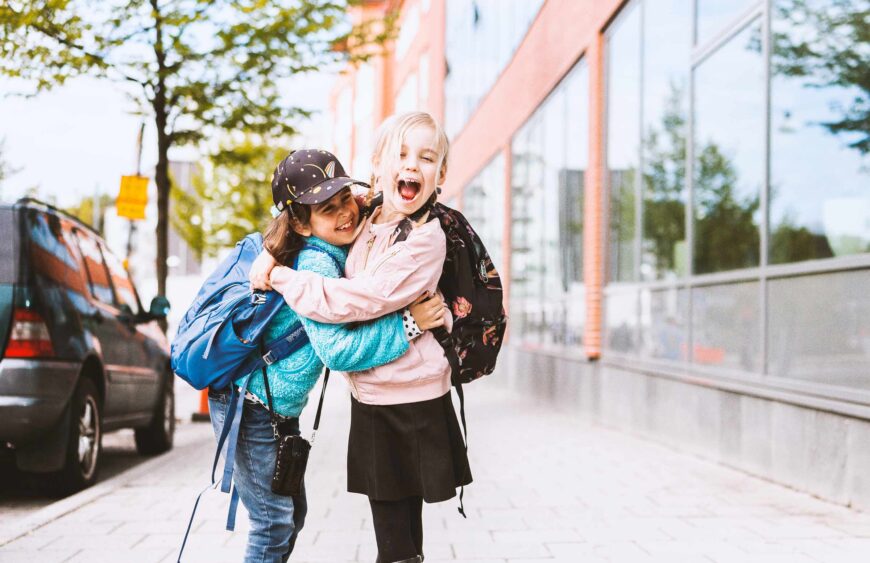
Coming home from a family trip often feels like a reset. Suitcases get unpacked, routines slowly return, and everyone settles back into familiar patterns. Then, sometimes days later, your child brings up a name you barely remember. A friend they met on a beach, at a campsite, or near a hotel pool suddenly becomes the center of a very real sadness.
For many parents, this moment feels unexpected. We prepare for tired kids, jet lag, and routine disruption, but not necessarily for grief. Especially not grief over someone our child only knew briefly. The intensity of the emotion can feel confusing, even disproportionate.
But for kids, travel friendships live in a different emotional space. They are formed during moments of freedom, novelty, and connection. When those friendships end abruptly, children are often left without the emotional tools to understand why. What feels fleeting to adults can feel deeply meaningful to them.
Why travel friendships hit kids harder than expected
Travel strips life down to its simplest elements. There is less structure, fewer expectations, and far more shared time. Kids play together for hours without interruption, moving from one activity to the next without the usual constraints of school schedules or organized plans. This intensity accelerates connection.
Children also experience travel with heightened emotion. Everything feels bigger, brighter, and more memorable. When a friendship forms in that environment, it becomes woven into the entire experience of the trip. The friend is not just a person, but part of the place, the feeling, and the freedom.
There is also a sense of emotional safety that often appears during travel. Parents are typically more present and relaxed. Kids feel less pressure to perform or fit into roles. This openness makes emotional bonding easier and faster than it might be at home.
When the trip ends, the friendship ends too, often without warning or closure. Kids do not have the adult perspective that some relationships are situational. To them, the loss feels sudden and unfair. The sadness that follows is not about duration, but about depth.
The emotional comedown after travel
Many parents notice that kids struggle emotionally after returning home, but the signs are not always obvious. Some children become irritable, others clingy, and some unusually quiet. Missing a travel friend often becomes the most concrete way for a child to express this emotional drop.
Travel removes routine and replaces it with novelty and attention. Parents are often more flexible, more engaged, and more available. When normal life resumes, kids feel the contrast sharply, even if they cannot explain it. The friend becomes a symbol of that lost emotional state.
Talking about the friend is easier than talking about missing the feeling of being on holiday. It gives kids language for something bigger and harder to name. This is why children may bring up travel friends repeatedly, even weeks after returning home.
Understanding this helps parents respond with patience rather than frustration. The sadness is not a refusal to move on, but part of emotional re adjustment. When kids are supported through this phase, it usually resolves naturally.
What actually helps when kids struggle with goodbyes abroad
The instinct to distract or minimize is understandable. Parents want their children to feel better quickly. But telling kids they will forget about the friend or that it was not a big deal often leaves them feeling dismissed.
What helps more is acknowledgment. Letting kids know it makes sense to miss someone validates their experience. It tells them their feelings are acceptable, even if uncomfortable. This alone often reduces the intensity of the sadness.
Giving kids space to remember the friendship can also help. Looking at photos, telling stories, or drawing pictures allows them to process the experience instead of pushing it away. This turns the loss into a memory rather than an open wound.
Parents can gently introduce perspective over time. Talking about how some friendships are brief but meaningful helps children build emotional understanding. This is not about forcing maturity, but about guiding it slowly.
How age and personality change the way kids process travel friendships
Younger children often express sadness through behavior rather than words. They may regress, ask repetitive questions, or become more emotionally reactive. Their grief is real, even if they cannot articulate it clearly.
School aged children tend to verbalize the loss more directly. They may talk about specific moments, compare home friendships unfavorably, or ask why they cannot see the friend again. This is a normal part of processing separation.
Older kids and teens often hide their sadness behind irritability or indifference. They may downplay the importance of the friendship while still feeling its loss. Parents should not assume silence means lack of impact.
Personality also plays a role. Sensitive or introspective children may dwell longer on the experience. More socially adaptable kids may move on faster. Neither response is wrong. Support should be tailored, not standardized.
When missing a travel friend points to something deeper
In most cases, missing a travel friend fades as routines settle and life fills back in. However, intense or prolonged sadness can sometimes signal underlying challenges. Kids who feel lonely at home or struggle socially may cling more tightly to travel friendships.
Major transitions amplify this effect. Changes at school, family stress, or recent moves can make a travel friendship feel like emotional refuge. Losing it can reopen older vulnerabilities.
If sadness persists for weeks or begins affecting sleep, school, or behavior, it may be worth slowing down and listening more closely. Not to panic, but to understand what the friendship represented emotionally.
For many parents, this becomes an opportunity to learn more about their child’s inner world. Travel has a way of revealing emotional needs that everyday life keeps hidden.
Too Long? Here are the most common questions we’re asked
Is it normal for kids to miss friends they made abroad?
Yes. Fast emotional bonds during travel are common, and missing those friends afterward is a normal response. The intensity reflects the experience, not the length of the friendship.
How long does post travel sadness usually last?
For most children, the adjustment period lasts from a few days to a couple of weeks. Routine, validation, and time usually help the feelings settle.
Should parents encourage kids to forget about travel friends?
No. Encouraging kids to forget can feel dismissive. It is more helpful to acknowledge the friendship and help children integrate it as a memory.
Is staying in touch with travel friends a good idea?
It depends on the child. Brief contact can help some children find closure, while others feel better letting the friendship remain a memory.
Will our preferred style of travel change as our kids get older?
We use cookies to ensure that we give you the best experience on our website. If you continue to use this site we will assume that you are happy with it.