
Jump to Section:
Why Flight Booking Feels Different With Kids
When to Book: The Parent’s Timeline
Choosing the Right Airline
Flight Times That Work Best for Families
Seat Selection Strategies
Connections vs. Direct Flights
Managing Costs
Final Thoughts
FAQs
If booking flights as a single adult is like playing Tetris with prices and schedules, booking flights with children is more like Jenga.
one wrong move and the whole plan collapses. Parents quickly realize that it isn’t just about finding the cheapest fare anymore. With kids in tow, suddenly departure times, seat layouts, layovers, and airline policies become just as important as price. Many parents discover too late that saving €100 meant arriving at 2 a.m. in a city with no open taxis and two overtired toddlers.
This guide takes the stress out of booking family flights. It walks through timing, airline choices, seating strategies, and the delicate balance between cost and convenience. The aim isn’t perfection since no flight with children is perfect, but it is to give you control and reduce the chaos.
Why Flight Booking Feels Different With Kids
Before kids, flights were just a line item in your travel plan. Cheap and cheerful worked fine when it was only your comfort on the line. But with children, the entire experience changes. What used to be a minor inconvenience for you like a midnight arrival or a five-hour layover can now derail the whole trip. Picture landing at 1 a.m. with a cranky toddler who’s refused to sleep since take-off, and then discovering the only way to get to your hotel is an hour-long taxi ride. Suddenly that cheap fare looks like the most expensive mistake you’ve ever made.
Another big difference is the sheer logistics. Adults can “rough it” through tight connections, overnight airports, or minimal luggage. Children can’t. Families end up needing to think about stroller allowances, seatback entertainment, whether the airline still serves meals, and even whether the cabin crew will warm a bottle if asked. Many parents only learn the importance of these policies mid-air when it’s too late to change them. In parenting forums, you’ll see threads full of regret: “I booked the cheapest flight without realizing they don’t seat families together” or “I didn’t check baggage rules and ended up paying €100 for my stroller.” These are the lessons you don’t forget twice.
When to Book: The Parent’s Timeline
For parents, booking early isn’t just about money, it’s about control. The earlier you book, the more power you have to shape the journey. You can choose flight times that align with your child’s sleep schedule, snag the few rows with bassinets, and actually sit together without paying extortionate fees.
Think of it as a sliding scale. The closer you get to your departure date, the fewer options remain. By the final weeks, you’re left with flights that nobody else wanted: awkward timings, scattered seating, or connections that require Olympic-level sprinting through terminals. Parents who play the waiting game often end up stressed and spending more on “extras” than they saved on the fare itself.
There’s also the reality of school holidays. Airlines know families have limited flexibility, so prices climb quickly once calendars hit peak travel periods. Booking six months out might feel excessive, but for summer trips or Christmas travel, it’s the only way to avoid both high prices and poor flight times. Parents who have been burned once usually start marking their calendars a year ahead, making flight booking part of the family’s annual rhythm.

Choosing the Right Airline
The choice of airline can set the tone for your entire trip. A family-friendly airline can make even a long-haul manageable; a family-unfriendly one can turn a short hop into misery. Take seat selection, for instance. Some low-cost carriers will happily separate a three-year-old from their parents unless you pay extra. Others automatically block seats together for families at no charge. The difference between the two isn’t just a matter of money; it’s a matter of sanity.
Amenities also vary wildly. On one airline, you might find kids’ meals, priority boarding, and activity packs waiting in the seat pocket. On another, you’ll be lucky if the crew remembers to bring a cup of water. Parents who fly often tend to stick with carriers that treat children as valued passengers rather than inconveniences. A slightly higher fare often pays for itself in smoother service and fewer in-flight arguments.
It’s also worth considering how an airline handles disruptions. Flights are delayed, baggage gets lost, and connections are missed. An airline with decent customer service will help you rebook or accommodate your family. A budget carrier with strict rules may leave you stranded with little more than a shrug. For parents, that difference can mean being rebooked on the next available flight or spending a night with overtired kids on the airport floor.
Flight Times That Work Best for Families
There’s no universal “best” flight time because children’s body clocks vary, but parents quickly learn which times spell trouble. For babies, daytime flights often work best because their natural nap rhythm can sync with the flight. Toddlers, however, can be unpredictable. A lunchtime departure might hit right at their nap sweet spot or it might mean you’re strapping them in just as they’re winding up for a tantrum.
Some parents swear by overnight flights, especially for long-haul travel. If a child can be lulled to sleep once the cabin lights dim, everyone arrives better rested. Others avoid red-eyes like the plague because their kids refuse to sleep anywhere but a familiar bed. You know your child’s habits better than anyone; the trick is to match flights to their most settled times.
What often gets overlooked is the arrival time. A 10 p.m. landing might sound fine when you’re child-free. With kids, it means negotiating customs, baggage claim, and transfers right when they should be asleep. Families who land in the morning or early afternoon usually have an easier transition, with time to check into accommodations, grab food, and reset before bedtime.
Seat Selection Strategies
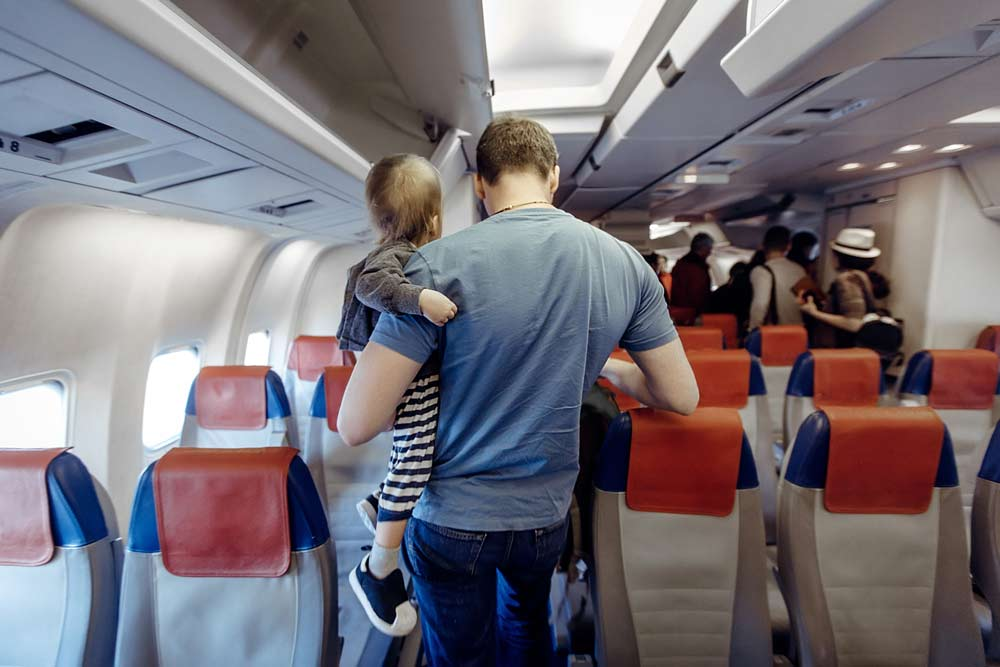
Seating can be the difference between a bearable flight and a nightmare. Parents often face two challenges: sitting together and sitting somewhere practical. Booking early almost always helps, but even then, some airlines charge steep fees for “premium” seats like bulkheads or exit rows. While you can’t sit in an exit row with children, the bulkhead row often offers bassinets for babies a godsend on long flights. There are also other benefits such as a tiny bit more legroom. However bulkhead seats also means, no storage under the seats. So you are forced to put everything in the overhead bins.
Aisle seats make bathroom trips easier, while window seats can entertain kids with a built-in view. Families with more than one child sometimes debate whether to split across two rows or squeeze into one. Both have pros and cons: sitting together means easier supervision, but splitting can give parents a chance to tag-team responsibilities.
One underused tactic is asking for help at the gate. Gate agents often reshuffle seating at the last minute to accommodate families, especially if the flight isn’t full. Parents who approach politely and explain their needs often find that staff go out of their way to move other passengers around. It’s not guaranteed, but it’s worth asking, and many seasoned parents rely on this as a back-up plan.
Connections vs. Direct Flights
The debate over connections versus direct flights usually comes down to money versus convenience. Direct flights are almost always less stressful but can cost more. Parents of babies often find direct flights easiest because they minimize transitions and keep routines intact. With older kids, however, a connection can break up the monotony of long travel days. A layover of two or three hours gives children time to move, explore, or reset before the next leg.
Where parents often go wrong is in underestimating short connections. Racing across terminals with children, strollers, and carry-ons isn’t just stressful, it’s risky. If one leg is delayed, your chances of making the next flight shrink dramatically. Parents in travel forums share horror stories of running full speed with toddlers in arms, only to miss the connection by minutes. If you must connect, aim for a buffer of at least 90 minutes, ideally longer as to accommodate cranky, hungry or tired children. Or worst case scenario a diaper blowout while sprinting to your connection. We’ve been there. Nothing pretty about it.
Another consideration is airport choice. Some hubs are easier for families than others. Airports like Amsterdam or Munich are relatively compact and efficient. Others, like London Heathrow, can mean trekking long distances with little help. If you’re traveling with young children, choosing a connection through a family-friendly airport can make a surprising difference. Switching between terminals at the Atlanta airport still gives us PTSD.
Managing Costs Without Sacrificing Sanity
Everyone wants to save money on flights, but with children, the cheapest ticket can come with the highest hidden costs. Parents often underestimate the value of convenience. Saving €200 by booking a 6 a.m. departure might seem smart until you’re waking kids at 3 a.m. and spending the first day of your holiday recovering from exhaustion.
Instead of chasing the absolute lowest price, many families adopt a “good enough” strategy. They look for fares that are reasonable but not punishing, balancing cost with the realities of traveling with kids. Flying mid-week or outside peak holiday weekends often strikes that balance, reducing fares without sacrificing comfort.
Parents also make good use of loyalty programs and credit card points. Instead of blowing points on upgrades, many families find better value in offsetting the cost of multiple economy tickets. It’s not glamorous, but it makes family travel affordable in the long run. Others pool miles with a spouse or partner, stretching benefits further.
The other financial trap is underestimating add-on costs. Low-cost carriers often lure families with cheap base fares but pile on fees for seat selection, baggage, meals, and even printing boarding passes. By the time the extras are added, the total often surpasses a standard airline ticket minus the perks. Experienced parents stress the importance of calculating the “true cost” of a flight, not just the headline fare. There is a whole underworld when it comes to collecting credit card points that we just don’t have the time to go into. Maybe a future article. For now, if you want to go down the rabbit hole, just google it. But we don’t recommend it. There’s no coming back.
Final Thoughts
Booking flights with kids is rarely simple, but it doesn’t have to be overwhelming. The trick is shifting your mindset. Instead of chasing the cheapest ticket, think in terms of value: how much rest, predictability, and peace will a slightly more expensive flight buy you? For most families, the answer is “a lot.”
Parents who plan ahead, respect their children’s rhythms, and factor in convenience often find the actual travel day much less daunting. You won’t prevent every tantrum or hiccup, but you will dramatically reduce the friction. And that’s the real goal: arriving at your destination tired but intact, with enough energy left to actually enjoy the trip.
Too Long? Here are the most common questions we’re asked.
A: For international travel, 4–6 months is recommended; for domestic or short-haul, 2–3 months is usually enough.
A: Yes, unless seats are pre-booked. Regulations are improving, but families should still book early to ensure seating together.
A: Often yes, as they reduce stress and disruption. But some parents choose layovers to break up long journeys, especially with older kids.
A: Yes. Lap infants under 2 may pay a reduced fare, but they still need to be ticketed and listed on the booking.
A: Legacy carriers usually offer better family perks (meals, entertainment, seating policies), but checking each airline’s “traveling with kids” policy is essential.