When snacks are more than snacks
Parents don’t need convincing that snacks matter. But on planes, snacks aren’t just food, they’re your lifelines. They buy time when toys lose their magic, soothe meltdowns before they erupt, and even double as medicine against ear-popping pain during takeoff. If you’ve ever watched your toddler’s mood turn from storm cloud to sunshine the moment you handed over a bag of crackers, you already know: snacks save sanity at 30,000 feet.
That’s why seasoned parents treat their snack stash as carefully as their passports. Packed right, it can be the difference between a miserable flight and a manageable one.
Jump to Section:
Your Secret Weapon
What Airports Actually Allow
Snacks for Different Ages
Regrettable Snacks
Making Snacks Last Longer
Snacking on Long-Haul Flights
FAQs
Why snacks are your secret weapon in the air
Airplanes compress every parenting challenge into a tight cabin. Kids get bored faster because they can’t move around. They feel the pressure in their ears but don’t know how to pop them. They’re overstimulated one moment and restless the next. And snacks quietly solve many of those problems.
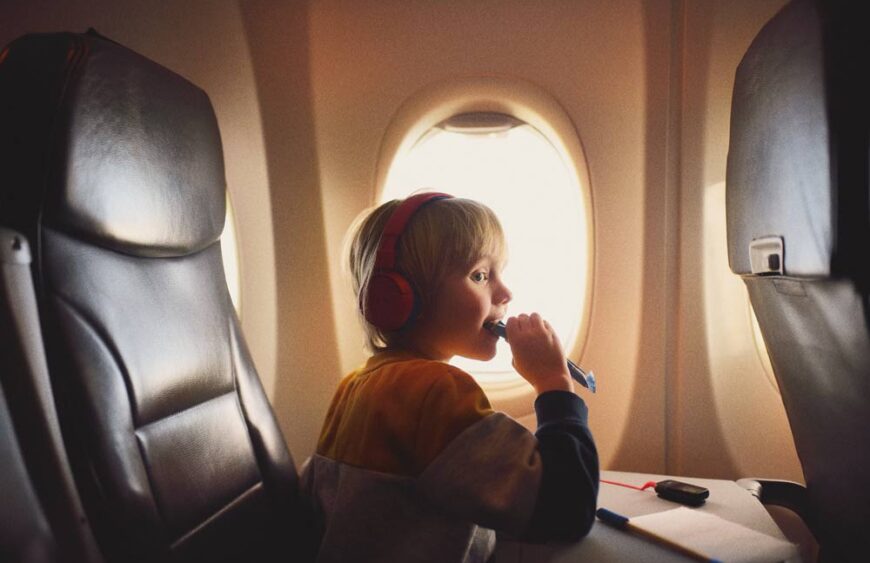
Eating distracts kids when nothing else works. Chewing and swallowing help ease ear pressure, which is why offering a drink or chewy snack at takeoff can prevent screaming fits. Something we also talk about in our guide to easing toddler ear pain on planes. And snacks restore a sense of normal routine. For kids who thrive on predictability, having familiar foods at hand is a calming reminder of home in an unfamiliar environment.
What airport security actually allows
Packing snacks is only useful if they make it through security. The good news is that most countries make exceptions for families. Formula, breast milk, and baby food are allowed in “reasonable quantities,” even if they exceed the usual liquid restrictions. Purées, pouches, and toddler snacks generally pass without trouble, though they may be inspected separately.
The trick is presentation. Put everything in clear zip bags or leave them in their original sealed packaging. Security staff are less likely to question items that look pre-portioned and labeled. Homemade snacks are usually fine, but pack them in transparent containers to avoid extra scrutiny. And don’t forget utensils. Toddler spoons or a small plastic knife for spreading peanut butter can be lifesavers once you’re on the plane.
We go into more detail about organizing travel bags in our essential carry-on packing list for families, but the short version is this: if you pack snacks visibly and neatly, you’ll get through security faster and with fewer headaches. If you want a checklist of carry-on packing list. You can find that here.
Smart snack choices for different ages
Not every snack works for every child. Babies, toddlers, preschoolers, and older kids all need different options both for nutrition and for ease of eating mid-flight.
For babies, it’s mostly about liquids and soft textures: breast milk, formula, or purées. Dissolvable baby puffs or teething wafers can buy a few minutes of quiet, and they’re safer than hard foods that risk choking.
Toddlers are trickier. They want independence but make the biggest messes. Bite-sized fruit (grapes cut in half, apple slices, berries), dry cereal, crackers, or cheese sticks all travel well. Small snack cups with lids prevent spills. This is also the age where snacks double as distraction toys. Opening containers, picking up pieces one by one, and “helping” hand out food can take longer than eating itself.
For preschoolers, think variety. Trail mix (without nuts if allergies are a concern), granola bars (not Nature Valley, unless you hate yourself), and mini sandwiches keep them fuller longer. This age group loves novelty, so small bento boxes with compartments often get more excitement than the snacks themselves.
By the time kids are school-aged and older, protein becomes important. Jerky, string cheese, roasted chickpeas, or protein bars keep them satisfied on long-haul flights. At this stage, kids may also want a say in what’s packed. Letting them pick a few favorites at the store before the trip gives them buy-in and reduces mid-flight battles.
Parents often underestimate how useful snacks are across all stages of travel. As we point out in the long-haul survival guide for babies, even a simple feed can calm a restless infant and reset the rhythm of the flight.
The snacks parents regret bringing
Every parent has a “never again” story about airplane snacks. Yogurt tubes that exploded under pressure. Bags of chips that showered crumbs across three rows. Bananas that turned into mush at the bottom of a backpack.
The most common regrets fall into four categories:
- Messy foods: yogurt, sticky fruit, anything with sauce.
- Crumb bombs: chips, crackers that disintegrate, flaky pastries.
- Smelly snacks: tuna sandwiches, boiled eggs, strong cheeses — your seatmates will never forgive you.
- Melt hazards: chocolate bars that turn into goo after three hours in a warm cabin.
It’s not just about the mess. These snacks make your job harder, and on a plane, harder equals regret. That’s why we always recommend sticking with sturdy, clean, neutral-smelling foods. A little foresight here saves you a lot of hassle later. Just as it does with other airport hacks parents swear by.
Creative ways to make snacks last longer
One of the biggest mistakes parents make is handing over all the snacks at once. Kids plow through them in minutes, and suddenly you’re left with nothing for hour six. The trick is pacing.
Seasoned travelers hand out snacks in intervals, spacing them like activities. Bento boxes or snack cups add novelty. Kids love having multiple little choices, even if it’s just pretzels and raisins. Some parents go further and wrap snacks like tiny presents, turning snack time into an activity in itself.
Snacks also work best in rotation. Alternate food with toys, coloring, or shows. After twenty minutes with stickers or blocks, a small snack feels like a new event, not just fuel. We talk about this rotation strategy in our guide to the best plane toys for kids, but the principle is the same: stretch out small wins to make the flight manageable.
Managing snacks on long-haul flights
Packing snacks for a short hop is easy. Long-haul flights are another story. Parents debate endlessly: how many snacks is “enough”? The answer depends on your child, but most families find a balance between their stash and the in-flight meals.
Airlines usually offer baby or child meals if requested in advance, but they’re hit or miss. Some kids gobble them up; others won’t touch a thing. That’s why packing a core selection of reliable favorites is critical. Plan enough to get you through the flight even if your child refuses airline food. A few extras cover delays.
Perishables are the trickiest part. Cheese sticks and sandwiches can last a few hours, but without refrigeration they won’t hold on ultra-long flights. Dried fruits, crackers, and shelf-stable snacks are safer. Parents who’ve done this often rotate: fresh snacks early in the trip, shelf-stable options later.
Snacks also help with transitions after landing. Offering food that matches local mealtimes can ease kids into new time zones. One of the many small tricks we cover in our guide to dealing with jet lag in kids.
Snacks as sanity savers, not just food
Snacks won’t magically make your kids quiet for ten hours, but they will buy you peace in small, precious doses. They’re not just calories, they’re comfort, distraction, and tools for maintaining some control in an unpredictable environment.
Don’t stress about packing a gourmet spread. A handful of familiar favorites, presented thoughtfully and paced strategically, is enough to turn chaos into something manageable. Because on a plane, “manageable” is the real victory.
Too Long? Here are the most common questions we’re asked.
Most security agencies allow formula, breast milk, baby food, and toddler snacks in reasonable quantities, even above the liquid limit. Pack them in clear containers or sealed packaging to speed things up at checkpoints.
Plan for one snack per hour of travel, plus extras for delays. Balance familiar favorites with a few new items for novelty. Always assume the airline meal might flop and pack enough to get through the flight on your own.
Dry cereal, cheese sticks, cut fruit, granola bars, and dissolvable baby crackers all work well. Avoid sticky, crumbly, or smelly options.
Yes, homemade snacks are usually fine. Just pack them in clear containers and avoid liquids or sauces that might raise eyebrows at security. Sandwiches, muffins, and wraps are all easy winners.
Anything that encourages chewing and swallowing can help: bottles, breast milk, sippy cups, chewy snacks, or even lollipops for older kids. Timing them for takeoff and landing is the key.