
When the brochure doesn’t match reality
Parents often picture a perfect day ashore: stepping off the ship, boarding a coach, and gliding through a day of cultural treasures or beach bliss while the kids happily tag along. The reality can be quite different. Long, hot bus rides, ports full of stairs, and tours with no bathroom breaks don’t always mix well with toddlers or tired school-age kids. Many parents return to the ship wondering why they paid hundreds for what felt like an endurance test.
Excursions can be fantastic with children, but not all are created equal. The key is choosing carefully and remembering that a shorter, simpler day often beats the grand tour.
What you’ll find in this guide:
Why excursions can be tricky with kids
Excursions that work well for babies and toddlers
Excursions that work for school-aged kids
Excursions that work for tweens and teens
The case for skipping excursions altogether
Booking through the cruise line vs. independently
Choosing excursions that add, not subtract
FAQ
Why excursions can be tricky with kids
Cruise lines make excursions sound seamless, but from a parent’s perspective, they can be stressful. Excursions start early, which means dragging kids out of bed when they’d rather sleep. Many involve long bus rides, and “three hours at the ruins” feels like a blink to adults but an eternity to a five-year-old. Meals are rarely scheduled around children’s needs, and if your toddler melts down halfway through, there’s often no easy way back to the ship.
Then there are the physical logistics. Strollers don’t always fit on tour buses or cope with cobblestoned streets. Tender ports, where you need to board a smaller boat to reach shore, can mean juggling bags, children, and folding prams all at once. Families quickly learn that excursions are best judged not by how exciting they sound in the brochure, but by how manageable they’ll feel in the moment.
Excursions that work well for babies and toddlers
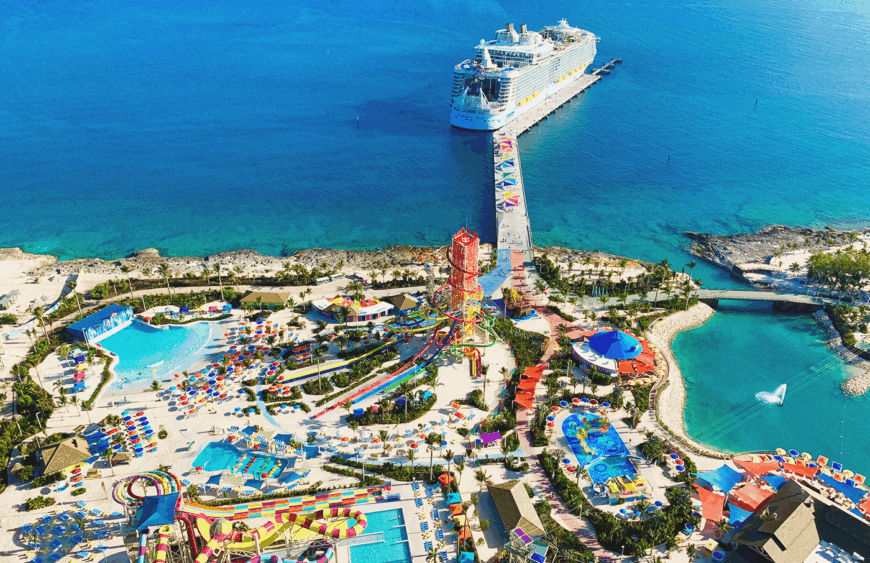
With very young children, simplicity is everything. A shaded beach with calm water and a short transfer from the pier beats any long cultural tour. Many private islands run by cruise lines like Disney’s Castaway Cay, Royal Caribbean’s CocoCay, or MSC’s Ocean Cay are tailor-made for families with babies and toddlers. You can bring a stroller, retreat easily for naps, and keep the day as long or short as you like.
City walks can also work if they’re short and stroller-friendly. Think wide promenades, parks near the port, or aquarium visits where the pace is relaxed and the air-conditioning is a welcome break. Museums, unless specifically designed for children, can be tough at this age. Parents often find it’s better to focus on one small stop, like a local café or playground, rather than a full-day itinerary.
This is where our guide to cruising with babies and toddlers ties in. Many of the same principles apply ashore as at sea. Naps, snacks, and comfort routines are still the anchors.
Excursions that work for school-aged kids
From about four to ten, children are curious enough to enjoy more structured excursions, but they still need plenty of breaks and a hands-on element. Beach days remain a hit, especially when paired with shallow water, umbrellas, and snack access. Wildlife excursions like spotting dolphins, visiting an aquarium, or taking a short boat ride also work well.
Short cultural tours can succeed if they include interactive moments: a fortress where kids can climb cannons, a market where they can sample fruit, or a craft workshop. Length is critical. Two to three hours ashore, with food and bathroom breaks, is about the maximum before meltdowns loom. Parents who try to push a full-day city tour often regret it.
In our post on what to do onboard, we talked about pacing entertainment so kids don’t burn out. The same advice applies here: one or two highlights are better than a packed schedule that leaves everyone exhausted.
Excursions that work for tweens and teens
Older kids want more independence and adventure, and excursions can finally deliver that. Zip-lining, snorkelling, kayaking, or hiking tours give them a sense of accomplishment. City tours work better at this age if teens get some say in what they’ll see, whether that’s street art, a cool café, or a shopping stop.
Some families split up at this stage, with one parent taking younger children on a calmer excursion while the other tackles something more adventurous with the teens. If you’re comfortable, some cruise lines even allow teens to sign waivers and join certain activities solo. Just remember that long lectures at ruins or cathedrals may still feel like drudgery to a 14-year-old, even if they’re willing to humour you.
This is where our guide to the best cruise lines for families can help. Some lines run teen-focused shore trips or package deals that make the day feel designed for them, not just tolerated.
The case for skipping excursions altogether
It feels counterintuitive at first. You’ve paid for this cruise, the ship is visiting ports you may never see again, and the brochure is full of “must-do” tours. But families quickly learn that sometimes the smartest choice is to stay onboard.
On port days, the ship empties out. Pools that are usually packed become blissfully calm. Splash zones are half-empty, kids’ clubs have space, and you can finally find a shaded lounger without a battle. For babies and toddlers, this can feel like having a private resort. Even older kids often enjoy the novelty of exploring the ship when it’s quiet.
There’s also the energy factor. After several early mornings and long days ashore, children burn out. A “day off” on the ship gives everyone a chance to reset. Parents who force themselves to take every excursion often return more exhausted than if they’d skipped one. We’ve talked before about how over-scheduling backfires; the same principle applies here. Missing a port isn’t failure. It’s choosing sanity.
Some parents even make a game of it. Letting kids vote on whether today will be an “adventure day” or a “ship day.” Framing it this way helps kids feel included in the decision and turns staying onboard into something special, not a consolation prize.
Booking through the cruise line vs. independently
Excursions are big business for cruise lines, and booking through them is the default. It’s easy: you select a tour, meet your group on the pier, and the line guarantees that if your bus runs late, the ship will wait. That last part is what sells it for parents. No one wants the stress of watching their ship sail away because traffic delayed their taxi.
The trade-off is cost and flexibility. Cruise line tours are often more expensive, and they tend to run on a fixed schedule with large groups. That can mean herding tired kids onto buses, waiting while dozens of passengers reboard, or sticking to a timetable that doesn’t match nap or snack needs.
Independent excursions, whether booked through a local operator, a private driver, or even just exploring on your own offer more freedom. You can adjust the pace, stop for ice cream, and cut the day short if meltdowns loom. For families with toddlers, this flexibility is priceless. Parents often describe private tours as the difference between “just surviving” and actually enjoying a port.
Of course, independence comes with responsibility. If you book on your own and run late, the ship will not wait. That risk means independent excursions work best in ports close to the ship, or when you build in big buffers of time. Some families even split strategies: booking ship tours in tricky ports where timing is tight, and going independent in easier, walkable destinations.
The bottom line? There’s no single “right” choice. The best approach is to weigh your family’s tolerance for risk and structure. If peace of mind matters most, stick with the cruise line. If flexibility matters more, and you’re confident managing logistics, then independent tours can be the highlight of the trip.
Choosing excursions that add, not subtract
Excursions can be the highlight of a family cruise but only if they’re chosen with your children’s needs at the centre, not just the brochure’s promises. Babies and toddlers thrive on short, simple, flexible days. School-aged kids need hands-on, interactive elements and not too many hours away from food and rest. Teens want independence and adventure, and will reward you with enthusiasm if you give them both.
The best excursions add to your cruise rather than draining it. They’re the days your kids talk about long after the ship has docked and not the days you spend coaxing them through lines or dragging them through heatstroke. When in doubt, keep it simple.
Too Long? Here are the most common questions we’re asked.
Most lines set the minimum at six months, with longer or transoceanic routes requiring twelve months.
Yes, sealed and packaged. AIDA even provides complimentary baby food jars, but most lines don’t.
Disney, Royal Caribbean, and MSC run nurseries for under-threes. Carnival and Norwegian offer late-night babysitting. Kids’ clubs typically start at age three and potty-trained.
Balconies, connecting rooms, blackout hacks, and white noise all help. Some parents use bathrooms or pop-up tents as makeshift nurseries.
Not the main pools if your child is in a swim diaper. Look for ships with splash zones and supervise closely.