
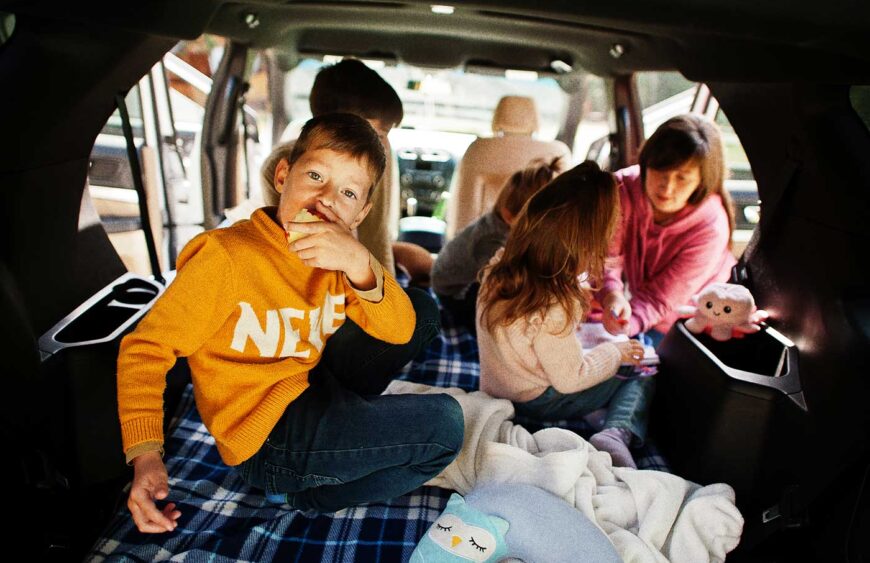
When a drive feels bigger than the destination
There’s something about the idea of a road trip that feels like freedom: piling into the car, hitting the open road, and letting adventure take you where it may. But when you add children into the mix, that picture-perfect scene looks a little different. Suddenly, “freedom” comes with snack schedules, bathroom breaks, and a backseat that feels more like a moving playroom than a serene escape.
The truth is, road trips with kids don’t just happen, they’re planned. Without preparation, a family drive can turn into a rolling chaos machine: toddlers screaming for food, older kids asking “are we there yet?” on repeat, and parents silently wondering if flying would have been easier after all.
But done right, a family road trip becomes more than transportation. It becomes a shared adventure, a memory factory where the in-between moments matter just as much as the destination itself.
What you’ll find in this guide:
Why family road trips need extra planning
Choosing routes that work for kids and adults
Balancing drive time with stops and detours
Packing smart for a rolling family home
Safety first: what to prep before you go
Keeping the budget under control
Routines that keep everyone sane on the road
Road trips as memories, not marathons
FAQ
Why family road trips need extra planning
Road trips before kids might have been about spontaneity. Driving late into the night, picking random exits, skipping meals until you found the perfect diner. With kids, that kind of freewheeling rarely works. Children thrive on predictability, and long stretches of “we’ll figure it out” often backfire.
Parents on forums share the same regrets over and over: they tried to cover too many miles in one day, didn’t stop often enough, or forgot a critical item like wipes or chargers. These oversights might sound small, but when multiplied over hours in a confined space, they can unravel the entire trip. Our guide on Packing the Car: What Families Always Forget digs into the essentials parents commonly overlook, and how to avoid those “we should’ve packed it” moments.
Planning doesn’t mean every minute is scheduled. It means giving your family a framework, a route that makes sense, realistic stop points, and enough preparation to handle the inevitable surprises without melting down.
Choosing routes that work for kids and adults
Not all routes are created equal when you have little passengers. A direct highway that gets you there fastest may seem efficient, but endless gray asphalt can be a special kind of torture for restless kids. On the other hand, a winding scenic road might look beautiful on a map but could add hours to your day and trigger motion sickness in the backseat. Anyone who has ever driven in Northern Ontario, Canada would know what we’re talking about.
The key is matching routes to your children’s ages and stamina. Families with toddlers often stick to shorter daily distances, aiming for no more than four to five hours of driving in total, broken into manageable chunks. School-age kids can handle longer stints, but boredom becomes the enemy, so planned diversions help. Teens might tolerate longer hauls but resent too many detours.
Strategic timing helps. Leaving at night lets babies and toddlers sleep through long stretches, while early-morning departures give families a head start before restlessness sets in. Route planning apps like ViaMichelin or AAA’s TripTik can help map realistic stops, but keep a paper map in the glovebox too, because Wi-Fi and batteries are never guaranteed. And when it comes to finding places kids will actually enjoy, our article on Family-Friendly Roadside Stops Worth Planning can help you choose detours that feel like part of the trip, not just breaks from driving.
Balancing drive time with stops and detours
One of the biggest mistakes parents make is thinking they can drive the same way with kids as they did before kids. A six-hour drive without breaks might have been doable once, but with children it’s a recipe for misery.
Think of the road trip in rhythms: two to three hours of driving, then a stop. Not just for bathrooms, but for stretching, snacks, and a reset. Even a bland highway rest area can be salvation if it has clean toilets and space to run. Some countries and states even design family-friendly rest stops with playgrounds, which parents quickly learn to love more than museums.
Then there are “destination detours.” Instead of stopping just for gas or toilets, plan stops at places that are fun in their own right: a roadside zoo, a quirky landmark, a park with a playground, or even just a grocery store where kids can pick out snacks. These stops may add time, but they transform the journey into part of the adventure. Having the right mix of road-friendly food also helps. Our article on the Best Road Trip Snacks for Children lays out which options work best for long drives and which ones create more mess than they’re worth.
Packing smart for a rolling family home
On a road trip, your car becomes your home on wheels. Packing isn’t just about fitting everything in; it’s about where you put things.
The golden rule: keep essentials within arm’s reach. Snacks, wipes, water bottles, a change of clothes, favorite toys, and entertainment devices should all be accessible without unloading half the trunk. Mess-prevention items like paper towels, trash bags, and wet wipes belong in door pockets or organizers.
Bulkier gear like extra clothes, camping supplies, spare diapers, can go in bins or bags stashed in the trunk. Packing cubes or clear plastic tubs make life easier when you’re rummaging in the dark at a roadside motel. Hello Ikea!
For long trips, some families treat the car like a camper: a cooler for meals, a bag with pajamas for quick overnight stops, and a “front-seat survival kit” with chargers, maps, and documents. The more organized the car, the less chaotic the journey feels. And don’t forget the safety side of packing: our Road Trip Health and Safety Kit for Families explains which items should live in your glovebox or console instead of being buried at the bottom of a duffel.
Safety first: what to prep before you go
A safe road trip starts before you even turn the key. Think of it as preflight checks, but for parents. Tires, oil, and brakes should be inspected, and car seats reinstalled if they’ve been loosened between trips. Many parents are surprised at how much a vehicle’s handling improves with properly inflated tires and a balanced load. These are the small checks that prevent breakdowns and accidents. And as the kid of an auto mechanic we can’t stress it enough.
An emergency kit is another non-negotiable. Families should carry a basic first-aid kit, flashlight, blankets, bottled water, and a portable phone charger. Medication and health paperwork deserve their own pouch. If you’re driving through rural areas, let someone know your route in case of delays.
And of course, none of this matters if the seats themselves aren’t secure. Our deep dive on Road Trip Safety: Car Seats and Safety Rules Parents Must Know walks through installs, harness checks, and comfort fixes so kids ride safely for the long haul.
Keeping the budget under control
Road trips are often framed as the budget-friendly alternative to flying, but the costs can pile up quickly. Gas, tolls, meals, and hotels add up, especially with kids in tow. Parents often underestimate how much they’ll spend on snacks and impulse stops, which can quietly double the food budget.
Planning meals is one of the easiest ways to save. Packing sandwiches, fruit, and snacks avoids overpriced roadside food and keeps kids fueled without long delays. Grocery stores are better than fast-food chains for both budget and nutrition, and kids enjoy the novelty of picking out local snacks.
Fuel apps that track gas prices along your route can shave off surprising amounts, and booking lodging ahead prevents last-minute splurges on overpriced motels. Avoiding peak weekends, when prices jump, can also make a noticeable difference. Our guide to Budgeting for Road Trips with Kids goes deeper into hidden costs and tricks families use to stretch their travel funds.
Routines that keep everyone sane on the road
Children thrive on rhythm, and long drives feel less daunting when broken into predictable chunks. Some families swear by the morning drive. Leaving early, pushing through while kids are alert, and relaxing in the afternoon. Others find late-evening departures better, with kids sleeping through miles of otherwise restless driving.
Whatever the rhythm, consistency helps. Drive, stop, snack, repeat. Build anticipation with countdowns, car games, or little rewards at milestones. For parents, rotating drivers keeps everyone sharp, especially on longer routes.
The goal isn’t to eliminate stress, as road trips with kids will always have a measure of chaos, but to keep it at a manageable level. With predictable routines, kids feel calmer, and parents spend less energy firefighting. If you’re looking for more ideas on how to keep kids engaged mile after mile, our piece on Keeping Kids Entertained on Long Drives offers strategies that don’t rely on screens alone. At tempting as it may be.
Road trips as memories, not marathons
At the end of the day, a successful road trip isn’t measured in miles covered. It’s measured in memories: the offbeat roadside diner that became a favorite story, the family singalong that turned traffic into fun, the unexpected park where everyone stretched their legs and laughed.
Planning is what creates the space for those memories to happen. Without it, exhaustion takes over. With it, families find joy in the journey itself. Kids won’t remember the exact route you took, but they’ll remember the feeling of adventure and that’s what makes all the planning worthwhile.
Too Long? Here are the most common questions we’re asked.
Most families find four to six hours a day manageable, broken into smaller chunks. Toddlers may need even shorter days with more frequent breaks.
Night driving works for some families, especially with babies who sleep soundly. But it can leave parents overtired. Weigh your own stamina carefully.
Plan meals, use grocery stores instead of restaurants, and book lodging ahead. Apps that track fuel prices also help.
Think in two-to-three-hour segments. Choose stops that serve multiple purposes: bathrooms, food, and a chance to run around.
Snacks, wipes, water, entertainment, and a change of clothes for young kids. Everything else can go in the trunk.