Keeping Memories Alive After Trips With Kids
Keeping a Trip Alive, Without Turning It Into Homework
You know that weird moment after you get home, when the suitcases are still half open and your kid is already asking when you can go back. Your camera roll is a mess, your brain is tired, and the trip starts slipping away faster than you expected. That’s where keeping memories alive after trips actually matters, because it is not about perfect scrapbooks or museum quality photo albums. It is about holding onto the little details your kids will forget first, and the little wins you will need on the next rough travel day.
So, yes, this is about preserving travel memories with kids. But in a way that fits real life, meaning it has to be quick, forgiving, and kind of fun. The best systems are the ones that still work when you are unpacking at 11pm and someone is crying because their favorite shell “doesn’t smell like the ocean anymore.” If you can turn your family travel memories into a few repeatable habits, you get something better than a highlight reel. You get stories your kids can actually retell, and a few anchors that make the trip feel like it is still yours.
What You'll Find in this Guide
The first 48 hours home are where memories either stick or vanish
Most families hit the same wall after travel, and it is not just jet lag. The routine comes back hard, the calendar fills up, and suddenly the trip feels like it happened to someone else. Many parents find that if they do not do something small in the first couple of days, the trip becomes “that time we were somewhere hot” and that’s it. The good news is you do not need a massive plan. You just need a tiny ritual that tells your brain, and your kid’s brain, this mattered.
Start with one low effort moment that fits your family. Put a snack on the table, sit down for ten minutes, and ask each kid for three things: their Favorite moment, their funniest moment, and their “I didn’t expect that” moment. The answers will be all over the place, and that is the point. One kid will say “the hotel elevator,” another will say “the mango juice,” and someone will bring up a meltdown you tried to forget. You are not grading this. You are capturing the raw material.
This is also the perfect time to do a quick “memory download” for yourself. Open your notes app and write five lines while it is still fresh, like the name of the beach, the tiny cafe with the good bread, and the one place you will never return to because it involved stairs and a stroller. It takes two minutes, and it saves you later when you are trying to remember which town had the playground that saved your afternoon. If you want to make it feel official, title the note with the destination and the date, then you are done.
Kids handle coming home differently, and it shows up in their behaviour. Some bounce back fast, some get clingy, and some act like they are angry at the entire concept of bedtime. It helps to treat memory keeping with children as part of settling back in, not a separate activity you have to force. In parenting forums, you will see the same advice repeated: ease back into normal life, do not over schedule, and keep connection moments simple. A quick chat, a few pictures, and one shared task can do more than a big weekend project that nobody finishes.
If your kid is school age, the first days home are also when teachers start asking questions. That can be annoying when you are still sorting laundry, but it is also a gift. A small school friendly project locks in memories because your child has to translate the trip into words and choices. You do not need glitter, you just need a few printed photos and a page of notes. Keep it practical and let the kid drive the selection, even if their “best photo” is a blurry shot of an airport carpet.
Finally, set expectations with yourself. Documenting family trips is not about doing everything, it is about doing one thing consistently. If you only manage a ten minute story chat and a single folder of saved photos, that is still a win. The best memory systems are the ones that survive real life, and real life is not a scrapbook aisle.
Make a “small and real” memory kit, not a craft project
A lot of people hear “travel scrapbooks for families” and immediately picture a disaster zone of glue sticks, tiny paper bits, and a parent who is silently regretting every decision. You do not need that. You need a small kit that lives in one place, and that you can pull out without turning your living room into a craft store. Think of it like a first aid kit, but for curing nostalgia.
Start with a single box, folder, or envelope, and keep the rules simple. Every trip gets one container, and only a few things go in it. Tickets, one brochure, a postcard, a small map, a few receipts if they have names on them, and maybe one “kid treasure” that will not rot. If you have toddlers, do not store food souvenirs unless you want to open the box later and meet a new ecosystem. Keep it clean, dry, and boring enough that it actually survives.
Then add a one page “trip snapshot” you can fill in quickly. Location, dates, where you stayed, and a list of top moments, plus a line called “what we would do differently next time.” Customers have told us this is the part they love most later, because it captures the real learning, not just the highlights. It also makes planning easier when you return to the same place or try something similar. And yes, future you will absolutely forget which neighbourhood worked best for naps.
If you want to include a physical journal, keep it flexible. Family travel journals do not need to be daily diaries with perfect handwriting. They can be a few pages with doodles, stickers, and short captions. For younger kids, let them draw one thing they remember, and write their words underneath exactly as they said them. The misspellings and weird logic are the entire charm.
For older kids, give them a slightly different job. Ask them to make a list called “Things I would tell a friend about this place,” then let them include food, games, weird signs, and whatever else stuck. This is also a sneaky way to get them to reflect without turning it into a deep emotional conversation that makes everyone uncomfortable. You are just helping them build a narrative.
Keep the kit small, because small is sustainable. If you are trying to save every paper scrap from the trip, you will drown in clutter and quit. Make it a “best of” collection and move on. Turning travel into lasting memories works better when it feels light, not heavy, and your home does not need another giant project hanging over it.
Get kids to tell the story, even if it comes out sideways
Here is the part parents forget. Kids do not remember trips the way we do. You remember logistics, timing, money, and the exact moment you realized you packed the wrong charger. They remember sensations and tiny moments that hit their brains at the right time. Helping kids remember travel experiences means letting them tell the story their way, then gently shaping it into something that makes sense.
Start with story prompts that do not feel like a test. “What was the best snack,” “what was the weirdest bathroom,” “what was the funniest thing we saw,” and “what is one thing you want to show grandma.” Kids answer these fast, and the answers are usually more useful than “tell me about your trip,” which makes them stare at you like you asked for taxes. For toddlers, you can do this with picture pointing instead of full sentences. Let them scroll a small set of photos and label what they see.
Then help them build a simple beginning, middle, end. Beginning is how you got there, middle is what you did, end is coming home, and you can keep it loose. The goal is not a perfect timeline, it is a shared story the family can repeat. Many parents find that once the story becomes a repeatable “trip tale,” kids bring it up more often, and the memories stick longer. It also gives you something to talk about on future travel days when everyone is tired.
If your kid loves performance, let them act it out. If they love building, let them recreate the hotel room with blocks. If they love drawing, let them draw the “scene” and you write the captions. Post travel activities for kids work best when they match the kid’s personality, not the parent’s fantasy of a calm crafting afternoon. If your child is a chaos goblin, aim for quick and physical.
This is also where you can quietly sneak in emotional processing. Sometimes a kid will bring up a scary moment, like a loud announcement at the airport or getting lost for a second. Do not shut it down just because it makes you uncomfortable. Listen, normalize it, and add one sentence about what helped, like holding hands, finding a staff member, or going back to a safe spot. That kind of reflection builds confidence for the next trip and helps the memory feel complete, not scary.
If you want to build a consistent habit, create a “trip night” once you are home. Not every week forever, just once or twice in the month after travel. Put on music from the destination, cook a simple dish you ate there, and tell the story again. It is a gentle way of keeping memories alive after trips without clinging to them. It also makes the return to normal life feel less abrupt, which is what a lot of kids struggle with even if they do not say it out loud.
Photos are fine, but give them a job
Everyone takes photos, and then nobody does anything with them. Your phone becomes a landfill of screenshots, blurry shots, and five versions of the same sunset. That is normal. The trick is to stop thinking of photos as the memory and start thinking of them as ingredients. You only need a few good ones to create a lasting record.
First, make a “Top 30” album within a week of getting home. Do it fast, do not overthink it, and do it while you still remember what everything is. If you want to include your kids, let them pick ten of the photos, because their choices will surprise you. They will choose the ice cream stand, the airplane window, and the random dog on the street, and that is how you learn what mattered to them. This is also the easiest way to preserve family travel memories without spending hours sorting.
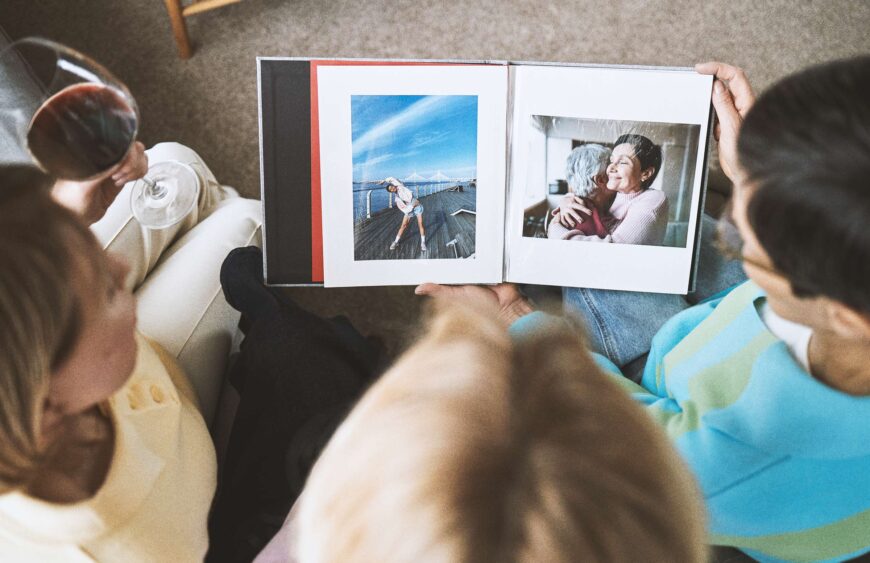
Next, pick three photos to print. Yes, print. Digital is convenient, but printed photos get seen, and seeing is remembering. Put them on the fridge, in a small frame, or in a cheap little album. You are creating visual reminders that trigger stories, and stories are what make memories stick. If you want to go one step further, add one line under each photo, like “the day we found the quiet beach,” or “the rainstorm that turned into a dance party.”
If you like structure, create one simple template you reuse. A one-page recap in a notes app works fine, or a short photo book once a year. Some parents love making monthly photo books, but unless you genuinely enjoy it, it becomes another chore. Keep it realistic and grounded in your actual energy levels. If you do one annual book called “Trips This Year,” you get a lot of value without constant pressure.
Also, be mindful about sharing. It is tempting to post everything immediately, but you do not have to. Many families prefer to share a few highlights with close people and keep the rest private. For safety and privacy reminders, it can help to glance at practical guidance from trusted health and safety bodies like the NHS and the CDC when you are thinking about what details to share publicly, especially around locations and identifying information. That does not mean you should panic, it just means you should be intentional.
Finally, give kids their own photo role if they are old enough. A cheap camera or a phone with a limited album can be great, because it turns them into observers. Then, when you get home, you can do a quick “photo interview” where they explain why they took each picture. That is one of the best ways of helping kids remember travel experiences, because they are turning images into language, and language is where long term memory gets stronger.
Keep the trip alive in normal life without being weird about it
The goal is not to live in the past. The goal is to take the best parts of the trip and let them add something to your everyday life. That is how turning travel into lasting memories works. You are not building a shrine; you are building small bridges back to the experience.
One easy bridge is food. Cook one simple dish you ate, even if you must simplify it to fit your weeknight reality. Kids remember taste and smell, and that can bring back a whole scene. If your child loved a certain fruit or snack abroad, look for it at home and make it a “trip night” treat. This works whether the trip was across the world or just a train ride away.
Another bridge is language but keep it playful. A single phrase, a greeting, or a silly word the family kept repeating can become a little household callback. It is not about being fluent, it is about keeping a piece of the place in your shared family culture. If your kid is into it, label a few printed photos with the local word for something simple, like “sea,” “bread,” or “thank you.”
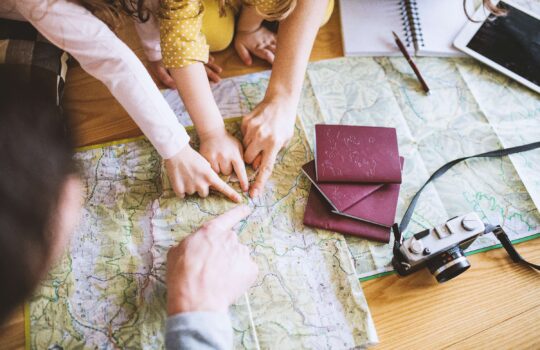
If you have kids who love collecting, make a “map wall” or a simple pin board. It can be a world map with stickers, or a small board where you pin a postcard from each trip. Do not over complicate it, because the second it becomes a serious interior design project, it dies. Keep it a living thing your kids can touch and add to. Post trip activities for families do not need to be huge, they just need to show up occasionally.
And yes, it is also okay to let the trip fade a little. Memories naturally soften, and that is not a failure. What you are doing is saving the parts that matter most and giving your kids a way to revisit them when they want. Many parents find that this reduces the “post trip crash” because the trip does not feel like it ended overnight. It becomes something you can pull off the shelf, talk about, laugh about, and then move forward.
If you want a gentle routine, create a monthly “family recap” habit where you include one travel flashback, even if it is small. One photo, one funny line, one moment. Over time, that becomes your family memory keeping system, and it is surprisingly powerful. It also makes the next trip easier, because your kids remember that travel is a story they can hold onto, not just a chaotic blur that disappears.
Parents planning longer journeys often run into the same emotional whiplash we cover in Helping Kids Adjust Back to Normal Life and it is worth treating memory keeping as part of that softer landing. This comes up a lot when families are dealing with situations like those described in Family Debrief Talking About the Trip because the story you tell together is what your child keeps.
When the suitcases are gone, the story is what stays
Keeping memories alive after trips is not about being the kind of parent who always has a perfectly labelled album. It is about making space for your family to replay the trip in small, comforting ways. A ten-minute chat, a tiny memory box, and a Top 30 photo album can do more than a complicated project that never gets finished.
The real magic is letting kids lead the memory. When they choose the photos, tell the story, and keep their weird little treasures, they are building ownership. That is how family travel memories turn into something they can carry, not just something that happened to them. It also helps them process the harder parts, because the story can include the meltdown and the recovery, not just the beach.
If you keep one principle, keep this one. Small and consistent beats big and rare. A simple system you repeat after every trip is what makes preserving travel memories with kids feel easy. And easy is what happens in real homes with real laundry piles.
Over time, these habits turn travel into a family language. You get inside jokes, repeated stories, and a shared sense of “we did that together.” That matters, especially when life gets busy and the days blur. Your kids may not remember every destination, but they will remember the feeling of being with you in a different place, looking at the world with fresh eyes.
So, pick one thing from this article and do it this week. Print three photos, start one trip box, or do one story chat at the dinner table. You are not trying to preserve everything. You are saving the moments that make your family feel like your family.
Too Long? Here are the most common questions we’re asked
What are the easiest ways to keep memories alive after trips with kids?
Keep it small and repeatable. Do a ten-minute story chat, create a Top 30 photo album, and print three photos for the fridge. Those quick habits build stronger long term family travel memories than a big project you never finish. If you want one extra step, add a small memory box with tickets and a postcard.
How can I help my toddler remember a trip when they are too young to describe it?
Use photos and simple prompts instead of expecting a full story. Let them point to a few pictures and name what they see, then you label it with their words. This kind of memory keeping with children works well because it matches their development and attention span. Repeating the same short story over a few weeks helps it stick.
Are travel scrapbooks for families worth doing, or is it too much work?
They are worth it if you keep them simple. A scrapbook can be one envelope of souvenirs plus a few printed photos and short captions, not a full craft project. If you dread the idea, skip it and do a photo album and a quick written recap instead. The best system is the one you will actually keep doing.
What should I include in a family travel journal after a trip?
Include what will matter later, not every detail. Dates, where you stayed, the best moments, the funniest moment, and one thing you would do differently next time are plenty. Kids can add drawings, stickers, or a short list of Favorite foods and activities. Family travel journals work best when everyone can contribute in their own way.
How do I keep the trip feeling alive once we are back to normal life?
Bring one small part of the trip into your routine. Cook a simple dish you ate, hang a photo where you will see it, or do a short “trip night” once or twice after you return. These post trip activities for families help kids feel connected to the experience without getting stuck in the past. It also makes the transition home feel softer.