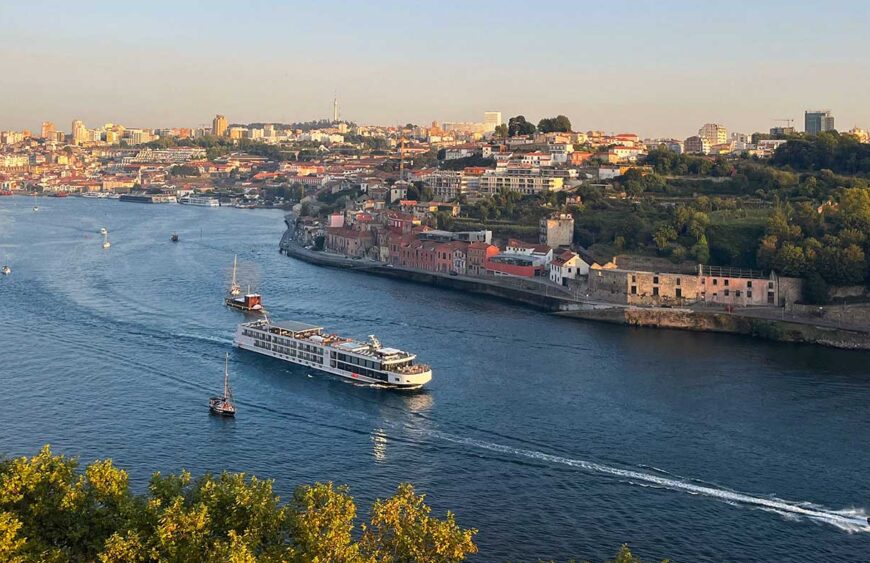
Where “floating hotel” meets family
River cruises have traditionally been marketed toward older adults. Think wine tastings, historic walking tours, and evenings of quiet piano music. On the surface, it doesn’t sound like the natural choice for families with kids.
But in reality, river cruising can also work for certain families. The smaller ships, central docking locations, and slower pace remove many of the logistical headaches of land travel. You’re not wrestling with airport transfers, constantly repacking suitcases, or chasing kids through mega-ships with thousands of passengers. Instead, you’re gliding from city to city with your hotel room always a short walk away.
The question isn’t whether kids “belong” on a river cruise. It’s whether the rhythm, excursions, and amenities fit your family’s stage of life. For some, it’s the perfect way to see Europe together; for others, it’s better saved for a later chapter.
What you’ll find in this guide:
How river cruises differ from ocean cruises
The pros of river cruising with kids
The cons parents should weigh
What life onboard is really like
Popular river cruises for families (lines and routes)
When it works, and when it doesn’t
FAQ
How river cruises differ from ocean cruises
Ocean cruises are floating resorts: pools, kids’ clubs, movie theatres, and endless buffets. River cruises are smaller, quieter, and more focused on the destinations. Ships usually hold 150–200 passengers rather than thousands, and instead of sea days, you’re almost always docked within walking distance of a town or city.
That’s both the appeal and the challenge for families. You won’t find water slides or nurseries, but you also won’t face the stress of wrangling kids in a giant atrium with thousands of people. It’s intimate, cultural, and very much about the places you visit rather than the ship itself.
The pros of river cruising with kids
For the right family, river cruises can be refreshing. Daily port stops mean you’re not stuck entertaining kids onboard for hours. You dock in the heart of cities, so there are no long transfers or buses to catch. Smaller ships mean kids can’t wander far, which many parents find reassuring.
Food is another plus. Meals are freshly prepared, and while menus lean European and adult-focused, most lines are happy to adjust for picky eaters. Some even offer special kids’ menus on family departures. And unlike ocean ships, where dinner can feel like a production, river cruise dining is more relaxed, no formalwear required.
Parents also love the slower pace. Instead of sprinting from one activity to another, days revolve around a single town or excursion. If your child melts down halfway through, it’s easy to head back to the ship and regroup.
The cons parents should weigh
That said, river cruising isn’t designed with children in mind. There are no kids’ clubs, babysitters, or splash pads. Entertainment onboard is minimal. Think piano music in the lounge, not Broadway shows. For younger kids, that can mean long stretches with little to do.
Cabins are compact, and unlike many ocean ships, connecting rooms or family suites are rare. Most families make do with a single cabin, which works but can feel tight if you’re trying to keep an infant asleep while an older sibling stays up.
Excursions, too, are geared toward adults. Historic walking tours can feel endless to a five-year-old. Some operators offer kid-friendly options, but they’re the exception, not the rule. Parents often need to improvise: splitting up so one adult takes the kids to a playground while the other joins a city tour.
Cost is another factor. River cruises tend to be more expensive than ocean sailings, and discounts for kids aren’t always offered. Some lines even discourage young children outside of designated family itineraries.
What life onboard is really like
Picture a small hotel moving gently along the water. Days start with breakfast, followed by an excursion into town. Lunch is often back onboard, then either more exploring or sailing to the next stop. Evenings bring dinner and sometimes a short presentation or local performance. By 10 p.m., the ship is quiet.
For families, the rhythm is manageable. No late-night noise, no crowds, no casinos. But the lack of distractions means you need to plan your own entertainment. Bring travel games, tablets, and books because when the day’s exploring ends, the ship won’t be providing much beyond a lounge chair and a view of the riverbanks.
Parents of babies often find the gentle motion helps with naps, and the central docking makes stroller use easy. Parents of teens may worry they’ll be bored but some actually thrive on the independence, enjoying the freedom to explore towns on foot or cycle with guided bike tours.
Popular river cruises for families
River cruising has traditionally catered to adults, but a handful of lines now design itineraries with children in mind. They won’t rival Disney ocean ships, but they can be a cultural and surprisingly fun way to explore Europe with kids.
Family-friendly river cruise lines:
- Adventures by Disney (with AmaWaterways): Disney charters AmaWaterways ships for Rhine, Danube, and Seine sailings. These are fully family-oriented, with kids’ activity hosts, movie nights onboard, and excursions tailored for younger travellers.
- Tauck Bridges: Tauck’s family programme offers Danube and Rhine cruises with activities like castle visits, interactive museums, and bike rides. Their guides are trained to keep children engaged.
- A-ROSA Cruises (Germany-based): One of the most genuinely family-friendly European lines. Kids often sail free or at reduced fares, and some ships have playrooms, splash pools, and babysitting. They sail the Rhine, Danube, and Rhône.
Popular routes with families:
- The Rhine: Castles, medieval towns, and easy day trips. Families love the stretch between Koblenz and Rüdesheim for its fairytale vibe.
- The Danube: Combines big cities like Vienna and Budapest with countryside stops. Cycling excursions along the riverbanks are a highlight for older kids.
- The Seine: Access to Paris plus smaller towns like Rouen and Vernon. Excursions often include markets, bakeries, and history told in a way kids can grasp.
Why these work: river days are short, ships dock right in town, and there’s always the option to duck back onboard for naps. It’s less about big entertainment and more about experiencing Europe at a child’s pace.
When it works, and when it doesn’t
River cruising with kids isn’t for every family. If you’re looking for splash pools, round-the-clock babysitting, or Broadway shows, you’ll be disappointed. But if you want a slower, cultural trip where logistics are simplified and each day brings a new town at your doorstep, it can be magical.
It works best for families with school-aged children and teens who can appreciate castles, markets, and city walks. It’s also surprisingly manageable with babies, since strollers roll straight off the gangway and naps fit easily into the quiet rhythm of the day. Toddlers, caught between needing constant stimulation and not yet appreciating history, are the trickiest fit.
The key is knowing your kids. A child who loves exploring new places and can handle some walking will thrive. A toddler who hates sitting through meals may struggle. With the right expectations, though, river cruises can be a rewarding and unique way to travel together.
Too Long? Here are the most common questions we’re asked.
Yes, but supervision is key. Ships are smaller and less chaotic than ocean liners, but they still have railings, staircases, and compact cabins. The upside is that with only 150–200 passengers, it’s much harder for a child to truly get lost. Parents often find river cruises feel more contained and manageable than big ships.
School-aged children and teens tend to get the most out of it as they can appreciate history, enjoy cycling or walking tours, and tolerate longer meals. Babies can also work surprisingly well since the quiet pace suits nap schedules. Toddlers are the toughest fit: too young to enjoy the excursions but too active to sit still through cultural tours.
Generally no, with the exception of lines like A-ROSA or special Disney/Tauck family sailings. These may provide supervised playrooms or childminding at certain times. On standard cruises, parents are responsible for their kids full-time.
Most lines will adjust menus if you ask. Family-focused sailings may even have children’s options. A-ROSA, for instance, offers flexible buffets where kids can pick and choose. Packing a few familiar snacks is always smart, especially for younger children.
It depends on your travel goals. River cruises are more expensive than ocean sailings, and you won’t get the same level of kid-focused entertainment. But if your family values culture, easy logistics, and seeing Europe without constant packing, the investment can be worthwhile. Families who try it often say it feels less like a “vacation” and more like a shared adventure.