Because not every city is built for walking
There’s a moment on every family trip when optimism runs out. Usually at the exact point where the map says “just 10 minutes on foot.” The sun’s beating down, one kid refuses to walk, another is melting over the wrong flavor of ice cream, and you realize that you’d pay anything to sit in an air-conditioned vehicle for five quiet minutes.
Enter the taxi, Uber, or ride-share: a parenting lifeline, a sanity-saver, and occasionally, a test of how much chaos you can absorb in a confined space for an inflated and sometimes arbitrary price. Used wisely, they make family travel smoother. Used blindly, they can be unpredictable with a mix of cost surprises, missing seatbelts, and drivers who think “child seat” means “your lap.”
Why taxis and ride-shares save more than time
taxi from the airport after a red-eye flight can mean the difference between “smooth arrival” and “meltdown heard across customs.” Ride-sharing apps make that even easier. You can see driver ratings, track the route, and pay cash-free, all while juggling luggage and snacks.
In big cities, taxis and apps like Uber, Bolt, Grab, or Lyft can also bridge the gap between public transport and walking. They’re your best friend on days when public transit feels too crowded or complicated, or when your hotel’s charming “just outside the center” location means only 1km uphill.
For families, these rides buy you more energy than time. They keep little legs fresh for the fun parts, and they give parents a moment to breathe between the chaos of one attraction and the next.
The car seat dilemma abroad
Here’s the part that catches most parents off guard. Car seat laws vary wildly around the world, and enforcement ranges from strict to practically nonexistent. In some countries, taxis are legally exempt from car seat rules; in others, you can be fined for not using one. Even if the driver says it’s fine.
In Germany, France, and most of the EU, kids under 12 or shorter than 150 cm (4’11”) must be in a proper seat. Taxis are technically exempt in many areas, but safety-wise, you shouldn’t be. The UK has similar rules but allows brief taxi trips without a seat if none are available. The U.S. and Canada vary by state and province — some require your own seat, others don’t.
In countries like Thailand, Mexico, or Turkey, car seats are rare, even for locals. If your child needs one, you’ll have to bring your own or use a foldable travel version like the Mifold, Hifold, or RideSafer Vest, which fit easily in backpacks.
When booking an Uber or Bolt abroad, check if the app has a “child seat” option. Some cities, like New York, London, and Dubai do, but they’re limited and often cost extra. For airport transfers or long rides, prebook a driver who confirms a seat in advance.
Parents on travel forums often share the same mantra: the ride’s not worth it if it doesn’t feel safe. Even if the locals shrug it off, you don’t have to.
Safety, scams, and local laws
Most rides go smoothly, but the few that don’t tend to stick in memory. To keep things safe, start with small checks: confirm the driver’s name and plate before getting in, share your route with someone if possible, and trust your gut. If the car feels wrong or the driver refuses to buckle up, step out politely but firmly.
Scams are rare in app-based rides, but more common with traditional taxis in tourist-heavy areas. The classic red flags: “the meter’s broken,” “that hotel is closed,” or sudden detours for “better roads.” Always insist on the meter or agree on a fare before starting. In Southeast Asia, apps like Grab or Gojek eliminate most of that guesswork, while in Europe, Bolt and FreeNow are generally the most reliable.
Laws can also surprise you. In Japan, for example, most taxis are spotless and safe, but child seats aren’t standard, and drivers rarely provide them. In Italy, Uber only operates in select cities, and local taxi unions dominate. In New York or Toronto, ride-sharing is smooth but surge pricing during bad weather can really sting.
When in doubt, ask your hotel or rental host what locals use. They’ll know which apps actually work and which ones tourists think work.and the light is soft enough for those “family on bikes” photos you’ll actually want to keep.
When to prebook (and when to flag down)
In busy cities, prebooking saves your nerves. Airport transfers, early morning departures, or rides with luggage are best arranged in advance especially if you need a larger car or a guaranteed car seat. Companies like Welcome Pickups or Blacklane operate in many major destinations and offer upfront pricing with family options.
But sometimes, spontaneity wins. In smaller towns or rural areas, the only thing that works is waving down a taxi or asking a café owner to call one. In cities like Bangkok, Marrakech, or Athens, apps can be unreliable or limited by Wi-Fi. Cash reigns supreme, and knowing a few local phrases goes a long way.
The sweet spot is to mix both approaches: book when predictability matters, flag when flexibility does.
The cities that do ride-sharing right
Some cities just get it. They’ve nailed the balance of safety, pricing, and convenience making it easier for parents to relax.
Singapore is the gold standard. Clean cars, courteous drivers, and strict safety rules make it a model for family-friendly transport. Apps like Grab even offer child seat options for a small surcharge.
London blends tradition and tech: black cabs remain iconic, but Uber and Bolt are fully regulated. Drivers are trained, GPS coverage is excellent, and car seats can be prebooked through select services.
New York City can be chaotic but dependable. Yellow Cabs are easy to hail, and Uber and Lyft dominate with predictable coverage. For families, the “Uber Car Seat” option (in Manhattan and Brooklyn) is worth the few extra dollars.
Dubai also stands out. It’s spotless, well-regulated, and equipped with ride-share options like Careem that cater to families, including larger vehicles for strollers and luggage.
In Scandinavian cities like Stockholm or Oslo, nearly all taxis have seatbelts for every passenger, drivers follow rules religiously, and apps like Bolt are as trustworthy as public transport.
These cities prove that good infrastructure makes travel feel effortless. Something parents appreciate more than anyone.
The backseat moments that make a trip
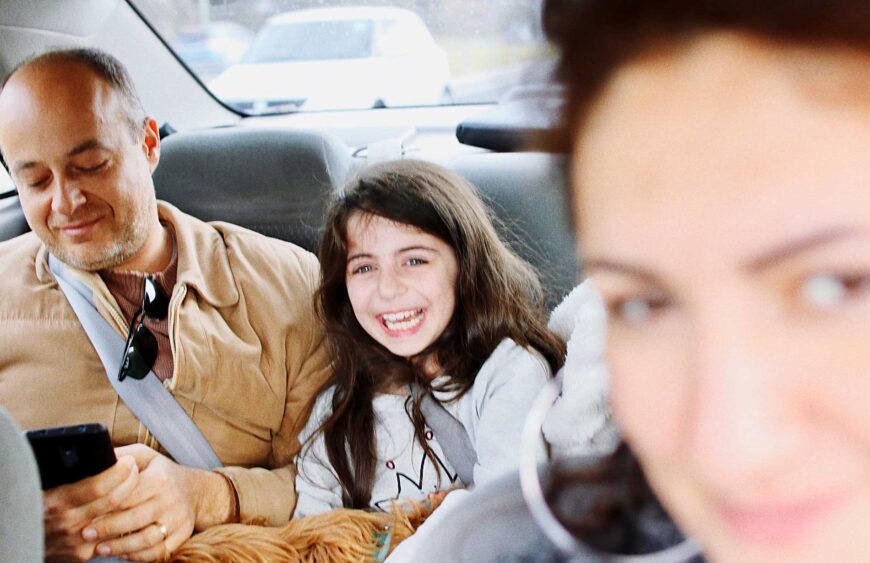
Sometimes, the best travel memories happen between destinations. A quiet ride through a new city, kids staring out the window, the hum of traffic mixing with their laughter. Taxis and ride-shares aren’t just transport; they’re small breathers in the blur of travel.
With a bit of preparation and common sense, they can be the calmest part of your day. A bit of predictability never hurt anyone. A seatbelt that works, a driver you trust, and five minutes of peace before the next round of adventure.
Because when you’re traveling with kids, sometimes the greatest luxury isn’t where you’re going. It’s getting there without drama.
Too Long? Here are the most common questions we’re asked.
It depends on the country. Many don’t enforce car seat laws in taxis, but bringing a portable booster or folding seat ensures safety anywhere.
Generally yes, but check driver ratings and confirm car seats if needed. Uber’s “Car Seat” option exists in a few major cities like New York, London, and Dubai.
Grab in Southeast Asia, Bolt and FreeNow in Europe, Careem in the Middle East, and Uber or Lyft in North America are the most reliable.
In most countries, rounding up the fare or adding 5–10% is appreciated but not required.
Confirm fares before entering, use metered taxis, or stick to official ride-share apps where routes and prices are tracked.