When dining is both a joy and a juggling act
Cruise lines love to show glossy images of elegant dining rooms and endless buffets. And those are real, but add children into the mix, and the picture changes. Meals can be magical, with waiters who remember your child’s name and favourite drink. They can also be stressful, with long waits, picky eaters, and meltdowns when dinner clashes with bedtime.
The truth is, dining on a cruise with kids isn’t one-size-fits-all. Some families thrive on the routine of sit-down meals. Others survive on buffets and snacks. Knowing what each option looks like helps you plan meals that fit your family’s rhythm instead of fighting against it.
What you’ll find in this guide:
Buffets: freedom or chaos?
Main dining rooms: structure and service
Specialty dining: is it worth it with kids?
Kids’ menus and picky eaters
Snacks, room service, and “off hours” food
Managing mealtime meltdowns
Cultural differences in dining (US vs Europe)
Final thoughts: making meals work for your family
FAQ
Buffets: freedom or chaos?
For many families, buffets are a lifeline. They open early, stay open late, and let kids choose exactly what they want, whether that’s fruit and pasta or chips and ice cream. You can be in and out in 20 minutes if you need to, and no one stares if your toddler decides dinner is three bread rolls and nothing else.
The downside is the chaos. Buffets are busy, lines form, and carrying multiple plates while managing a stroller is nobody’s idea of relaxing. Some families solve this by “tag-teaming”: one parent loads plates while the other stays at the table with the kids. Others head to buffets during off-peak hours, like just after opening or near closing, when crowds thin.
Buffets are also where germs spread fastest. As we noted in Safety at Sea, sanitising hands before and after eating is worth making a family ritual.
Main dining rooms: structure and service
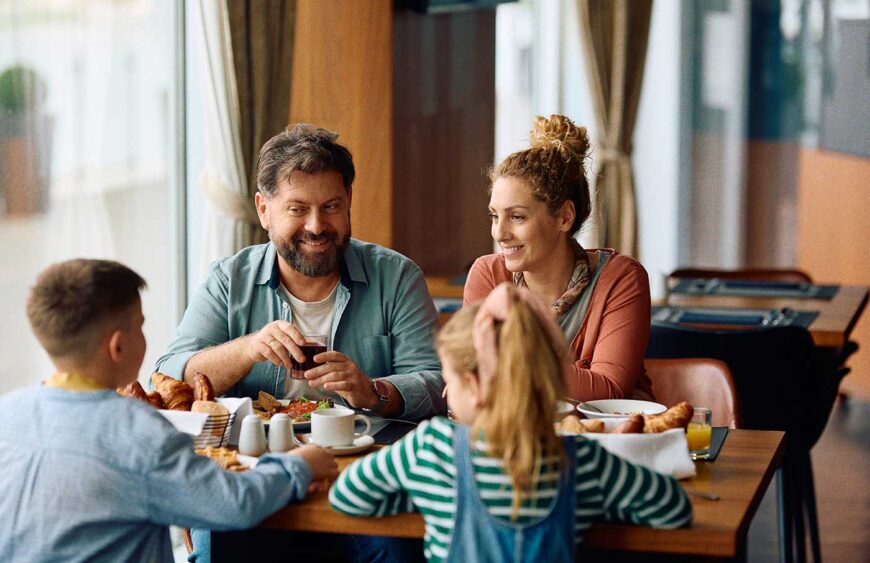
Main dining rooms are the heart of traditional cruise dining. Families are assigned a table and time, and waiters often follow you throughout the trip. This is where the “Disney magic” happens on lines like Disney Cruise Line, servers who know your child’s favourite drink by day two, or who bring out crayons and games between courses.
The upside is structure: food comes to you, you don’t have to juggle plates, and meals feel like a shared event. The downside is timing. Dinner often runs to 90 minutes or more, which is a stretch for many young kids. Early seating times are usually best for families; late dining rarely works with toddlers.
For school-aged kids, dining rooms can be a highlight. The sense of occasion, trying new dishes, and building rapport with the same wait staff each night. For toddlers, it’s often more about survival: bring crayons, tablets, or small toys to bridge the long gaps between courses.
Specialty dining: is it worth it with kids?
Specialty restaurants, such as steakhouses, sushi bars, fine dining, often come with a surcharge. They’re marketed to adults, but many are surprisingly family-friendly if you pick the right one. Italian or Asian-fusion spots often have dishes kids will try, and some lines even offer reduced or waived fees for children.
Still, the atmosphere can be tricky with younger kids. If your toddler isn’t in the mood to sit through a drawn-out meal, that fancy dinner you paid extra for can quickly feel wasted. Families often save specialty dining for a date night with childcare (nurseries or babysitting) or for older kids who appreciate the novelty.
Kids’ menus and picky eaters
Most cruise lines offer kids’ menus with staples: chicken nuggets, pasta, burgers, pizza, and fruit. The good news is that waiters are usually flexible. They’ll mix and match dishes, bring sides separately, or offer plain versions of adult meals.
For picky eaters, the buffet often feels safe, but the dining room can surprise you. Many parents report their kids trying new foods on cruises simply because the environment is relaxed and playful. The key is not to pressure them. Let them order their safety food, and offer a taste of yours. Sometimes curiosity wins out.
For babies and toddlers, most lines allow you to bring baby food or formula onboard. As mentioned in Cruising with Babies and Toddlers, AIDA even provides complimentary HiPP jars in their Baby-Bistro kitchens.
Snacks, room service, and “off hours” food
One of the underrated perks of cruising is how much food is available outside regular meal times. Room service (often free or included) can save the day when a child needs a nap and misses dinner, or when your teen wants a midnight snack.
Poolside grills, pizza counters, and ice cream machines are usually open late. On Disney and Royal Caribbean ships, snacks are almost constant. European lines like AIDA or MSC may have more structured hours, so it’s worth knowing your ship’s policy.
Parents often use these options strategically: a slice of pizza before the show so kids don’t get cranky, or sandwiches back in the cabin to avoid dragging overtired toddlers to dinner.
Managing mealtime meltdowns
Every family hits a meltdown meal eventually. Maybe the toddler won’t sit, or the older child is overstimulated. The trick is not to fight it. Sometimes that means abandoning the dining room and grabbing food at the buffet. Other times it means asking the waiter to speed things up or box something to-go.
Bringing distractions helps. Distractions such as colouring pads, sticker books, or a tablet with headphones. But so does managing expectations. Cruises are long, and not every dinner will be picture-perfect. Parents often find that alternating between structured dining rooms and casual buffets keeps everyone happier.
Cultural differences in dining (US vs Europe)
American cruise lines (Disney, Royal Caribbean, Carnival) lean heavily into family dining, with flexible kids’ menus, fast service, and casual attitudes toward meltdowns. European lines (AIDA, MSC, Costa) often have a more traditional approach: longer meals, less kid-specific entertainment, and menus that lean more local than kid-friendly.
Neither is better but knowing the style prevents surprises. If your kids thrive on routine and want chicken nuggets on repeat, American lines are safer. If you’d like them to try European dishes and don’t mind longer dinners, European lines can be a cultural education.
Making meals work for your family
Dining on a cruise with kids isn’t about doing it “right.” It’s about finding the rhythm that works for your family. Buffets offer speed and freedom, dining rooms offer structure and service, and specialty restaurants can feel like a treat if timed well. Snacks and room service fill the gaps when schedules don’t match.
Once you stop comparing your meals to brochure photos and start tailoring them to your children’s needs, dining becomes one of the best parts of cruising. It’s where waiters learn your child’s quirks, where picky eaters sometimes surprise you, and where family time takes centre stage — even if dinner some nights is just ice cream and bread rolls.
Too Long? Here are the most common questions we’re asked.
Most buffets have set hours, but they cover most of the day, from breakfast through late-night snacks. Some ships offer 24/7 options like pizza counters or room service. If your child eats at odd hours, check your ship’s schedule before sailing.
A few do. AIDA stocks HiPP jars in Baby-Bistro kitchens, while most others allow you to bring sealed jars or pouches onboard. Formula is rarely provided, so pack your own. Always check your cruise line’s policy before boarding.
It depends on the child and the restaurant. Many have kid-friendly dishes and reduced surcharges for children. But if your toddler can’t sit through a two-hour meal, it may not be worth the extra fee. Save it for older kids or a date night.
Cruise lines take allergies seriously. Inform the line in advance and remind your servers at every meal. Many lines will prepare separate dishes to avoid cross-contamination. Pack safe snacks as a backup, especially on excursions.
On many ships, yes. Kids’ clubs often serve meals or snacks during certain sessions. For parents, this means you can enjoy a quieter meal on your own while knowing your child is fed and supervised.